
In-ear analysis · Expert · as listed
64 Audio Aspire 1 Analysis
The 64 Audio Aspire 1 sits on the in-ear shortlist of 12 November 2026 in the Expert tier, now expanded to seventeen models, in rank 6 with a Vinyl BotPro index of 81 and no tier badge. This analysis takes the list record as published and does not run a second calculation.
In short
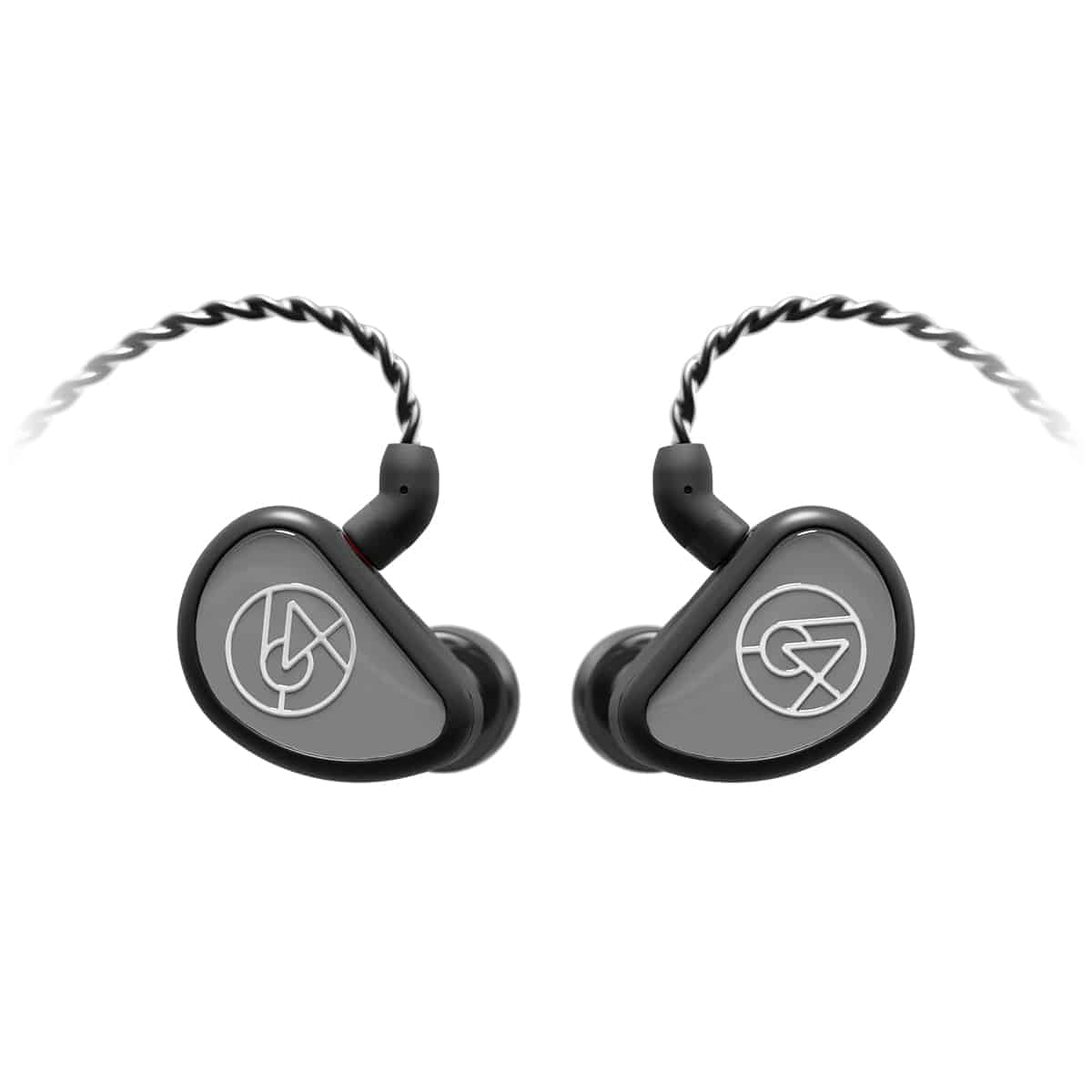
The 64 Audio Aspire 1 is a wired universal-fit in-ear with a single full-range dynamic driver, an ABS shell, a stainless-steel nozzle and an IPX connector. On the in-ear shortlist of 12 November 2026 it sits in the Expert tier, now expanded to seventeen models, in rank 6 with a Vinyl BotPro index of 81 and no tier badge. The subscores and the mapping onto the 70–84 band are documented in the list package; this page repeats the list record and does not run a second calculation.
The listening report is Headfonia (Felix, 5 January 2026) in the series review of the Aspire 1, 2 and 3: a dated listening review of the exact model in an independent international online specialist outlet of the same class that already supports the live pillar for the THIEAUDIO Monarch MKIV. Under the single badge rule of 12 November 2026 — including the t647s3962 addendum that YouTube listening tests by established, named reviewers count — the Aspire 1 is eligible; its pillar here is the editorial text, not a video. 64 Audio lists US$349. The documented euro price used here is €339.00 at WOD Audio (shop.wodaudio.com, 12 November 2026, previously €379.00). The dollar price is not converted into euros.
Technical data (public)
| Type | Wired universal-fit in-ear, single full-range dynamic driver |
|---|---|
| Drivers | One full-range dynamic driver, Helmholtz resonator in a 3D-printed shell (64 Audio / WOD Audio) |
| Impedance | 30 Ω at 1 kHz (WOD Audio, 12 November 2026) |
| Sensitivity | 106 dB/mW at 1 kHz (WOD Audio) |
| Frequency response | 20 Hz–18 kHz (WOD Audio) |
| Isolation | −20 dB (WOD Audio) |
| Connection | T2 / IPX, supplied cable about 1.20 m with an angled 3.5 mm plug |
| Housing | ABS with a stainless-steel nozzle and a lip, light-grey faceplate |
| Price as documented | €339.00 at shop.wodaudio.com, 12 November 2026 (previously €379.00, page marked in stock) |
Amplifier compatibility
At 30 Ω at 1 kHz and 106 dB/mW the Aspire 1 sits a little higher in impedance than the Aspire 2 (13 Ω) and Aspire 3 (12 Ω), but it remains in the range of typical in-ears. Headfonia ran the series from digital audio players — the Astell&Kern SP3000M and the Lotoo PAW Gold Touch and PAW Gold Touch 2 are named — and does not treat drive as a hurdle. A dedicated headphone amplifier is not a requirement on this record; on very quiet outputs it can add headroom.
The carton includes an unbalanced 3.5 mm cable with a 90-degree plug. A balanced 4.4 mm cable is not part of the kit; Headfonia notes that the series offers no option for balanced connectors. On a typical vinyl chain with a headphone output the Aspire 1 hangs from the 3.5 mm plug. Whether a given phono preamp reaches the level you want remains device-dependent; the present record points to uncritical use on ordinary outputs.
Rating criteria in detail
The Vinyl BotPro index on this page is not a second calculation but the list record of 12 November 2026. The Expert tier now holds seventeen models; the mapping uses the 70–84 band, with the strongest raw score at 84 and the weakest at 70, and shared indices are allowed. Shared indices are allowed. The indices are 84, 82, 81, 79, 79, 78, 71, 71 and 70.
The sound-evidence score of 7.2 rests on the Headfonia listening report: an organic, analogue, full sound, vocals slightly forward, bass with body but without extensive sub-bass rumble, a warm and dense lower midrange, relaxed treble that rolls off early, and an intimate, rather narrow stage. Build/comfort 7.8 follows from the same ABS construction as the Aspire 4 (also V 7.8), the low weight, a fit described as very comfortable, and a good rather than luxurious kit; IPX limits cable rolling. Drive 8.8 follows from 30 Ω / 106 dB/mW and the absence of a drive complaint. Value 8.0 follows from €339.00 and Headfonia’s explicitly strong value judgement; the highest P subscore in the Expert tier and the value badge now sit with the Moondrop Blessing 3.
Manufacturer and concept
64 Audio is based in Vancouver, Washington, and grew out of 1964 Ears. Headfonia recalls the brand’s familiar technologies — tia drivers, LID and apex — and the many professional stage clients the company serves. The Aspire series is the most accessible entry into the universal line: it adopts Apex Core (not swappable), a waveguide for the treble BA on the Aspire 3, and, in all three entry models, a Helmholtz resonator that Headfonia already knew from the Volür, used to shape the dynamic driver.
The Aspire 1 deliberately stays with a single full-range dynamic driver. The Aspire 2 and 3 are hybrids. All three share the same ABS shell with a stainless-steel nozzle and differ outwardly mainly in the faceplate: light grey on the Aspire 1, dark grey on the Aspire 2, dark red on the Aspire 3. Headfonia finds the move to plastic understandable because it cuts weight and cost; the shells still feel good and are robust. The IPX connector is clearly aimed at professional use, where connections are often stressed, and at the same time it narrows the aftermarket for typical 2-pin or MMCX cables.
How the technology works
A single full-range dynamic driver has to cover bass, midrange and treble on its own. 64 Audio shapes the response, according to the manufacturer, with a Helmholtz resonator in the 3D-printed interior of the shell. This analysis has no measurements of its own; the technical figures come from the WOD Audio product page — WOD is the official distributor for Germany, Austria and Switzerland — retrieved on 12 November 2026.
The stated 30 Ω at 1 kHz and 106 dB/mW at 1 kHz describe an electrical and level specification, not a lab judgement of sound. Frequency response is given as 20 Hz to 18 kHz, isolation as −20 dB. Headfonia notes that this isolation lets a little more of the room through than other models from the brand, without the author himself having a problem with it. The nozzle has a lip so that ear-tips stay put when the in-ears are removed — Headfonia calls this a step forward from older 64 Audio universal models, where tips were left behind in the canal.
What the international specialist press hears
Character
Felix describes the Aspire 1 as a full, organic, analogue sound with good technical performance relative to its price. Vocals sit slightly further forward in an overall warmer picture. Bass and mids have good definition; the treble is laid-back and softer. Overall the tuning is easy to live with for hours without fatigue — an easy-on-the-ear character, not a sharp monitor picture.
Tonal balance
The bass extends well without going into extensive sub-bass rumble or the highest impact in the deepest cellar. The mid- and upper bass stand out more clearly, with good resolution and texture; the range feels organic, full, thick and lush, yet with speed and weight, and it carries density into the lower midrange. Headfonia names Moderat’s “Intruder” and Massive Attack’s “Angel” and “Teardrop” as examples where weight, speed and texture land.
The lower midrange is warm, full and dense, with a somewhat analogue, smoother midrange picture. At times pieces can feel a little veiled because of the emphasised lower mids; clarity and detail in the upper range then fall back. Vocals have body and shape and sit slightly forward, though they could use more air around them, without coming across as dull or tamed. On “Teardrop” Felix misses the emotional filling of the room that Elizabeth Fraser can usually carry. The upper midrange sounds slightly darkened, with less shimmer; wind instruments and bells could use more saturation. This gently rolling signature prepares the laid-back treble.
Dynamics, bass and stage
Technically the Aspire 1 is a solid performer in its price class, without keeping up with its dearer siblings. The stage is intimate but decently spread, with good imaging and instrumental separation. On live recordings (Florence + the Machine, Damon Albarn, Moderat) width and depth appear, yet the experience stays closer and narrower. Treble rolls off rather early and does not reach far into the highest registers; there is enough bite for hi-hats, snares, cymbals and violins, always on a relaxed line that never pierces or fatigues. On Nina Simone’s “Sinnerman” cymbal crashes sound defined and laid-back, and the exploding hi-hat section keeps shimmer and speed with enough softness for treble-sensitive ears.
Strengths and limits
In the series conclusion Headfonia calls the Aspire 1 the best door into the line: an organic, analogue, full sound, more than fairly priced at US$349 in a tight market, and exactly the model that should win over newcomers. Strengths of the series include the price-to-performance ratio, full and harmonic mids on the Aspire 1 and 2, a tight, impactful bass, clear differences between the models, the adopted proprietary technology and a robust build. The explicit limit of the Aspire 1 is the intimate stage; series cons also include IPX (limited cable choice) and ABS shells that do not feel as premium as other models.
Research consensus
This analysis rests on Headfonia’s substantial series listening review, not a second international magazine report of the same depth devoted to the Aspire 1 alone. The consensus is therefore Felix’s finding, read against the data sheet and the documented euro price: a light, comfortably fitting single-dynamic in-ear with an organically warm, slightly forward vocal, full bass without deep rumble, dense lower mids, relaxed treble and a rather intimate stage. Eligibility for a tier badge follows the single rule of 12 November 2026, including the t647s3962 addendum on YouTube listening tests by established reviewers; random channels, short clips and unboxings without a listening section remain excluded. Forums, retailer copy or manufacturer pages are not used as a listening pillar. Here the pillar is an editorial specialist text.
Features and daily use
Headfonia was pleasantly surprised by the packaging, even if other 64 Audio models come in a more luxurious carton. The kit includes silicone and foam tips, a cleaning tool, a shirt clip, a 6.35 mm adapter, a small carry case and the cable with an angled 3.5 mm plug. That is a good package without looking luxurious. A 4.4 mm cable is not included.
The fit is described as very comfortable and ergonomic. The shells are light and disappear during listening; Felix could wear them for hours. Isolation of −20 dB lets a little more of the room through than other models; the author himself had no issue with it. The lip on the nozzle keeps tips in place. Overall the build leaves Headfonia little to complain about: ABS is not the most premium choice, but it still feels good and brings the cost down, which eventually reaches the buyer.
Price and availability
The documented euro price is €339.00 at WOD Audio (shop.wodaudio.com) on 12 November 2026; the page showed a previous price of €379.00 and was marked in stock, with a shipping note of about one to two working days within Germany. Whether a shop has stock is a snapshot and is not recorded here as a guarantee. 64 Audio lists US$349. This analysis does not convert that amount into euros. Prices change, without guarantee.
In the Expert tier (about €250–600) €339.00 sits at the lower end of the frame and below the Iris (€399.00). Headfonia calls the Aspire 1 more than well priced and the convincing entry model of the series. That judgement, read against the documented euro price, supports the P subscore of 8.0 ; the highest P subscore and the value badge now sit with the Moondrop Blessing 3.
At the amplifier and on a vinyl system
As a wired in-ear with a supplied 3.5 mm cable, the Aspire 1 hangs from typical phono chains that provide a headphone output. A 4.4 mm cable is not included and must be sourced separately by anyone who wants balanced outputs — and IPX narrows that choice compared with 2-pin and MMCX. Headfonia describes no weakness in drive; the official impedance is moderate. A dedicated headphone amplifier is not a requirement on the present record, though it can add headroom on quiet outputs.
The review itself names portable players, not a specific phono stage. Anyone listening to records should read the report especially for the dense lower midrange and the early-rolling treble: warm, slightly veiled registers can add weight to older or full-bodied pressings, while finely drawn overtones and air around voices recede. The intimate stage renders large recordings close rather than wide.
Who is the Aspire 1 for?
The Aspire 1 suits listeners who want a light, comfortably fitting wired in-ear with an organically warm, easy-to-live-with sound, who value full bass without deep rumble, and who want to stay at €339.00 inside the Expert frame. Anyone who wants a wide stage, an airy upper midrange or widely extended treble will find clear caveats in the same review — and, on this same list, the Aspire 2 as the step up in resolution and air around vocals that Headfonia prefers. Anyone who often swaps cables should take the IPX connector seriously.
On the shortlist of 12 November 2026 the Aspire 1 sits in rank 6 at index 81 with no tier badge; the Expert value badge sits with the Moondrop Blessing 3. The Sound badge in this tier sits with the Campfire Audio Iris (rank 1, index 84), whose Headfonia review describes the more mature, coherent V-shaped tuning under US$500.
How it compares
Headfonia compares the three entry Aspire models mainly with one another. Against the Aspire 2 the Aspire 1 gives up resolution, air around vocals and mid/treble precision; it stays fuller, smoother and more intimate. The Aspire 3 goes further in stage and treble energy, but it sits in a different list tier. On the list of 12 November 2026 the Aspire 2 sits in the same Expert tier in rank 6 at index 78, without a badge.
The Campfire Audio Iris (€399.00) sits in the same tier in rank 1 at index 84 with the Sound badge. Headfonia describes the Iris as a warm V with strong, controlled bass and an upper treble that can turn sharp on poor recordings — a different compromise from the early-rolling, soft treble of the Aspire 1. The Westone MACH 20 (index 72) and MACH 30 (index 75) and the Final A5000 (index 70) follow on the list; they carry no tier badge in this stand.
How it sits on the opened list
With the Aspire 1 and Aspire 2 the Expert tier grows from four models to six. The Aspire 1’s Vinyl BotPro index is 81, rank 3, no badge. The raw score of 7.8 sits just under the Iris (7.9); if the rounded first decimals were equal, the higher K subscore would decide, but here the raw scores already differ by a tenth. All nine models are eligible under the single rule. The Sound badge goes to the best remaining K subscore, here the Iris (K 7.6) ahead of the Aspire 2 (K 7.5) and the MACH 30 (K 7.4). The MACH 30 therefore loses the Sound badge it previously carried in this queue; the value badge sits with the Moondrop Blessing 3. Neither badge sat on an already live Expert page.
FAQ
What exactly is the 64 Audio Aspire 1?
A wired universal-fit in-ear with a single full-range dynamic driver, 30 Ω at 1 kHz, 106 dB/mW at 1 kHz, a 20 Hz–18 kHz frequency response, −20 dB isolation, an IPX/T2 connector and an ABS shell with a stainless-steel nozzle. An angled 3.5 mm cable is in the carton.
Does the Aspire 1 need a headphone amplifier?
WOD Audio quotes 30 Ω at 1 kHz and 106 dB/mW at 1 kHz. Headfonia does not treat drive as a hurdle and listened on DAPs. A dedicated amplifier is not a requirement on this record; on quiet outputs it can add headroom.
Is it suitable for listening to records?
Yes. As a wired in-ear with a 3.5 mm plug it hangs from typical phono chains with a headphone output. The review describes an organically warm, intimate sound with dense lower mids and relaxed treble. A 4.4 mm cable is not included and is not a substitute for a phono stage.
What does the Aspire 1 cost?
At WOD Audio the price on 12 November 2026 was €339.00 (previously €379.00, page marked in stock). 64 Audio lists US$349. This analysis does not convert the dollar price into euros. Prices and stock change, without guarantee.
Is the Aspire 1 eligible for a tier badge?
Yes. Headfonia (Felix, 5 January 2026) is a dated listening review of the exact model in an independent international online specialist outlet. Under the single rule of 12 November 2026 it is eligible; in the Expert tier it carries no badge; the value badge sits with the Moondrop Blessing 3.
Does this page rest on a listening test by the VinylCination team?
No. There was no in-house listening test and no measurement of our own. The assessment draws on 64 Audio’s and WOD Audio’s data and the international Headfonia listening review (Felix, 5 January 2026). The list figures (Expert, rank 6, index 81, no badge) come from the list package of 12 November 2026.
Conclusion
The 64 Audio Aspire 1 is a clearly documented wired in-ear for the expanded Expert tier: light, comfortable, with an organically warm single-dynamic sound, a documented euro price and a listening review that records it as a convincing door into the series. The list record of 12 November 2026 is Expert rank 6, index 81 and no tier badge. Anyone planning €339.00 and looking for a full, easy-to-live-with tuning on a vinyl system will find a solid source base here. Anyone expecting width, air around vocals or extended treble should read the same report at exactly those points and compare the Aspire 2.
About this AI analysis
This section is an AI summary of a published international listening review and 64 Audio’s and WOD Audio’s own data. Vinyl BotPro places the findings and links them to the data sheet, the specialist-trade price and the list record; VinylCination does not have listening tests or measurements of its own, and every source is linked at the end of the page. Prices and availability change (as of 12 November 2026, without guarantee). Subscores and the index come from the list package of the same day.