
In-ear analysis · Starter · as listed
7Hz Salnotes Zero Analysis
The 7Hz Salnotes Zero already sits in third place in the Starter tier of the live shortlist, with a Vinyl BotPro index of 50. This analysis fills the previously missing product page and takes the list figure as recorded, without recalculating the index.
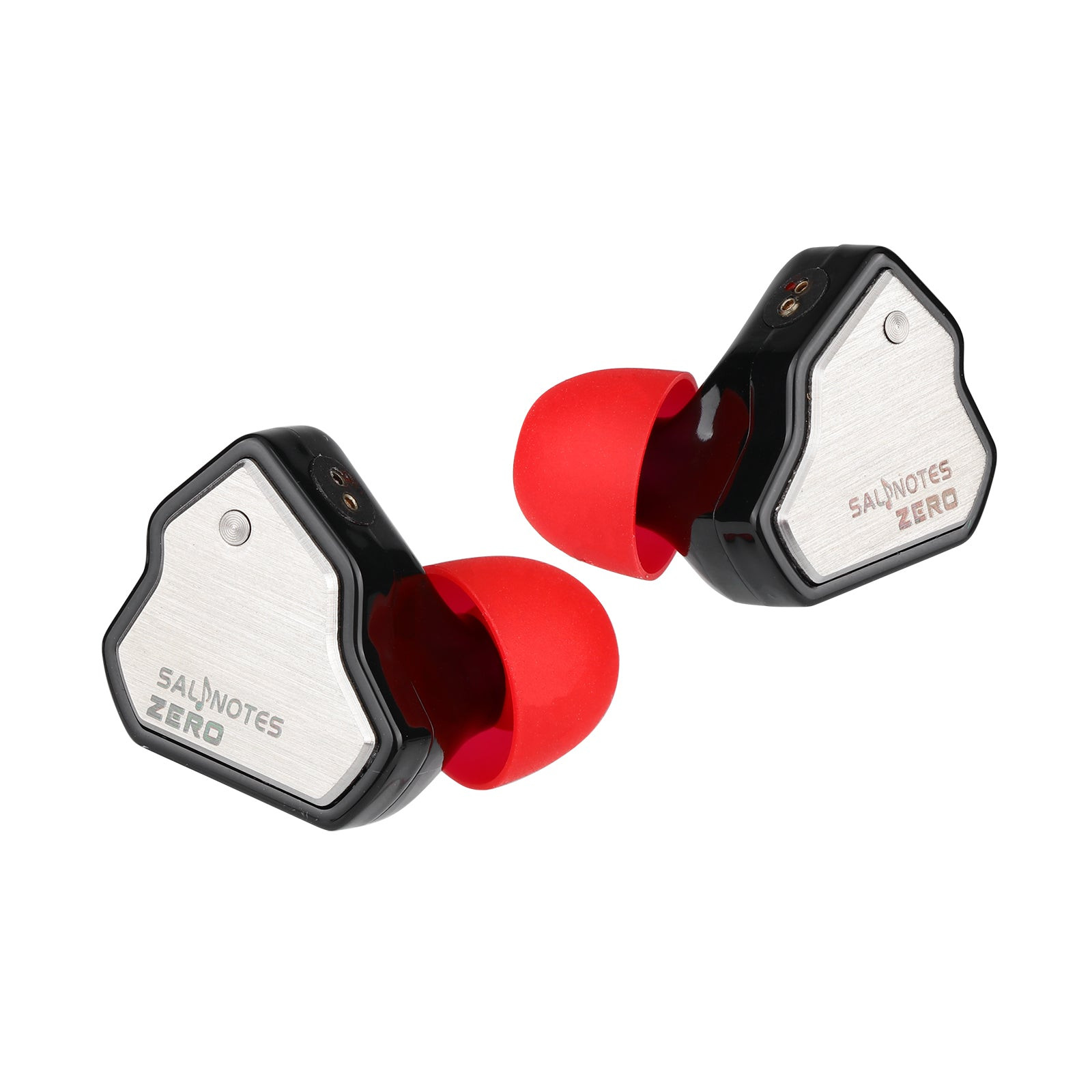
In short
The 7Hz Salnotes Zero is a very inexpensive wired single-driver in-ear that already appears on VinylCination’s live shortlist in the Starter tier: rank 7, index 50. That figure is the existing list standing (list dated 7 November 2026, unchanged on 12 November 2026), not a new calculation in this analysis. The page supplies the full AI analysis that the tile previously lacked, linking only to an on-page overview.
The public picture is well defined. 7Hz and its European distributor Linsoul describe a 10 mm dynamic driver with a metal-composite diaphragm, a brushed metal back plate, a detachable 2-pin cable and a small, angular shell. SoundGuys published a listening review with lab measurements under Christian Thomas on 29 May 2024 and issued a formatting update on 18 July 2025. The overall score is 7.7 out of 10. The review praises the price, the sound quality in class, the isolation and the replaceable cable. It criticises the optional microphone, the lack of a case, the lack of an IP rating and, above all, a clear rise around 3 kHz that can grate at higher listening levels.
On a vinyl system the Zero is a typical Starter in-ear: low weight, modest amplifier demand, a 3.5 mm plug on the jack versions, no wireless path. Hung from the headphone socket of an integrated amplifier or a phono stage, it will show the same tonal behaviour the review recorded on a simple mobile source. An expensive headphone amplifier will not rewrite that behaviour; eartips, seal and level matter more. The shortlist quoted €24.64 without a microphone in the Linsoul EU shop on 7 November 2026; the same figure was still listed on linsoul.de on 12 November 2026.
This analysis is a research synthesis. VinylCination has not listened to the Salnotes Zero and has not measured it. All listening judgements come from the international review named above, supplemented by manufacturer and distributor data. The Zero does not carry a champion badge: in Starter, value remains with the Moondrop Chu II and sound with the Truthear x Crinacle Zero:Red.
Technical data (public)
| Form | Wired in-ear, closed |
|---|---|
| Driver | Single 10 mm dynamic driver, metal-composite diaphragm (manufacturer/distributor) |
| Impedance | 32 Ω (SoundGuys / list standing) |
| Sensitivity | 108 dB/V (SoundGuys / list standing) |
| Weight | 5.8 g per earpiece (SoundGuys) |
| Shell | Angular housing with brushed metal back plate and an angled nozzle (review) |
| Cable | Detachable 2-pin; versions without a microphone, with a 3.5 mm microphone cable, or with a USB-C microphone cable |
| Connector | 3.5 mm (jack versions) or USB-C (one microphone version) |
| Accessories | Six colour-coded pairs of silicone eartips; no case, no IP rating (review) |
| Price as of 12 November 2026 | €24.64 without microphone at linsoul.de; €25.49 USB-C with microphone; €27.20 3.5 mm with microphone |
Amplifier compatibility
The electrical figures are unremarkable for a Starter in-ear, but they are not identical to the even more sensitive siblings on the list. At 32 ohms and 108 dB/V the Zero needs a little more level than the Moondrop Chu II (18 Ω, 119 dB/Vrms) and the Truthear Zero:Red (17.5 Ω, 117.5 dB/Vrms). The live list already records that in the drive subscore (8.5): no dedicated amplifier is required, but the Zero asks for slightly more volume margin.
SoundGuys confirms this from use. The review calls the power requirement “pretty light” and states that an Apple or Google dongle is enough; an extra amplifier is not required. The same text describes typical use with a USB-C dongle on a phone or with a portable player. For a vinyl chain that means the headphone output of an integrated amplifier, a phono stage with a jack, or a small desktop converter is usually sufficient. A very weak smartphone dongle may need a higher volume setting than the Chu II, but that is not a hard limit.
As a single driver without a crossover, the Zero is less sensitive to the source’s output impedance than a multi-way in-ear. That is a practical advantage with older amplifiers whose headphone sockets were not designed for very low-impedance loads. Conversely, the tonal signature – including the 3 kHz rise described in the review – remains the same at every source. More amplifier power does not make the Zero more neutral; it only makes it louder.
Rating criteria in detail
The live list’s subscores are repeated here only as existing standing, not newly awarded. Sound-data 6.6: one dated international listening review with measurements, a strong timbre score in the lab model, but the described 3 kHz rise and only middling immersiveness. Build/comfort 7.0: a high comfort score (8.7 at SoundGuys), a detachable cable and low weight, but a build score of 6.0, no case and no IP rating. Drive 8.5: easy to power, a little more level needed than the other full Starter analyses. Value 9.2: €24.64 without a microphone, just above the Chu II, with a 9.5 value score in the review. Weighted raw score 7.7, mapped to Starter index 50. Any remapping of those figures belongs in a later list package, not on this product page.
Manufacturer and concept
7Hz is a Chinese in-ear maker that sells its inexpensive line under the Salnotes name. The Zero is the entry model in that line: a single dynamic driver, a deliberately plain shell and a price well below €30. Linsoul acts as the international and European distributor; the live list and this analysis take the euro price from linsoul.de, not from a converted dollar figure.
The concept is aimed at listeners who want to stay wired and spend very little. SoundGuys frames the Zero in exactly those terms: as a product for a minority that still listens over a cable, and as evidence that inexpensive in-ears have become far more competent in recent years. The review is clear that the Zero is not “neutral”, but that it offers solid, understandable performance for the money. That matches its role in Starter: it is not the leader in sound-data, but a comfortable, documented single-driver below the two champion models and above the new DUNU Subsurge, which occupies the bass-specialist slot on the list.
Several shell colours are offered (including black, blue, white, red, orange and rose). That changes the look, not the driver. The more important choice is the cable: no microphone, a microphone with a 3.5 mm plug, or a microphone with USB-C. Anyone who wants the Zero fixed to a vinyl system should take a jack version with or without a microphone; the USB-C version is meant for mobile sources with that socket and is not the focus of this analysis.
7Hz itself appears in public mainly through the distributor; a separate, well-documented manufacturer site with a press room is not the main source for this model. The technical core on Linsoul’s product page and the measurement plus listening judgement at SoundGuys are enough for an editorial placement. This page does not add manufacturer poetry beyond what those two pillars support.
How the technology works
At heart the Zero remains a classic single-way in-ear. One 10 mm dynamic driver with a metal-composite diaphragm covers the listening range on its own, without an electrical crossover splitting several drivers. That has the usual strengths and weaknesses of the class. On the plus side: no handover between drivers, less dependence on output impedance, a simple construction that can be repaired because the cable comes off the 2-pin connector. On the minus side: the whole response has to be managed in one diaphragm and one damping scheme. That is exactly where the review’s criticism lands: a strong rise in the ear-gain region around 3 kHz, with the top treble falling off after that peak.
The brushed metal back plate is the visible signature; the official packshot shows the lettering “SALNOTES ZERO” on the plate. The review describes an angular shell with an angled nozzle. The nozzle is on the narrow side, so the supplied silicone tips put little pressure on the ear canal. The 5.8 g weight per side is also partly borne by the over-ear cable; SoundGuys ties the high comfort score to that mix of low pressure, low weight and many tip sizes.
The cable is detachable and uses the widespread 2-pin connector. In practice a torn cable does not force a replacement of the whole in-ear. SoundGuys underlines this as a durability point. Swapping cables does not necessarily change the driver’s tuning; this analysis does not treat “better” cables as a lever. SoundGuys lists the length as 0.76 m – shorter than the 1.2 m cables on some dearer models, but typical for a pocket and a phone dongle. At an amplifier on a sideboard the length can be tight; an extension with a 3.5 mm coupler is the remedy, not a new in-ear.
What the Zero lacks is also part of the technical story at this price: no case, no published ingress rating, no built-in attenuator, no second driver for the bass. The isolation that SoundGuys puts at a 61.1 per cent average loudness reduction, mostly above 1 kHz, depends on the seal, as with any in-ear. Foam tips are not in the box; six pairs of silicone tips in different sizes are.
What the international specialist press hears
Character
SoundGuys describes the Zero as a product that shows why inexpensive wired monitors have a following – and as a design that is not free of rough edges. The lab model’s overall MDAQS score is 4.5 out of 5: an excellent timbre score (4.8), a good distortion score (4.0), but only middling immersiveness (3.2). The written review is more reserved than that timbre figure. Christian Thomas notes that many inexpensive in-ears over-emphasise the highs in a way that becomes tiring over time; the Zero leans that way, without becoming painful on every track.
As an example the review cites a cymbal sample in Ark Patrol’s “Hex” that can become annoying at a normal volume. Simpler, quieter mixes such as Duke Dumont’s “I Got U” or Tobias Jesso Jr.’s “True Love” come off decently as long as the level stays moderate. Room effects and recorded reverberation recede a little, because the treble drops after the strong rise.
Tonal balance
The measurement, SoundGuys says, shows a clear excess in the ear-gain region around 3 kHz against the site’s target once bass and mids are normalised to that curve. The shape resembles a V that does not hollow out the midrange but lifts the presence region. The live list takes that rise into its one-line summary: it “can become tiring at a higher level.” The review suggests a simple equaliser for listeners who find it too much, including example filters with a −2.4 dB preamp gain – as the author’s hint, not as an instruction from this page.
The Zero is therefore not neutral in a strict sense. SoundGuys answers its own FAQ question “Are the 7Hz Salnotes Zero neutral?” with a plain no. For the Starter list that is not a reason to exclude it; the tier already gathers different tunings, from the more bass-heavy Zero:Red to the Chu II, which sits closer to a reference curve. The Salnotes Zero sits between them as a presence-forward, inexpensive single driver.
Dynamics, bass and stage
The review does not treat the bass as the main problem. On the contrary: the curve can look bass-light because the highs stand out so far; under another normalisation a usable foundation remains. The weakness is spatial. Immersiveness is only middling, and SoundGuys explicitly warns against expecting the Zero to place sources well in first-person games. For quiet music listening, including records, that limit is less dramatic than in a game where direction of sound matters. The review does not promise a wide stage.
Strengths
Price, comfort, the replaceable cable and a comprehensible basic quality for the money remain uncontested. SoundGuys scores value at 9.5 and comfort at 8.7, praises six tip sizes and the low load on the ear canal. Isolation is “fairly decent” provided the seal is good. The lab model credits a pleasing timbre – a finding the written review shares but qualifies with the 3 kHz region.
Fit and partners
In-ears have no placement in a room. What matters are the tip, the over-ear fit and the seal. The review reports good long-session comfort but warns that the nozzle may be too long for some ears. The live list takes comfort as a strength and the missing case as a practical deduction. As a partner, the review says, a simple dongle is enough; a dedicated headphone amplifier is not a requirement. On a vinyl system the sensible partner is a quiet headphone output and a cable that reaches the amplifier.
Agreement and gaps
This analysis rests on one substantial international listening review, not on a wide magazine field. Traditional print magazines with an exact-model test were not found in the research for this page. For a non-champion in Starter that is acceptable under the source rule of this expansion, because the live list already uses the same SoundGuys text as its pillar. A second, independent magazine review is not assumed here. Promoting the Zero to a champion later would require an exact specialist-magazine pillar under t646u; that step is not being taken.
Research consensus
Manufacturer data and the listening review form a stable picture. The Salnotes Zero is a light, comfortable, very inexpensive wired in-ear with a detachable 2-pin cable that typical portable and domestic sources can drive without an extra amplifier. Timbre in the lab model is good, but the tuning is not neutral: a rise around 3 kHz defines the character and can become tiring at higher levels, while the sense of space stays only average. Practical deductions are the missing case, the missing IP rating and, if the microphone version is chosen, a merely modest in-line microphone. The European shop price remains firmly inside the Starter frame. Those sentences are a consensus of the sources in hand, not an in-house listening judgement.
Features and daily use
According to the review the box contains the earphones and six colour-coded pairs of silicone tips. There is no case. For the walk to the system or a coat pocket you therefore need a pouch of your own, or the metal plates sit unprotected next to keys and a dongle. The detachable cable softens the most common failure of inexpensive in-ears – a broken cable. The version without a microphone keeps the lead simple; the microphone version adds volume buttons and an in-line capsule that SoundGuys finds weak in reverberant rooms and in wind. For listening to records at an amplifier the microphone is unnecessary.
There is no IP rating. The review warns against getting the Zero wet or taking it into the rain unprotected. That barely matters on a sofa or at a desk; it does matter on a commute. The over-ear fit relieves the ear canal but requires the cable to be hooked around the pinna deliberately. Listeners coming from wireless buds, SoundGuys notes, have to remember they are still tethered before they stand up – a banal but real daily point.
The official product photograph shows the familiar silver back plate with the model lettering and red silicone tips. The shot is a distributor packshot and is used here for orientation, not as proof of one retail colour; other shell colours are listed in the shop.
Price and availability
On 12 November 2026 the Salnotes Zero costs €24.64 at linsoul.de in the versions without a microphone, regardless of shell colour. The USB-C version with a microphone is €25.49, the 3.5 mm version with a microphone €27.20. The shortlist price of 7 November 2026 (€24.64 without a microphone) is therefore still current. All figures are shop prices as presented by the dealer, without guarantee, and can change.
There is no official manufacturer euro price outside the distributor, and this page does not convert dollar prices. SoundGuys cited a ballpark of about 25 to 30 US dollars in the review and scored value at 9.5. In euro the Zero sits just above the Chu II (€21.25 at Linsoul EU, list standing) and clearly below the Zero:Red, for which the list only has a dollar shop price and no official euro figure. For the Starter tier (a frame up to about €60) the Zero therefore sits in the lower band.
Availability: the shop showed the variants named above as in stock on 12 November 2026. Whether a given colour is in stock on a given day should be checked again before ordering. Other marketplaces may show other prices and other cable versions; the binding figure for this analysis is the European Linsoul price that the list also uses.
At the amplifier and on a vinyl system
The Zero is a purely wired in-ear. On a typical vinyl chain it hangs where any other headphone hangs: from the jack of the integrated amplifier, the phono stage, or a small converter that takes the analogue signal after the phono stage. It is not a difficult load. 32 ohms sit in a range that older outputs can also handle; the sensitivity merely asks for a little more travel on the volume control than the more sensitive Starter siblings.
What the system will not even out is the tuning. The 3 kHz rise from the review is the same at an expensive phono stage as it is at a phone dongle. Anyone who plays records with an already present mix – many modern pop cuts, or brightly recorded jazz cymbals – at a high level meets exactly the situation SoundGuys warns about. Then a different tip, a slightly lower level or a different in-ear helps more than a different amplifier. The Chu II on the same list is described in its own review as closer to a reference curve and would be the obvious alternative if the presence region bothers you. The Zero:Red, in turn, stands for a more bass-heavy, more isolating direction.
In practice cable length matters. 0.76 m will reach a player in a pocket, not always an amplifier on a sideboard if you sit back in an armchair. A wired extension is the plain solution. The review does not treat cable microphonics as a central problem on the Zero; a shirt clip is not necessarily included. Anyone who uses the Zero only at the system should take the version without a microphone and keep the signal path simple: cartridge, phono stage, amplifier, jack, in-ear.
As isolation from the room the Zero offers only the passive seal. In a quiet listening room that is enough. In a living room with conversation or street noise, more residual sound remains than with in-ears to which a review attributes very high attenuation with foam – such as the Zero:Red on the same list. Anyone who wants to play records quietly and keep the room out must choose tips with care; six silicone sizes are the toolkit in the box, foam would be later accessory, not a supply item.
Who is the Salnotes Zero for?
The Zero suits listeners who want a very inexpensive, light wired in-ear with a documented international listening review, who want a replaceable cable and who can live with a presence-forward, non-neutral tuning. It fits a simple vinyl chain that already has a headphone output, and mobile sources with a dongle. It fits less well if you want a neutral mid-treble balance or a wide stage, if you need a case and an ingress rating, or if you mainly want to take calls on the move. The review also advises against it as a start in competitive first-person games.
In the list’s Starter tier it is the model for a small budget, not the sound or value champion. Anyone who wants the €20 class and a more even description will find the value badge on the Chu II. Anyone who wants more bass and isolation and accepts the higher, dollar-only price of the Zero:Red stays with the tier’s sound champion. The Zero itself is the comfortable, documented economy option with an honest weakness in the 3 kHz region.
How it compares
Inside the live list the comparison is straightforward, because the other three Starter models meet the same rules. The Moondrop Chu II costs a little less (€21.25 at Linsoul EU), has a metal shell and a likewise detachable 2-pin cable, but weighs 8 g per side according to its own review and isolates only averagely; tonally it is described as more even, with a restrained uppermost treble. The Truthear Zero:Red is a two-way in-ear with a bass adaptor, clearly more bass-heavy and very isolating with foam, but without an official euro price and without a microphone option. The DUNU Subsurge sits at the top of the Starter price span ($59.99, no official euro price) and is conceived as a bass specialist with two dynamic drivers, not as a budget single driver.
Outside the list SoundGuys mentions alternatives including the Moondrop Chu II, the Tangzu Wan’er and, as a dearer step, the Sennheiser IE 200. Those names are suggestions in the review, not extra list places and not scores of our own. The IE 200 already sits in another price class (€149.90 in the Sennheiser EU shop on 12 November 2026) and receives its own analysis in this expansion; a direct index comparison is not made here until a list package remaps the tiers together.
FAQ
What exactly is the 7Hz Salnotes Zero?
A wired in-ear monitor with a single 10 mm dynamic driver, a metal back plate and a detachable 2-pin cable. It is sold with or without a microphone; the shortlist quotes the price of the version without a microphone.
Does the Salnotes Zero need a headphone amplifier?
Not according to the manufacturer data and the published listening review. SoundGuys lists 32 ohms and 108 dB/V and says a typical USB-C or Lightning dongle is enough; an extra amplifier is not required.
Is it suitable for listening to records?
As a wired in-ear with a 3.5 mm plug (on the jack-cable versions) it can be connected to a typical phono chain with a headphone output. The 3 kHz rise described in the review remains source-independent; a moderate listening level and a tight eartip seal matter more than an expensive headphone amp.
Is the Salnotes Zero available in Germany?
Yes. In Linsoul’s European shop (linsoul.de) the price on 12 November 2026 was €24.64 for the version without a microphone, €25.49 for the USB-C version with a microphone and €27.20 for the 3.5 mm version with a microphone.
Does the Salnotes Zero have a microphone?
There are variants with and without a microphone in the cable. The shortlist quotes the price without a microphone. SoundGuys describes the in-line microphone as usable but poor at rejecting nearby noise and wind.
Does this page rest on a listening test by the VinylCination team?
No. There was no in-house listening test and no measurement of our own. The assessment draws on manufacturer and distributor data plus the international listening review by SoundGuys (Christian Thomas, 29 May 2024, formatting update 18 July 2025).
Conclusion
The 7Hz Salnotes Zero remains what the live list already sketched: a comfortable, very inexpensive single-driver in-ear with a detachable cable, a documented international listening review and an honest tonal weakness in the presence region. The European price of €24.64 without a microphone makes it a understandable Starter for a wired system, not the sound leader of its tier. Anyone who accepts the 3 kHz rise and the missing case gets a light, easy-to-drive cable model with a documented source base. Anyone who wants more evenness, or more bass and isolation, stays with the neighbours on the list that already have full analyses. This page fills in the missing analysis; it does not move badges or the index.
About this AI analysis
This section is an AI summary of a published international listening review and of manufacturer and distributor data. Vinyl BotPro places the findings and links them to the data sheet, the list standing and comparison models on the shortlist; VinylCination does not carry out its own listening tests or measurements, and all sources are linked at the end of the page. Prices and availability change (as of 12 November 2026, without guarantee); please check technical figures against the current data sheet or shop. Index 50 is the unchanged list standing, not a recalculation.
Sources
- Linsoul-DE — 7HZ Salnotes Zero (EU distributor, price as of 12 November 2026)
- Linsoul Audio — 7HZ Salnotes Zero (international product page)
- SoundGuys — 7Hz Salnotes Zero review (Christian Thomas, 29 May 2024, updated 18 July 2025)
- VinylCination — Best in-ear headphones (list standing, index 50, SoundGuys / Linsoul EU)