
Cartridge · AI analysis · Master, rank 3
Audio-Technica AT-MCD1 Review
AI analysis (research): Audio-Technica's flagship MC with a one-piece cantilever and Shibata tip made from a single lab-grown diamond, dual moving-coil generator and titanium-aluminium body for €11,000 – guidance from manufacturer data and international listening tests, no listening test of our own.
Summary
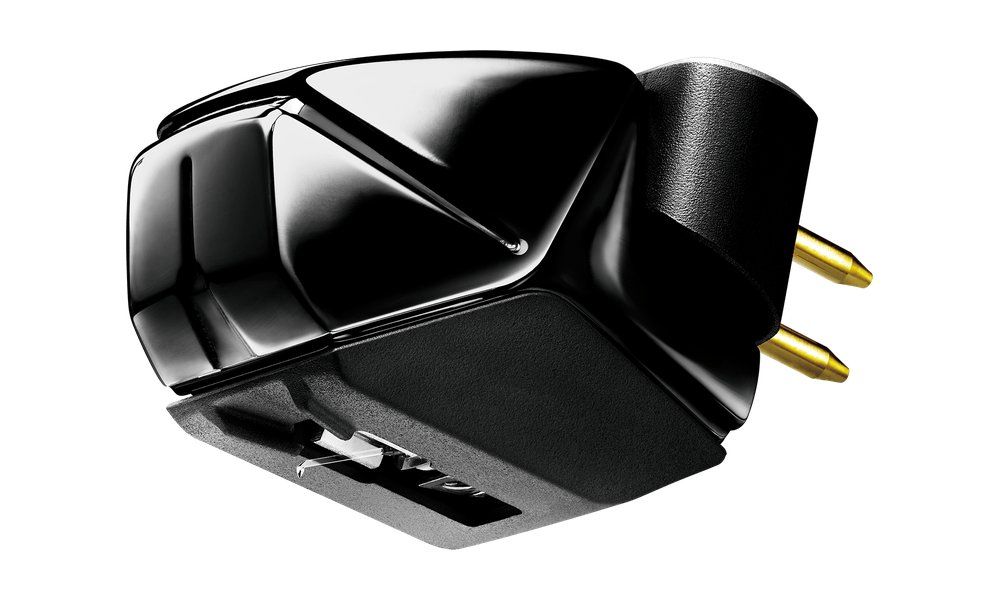
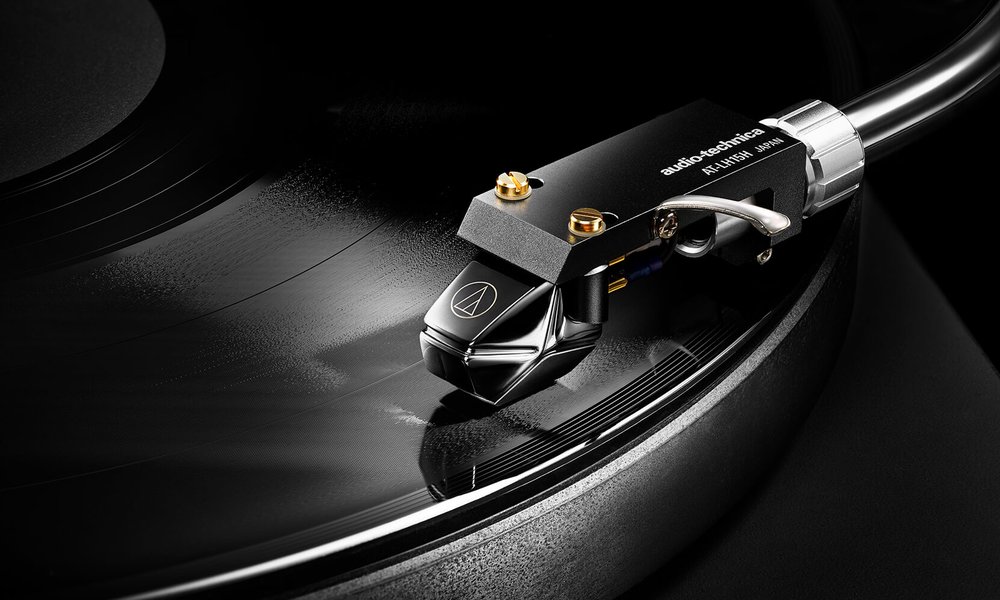
The Audio-Technica AT-MCD1 is the Japanese manufacturer's new top cartridge and the regular successor to the AT-MC2022 anniversary model, which was limited to 60 units. At its heart is a one-piece cantilever and stylus tip, formed from a single lab-grown diamond made by chemical vapour deposition (CVD). New is the finer Shibata profile (R2.7 × r0.08 mil), joined by a dual moving-coil generator with PCOCC coils and a body of titanium, aluminium and elastomer. MSRP 11,000 € (as at 22.10.2026, without guarantee). In the Master field, the AT-MCD1 lands in rank 3 with an index of 96 – behind Ortofon's two flagships MC Verismo and MC Vertex and ahead of the MC Windfeld Ti.
Assumptions
- Low-output MC at 0.55 mV: needs an MC phono input, a step-up transformer or a transimpedance phono stage
- Rated for high-quality turntables and medium-mass tonearms, assuming careful alignment
- Listening findings exclusively from published international reviews
Technical data (public)
| Type | moving coil (dual moving coil, low output) · flagship |
|---|---|
| Stylus / Cantilever | Shibata R2.7 × r0.08 mil · one piece with 0.22 mm square cantilever of lab-grown diamond (CVD) |
| Output / Impedance | 0.55 mV (1 kHz, 5 cm/s) · coil 12 Ω · 25 µH · PCOCC copper |
| Channel separation / balance | 28 dB (1 kHz) · 0.5 dB balance |
| Frequency response | 20 Hz–50 kHz |
| Compliance / VTF | dynamic 15 × 10⁻⁶ cm/dyne (100 Hz) · static 21 × 10⁻⁶ cm/dyne · 1.7–1.9 g (standard 1.8 g) · VTA 20° |
| Load | ≥ 100 Ω (with head amplifier) |
| Body / weight | aluminium base, titanium housing, elastomer undercover · threaded holes M2.6 · 9.5 g |
| In the box | cherry wood case, non-magnetic screwdriver, brush, M2.6 screw set, engraved serial number |
| Price guide | DE MSRP 11,000 € · £9,999 · $11,000 · As of 22.10.2026 · without guarantee |
Manufacturer specifications (Audio-Technica)
| Type | moving coil (dual moving coil) |
|---|---|
| Output voltage | 0.55 mV (1 kHz, 5 cm/s) |
| Frequency response | 20 Hz–50 kHz |
| Channel separation | 28 dB (1 kHz) |
| Channel balance | 0.5 dB (1 kHz) |
| Compliance | dynamic 15 × 10⁻⁶ cm/dyne (100 Hz) · static 21 × 10⁻⁶ cm/dyne |
| Cantilever | 0.22 mm square diamond, one piece with the stylus |
| Stylus | Shibata, R2.7 × r0.08 mil (integrated with the cantilever) |
| Vertical tracking angle | 20° |
| Tracking force | 1.7–1.9 g (1.8 g standard) |
| Recommended load | ≥ 100 Ω (with head amplifier) |
| DC resistance | 12 Ω |
| Coil impedance / inductance | 12 Ω / 25 µH (1 kHz) |
| Dimensions | 17.3 × 17.7 × 26.7 mm (H × W × D) |
| Mounting | threaded holes M2.6 × 2 |
| Cartridge weight | 9.5 g |
Source: Audio-Technica – official specifications · As of 22 October 2026 · subject to change by the manufacturer
Rating criteria in detail
The four criteria feed into the Vinyl BotPro Index with weights of 25/20/25/30. The index is scaled across all tiers (see Methodology); that is why we do not show individual sub-scores.
Strengths
- Cantilever and Shibata tip from one piece of diamond, with no glued or pressed joint
- 0.55 mV at just 12 Ω: strong output, also suits transimpedance inputs
- According to the listening review, outstanding tracking and much less surface noise on older records
- Threaded holes, serial number and wooden case; hand-built in Japan
Weaknesses
- Stylus sits far under the body: alignment only with a good loupe and protractor
- Shibata profile demands exact azimuth and clean records
- Adds no warmth – anyone looking for a coloured sound will not find it here
Comparison models
| Ortofon MC Vertex | Also a diamond cantilever, Vertex line contact and SLM titanium – around €4,000 more expensive, lower output (0.3 mV) |
|---|---|
| Ortofon MC Verismo | Master rank 1 with diamond cantilever and Replicant 100 stylus, considerably cheaper |
| Audio-Technica AT-ART20 | In-house donor of the magnetic circuit, boron cantilever with Special Line Contact – a quarter of the price |
| Ortofon MC Windfeld Ti | Boron cantilever, Replicant 100, SLM titanium – rank 4, around half the price |
System matching
Works well with
- MC phono stages with a load of 100 Ω or more, and transimpedance inputs
- Tonearms of medium effective mass with fine azimuth and VTA adjustment
- Listeners with large collections of older pressings who want more quiet in the groove
Less suited
- Simple turntables without azimuth adjustment or with very light tonearms
- Listeners who want a warm, rich balance from the cartridge
- Anyone who does not want to align it themselves or have a specialist dealer do it
Specs & Features
The AT-MCD1 is a moving-coil cartridge with two separate coils, one per channel, positioned right at the cantilever's pivot. Audio-Technica takes the magnetic circuit from the AT-ART20; it delivers high flux density and therefore 0.55 mV output at just 12 Ω coil impedance and 25 µH inductance. The coils are made of PCOCC copper, and according to the manufacturer the terminal pins carry gold plating around 30 times thicker than on previous models.
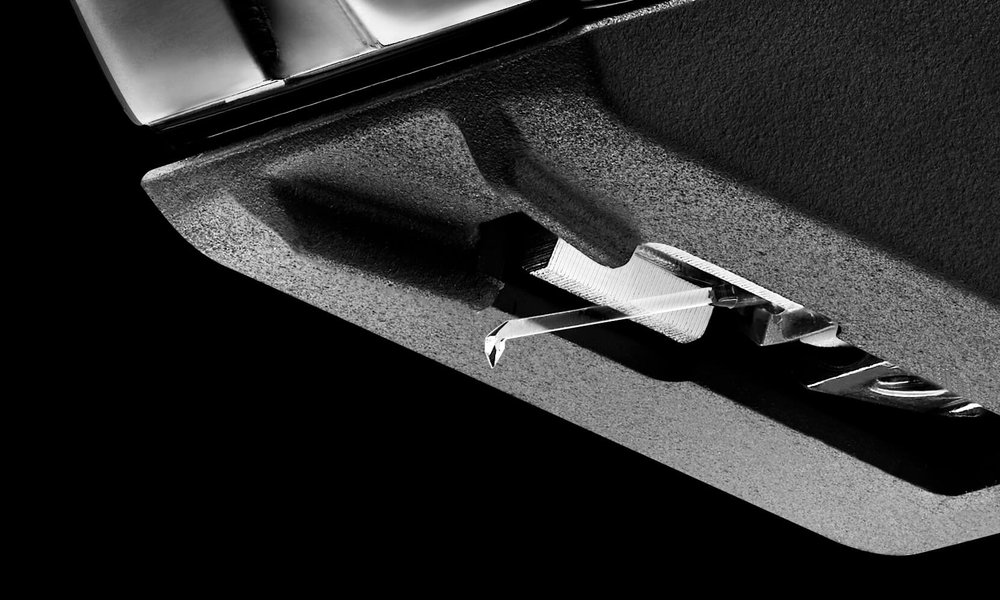
The cantilever is a square rod with 0.22 mm sides, with the Shibata profile polished directly into its tip – cantilever and tip are a single piece of diamond. Compared with the AT-MC2022, Audio-Technica bevelled the front edge of the cantilever more steeply, making it lighter. The body combines an aluminium base, a titanium housing that is mirror-polished by hand and ion-plated, and an elastomer undercover against resonances. Weight 9.5 g, recommended tracking force 1.8 g, load from 100 Ω. The cartridge is supplied on a wooden headshell in a cherry wood case. RRP €11,000 (as of 22.10.2026, no guarantee).
What international reviewers heard
Several reviews from the international specialist press are available for the Audio-Technica AT-MCD1. Here we summarise the overall picture in our own words; all sources are linked at the end of the page.
Sound character
- One review describes the AT-MCD1 as one of the most tonally neutral cartridges the reviewer has heard. It adds neither warmth nor treble sparkle, and impresses above all with speed and precision in the time domain.
Tonal balance
- The treble sounds clear and at the same time smooth, never sharp or hard unless the recording is. One review hears an even more natural presentation across the whole frequency range compared with the AT-MC2022.
Dynamics, bass & staging
- According to the review, transients arrive naturally sharp, clean and with great authority. On organ recordings made in large churches, the AT-MCD1 delivers deep pedal notes with weight and conveys the depth and height of the space convincingly.
Strengths
- One review names tracking as a particular strength: on the Ortofon test record the cartridge mastered every level except the highest without audible distortion. The Shibata stylus also drew noticeably more quiet from the groove on many older, noisy records.
Setup, room & partners
- Listening was done in a Wilson-Benesch Graviton tonearm, mostly into a transimpedance input; a voltage input set to 100 Ω also sounded very good according to the review. The reviewer recommends an alignment loupe because the stylus sits far under the body, and about 20 hours of running-in before the deep bass has properly developed.
Consensus & differences
- Both reviewers compare it with the AT-MC2022 and see the new model ahead, though not dramatically: One international review cites better high-frequency tracking and more detail without artificial effect, a further review a more natural presentation. They agree that the cartridge does not embellish anything.
Research Consensus
The sources are good for a flagship presented in June 2026: a detailed manufacturer page with data sheet, international presentations, a press interview with the responsible product manager, a detailed listening test from the specialist press and listening reports from the Japanese specialist press. Recurring patterns: the AT-MCD1 is seen as very neutral, fast and detailed without sounding hard. Compared with the AT-MC2022, the reports mainly describe finer treble, sharper outlines and more depth. There is also agreement that alignment requires care. The verdict of international reviews is assessed in detail in the section What the international specialist press hears.
For whom / Matching
Arm
At 9.5 g and with a dynamic compliance of 15 × 10⁻⁶ cm/dyne, the AT-MCD1 suits tonearms of medium effective mass. Fine azimuth adjustment and the ability to adjust the vertical tracking angle are important, because the Shibata profile is sensitive to both.
Phono
0.55 mV is a lot for an MC cartridge. An MC phono stage with around 60 dB of gain is enough, and a load of 100 Ω is the starting point. Thanks to the low coil impedance, the cartridge also suits transimpedance inputs.
Budget
At €11,000 RRP (as of 22.10.2026, no guarantee), the AT-MCD1 sits below the Ortofon MC Vertex and above the MC Verismo. For installation, plan for an alignment loupe and an accurate protractor, or book the setup with a specialist dealer.
Upgrade
Anyone coming from an AT-ART20 or AT-ART9XI keeps the brand's sonic character and gains the diamond cantilever. Within Audio-Technica, the AT-MCD1 is the top of the ladder.
What makes this AI analysis special
This section is an AI summary of published international listening reviews and the manufacturer data from Audio-Technica. Vinyl BotPro puts the reviewers’ findings into context and links them with the data sheet and comparison models; VinylCination does not run its own listening tests or measurements; all sources are linked at the end of the page. Prices and availability change (as of Oct. 2026, no guarantee); please check technical values against the current data sheet.
Vinyl BotPro Score Logic
The Vinyl BotPro Index is cross-tier 0–100. Master typically sits at ~85–97. The AT-MCD1 receives 96 (rank 3 Master): top marks for technology/build thanks to the one-piece diamond cantilever with Shibata tip, a very strong performance expectation from the international listening reviews, plus an easy output level. MC Verismo and MC Vertex (97 each) are just ahead because more listening reviews from the major English-language magazines are available for them. The AT-MCD1 is ahead of the MC Windfeld Ti (95) because it brings the diamond cantilever. The champion seals remain unchanged: sound Hana Umami Red, value for money Audio-Technica AT-ART9XI. Weights: technology/build ~25 · features ~20 · performance (expected) ~25 · value for money ~30. Rank ≠ lab rating – no listening test. Details: Details on weighting · Methodology.
Created by Vinyl BotPro (AI) · AI analysis · As of 22.10.2026 · Corrections: info@vinylcination.de · Prices without guarantee.
Manufacturer and concept
Audio-Technica was founded in Tokyo in 1962 and started out with phono cartridges. To this day the company develops and builds everything from affordable MM cartridges for beginners to hand-built MC designs for very expensive turntables. For its 60th anniversary in 2022 it released the AT-MC2022, limited to 60 units and built around a component that was unusual at the time: cantilever and stylus tip made from a single diamond. It sold out quickly, and according to the product manager responsible, so many enquiries followed that Audio-Technica developed a regular successor.
According to the manufacturer, around two years of development went into the AT-MCD1, which was unveiled at High End Vienna in June 2026. The goal was not a rerun but more space, more refinement and an even quicker response. Unlike the anniversary model, the AT-MCD1 is not a limited edition. Every unit is hand-built in Japan and carries an engraved serial number.
Technology explained
Cantilever and stylus from one diamond
In almost every cartridge the stylus tip is a small diamond glued or pressed into a cantilever made of aluminium, boron or sapphire. That joint adds a little extra mass and is a possible source of losses and resonances. The AT-MCD1 does without it: the 0.22 mm square cantilever and the tip are a single piece of lab-grown diamond. The material is grown using CVD, a process in which carbon is deposited from a gas layer by layer, which produces a very uniform material. Diamond is extremely stiff and transmits vibrations very quickly, but it is also heavy. Audio-Technica therefore bevelled the front edge of the cantilever more steeply than on the predecessor, saving a little mass at the most sensitive point.
The new Shibata profile
The AT-MCD1 is the first Audio-Technica cartridge with a newly developed Shibata profile. Its radii are 2.7 × 0.08 mil, roughly 69 × 2 micrometres. The small radius touches the groove wall along a long, narrow line, so the stylus can follow fine modulations, such as those in high frequencies and on inner grooves, more accurately. A side effect also described by Tracking Angle: the tip reaches parts of the groove that older styli never touched, so some worn records play more quietly. According to the manufacturer, the new profile was mainly meant to improve spaciousness compared with its previous Shibata.
Generator and body
The generator uses two separate PCOCC copper coils, one per channel, positioned right at the cantilever's pivot. Audio-Technica took the magnetic circuit from the AT-ART20. It produces enough flux for an output of 0.55 mV with a coil impedance of just 12 Ω. The body combines an aluminium base, a titanium housing and an elastomer undercover. According to the interview, a pure titanium shell sounded compressed and pure aluminium sounded metallic on cymbals; the mix is meant to avoid both. The titanium housing is mirror-polished by hand and then ion-plated, which gives it its deep black finish.
Sound according to international reviews
The most detailed listening review comes in the international trade press. The reviewer compared the AT-MCD1 with his own AT-MC2022 and describes a tonally very neutral cartridge with an exceptionally fast, clean response. Deep bass needs about 20 hours of running-in; after that, according to the review, organ recordings get full weight and a convincing sense of space. The Japanese listening reports in the international trade press describe finer treble, sharper outlines and more depth compared with the AT-MC2022. The details are summarised in the section on the international press.
Features and everyday use
The AT-MCD1 arrives mounted on a wooden headshell in a hinged case of solid cherry wood. It comes with a non-magnetic screwdriver, a brush and screws in four lengths. The threaded holes in the body make loose nuts unnecessary. Alignment is demanding: the tip sits far under the body and is hard to see from above. One review recommends an alignment loupe that works close to the protractor. Because the Shibata profile is sensitive to azimuth and vertical tracking angle, it pays to set both carefully. Tracking force is 1.7 to 1.9 g, with 1.8 g as the standard. The hidden position protects the tip but collects dust, which should be removed regularly.
Who it suits
The AT-MCD1 is aimed at listeners with a high-quality turntable and an adjustable tonearm who want a cartridge that is as neutral and fast as possible. Anyone with a large collection of older pressings benefits in particular from the Shibata profile. Listeners looking for a warm, full balance to offset a bright system will find more colour in other cartridges. Electrically it is straightforward, because the output is high enough for most MC phono stages.
Comparison with alternatives
The Ortofon MC Vertex also uses a diamond cantilever, combines it with a Vertex line-contact stylus and a 3D-printed titanium body, and costs around €4,000 more. Its output is lower at 0.3 mV. The Ortofon MC Verismo leads the Master level and offers a diamond cantilever at a much lower price. Within the brand, the AT-ART20 is the closest relative: same magnetic circuit, but a boron cantilever and Special Line Contact stylus for about a quarter of the price. The Ortofon MC Windfeld Ti, with its boron cantilever, is the more affordable alternative in rank 4.
More questions about the Audio-Technica AT-MCD1
How does the AT-MCD1 differ from the AT-MC2022?
The basic design is very similar. New are the Shibata profile instead of the previous line contact, a diamond cantilever that is lighter at the front edge, the black instead of gold finish and much thicker gold plating on the terminal pins. The AT-MCD1 is also not a limited edition.
Which phono stage do I need?
An MC phono stage with a load of 100 Ω or more. Thanks to the high output of 0.55 mV, moderate gain is enough. With its low coil impedance of 12 Ω, the cartridge also works with transimpedance inputs.
How long does it take to run in?
One review describes the deep bass as somewhat lean during the first hours. After about 20 hours of playing time, the cartridge had largely settled in according to the review.
Is alignment difficult?
It requires care. The stylus sits far under the body, and the Shibata profile is sensitive to azimuth and tracking angle. An alignment loupe and an accurate protractor are recommended; alternatively, a specialist dealer can do the job.
Conclusion
The Audio-Technica AT-MCD1 turns the sought-after anniversary cartridge into a regular flagship and refines it with a new Shibata profile and a lighter diamond cantilever. Manufacturer data and international listening reviews paint a picture of a very neutral, fast cartridge with excellent tracking that plays older records more quietly and embellishes nothing. In return it demands careful alignment and a suitable tonearm. In the Master level of our best-of list it sits in rank 3 with an index of 96.
Sources
- Audio-Technica — AT-MCD1 (product page, specifications)
- Audio-Technica — AT-MCD1 press release, High End Vienna 2026
- Tracking Angle — Audio-Technica's "Speed of Sound" AT-MCD1 (listening review)
- PHILE WEB — AT-MCD1 listening report (Japanese)
- AV Watch — launch report with listening comparison to the AT-MC2022 (Japanese)
- What Hi-Fi? — AT-MCD1 launch report
- What Hi-Fi? — interview on the AT-MCD1
- StereoNET — Audio-Technica Cues Up AT-MCD1 Flagship MC Cartridge
Read more: best cartridges 2026 · Stylus shapes explained · What is hi-fi?