
In-ear analysis · Premium · as listed
beyerdynamic DT 30 IE Analysis
The beyerdynamic DT 30 IE sits on the in-ear shortlist of 12 November 2026 in the Premium tier, now expanded to thirty-four models, in rank 4 with a Vinyl BotPro index of 67 and no tier badge. It shares index 67 with the Moondrop Aria 2 and the DUNU Titan S2. This analysis takes the list record as published and does not run a second calculation.
In brief
The beyerdynamic DT 30 IE is a wired dynamic universal-fit in-ear aimed at pro-audio use, with officially up to −39 dB of passive isolation, an 18 Ω impedance and 111 dB of sensitivity at 1 mW and 1 kHz. On the in-ear shortlist of 12 November 2026 it sits in the Premium tier, now expanded to thirty-four models, in rank 4 with a Vinyl BotPro index of 67 and no tier badge. It shares index 67 with the Moondrop Aria 2 (rank 3) and the DUNU Titan S2 (rank 7): the three raw scores sit close together, and the mapping does not stretch them apart artificially. The subscores and the linear mapping onto the 55–69 band are documented in the list package; this page repeats the list record and does not run a second calculation.
The listening report comes from Headfonics (Louis, 11 September 2026): a dated listening review of the exact model in an independent international online specialist outlet of the same class already used for other in-ears on this list. Under the single badge rule of 12 November 2026 — including addendum t647s3962 on YouTube listening tests by established, named reviewers — the DT 30 IE is eligible; its pillar here is the written review, not a video. The documented euro price is the official EU list price of €119.00 at europe.beyerdynamic.com (12 November 2026, JSON-LD InStock; no lasting stock guarantee). The US$149.99 figure in the review is not converted into euros.
Technical data (published)
| Construction | Wired universal-fit in-ear, dynamic driver, written for pro-audio use |
|---|---|
| Impedance | 18 Ω (beyerdynamic / Headfonics) |
| Sensitivity | 111 dB at 1 mW and 1 kHz (beyerdynamic / Headfonics) |
| Frequency response | 5 Hz–20 kHz (beyerdynamic, quoted in the review) |
| Isolation | Up to −39 dB passive (beyerdynamic / Headfonics) |
| Price as of | €119.00 at europe.beyerdynamic.com, 12 November 2026 (official EU list price, JSON-LD InStock, no lasting stock guarantee) |
Amplifier compatibility
At 18 Ω and 111 dB at 1 mW and 1 kHz the DT 30 IE sits in the easy-to-drive part of the Premium tier, comparable with the Sony IER-M500, the Aria 2 and the Sennheiser IE 200 (each with a drive score of 8.8). Headfonics awards a Synergy score of 8.4 and does not describe a shortfall on typical outputs. A dedicated headphone amplifier is not, on this report, a requirement for the picture described.
In the box is a cable with a 3.5 mm plug, by which the DT 30 IE hangs from typical phono chains with a headphone output. Headfonics records as a limitation that the supplied cable picks up noise — a practical caveat at the output, not evidence of a difficult load. Whether a given phono preamplifier puts quiet hum into the cable remains device-dependent; the review lists the cable noise expressly as a con, not as a level problem.
Scoring criteria in detail
The Vinyl BotPro index on this page is not a second calculation; it is the list record of 12 November 2026. The Premium tier holds thirty-four models; the mapping uses the 55–69 band linearly across the unrounded raw score. The unrounded raw score is placed linearly on the tier band, strongest model at the ceiling, weakest at the floor, with no required gap between places. Shared indices within a tier are allowed; rank remains unique (higher index first, then higher sound-evidence score, then lower documented euro price, then alphabetical name).
The sound-evidence score of 7.4 rests on Headfonics: Sound Quality 8.4, Award Score 8.5, a fun, punchy, U-shaped character with genuine musical energy, but a narrow stage and no claim to the finest detail work. It sits below the IER-M500 and the Alba (each 7.6), on the same figure as the Aria 2, and above the IE 200 (7.2). Build/comfort of 7.8 follows from Design 8.5 and Comfort & Isolation 8.8, reduced by the noise-prone cable. Drive of 8.8 follows from 18 Ω, 111 dB and the absence of a drive caveat. Value of 8.6 follows from €119.00, close to the IER-M500 (€118.00, P 8.8), below the Titan S2 (€66.25, P 9.2) and the Aria 2 (€93.50, P 9.0). The raw score of 8.05 maps to index 67, which it shares with the Aria 2 and the Titan S2; rank 4 follows from the Aria 2’s higher sound-evidence score at the same index. It carries no tier badge: Sound stays with the IER-M500, and value goes to the Titan S2.
The manufacturer and the concept
beyerdynamic comes from the professional headphone trade and presents the DT 30 IE as an affordable dynamic in-ear for pro-audio use, with high passive isolation for the stage and for travel. Headfonics frames the review expressly in that pro line: Louis looks at typical studio and live monitors and finds here an all-rounder for professionals on the road, which he also leaves open for urban listening with high isolation. He describes the housing as unusually thin at the driver, with a light, secure fit.
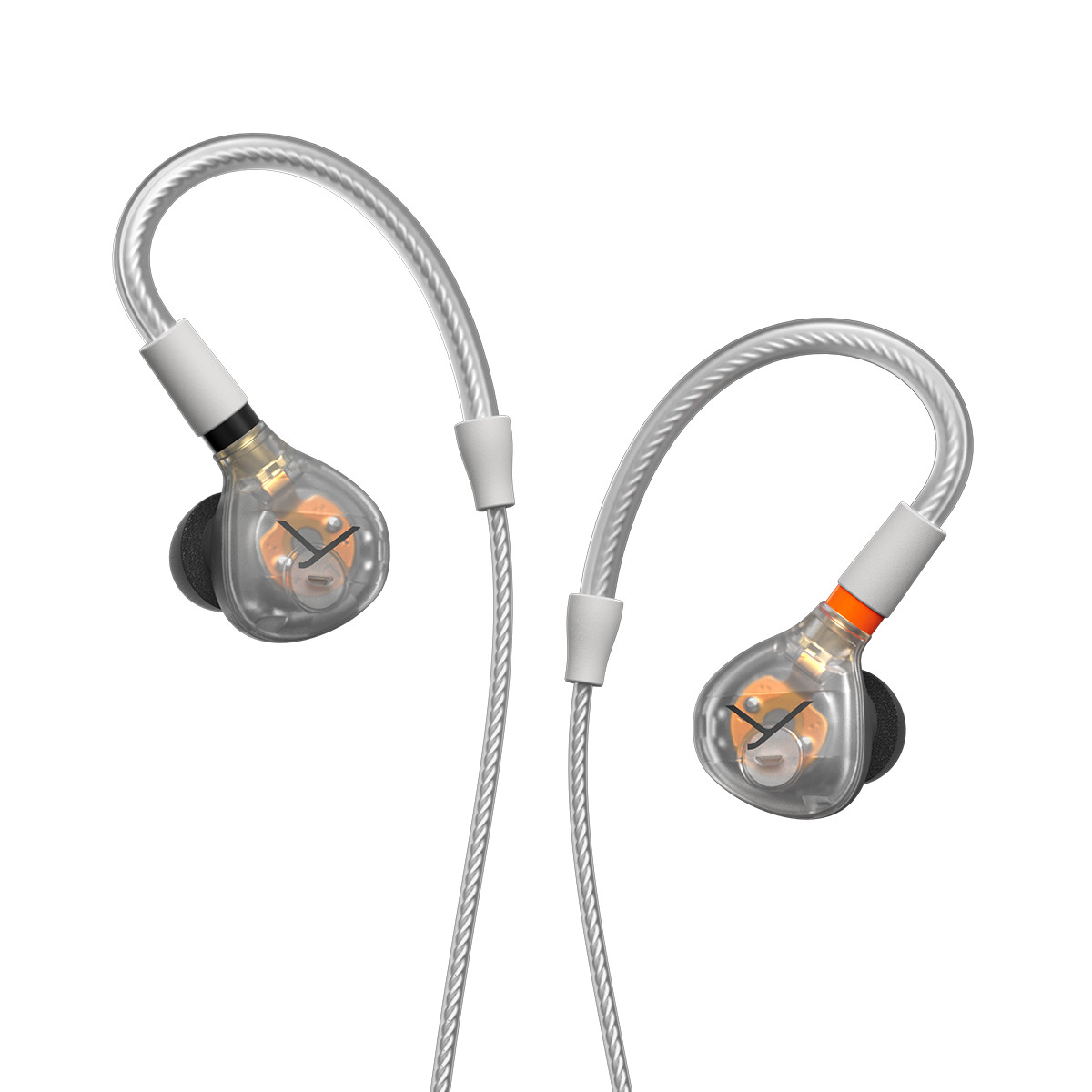
The visible concept is therefore closer to a practical monitor than to a dissecting listening tool. Headfonics highlights punchy enjoyment, isolation and comfort, and names as limits the narrow stage and the cable noise. Against the IER-M500 in the same price and Premium band (€118.00, Sound badge, K 7.6) the DT 30 IE stays a step behind in the evidence score: the review stresses musicality rather than fine detail work. The official packshot on this page comes from beyerdynamic’s EU product page (photo: manufacturer).
The technology, explained
A single dynamic driver works across the full band. beyerdynamic quotes 18 Ω, 111 dB at 1 mW and 1 kHz, and 5 Hz to 20 kHz; Headfonics takes those figures and reads from them a deep bass extension with adequate reach at the top. This analysis has no measurements of its own; the figures come from the manufacturer and the review, retrieved or read on 12 November 2026. The comparatively high sensitivity explains why the report describes no shortfall of drive.
The stated passive isolation of up to −39 dB is a central claim of the pro line. Headfonics confirms very good isolation and a light, secure fit. The thin driver and compact housing are meant to ease the fit in the ear; the fit still depends on the ear, and this analysis does not attempt a sitting of its own. The supplied cable is the documented weak point: it picks up noise, with drive otherwise unremarkable.
What the international specialist press hears
Tonal character
Louis describes a fun, punchy signature with a generally U-shaped impression: the bass is a little elevated and carries into the midrange, the midrange stays broadly balanced but sits in a small panorama. Around 1.5 kHz the upper midrange drops in intensity and gives that region an easy-going, relaxed sense. Everything in the mix is said to be clearly distinguishable, without the DT 30 IE being a tool for the finest detail work; Headfonics puts musical energy ahead of dissecting analysis — rather unusual, Louis notes, for a field monitor.
The first impression, according to the report, needs no running-in: character and body are there from the start. In his verdict Louis calls the DT 30 IE a good choice for anyone looking for an in-ear with sonic focus, great passive isolation and comfort, and a solid all-rounder for professionals on the road. The same passage opens the circle to urban listening with high isolation, without claiming a second, separate tuning.
Tonal balance
The bass reaches deep on the manufacturer’s figures (5 Hz on the data sheet, read in the review as extension) and carries the lift that shapes the U-shaped picture. The midrange remains convincing but spatially small; the dip in the upper midrange around 1.5 kHz takes sharpness and urgency out of that region. The treble, according to Headfonics, has good clarity and sharpness with an energetic character, but does not cross the line into brightness or harshness. The set is not meant for the finest detail work, but it is meant for musicality.
This balance carries the punchy, entertaining impression and also explains why the sound-evidence score stays below the IER-M500: the Sony review in the same tier stresses a more neutral, less coloured line, while Louis here puts enjoyment and body ahead of fine detail. The narrow stage is not a side note; it is an express con of the report.
Dynamics, staging and drive
Headfonics describes the stage as snug and compact: anyone looking for larger-than-life width and depth will not find it here. The picture is concentrated, not fragmented, but clearly limited. Placement of elements remains intelligible inside that tight space. On drive the report names no shortfall; Synergy 8.4 and the 18 Ω / 111 dB figures support the subscore of 8.8. Cable noise remains the practical caveat at the source, not a lack of level.
Strengths and limits
Strengths in the review: a punchy, entertaining signature, very good isolation, and a light, secure, comfortable fit. Limits: a narrow stage, a cable that picks up noise, and treble not aimed at the finest detail work. Headfonics awards an Award Score of 8.5 with Sound Quality 8.4, Design 8.5 and Comfort & Isolation 8.8. On the list of 12 November 2026 the DT 30 IE still carries no badge, because the IER-M500 holds the higher sound-evidence score and the Titan S2 holds the higher value subscore.
Research consensus
This analysis has the full Headfonics listening review; it does not have a second international magazine report of the same depth. The consensus is Louis’s finding, read against the data sheet and the euro price: a light, well-isolating pro in-ear with a punchy, U-shaped tuning, a narrow stage and a noise-prone cable, at an official EU price of €119.00. Eligibility follows from the single rule of 12 November 2026, including t647s3962. Forums, retailer copy or manufacturer pages do not serve as a listening pillar. The DT 30 IE does not carry a tier badge.
Accessories and use
Headfonics describes a small, well-laminated box with a removable lid in black, white and red. Inside, the earphones sit in the included case; the kit also includes ear tips and the cable already mentioned. The fit is described as light, secure and comfortable, the isolation as very good. The fit still depends on the ear; this analysis does not attempt a sitting of its own.
The cable is the documented weak point in use: it picks up noise. Anyone hanging the set from a phono chain with audible mains or cable noise should take that caveat seriously. The high stated isolation is untouched by that point and is confirmed in the review.
Price and availability
The documented euro price is €119.00 at europe.beyerdynamic.com on 12 November 2026, the official EU list price, marked InStock in the JSON-LD. That is not a lasting stock guarantee. The US$149.99 figure in the review is not converted. Prices and availability change, without guarantee.
In the Premium tier, €119.00 sits practically beside the IER-M500 (€118.00, P 8.8) and below the IE 200 (€149.90, P 8.0). The value subscore of 8.6 reflects that price at a slightly lower sound-evidence score. The tier’s value badge sits with the Titan S2 (€66.25, P 9.2), not with the DT 30 IE.
On an amplifier and on a vinyl system
As a wired in-ear with a 3.5 mm plug the DT 30 IE hangs from typical phono chains with a headphone output. Drive is, on the data sheet and the review, uncritical; what remains open is the cable noise Headfonics describes, which may be more obvious on some outputs than on others. A dedicated headphone amplifier is not a requirement for level here, but it can shorten the chain on restless outputs or allow a different cable to be used — the supplied one is the documented weak point.
The review mentions use on the road and in an urban setting, not a particular phono stage. Anyone listening to records will find a punchy, bodily, rather narrow tuning that can carry cuts and pressings with energy without resolving them in a dissecting way. The high isolation suits concentrated listening beside the system, but it is not a statement about any particular chain.
Who is the beyerdynamic DT 30 IE for?
The DT 30 IE suits listeners who want a light, well-isolating wired in-ear around €119.00, who like a punchy, U-shaped tuning and who do not expect a huge stage. Anyone wanting the more neutral, higher-scoring sound evidence in the tier stays with the IER-M500 (rank 1, index 69, Sound badge). Anyone wanting the value argument stays with the Titan S2 (rank 7, index 67, value badge) or the Aria 2 (rank 3, index 67). In this list record the DT 30 IE sits in rank 4 at index 67, with no badge — in an honest raw-score group with the Aria 2 and the Titan S2, not as a distant mid-table place.
For the professional use that beyerdynamic and Headfonics put in the foreground, isolation, fit and the practical tuning remain the central arguments. Anyone who will wear the set for a long time on stage or on a sensitive phono chain should know about the narrow stage and the cable noise.
How it compares
Inside the Premium tier the IER-M500, at an almost identical euro price, leads with a higher sound-evidence score and the Sound badge (rank 1, index 69). The Alba (rank 2, index 68) shares the 7.6 sound-evidence score with the Sony and sits just below it on raw score. The Aria 2, the DT 30 IE and the Titan S2 share index 67: the Aria 2 has the same sound-evidence score of 7.4 as the DT 30 IE at a lower price and therefore takes rank 3; the Titan S2 has the lower sound-evidence score of 7.2, the highest value subscore of 9.2 and the value badge. The IE 200 (rank 18, index 62) is dearer and sits clearly lower on raw score.
Headfonics also sets the DT 30 IE against the Flare Audio Studio Master; that model is not on the in-ear list. For the list work, the comparison that counts is with the documented Premium neighbours: punchier, narrower and less expensive than a typical Sennheiser place in the tier, without reaching the IER-M500’s neutrality score.
Place on the expanded list
With the DT 30 IE, the Titan S2 and the LETSHUOER S12 the Premium tier expands from seven models to ten. The Vinyl BotPro index of the DT 30 IE is 67, rank 4, with no badge. The raw score of 8.05 sits in a tight group with the Aria 2 (8.09) and the Titan S2 (8.09); the three models share index 67 instead of being stretched onto separate points. All ten models in the tier are eligible under the single rule. The value badge goes to the Titan S2 (P 9.2), and the Sound badge stays with the IER-M500 (K 7.6). The unrounded raw score is mapped linearly onto the tier band; shared indices are allowed, and rank remains unique.
FAQ
What exactly is the beyerdynamic DT 30 IE?
A wired dynamic universal-fit in-ear for pro-audio use, with 18 Ω, 111 dB at 1 mW and 1 kHz, a 5 Hz–20 kHz frequency response and officially up to −39 dB of passive isolation.
Does the DT 30 IE need a headphone amplifier?
Not as a requirement, on the data sheet and on Headfonics. 18 Ω and 111 dB are treated as easy to drive; the report names no shortfall. The supplied cable can pick up noise — that is a different caveat from a lack of level.
Is it suitable for listening to records?
Yes. As a wired in-ear with a 3.5 mm plug it hangs from typical phono chains with a headphone output. The review describes a punchy, bodily, rather narrow tuning. The cable is not a substitute for a phono stage.
What does the DT 30 IE cost?
In the official EU shop europe.beyerdynamic.com the list price on 12 November 2026 was €119.00 (JSON-LD InStock, with no lasting stock guarantee). The US$149.99 figure in the review is not converted. Prices change, without guarantee.
Is the DT 30 IE eligible for a tier badge?
Yes, it is eligible: Headfonics (Louis, 11 September 2026) is a dated listening review of the exact model. It does not hold a badge, because the IER-M500 has the higher sound-evidence score of 7.6 and the Titan S2 has the higher value subscore of 9.2.
Why does it share index 67 with two other models?
Since 12 November 2026 the mapping follows the unrounded raw score linearly, with no required gap between places. The Aria 2, the DT 30 IE and the Titan S2 sit close together on raw score and may share an index. Rank remains unique: Aria 2, then DT 30 IE, then Titan S2.
Does this page rest on a listening test by the VinylCination team?
No. There was no in-house listening test and no measurement of our own. The assessment draws on beyerdynamic and the Headfonics listening review (Louis, 11 September 2026). The list figures (Premium, rank 4, index 67, no badge) come from the list package of 12 November 2026.
Conclusion
The beyerdynamic DT 30 IE is a clearly documented dynamic pro in-ear for the expanded Premium tier: light, strongly isolating, punchy and U-shaped in tuning, with an official EU price of €119.00 and a listening review that records musicality, isolation and comfort as clearly as the narrow stage and the noise-prone cable. The list record of 12 November 2026 is Premium rank 4, index 67, with no tier badge — in an honest raw-score group with the Aria 2 and the Titan S2, not as a mark of disparagement. Anyone planning €119.00 and wanting a bodily, narrow tuning with high isolation will find a solid body of sources here. Anyone wanting neutrality or the tier’s value argument should read the same report against the IER-M500 and the Titan S2.
About this AI analysis
This section is an AI summary of published international listening reviews and the manufacturer’s published figures. Vinyl BotPro places those findings against the data sheet, a documented euro price and the list record; VinylCination does not conduct in-house listening tests or measurements, and every source is linked at the end of the page. Prices and availability change (as of 12 November 2026, without guarantee). Subscores and the index come from the list package of the same day. The Vinyl BotPro index maps the unrounded raw score linearly onto the tier band; equal or closely spaced raw scores may share an index.