
Streaming Amplifier · AI Analysis · Expert, Rank 5
Cambridge Audio EVO 150 SE: Analysis
AI analysis (Research): streaming amplifier with 2 × 150 W, MM phono input, HDMI ARC, balanced XLR input, equaliser, display and StreamMagic platform. Based on manufacturer data and press reviews, no listening test.
Summary
Value-for-money Vinyl BotPro Champion Best value-for-money estimate of the tier on the data basis (no listening test).
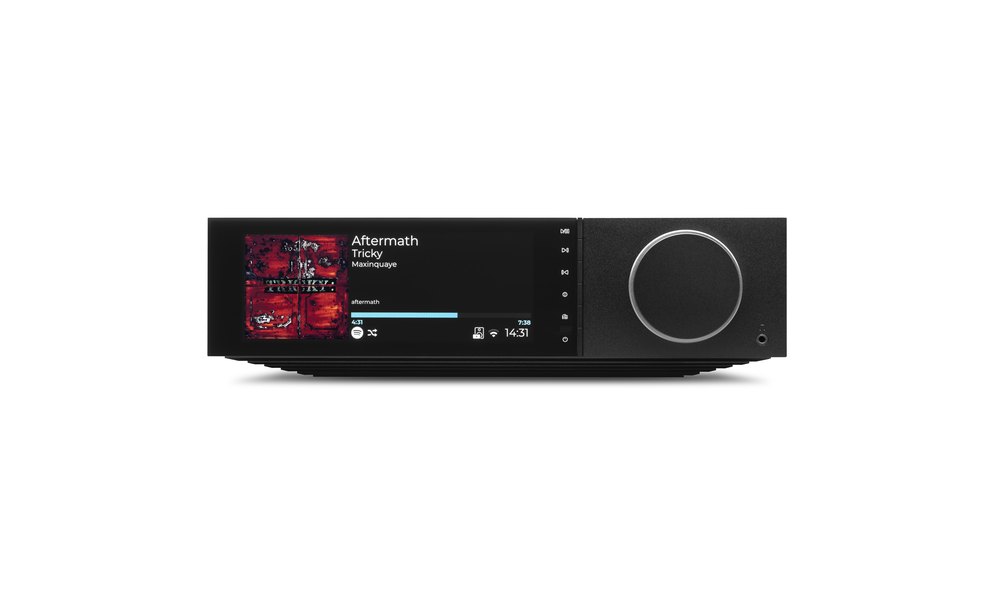
The Cambridge Audio EVO 150 SE is the revised version of the EVO 150 with 150 W per channel. It offers an MM phono input, HDMI ARC, XLR, RCA and digital inputs, an equaliser and streaming via StreamMagic with Chromecast, AirPlay 2, Connect services and Roon Ready. What Hi-Fi? (Kashfia Kabir, 18 February 2026) awards four out of five stars, praises features, ease of use and a clear, spacious presentation, but finds dynamics and rhythmic grip behind the NAD C 3050 and describes the phono stage as lightweight and muddy; an external phono stage is advisable if vinyl is the main source. Price guide around €2,300–2,500 (UK £1,999, Stand Oct. 2026, without guarantee).
Assumptions
- Price per device according to the manufacturer or DE-Market price; UK/US-prices rounded, Stand Oct. 2026, no guarantee
- Operation with passive speakers; vinyl via the phono input of the device or an external phono stage at the line input
- Streaming via WLAN or Ethernet; available services can change via firmware
- No in-house measurements or listening tests
Specifications (manufacturer)
| Type | Streaming amplifiers · Class D |
|---|---|
| Power | 2 × 150 W into 8 Ω · 2 × 250 W to 4 Ω (manufacturer) |
| Phono | MM (signal being digitized) |
| Streaming | StreamMagic · AirPlay 2 · Chromecast · Spotify, Tidal and Qobuz Connect · Roon Ready · Bluetooth aptX HD |
| Inputs | HDMI ARC · Phono · XLR · RCA · Optical · Coaxial · USB |
| Price guide | approx. €2,300–2,500 · UK 1,999 £ · as of Oct. 2026 · without guarantee |
Manufacturer specifications (Cambridge Audio)
| Power output | 150 W into 8 Ω |
|---|---|
| Power into 4 Ω (Cambridge FAQ/manual) | approx. 250 W |
| Amplification | Class D, Hypex NCOREx (tuned by Cambridge) |
| DAC | ESS Sabre ES9018K2M |
| Frequency response | 20 Hz–20 kHz +0/−3 dB |
| Analogue inputs | 1 × RCA, 1 × balanced XLR, 1 × MM phono |
| Digital inputs | 1 × optical (TOSLINK), 1 × coaxial (S/PDIF), 1 × TV ARC (HDMI), USB Audio, Bluetooth |
| Outputs | Speakers A+B, 3.5 mm headphone, preamp output, subwoofer output |
| Streaming | AirPlay 2, Chromecast built-in, Spotify Connect, TIDAL, Qobuz, Deezer, Roon Ready, UPnP, internet radio |
| Bluetooth | 4.2 A2DP/AVRCP, SBC, aptX, aptX HD |
| Network | Dual-band Wi-Fi 2.4/5 GHz · Ethernet 10/100 Base-T |
| Audio formats | ALAC, WAV, FLAC, AIFF, DSD (×256), WMA, MP3, AAC, HE-AAC, OGG Vorbis |
| Power consumption | max. 700 W · standby < 0.5 W |
| Dimensions (W × H × D) | 317 × 89 × 352 mm |
| Weight | 5.3 kg |
Source: Cambridge Audio – official specifications · As of 16 October 2026 · subject to change by the manufacturer
Rating criteria in detail
The four criteria feed into the Vinyl BotPro Index with weights of 25/20/25/30. The index is scaled across all tiers (see Methodology); that is why we do not show individual sub-scores.
Strengths
- 150 W per channel
- MM phono, HDMI ARC and XLR input
- Very wide service selection and Roon Ready
- What Hi-Fi? finds the open, refined character consistent across the inputs it tried
Weaknesses
- Phono signal is digitized, sound is more influenced by the device
- Setting up more cumbersome than at WiiM
- Equalizer less intuitive than competitors
- No Space measurement by microphone
System matching
Works well with
- Living rooms with TV, Turntable and floorstanding speakers
- Listeners that bundle many sources in one device
- Design-conscious facilities
Less suited
- Vinyl as main source with high-quality MC system
- Spaces that require a microphone measurement
- Purists who prefer analog signal way
Specs & Features
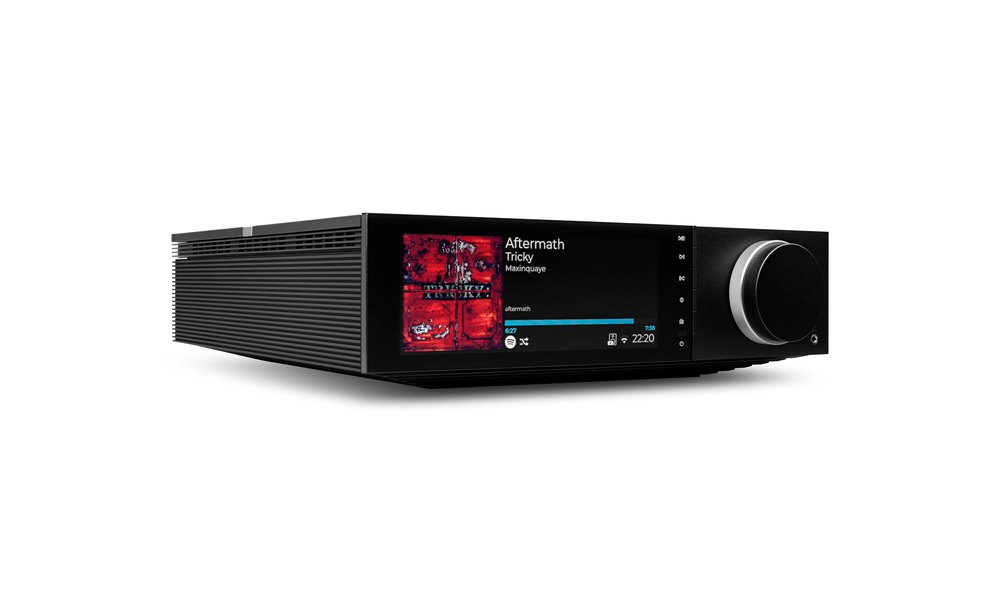
The EVO 150 SE uses a Class D power amplifier with 150 W per channel at 8 Ohm in a compact enclosure with display and rotary controller.
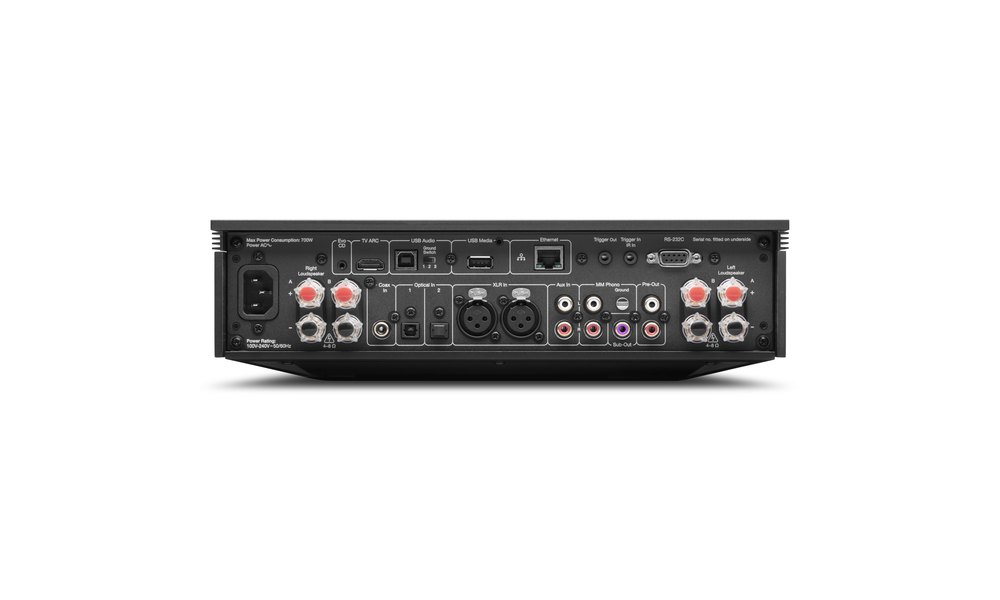
All inputs, including phono, are digitized, which means that the equalizer also uses vinyl. Connections: HDMI ARC, MM phono, XLR, RCA, optical, coaxial and USB; streamed via StreamMagic with Chromecast, AirPlay 2, Spotify, Tidal and Qobuz Connect as well as Roon Ready.
Research Consensus
What Hi-Fi? (Kashfia Kabir, 18 February 2026) awards four out of five stars: exhaustive features and ease of use, a clear, spacious presentation, but less dynamic and rhythmic grip than the NAD C 3050 in a direct comparison, and a phono stage described as lightweight and muddy.
Recurring pattern: a very versatile central device with a lot of power. VinylCination summarizes this as AI summary of the specialist press, without its own listening test.
Specialist press in detail
Summaries in own words (AI), per magazine with source; no quotes, no listening test of our own.
What Hi-Fi? (18 February 2026)
What Hi-Fi? highlights the exhaustive feature set, careful build and ease of use, awards four out of five stars and names as reservations dynamics and rhythmic ability against the NAD C 3050, plus the need for well-matched speakers; the magazine describes the phono stage as lightweight and muddy. For the report
Placement, use & Room
The EVO 150 SE is more compact than a classic Integrated Amplifier and is designed for living rooms where the device is visible. Display and rotary control make it operable even without an app.
With 150 W per channel, it is suitable for medium to large rooms; HDMI eARC integrates the TV, the XLR input an external phono stage or a high-quality player.
Matching Speaker, Turntable & Cartridge
- Speaker: Floorstanding speaker from the Top list Floorstanding speaker and large bookshelf speakers.
- Turntable and Cartridge: The MM input is intended for mid-class MM systems. For MC systems or if vinyl is the main source, What Hi-Fi? effectively points to an external phono stage, describing the built-in stage as lightweight and muddy.
Streaming platform & app practice
StreamMagic integrates Qobuz, Tidal, Spotify, Deezer and Internet radio, along with Chromecast, AirPlay 2, the Connect features and Roon Ready.
One international review sees the initial setup as more cumbersome than WiiM and the equalizer as less intuitive than WiiM or Eversolo; the equalizer also acts on the phono signal because all inputs are digitized.
Analysis: Cambridge Audio EVO 150 SE in detail
Scope and sources
On the existing VinylCination page the Cambridge Audio EVO 150 SE carries the title Value Vinyl BotPro Champion in the Expert tier, with Vinyl BotPro Index 79 and rank 5 in that tier (analysis 09/2026). That ranking remains the live page’s; this long analysis adds a named, checked international listening report and the official manufacturer data. VinylCination has neither heard nor measured the EVO 150 SE itself.
The pillar is the What Hi-Fi? listening report (Kashfia Kabir, published 18 February 2026, datePublished 2026-02-18T15:03:25+00:00). The page awards four out of five stars. Kabir heard the exact EVO 150 SE in the magazine’s rooms, among other things with Epos ES-7N speakers, via streaming and USB, a Cyrus CDi CD player and a Rega Planar 3 RS Edition on the phono input, and sets it against the NAD C 3050 with the MDC2 BluOS-D module. That is an independent international listening report from a specialist magazine, not a manufacturer page, a forum or a video channel.
The existing live page leans in its short summary on an AVForums text and the phrase “Highly Recommended”. AVForums is a forum platform with editorial pieces; under the rule that pillars come from independent specialist publications (print or online magazines), not from forums, we do not treat AVForums as a t646u pillar. The listening observations in this long analysis follow What Hi-Fi? of 18 February 2026. We leave the AVForums link in the live page’s history but do not use it as a carrying source.
The Cambridge Audio manufacturer page (Evo 150 SE product page, retrieved 12 November 2026) states, among other things, 150 W into 8 ohms, a Cambridge-tuned Hypex Class D output stage (NCOREx/NCore in the company wording), an ESS Sabre ES9018K2M DAC, an MM phono input, HDMI ARC, XLR and RCA, fourth-generation StreamMagic, 317 × 89 × 352 mm and 5.3 kg. The live table is left unchanged. The live page gives about €2,300 to €2,500 and £1,999 as a guide (as of October 2026, without guarantee); the US manufacturer page showed $3,299.
Place in the range
The EVO 150 SE is the revised, regularly listed version of the 2021 EVO 150, not a time-limited special finish. What Hi-Fi? notes that power, DAC chip and the connection set remain the same as on the predecessor; what changed are the output stage (Hypex NCoreX, tuned by Cambridge), components and the power supply, plus fourth-generation StreamMagic and slightly revised controls. The cheaper EVO 75 is, according to the same text, discontinued.
The existing page lists it in the Expert tier of streaming amplifiers as value champion with Index 79 and rank 5. The comparison table includes, among others, the NAD M10 V3, the Yamaha R-N2000A and the smaller EVO 75 in the Premium tier. This long analysis takes that order and does not recalculate the index.
What Hi-Fi? takes as its direct sonic yardstick in this price range the NAD C 3050 with the BluOS module, then an Award and Product of the Year winner and, in the UK, less expensive than the EVO 150 SE. That comparison belongs to that report and is not written into the VinylCination table on the live page.
Design and manufacturer data
According to the maker and the unchanged live table, the EVO 150 SE delivers 150 W into 8 ohms and, on the Cambridge FAQ or manual cited on the live page, about 250 W into 4 ohms. The output stage is Class D on a Hypex base, tuned by Cambridge. The DAC is the ES9018K2M. Analogue inputs are RCA, balanced XLR and MM phono; digital inputs are optical, coaxial, HDMI ARC, USB and Bluetooth aptX HD. Outputs include two speaker pairs, a 3.5 mm headphone jack, a pre-out and a sub out. StreamMagic brings in AirPlay 2, Chromecast, Connect services, Roon Ready and internet radio. The cabinet measures 317 × 89 × 352 mm and weighs 5.3 kg; two magnetic side panels (wood and ribbed black) are included.
These figures are ratings, not measurements of our own. What Hi-Fi? confirms the 150 W into 8 ohms rating, the same DAC and the same connection set as the older EVO 150, and highlights the new NCoreX modules and the current StreamMagic generation. All inputs, including phono, are digitised, so the equaliser also acts on vinyl; that is on the live page and follows the architecture, not a measurement of our own.
What Hi-Fi? describes the unit as carefully built, about the footprint of an LP sleeve, with a large, easily read colour display and a slightly revised knurled control dial. In the report the volume knob feels less precise than the selector, and the small side buttons a little cheaper than the rest of the case, but they remain handy. Remote, app and unit worked together without hitches in the listening sessions.
What the specialist press heard and measured
On the Epos ES-7N Kabir first hears a large, wide soundstage: on M83’s “Midnight City” a spacious, clear, neon-lit picture; on Aphex Twin’s “Meltphace 6” cleanly defined attacks and a strong, physical low-frequency pulse. The EVO 150 SE prefers higher rather than very quiet levels and stays clean as the volume rises. At the same time there is a lack of grip and forward momentum: Fat Larry’s Band’s “Act Like You Know” sounds big on the surface but does not offer the gritty texture, dynamic subtlety and agile bass line the magazine wants. On Joni Mitchell’s “A Case of You” the midrange seems a touch reserved, voices less focused and with less emotional nuance.
Switching to the NAD C 3050 brings, in the same report, rhythmic cohesion, dynamic subtlety, momentum and emotional pull back into the same music. The NAD sounds smaller-scaled, less refined and less muscular, but it hangs the music together better. Back on the Cambridge the slightly more detached, less dynamic impression remains, with more power, space, clarity and polish added. The open, refined character is consistent across every input tried; lossy Bluetooth and AirPlay sound less refined, higher-quality files from a server or USB more detailed. At the headphone output (Grado SR325x) the same clear, tonal balance remains. The DAC with the Cyrus CDi is described as good, the phono stage with the Rega Planar 3 RS Edition as lightweight and muddy.
The verdict is: beautifully packaged, richly equipped and lovely to use, but it needs the right speakers to deliver a satisfying, engaging sound. Strengths: a clear, spacious, refined presentation, an exhaustive feature set, careful, appealing build, and ease of use. Reservations: dynamics and rhythmic ability, in which rivals do better, and the need for careful speaker matching. The score is four out of five stars. The live page had already recorded the features and the consistency across inputs, but had not assigned the mixed dynamic balance and the weakness of the phono stage with this sharpness to the What Hi-Fi? sessions. We do that here.
A more awkward initial setup than on a WiiM and a less intuitive equaliser than on a WiiM or Eversolo, mentioned on the live page, do not come from the What Hi-Fi? text; Kabir, on the contrary, calls StreamMagic organised and pleasant and the everyday use trouble-free. We do not treat that unverified contrast as a magazine finding.
What Hi-Fi? also checked file compatibility up to 32-bit/384 kHz PCM and DSD256 and found playback stable over Wi-Fi and Ethernet. Unused inputs can be hidden in the app; presets and a large library on a Naim Core server were intuitive in the sessions. That remains an observation about use by that magazine, not an assurance for every future software version.
Setup and system
The EVO 150 SE is meant as a visible living-room unit, more compact than many classic integrated amplifiers, usable without the app via the display and the dials. At 150 W into 8 ohms the live page aims it at medium to large rooms; HDMI ARC ties in a television, the XLR input an external phono stage or a high-quality source. Two speaker pairs allow a second zone.
The MM input is intended for mid-class MM cartridges. What Hi-Fi? finds the built-in phono stage sonically weak; anyone who uses vinyl as the main source or an MC cartridge is better with an external phono stage on the line or XLR input — that agrees with the live page’s caution, but here it follows the named listening sessions, not a forum report. Because all inputs are digitised, the equaliser also acts on the turntable; that is architecture, not a quality judgement.
Speaker matching is, according to What Hi-Fi?, decisive: the right speakers reward with a fluid, spacious, clear picture, a mismatch makes the lack of dynamics and rhythmic flow obvious. The live page points to floorstanders and large standmounts on the lists; we do not enlarge on which other pairs Kabir heard besides the Epos ES-7N. There is no microphone room correction, only a simple room slider and EQ in the app.
Fourth-generation StreamMagic brings in the usual services, Connect functions, Chromecast, AirPlay 2, UPnP and Roon Ready. In the What Hi-Fi? sessions the system was stable over Wi-Fi and Ethernet, the app was clearly organised, and unused inputs can be hidden. That remains an observation about use by that magazine in February 2026, not a lasting promise for every firmware.
Price and availability
The existing page gives about €2,300 to €2,500 and £1,999, as of October 2026, without guarantee of day-to-day retail prices. In February 2026 What Hi-Fi? quoted £1,999, $3,299 and AU$5,795 and noted that the SE is cheaper in the UK and more expensive in the US and Australia than the original EVO 150. We do not convert those local prices into the live page’s euro range. This long analysis does not recalculate Index 79 and does not make a buying appeal.
In the Expert tier the EVO 150 SE remains value champion and rank 5. What Hi-Fi? does not see it as an all-rounder in this class this time, but as a well-made, easy-to-use unit that, in dynamics and rhythm, can leave a rival — in the report, the NAD C 3050 — ahead. That is the magazine’s listening balance, not a re-scoring of the Vinyl BotPro Index.
What we do not use
VinylCination has not heard the EVO 150 SE itself and has not measured it. Manufacturer claims of a “warm, dynamic and controlled” voicing remain marketing insofar as they go beyond the data sheet; What Hi-Fi? describes an open, refined, but not uniformly dynamically gripping picture. Forums, including AVForums, dealer copy and video channels do not replace the pillar. Listening reports of the older EVO 150 or the discontinued EVO 75 concern other models.
German specialist press alone would not suffice under t646u; What Hi-Fi? supplies an international magazine listening text of the exact model. We do not treat an award text as a listening pillar.
Conclusion of the analysis
The Cambridge Audio EVO 150 SE is a streaming amplifier with 150 W into 8 ohms, Hypex Class D, an ESS Sabre DAC, MM phono, HDMI ARC, XLR and StreamMagic, in a 317 × 89 × 352 mm cabinet at 5.3 kg. What Hi-Fi? (Kashfia Kabir, 18 February 2026) awards four out of five stars: a clear, wide, refined picture, a very broad feature set and pleasant everyday use, but more reserved dynamics and less rhythmic grip than the NAD C 3050 in a direct comparison, plus a phono stage described as lightweight and muddy, and the need for well-matched speakers.
This long analysis supports the live page’s existing champion ranking with that named international listening report, without its own measurement and without a buying appeal, and replaces the short summary’s former forum attribution with the specialist magazine. Limits remain the single editorial chain, the comparison with one particular NAD model, and the decision not to treat forums as a pillar.
Sources
- What Hi-Fi?, Kashfia Kabir, Cambridge Audio Evo 150 SE review, published 18 February 2026: https://www.whathifi.com/hi-fi/music-streamers/cambridge-audio-evo-150-se
- Cambridge Audio, Evo 150 SE manufacturer page, retrieved 12 November 2026: https://www.cambridgeaudio.com/usa/en/products/hi-fi/evo/evo-150-se
- VinylCination, existing Cambridge Audio EVO 150 SE product page (guide about €2,300–€2,500, UK £1,999, as of October 2026; champion ranking Expert Value, Index 79, rank 5).
Created by AI (Vinyl BotPro) from the sources named; no in-house listening tests or measurements. A detailed human fact-check is still outstanding.
In comparison: direct competitors from the list
| Model | Key data | Difference to Cambridge Audio EVO 150 SE |
|---|---|---|
| NAD M10 V3 | Expert · Index 80 · approx. €2,500–3,000 · phono MM · HDMI eARC | Dirac Live with microphone and two sub-outputs, less power; slightly more expensive. |
| Yamaha R-N2000A | Expert · Index 83 · approx. €2,800–3,300 · phono MM · HDMI ARC | Class AB with toroidal transformer, analogue signal path; much more expensive. |
| Cambridge Audio EVO 75 | Premium · Index 58 · approx. €1,500 · Phono – · HDMI ARC | Smaller sister without phono input with 75 W; cheaper. |
Budget & Upgrade Path
With around 2,300–2,500 €, the EVO 150 SE is the value for money champion of the expert stage. With toroidal transformer, Class AB and YPAO: Yamaha R-N2000A.
Typical buyer questions
Does the EVO 150 SE have a phono input?
Yeah, for MM-Cartridge.
Is the phono signal being digitized?
Yes, all inputs are digitized; thus, the equalizer also works on vinyl.
Does the EVO 150 SE have HDMI?
Yes, HDMI ARC for the TV.
What makes this AI analysis special
This section is an AI summary from Manufacturer data and reports from international specialist media. Vinyl BotPro had no physical access, no measurement of our own chain and no listening test. The basis are the manufacturer specifications of Cambridge Audio and a review from the international specialist press. The expected performance is derived from construction, datasheet and the judgements of the Specialist press. Prices and availability change (as of Oct. 2026, no guarantee); please check technical values against the current data sheet.
Vinyl BotPro Score Logic
The Vinyl BotPro Index runs from 0–100 across all tiers and weights build/technology, features, expected performance and value for money at 25/20/25/30. Expert typically sits at ~70–84. Cambridge Audio EVO 150 SE receives 79 (Rank 5 Expert). Best value for money share of the expert level with very wide features. In the stage, the model bears the title Value for money Vinyl BotPro Champion. Rank is not Laboratory Evaluation — no Listening test. Details on weighting · Methodology.
Sources
Created by Vinyl BotPro (AI) · AI analysis · As of 11.10.2026 · Corrections: info@vinylcination.de · Prices without guarantee.