
In-ear analysis · Master · as listed
Campfire Audio Andromeda 10 Analysis
The Campfire Audio Andromeda 10 sits on the in-ear shortlist of 12 November 2026 in the Master tier, now expanded to twenty-one models, in rank 14 with a Vinyl BotPro index of 91 and no tier badge. The model listed is the regular CNC-aluminium version. This analysis takes the list record as published and does not run a second calculation.
In short
The Campfire Audio Andromeda 10 is a wired ten-driver in-ear from Portland with ten balanced armatures, a 2-pin connector and the Time Link modular cable (3.5 mm, 4.4 mm and a USB-C DAC). On the in-ear shortlist of 12 November 2026 the regular CNC-aluminium Andromeda Green model sits in the Master tier, now expanded to twenty-one models, in rank 14 with a Vinyl BotPro index of 91 and without a tier badge. The subscores and the mapping onto the 85–97 band are documented in the list package; this page repeats the list record and does not run a second calculation.
The listening report is Headfonics (Nihal, 11 February 2026) under the title Andromeda 10; the unit heard was the Launch Edition (stainless steel, Damascus faceplate). Campfire presents the regular green CNC-aluminium model as the same 10-BA design with TAEC and NEMC. The documented euro price is for that regular model: €1,949.00 at the-soundkitchen.com (12 November 2026, “Out of stock, but can be ordered”). The official dollar price of the Launch Edition (US$2,499) is not used as a list price, and dollar amounts are not converted into euros. Under the single badge rule of 12 November 2026 — including t647s3962 — the model is eligible; the housing variant is documented openly. The USB-C DAC is an accessory; the in-ear remains a wired model.
Technical data (public)
| Type | Wired universal-fit in-ear, ten balanced armatures |
|---|---|
| Drivers | 10 BA (4 low, 4 mid, 2 high), TAEC, NEMC (Campfire Audio) |
| Impedance | 8.5 Ω at 1 kHz (Campfire, product page 12 November 2026) |
| Sensitivity | 94 dB SPL at 1 kHz (12.10 mVrms) (Campfire) |
| Frequency response | 5 Hz–20 kHz (Campfire) |
| THD | less than 1 % (Campfire) |
| Connection | 2-pin, Time Link modular cable in 3.5 mm, 4.4 mm and USB-C DAC |
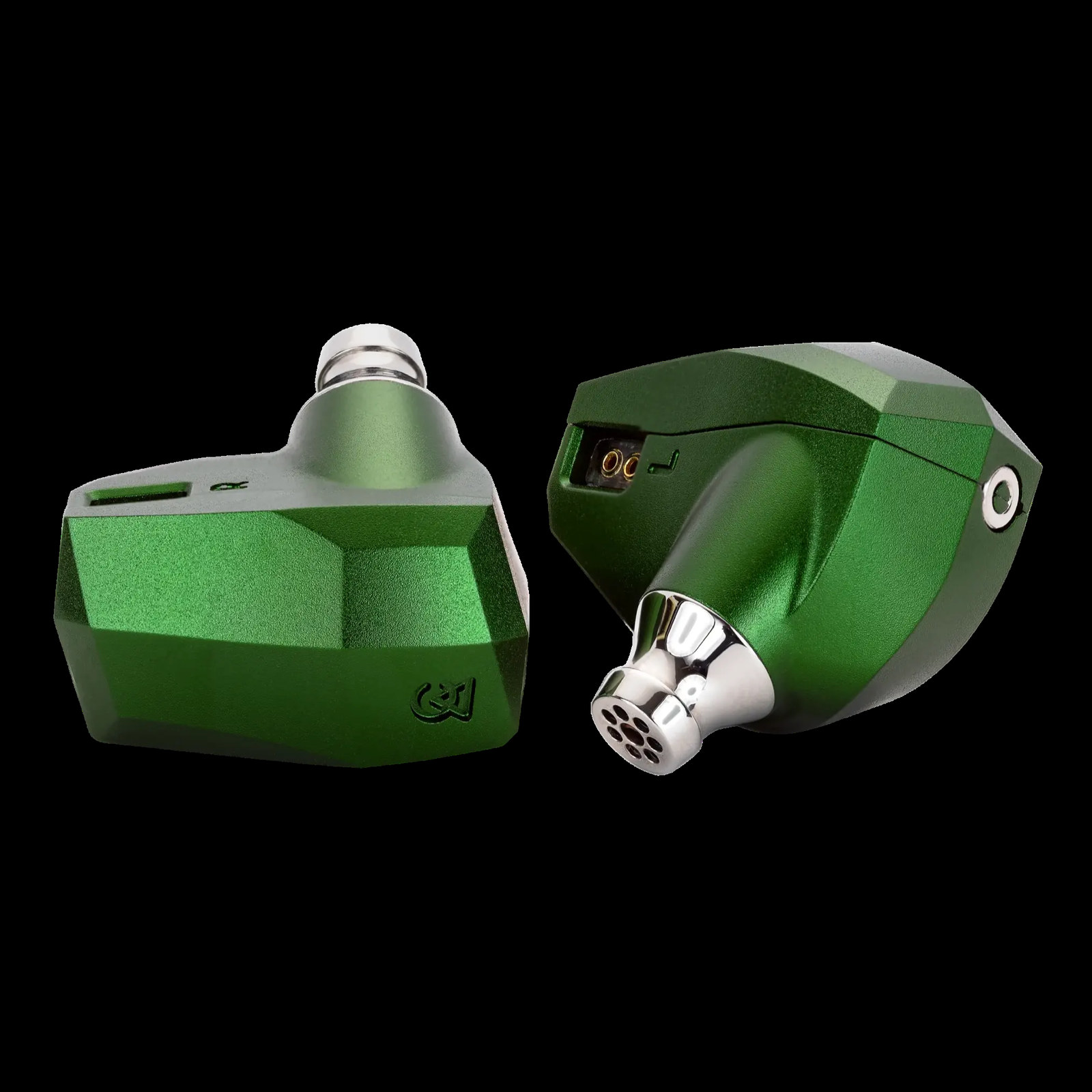
| Housing | Regular model: CNC aluminium in Andromeda Green (the listed EU model). Launch Edition: stainless steel with a Damascus faceplate (the unit Headfonics heard). |
| Price as documented | €1,949.00 at the-soundkitchen.com for the regular model, 12 November 2026 (out of stock, but can be ordered; no stock guarantee) |
Amplifier compatibility
At 8.5 Ω at 1 kHz and 94 dB SPL at 1 kHz (12.10 mVrms) the Andromeda 10 is very sensitive. Headfonics describes typical sources — a phone, a laptop, a dongle — as sufficient and a dedicated amplifier as unnecessary; powerful sources can reveal the noise floor. Nihal would not hang Campfire in-ears from a powerful amplifier and names audible hiss on the Questyle CMA18P, for example. A clean, rather neutral source is recommended. A dedicated headphone amplifier is not a requirement on this record.
The Time Link system includes 3.5 mm, 4.4 mm and USB-C DAC terminations. On a typical vinyl chain with a headphone output the Andromeda 10 hangs from the 3.5 mm plug. The USB-C DAC is a module, not a substitute for a phono stage, and does not turn the model into a USB-C-only device.
Rating criteria in detail
The Vinyl BotPro index on this page is not a second calculation but the list record of 12 November 2026. The Master tier now holds twenty-one models; the mapping uses the 85–97 band, with the indices 97 down to 87 and 85.
The sound-evidence score of 8.4 rests on the Headfonics listening report (Sound Quality 9.1, Award Score 9.2): a mature, musical tuning, clean timbre, bass built more around mid-bass than sub-bass, midrange that is “just right”, treble that is clean and controlled in its sparkle, a naturally stretched stage, and strong technical performance without showing off. Limits: sub-bass is not the star, the lower midrange is a touch lean, and on very dense passages the treble can step back a little. Below the IE 900 (K 8.6), above the SE846 (7.8) and the Monarch (8.0). Build/comfort 8.8 follows from Design 9.3 and Comfort & Isolation 9.2; the listed EU model is the lighter CNC-aluminium shell, not the Launch Edition that was heard. Drive 9.0 follows from the high sensitivity and the clear statement that no amplifier is needed. Value 5.2 follows from €1,949.00, the highest documented euro price in the tier. No tier badge: the Sound badge remains with the IE 900.
Manufacturer and concept
Campfire Audio is based in Portland. Andromeda appeared in 2016 and has seen several revisions; the Andromeda 10 is the tenth-anniversary model and moves from the familiar five-BA layout (Andromeda Gold had seven) to ten balanced armatures: four for midrange and vocals, four large drivers for bass, two for treble. Headfonics stresses that this is not a “more drivers, more hype” exercise, but an internal reworking meant to cut the noise and resonance that multi-BA designs can carry. TAEC (Tuned Acoustic Expansion Chamber) is meant to support space and the classic Andromeda character; a vintage ceramic-film capacitor in the crossover network is meant to hold the handoffs together. Campfire has dropped MMCX in favour of recessed 2-pin sockets.
Headfonics heard the Launch Edition in black: a stainless-steel shell, a Damascus faceplate, a gold inlay, somewhat heavier and described as a special piece. The regular model listed here is CNC aluminium in Andromeda Green, lighter, with a more classic green look. Official materials present both as the same 10-BA design with TAEC and NEMC. The packshot on this page is the official green manufacturer photograph of the regular model.
How the technology works
Ten balanced armatures split the work into four low, four mid and two high drivers. Campfire quotes 8.5 Ω at 1 kHz, 5 Hz to 20 kHz, 94 dB SPL at 1 kHz referred to 12.10 mVrms and THD of less than 1 percent. This analysis has no measurements of its own; the figures come from the official product page of 12 November 2026. The high sensitivity explains why Headfonics warns against noisy, powerful sources and recommends a clean, rather neutral chain.
The Time Link modular cable switches between 3.5 mm, 4.4 mm and a USB-C DAC. For typical phono chains the 3.5 mm plug remains the obvious path. The DAC module is an accessory, not a substitute for a phono stage.
What the international specialist press hears
Character
Nihal describes the Andromeda 10 LE as a return to the core Andromeda idea, refined, without trying to wow the listener with brute-force bass or a spotlight treble trick. The appeal is in how balanced and “right” it feels once you settle in. Timbre is clean, tonality is natural, and the presentation leans musical without turning warm or thick. Headfonics awards Sound Quality 9.1 and an Award Score of 9.2.
Tonal balance
Bass is clearly built around mid-bass presence: punch, definition and good texture, but not a deep, chesty sub-bass rumble. The sub-bass is there, but it is not the star; it is about presence rather than pressure. The mid-bass lift does not spill into the midrange or cloud vocals. For a balanced-armature bass it keeps a nice balance between speed and natural decay, faster than a typical dynamic-driver hit, but not dry or mechanical. Impact is controlled rather than weak, and it keeps its shape even at higher volume.
Nihal calls the midrange “just right”: natural vocals, believable instruments, a clean timbre with only a tiny hint of warmth, organic and tidy. The lower mids are a touch lean; male vocals can miss the last bit of body, and strings and guitars can sound less thick than on warmer, bassier sets, without sounding thin or anaemic. A forwardness in the upper midrange gives female vocals extension and focus. Treble is clean first and sparkly second: a metallic bite on cymbals without a splashy mess, controlled rather than fatiguing, with sibilance mostly in check. Anyone who finds it a touch too forward can calm it with tip rolling. Air and sparkle are present in plenty; on very dense, complex tracks the treble can feel as if it steps back a little — a reservation Nihal treats as a nitpick within the tuning as a whole.
Dynamics, stage and technique
The stage stretches naturally in width and depth, without a fake ultra-wide picture. Imaging is confident, layering is solid, including on busy tracks. Micro-dynamics keep low-level detail alive; macro-dynamics are not the main flex, and big swings do not slam as hard as on sets that lean on a stronger low-end shove, so the presentation stays balanced. Overall the Andromeda 10 feels technically strong in a quiet way and lands in a strong place among its peers for technical performance, without screaming about it.
Strengths and limits
The review records a mature, musical tuning that still respects technical performance without pushing it to the front. Limits remain a low end built more around mid-bass than sub-bass, a slightly leaner lower midrange, and treble that can step back on very dense passages. The Launch Edition is described as a special piece in build and appearance; isolation is decent rather than the deepest. Headfonics also notes a particular synergy with Campfire’s own Relay dongle and warns against noisy, powerful sources.
Research consensus
This analysis rests on Headfonics’ substantial listening review, heard on the Launch Edition, read against the data sheet and the documented euro price of the regular model. The consensus is Nihal’s finding: a mature, musical ten-BA in-ear with clean timbre, mid-bass-focused, tidy bass, natural mids, controlled sparkly treble and a confidently stretched stage, with limits in the sub-bass and the lower midrange. Eligibility follows the single rule of 12 November 2026, including t647s3962; the housing variant (Launch Edition heard, regular CNC-aluminium model listed) is recorded openly. Forums, retailer copy or manufacturer pages are not used as a listening pillar. The Sound badge remains with the IE 900 (K 8.6), the value badge with the Aspire 3.
Features and daily use
Alongside the Time Link modular cable come typical Campfire tips and the brand’s familiar accessories; Headfonics listened among other things with Divinus Velvet tips in size L. The fit of the Launch Edition is described as unproblematic, isolation as decent rather than deep. The regular CNC-aluminium shell is, according to Headfonics, lighter than the stainless-steel Launch Edition. A side vent and a grilled nozzle are noted on the shell. Fit always depends on the ear; this analysis does not set up a sitting test of its own.
Price and availability
The documented euro price is €1,949.00 at the-soundkitchen.com on 12 November 2026 for the regular model (CNC aluminium, Andromeda Green, SKU on the shop page). The page showed “Out of stock, but can be ordered”; that is not recorded here as a stock guarantee. Campfire lists US$1,799 for the regular model and US$2,499 for the Launch Edition. This analysis does not convert a dollar price into euros and does not use the Launch Edition price as a list price. Prices and availability change, without guarantee.
€1,949.00 is the highest documented euro price in the expanded Master tier and supports the P subscore of 5.2, below the MACH 80 (€1,699.99, P 5.4) and the IE 900 (€1,399, P 5.8). Despite the high sound-evidence score of 8.4 the Andromeda 10 carries no badge.
At the amplifier and on a vinyl system
As a wired in-ear with a 3.5 mm termination, the Andromeda 10 hangs from typical phono chains with a headphone output. A 4.4 mm termination and a USB-C DAC are also included; the DAC is not a substitute for a phono stage. Headfonics describes no weakness of drive in the sense of too little level, but the opposite: high sensitivity, a quick rise in loudness, and a visible noise floor on powerful sources. A dedicated headphone amplifier is not a requirement on the present record and can even get in the way if it hisses.
The review names portable players and the Relay dongle, not a specific phono stage. Anyone listening to records will find a musically balanced picture built more around mid-bass than sub-bass, with natural vocals and controlled, sparkly treble. Older, full-bodied pressings will not get the lush sub-bass rumble of other sets; restless, bright cuttings are, on this account, more likely to be kept in check by the described treble control than to be sharpened. The naturally stretched stage helps large recordings.
Who is the Andromeda 10 for?
The Andromeda 10 suits listeners who want an expensive, musically balanced ten-BA in-ear with clean timbre and controlled treble, who do not need chesty sub-bass, and who are planning €1,949.00 in the Master tier. Anyone who wants maximum rumble, especially bodily lower mids or the tier’s Sound badge will find limits in the same review and, on this same list, the IE 900 (rank 15, index 90, Sound badge, K 8.6). Anyone looking for the tier’s value argument stays with the Aspire 3 (€649.00, value badge). In this list stand the Andromeda 10 sits in rank 8 at index 91, without a badge.
How it compares
Headfonics sets the Andromeda 10 alongside, among others, the Grand Luna, Noble’s AGIS II and THIEAUDIO’s Valhalla; those comparisons are review comparisons, not list competition in every case. On the list of 12 November 2026 the Grand Luna sits in the same Master tier in rank 12 at index 87: darker, more bass-forward, smoother, with a lower sound-evidence score and a lower price. The IE 900 (rank 15, index 90) keeps the Sound badge. The Monarch MKIV sits in rank 6 at index 92, without a badge, with K 8.0 below the Andromeda 10’s 8.4, but with a higher unrounded raw score that, under the tie-break on the rounded 7.6, yields to the higher K subscore. The SE846 sits in rank 7 at index 92 (raw 7.7).
How it sits on the opened list
With the Aspire 3, the Grand Luna, the Andromeda 10 and the MACH 80 the Master tier grows from eight models to twelve. The Andromeda 10’s Vinyl BotPro index is 92, rank 8, without a badge. The raw score of 7.6 shares the rounded first decimal with the Monarch (also 7.6); the higher K subscore (8.4 against 8.0) puts the Andromeda 10 ahead of the Monarch. All eighteen models are eligible under the single rule. The Sound badge remains with the IE 900 (K 8.6), the value badge goes to the Aspire 3 (P 8.2). The live IE 900 keeps its badge; the live Monarch remains without a badge, and its list place moves from rank 5 / index 89 to rank 6 / index 92.
FAQ
What exactly is the Campfire Audio Andromeda 10?
A wired universal-fit in-ear with ten balanced armatures (4 low, 4 mid, 2 high), 8.5 Ω at 1 kHz, 94 dB SPL at 1 kHz (12.10 mVrms), a 5 Hz–20 kHz frequency response, 2-pin and a Time Link modular cable in 3.5 mm, 4.4 mm and USB-C DAC. The model listed is the regular CNC-aluminium Andromeda Green version.
Which unit did Headfonics hear?
The Launch Edition (stainless steel, Damascus faceplate). Campfire presents the regular green CNC-aluminium model as the same 10-BA design with TAEC and NEMC. The documented euro price and the packshot are for the regular model.
Does the Andromeda 10 need a headphone amplifier?
Campfire quotes 8.5 Ω at 1 kHz and 94 dB SPL at 1 kHz (12.10 mVrms). Headfonics describes it as very sensitive; typical sources suffice, and powerful sources can hiss. A dedicated amplifier is not a requirement on this record.
Is it suitable for listening to records?
Yes. As a wired in-ear with a 3.5 mm termination it hangs from typical phono chains with a headphone output. The review describes a musically balanced tuning with mid-bass-focused bass and controlled treble. The USB-C DAC is not a substitute for a phono stage.
What does the Andromeda 10 cost?
At the-soundkitchen.com the price of the regular model on 12 November 2026 was €1,949.00 (out of stock, but can be ordered, with no stock guarantee). Campfire lists US$1,799 regular and US$2,499 for the Launch Edition. Dollar prices are not converted.
Is the Andromeda 10 eligible for a tier badge?
Yes, it is eligible, with an open note on the housing variant. It does not hold a badge, because the IE 900 has the higher sound-evidence score of 8.6 and the Aspire 3 has the higher P subscore of 8.2.
Does this page rest on a listening test by the VinylCination team?
No. There was no in-house listening test and no measurement of our own. The assessment draws on Campfire Audio and the Headfonics listening review (Nihal, 11 February 2026). The list figures (Master, rank 14, index 91, no badge) come from the list package of 12 November 2026.
Conclusion
The Campfire Audio Andromeda 10 is a clearly documented ten-BA in-ear for the expanded Master tier: musically balanced, with a high sound-evidence score, a documented euro price for the regular model and a listening review heard on the Launch Edition that records the limits in sub-bass and the lower midrange openly. The list record of 12 November 2026 is Master rank 14, index 91, without a tier badge. Anyone planning €1,949.00 and looking for a mature, controlled, sparkly tuning will find a solid source base here. Anyone expecting maximum rumble or the Sound badge should read the same report and compare the IE 900.
About this AI analysis
This section is an AI summary of a published international listening review and Campfire Audio’s own data. Vinyl BotPro places the findings and links them to the data sheet, the specialist-trade price and the list record; VinylCination does not have listening tests or measurements of its own, and every source is linked at the end of the page. Prices and availability change (as of 12 November 2026, without guarantee). Subscores and the index come from the list package of the same day.
Sources
- Campfire Audio — Andromeda 10 (official product page and packshot of the regular model, retrieved 12 November 2026)
- the-soundkitchen.com — Campfire Audio Andromeda 10 (EU shop price €1,949.00, regular model, as of 12 November 2026)
- Headfonics — Campfire Audio Andromeda 10 Review (Nihal, 11 February 2026, page 1)
- Headfonics — Campfire Audio Andromeda 10 Review (Nihal, 11 February 2026, page 2)