
In-ear analysis · Master · as listed
Campfire Audio Grand Luna Analysis
The Campfire Audio Grand Luna sits on the in-ear shortlist of 12 November 2026 in the Master tier, now expanded to twenty-one models, in rank 19 with a Vinyl BotPro index of 87 and no tier badge. This analysis takes the list record as published and does not run a second calculation.
In short
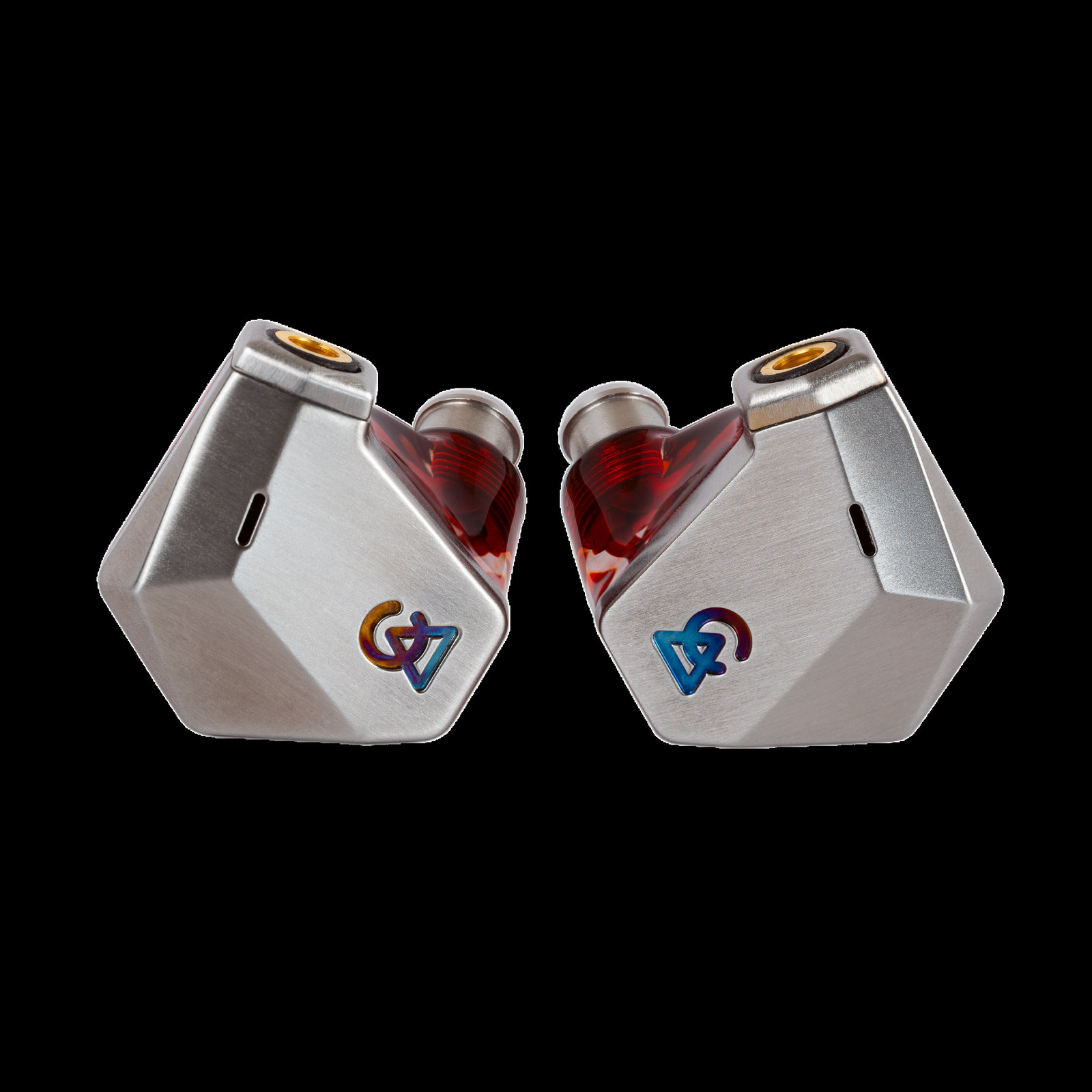
The Campfire Audio Grand Luna is a wired hybrid in-ear from Portland with a 14 mm planar driver, two balanced-armature drivers and the Time Link modular cable (3.5 mm, 4.4 mm and a USB-C DAC). On the in-ear shortlist of 12 November 2026 it sits in the Master tier, now expanded to twenty-one models, in rank 19 with a Vinyl BotPro index of 87 and without a tier badge. The subscores and the mapping onto the 85–97 band are documented in the list package; this page repeats the list record and does not run a second calculation.
The listening report is Headfonia (Berkhan, 25 October 2025): a dated listening review of the exact model in an independent international online specialist outlet of the same class that already supports the live pillar for the THIEAUDIO Monarch MKIV. Under the single badge rule of 12 November 2026 — including the t647s3962 addendum on YouTube listening tests by established, named reviewers — the Grand Luna is eligible; its pillar here is the editorial text, not a video. Campfire lists US$1,399. The documented euro price used here is €1,499.00 at the-soundkitchen.com (12 November 2026, “Out of stock, but can be ordered”). The dollar price is not converted into euros. The USB-C DAC is a supplied module; the in-ear itself remains a wired model.
Technical data (public)
| Type | Wired universal-fit hybrid in-ear |
|---|---|
| Drivers | 14 mm planar plus 2 balanced armatures (Campfire Audio) |
| Impedance | 13 Ω at 1 kHz (Campfire, product page 12 November 2026) |
| Sensitivity | 94 dB at 1 kHz / 33 mVrms (Campfire) |
| Frequency response | 5–30 kHz (Campfire) |
| THD | less than 0.5 % (Campfire) |
| Connection | MMCX, Time Link modular cable in 3.5 mm, 4.4 mm and USB-C DAC (Cirrus CS43131) in the carton |
| Housing | Campfire shell with metal nozzles |
| Price as documented | €1,499.00 at the-soundkitchen.com, 12 November 2026 (out of stock, but can be ordered; no stock guarantee) |
Amplifier compatibility
At 13 Ω at 1 kHz and 94 dB at 1 kHz referred to 33 mVrms the Grand Luna sits in the range of typical Campfire in-ears. Headfonia does not treat drive as a hurdle. A dedicated headphone amplifier is not a requirement on this record; on very quiet outputs it can add headroom. The Time Link system includes 3.5 mm, 4.4 mm and USB-C DAC terminations. The USB-C DAC (Cirrus CS43131) is an extra module, not a substitute for a phono stage, and does not turn the model into a USB-C-only device.
On a typical vinyl chain with a headphone output the Grand Luna hangs from the 3.5 mm plug. Whether a given phono preamp reaches the level you want remains device-dependent; the low impedance and the absence of a drive complaint point to uncritical use on ordinary outputs.
Rating criteria in detail
The Vinyl BotPro index on this page is not a second calculation but the list record of 12 November 2026. The Master tier now holds twenty-one models; the mapping uses the 85–97 band, with the strongest raw score at 97 and the weakest at 85, and shared indices are allowed. Shared indices are allowed. The indices are 97, 96, 95, 94, 94, 92, 92, 91, 90, 90, 88, 87 and 85.
The sound-evidence score of 7.4 rests on the Headfonia listening report: warm, smooth, dark, bass-forward, with midrange slightly back and treble that is smooth rather than technically leading; it should be enjoyed rather than scrutinised; timbre is natural, the stage surprisingly spacious, resolution and speed not top-tier. Build/comfort 8.6 follows from the Campfire build described as impeccable, the excellent fit and isolation with foam tips that approaches custom quality. Drive 8.8 follows from 13 Ω and the absence of a drive complaint. Value 5.6 follows from €1,499.00, a little above the IE 900 (€1,399, P 5.8) and below the Andromeda 10 and MACH 80; Headfonia praises the musical luxury, not a value argument. No tier badge.
Manufacturer and concept
Campfire Audio is based in Portland, Oregon, and is known for models such as Andromeda, Solaris, Astrolith and the Iris, which already sits on this same list. Headfonia presents the Grand Luna as a model that embodies a classic Campfire experience: a striking, recognisable design, a generous unboxing, a high claim on fit and build, and a tuning that puts smoothness and musical flow ahead of analytical sharpness. The planar hybrid is part of Campfire’s more recent technical line; Headfonia compares it explicitly with the Bonneville and the dearer Astrolith.
In the review the shell comes across as exceptionally carefully made: metal nozzles, sturdy MMCX sockets, a cable with high tensile strength. Berkhan calls the build impeccable and the design one of the most appealing of recent years. Despite looking relatively large in pictures, the actual size is compact enough for long sessions. Isolation with foam tips, in this account, approaches custom-in-ear quality.
How the technology works
A planar hybrid combines a 14 mm planar driver with two balanced-armature drivers. Campfire quotes 13 Ω at 1 kHz, 5 to 30 kHz, 94 dB at 1 kHz / 33 mVrms and THD of less than 0.5 percent. This analysis has no measurements of its own; the figures come from the official product page, retrieved on 12 November 2026. Headfonia hears in the bass the richness often associated with dynamic drivers, and notes that speed and decay are not the strength typically expected of planar or BA arrays, yet the Grand Luna, in mid-bass texture, carries a pleasant fullness into the lower midrange.
The Time Link modular cable allows a change between 3.5 mm, 4.4 mm and a USB-C DAC with a Cirrus CS43131 converter. For typical phono chains the 3.5 mm plug remains the obvious path. The DAC module is an accessory, not a substitute for a phono stage, and does not change the fact that this in-ear is listed as a wired model.
What the international specialist press hears
Character
Berkhan describes the Grand Luna as a warm, smooth in-ear with a dark tonal character, thick and rich especially in the bass. It is not aimed at a technical or analytical sound, but at smoothness, long sessions and straightforward enjoyment. The unit sounds different from conventional in-ears; the dark, at times veiled character is not for everyone, especially not for listeners who put pure technical performance first. Bass is dominant, the midrange slightly recessed, the treble smooth.
Tonal balance
The bass has considerable impact and texture, emphasises texture and deep bass and, whenever bass is called for, often delivers more than expected. Headfonia calls it significantly more bass-heavy than neutral; the mid-bass can at times become a little too dense, yet it never sounds muddled. Final E-type tips enhance the bass still further and are therefore hard to recommend. Decay is decent, speed is not the strength. The midrange sounds organic, with natural timbre, natural instruments and vocals, but sits slightly back in the mix. It is not drastically recessed, yet a clearer presence would help the model. The lower midrange has texture, body and density, the upper midrange a little less bite and air. Transparency and resolution are commendable, midrange definition is not the strongest side — hence the darker, slightly veiled impression.
Treble is smooth and detailed, without aggressive emphasis, understated rather than bright. It avoids harshness and fatigue, integrates with the rest of the spectrum and offers a soft, musical quality with a respectable level of resolution. Anyone looking for clarity, brightness and articulation in the treble will, in Berkhan’s account, find limits in energy, brightness and definition.
Dynamics, stage and technique
Despite the dark, full tuning the Grand Luna offers surprisingly good soundstage, depth and layering and never feels congested. Timbre is natural, and realistic body in the midrange adds to the sense of realism; midrange dynamism and attack are not particularly remarkable. In resolution, transparency and speed it is not a top-tier model. Imaging is described as clearly strong, detail retrieval as commendable, and separation, thanks to the staging, well focused and without unnecessary complexity. Headfonia does not publish measurements in this piece; the assessment remains a listening review.
Comparisons and the review’s conclusion
Against the Campfire Bonneville the Grand Luna handles bass more proficiently, has clearer mids and a more controlled, quicker course; the Bonneville comes across as more sluggish in the bass and denser in the mid-bass. The dearer Astrolith has the upper hand in realism, bass texture, midrange presence and treble and is the choice if technical cleanliness and speed matter; the Grand Luna remains the more classic, darker, creamier Campfire tuning, more fun and more comfortable to listen to. In the conclusion the Grand Luna should be enjoyed rather than scrutinised: robust, deep bass, remarkably smooth treble, a flowing, musical, somewhat dark character for listening at home. Strengths: packaging, build, design, planar technology, bass rumble, musicality and smoothness. Limits: treble that is not technically strong, a presentation that is at times too dark, not the most impressive model technically, and a midrange that is not strong enough.
Research consensus
This analysis rests on Headfonia’s substantial listening review, not a second international magazine report of the same depth. The consensus is Berkhan’s finding, read against the data sheet and the euro price: a luxuriously built planar hybrid with a warm, dark, bass-forward tuning, slightly recessed mids, smooth treble, a surprisingly spacious stage and limits in resolution, speed and midrange presence. Eligibility follows the single rule of 12 November 2026, including t647s3962; random channels, short clips and unboxings without a listening section remain excluded. Forums, retailer copy or manufacturer pages are not used as a listening pillar. The Grand Luna does not carry a tier badge: the value badge sits with the Aspire 3, the Sound badge with the IE 900.
Features and daily use
Headfonia highlights the unboxing as a typically generous Campfire experience, with a more comprehensive set of inclusions than the Bonneville. Alongside the Time Link cable come the usual Campfire tips and the brand’s familiar accessories. The fit is described as excellent, secure and suited to long sessions; with foam tips the Grand Luna sits snugly and isolates exceptionally well, approaching custom in-ears. Despite looking large in pictures, the actual shell is compact enough. Berkhan writes that Campfire has achieved a very good fit with its more recent models.
Price and availability
The documented euro price is €1,499.00 at the-soundkitchen.com on 12 November 2026. The page showed “Out of stock, but can be ordered” and pointed to a delivery enquiry; that is not recorded here as a stock guarantee. Campfire lists US$1,399.00. This analysis does not convert that amount into euros. Prices and availability change, without guarantee.
In the Master tier €1,499.00 sits above the IE 900 (€1,399, P 5.8) and below the MACH 80 (€1,699.99, P 5.4) and the Andromeda 10 (€1,949, P 5.2). Headfonia praises build, design and musical enjoyment, not a keen value argument. The P subscore of 5.6 places that upper Master price without claiming a badge.
At the amplifier and on a vinyl system
As a wired in-ear with a supplied 3.5 mm termination, the Grand Luna hangs from typical phono chains with a headphone output. A 4.4 mm termination and a USB-C DAC are also included; the DAC is not a substitute for a phono stage. Headfonia describes no weakness in drive, and the official impedance is low. A dedicated headphone amplifier is not a requirement on the present record.
The review explicitly presents the Grand Luna as a model to be enjoyed at home in peace rather than scrutinised. Anyone listening to records should read the report especially for the dark, bass-forward picture and the slightly recessed midrange: warm, full pressings can gain still more body, while finely drawn overtones and vocal presence recede. The smooth treble eases sharpness on restless cuttings, but costs air and articulation. The surprisingly wide stage helps large recordings, without Headfonia turning that into a studio-reference claim.
Who is the Grand Luna for?
The Grand Luna suits listeners who want a luxuriously built wired in-ear with a warm, dark, bass-forward tuning, who put smoothness and long sessions ahead of analytical sharpness, and who are planning €1,499.00 in the Master tier. Anyone who wants a neutral midrange, strong treble or leading technical performance will find clear caveats in the same review — and, on this same list, the IE 900 with the Sound badge or the Andromeda 10 with the higher sound-evidence score of 8.4. On the shortlist of 12 November 2026 the Grand Luna sits in rank 12 at index 87, without a badge.
How it compares
Headfonia sets the Grand Luna against the Bonneville and the Astrolith: against the Bonneville the clearer, more controlled design, against the Astrolith the darker, more entertaining, less technical choice. On the list of 12 November 2026 the Andromeda 10 sits in the same Master tier in rank 8 at index 91, without a badge, with a clearly higher sound-evidence score and a higher price. The Sennheiser IE 900 (rank 19, index 90, Sound badge) remains the tier’s sonic pillar. The Westone MACH 80 follows in rank 13 at index 85; its raw score sits below the Grand Luna’s because of price and drive, even though Headfonics describes the MACH 80 as highly resolving. The Aspire 3 holds the tier’s value badge at €649.00.
How it sits on the opened list
With the Aspire 3, the Grand Luna, the Andromeda 10 and the MACH 80 the Master tier grows from eight models to twelve. The Grand Luna’s Vinyl BotPro index is 87, rank 12, without a badge. The raw score of 7.3 sits below the MACH 60 (7.4, index 88) and above the MACH 80 (7.2, index 85). All eighteen models are eligible under the single rule. The value badge goes to the Aspire 3 (P 8.2), the Sound badge remains with the IE 900 (K 8.6). The Grand Luna competes neither on the lowest price argument nor on the highest sound evidence; its place records the musically dark, dearer design in the lower third of the tier.
FAQ
What exactly is the Campfire Audio Grand Luna?
A wired universal-fit hybrid from Portland with a 14 mm planar driver plus two balanced armatures, 13 Ω at 1 kHz, 94 dB at 1 kHz / 33 mVrms, a 5–30 kHz frequency response, MMCX and a Time Link modular cable in 3.5 mm, 4.4 mm and USB-C DAC.
Does the Grand Luna need a headphone amplifier?
Campfire quotes 13 Ω at 1 kHz and 94 dB at 1 kHz / 33 mVrms. Headfonia does not treat drive as a hurdle. A dedicated amplifier is not a requirement on this record; on quiet outputs it can add headroom.
Is it suitable for listening to records?
Yes. As a wired in-ear with a 3.5 mm termination it hangs from typical phono chains with a headphone output. The review describes a warm, dark, bass-forward sound that should be enjoyed rather than scrutinised. The USB-C DAC is not a substitute for a phono stage.
What does the Grand Luna cost?
At the-soundkitchen.com the price on 12 November 2026 was €1,499.00 (out of stock, but can be ordered, with no stock guarantee). Campfire lists US$1,399. This analysis does not convert the dollar price into euros. Prices change, without guarantee.
Is the Grand Luna eligible for a tier badge?
Yes, it is eligible: Headfonia (Berkhan, 25 October 2025) is a dated listening review of the exact model. It does not hold a badge in this tier, because the Aspire 3 has the higher P subscore of 8.2 and the IE 900 has the higher sound-evidence score of 8.6.
Does this page rest on a listening test by the VinylCination team?
No. There was no in-house listening test and no measurement of our own. The assessment draws on Campfire Audio’s data and the Headfonia listening review (Berkhan, 25 October 2025). The list figures (Master, rank 19, index 87, no badge) come from the list package of 12 November 2026.
Conclusion
The Campfire Audio Grand Luna is a clearly documented planar hybrid for the expanded Master tier: carefully built, comfortable, with a warm, dark, bass-forward tuning, a documented euro price and a listening review that puts enjoyment ahead of analysis. The list record of 12 November 2026 is Master rank 19, index 87, without a tier badge. Anyone planning €1,499.00 and looking for a smooth, dark tuning on a vinyl system will find a solid source base here. Anyone expecting forward mids, luminous treble or leading technical figures should read the same report at exactly those points.
About this AI analysis
This section is an AI summary of a published international listening review and Campfire Audio’s own data. Vinyl BotPro places the findings and links them to the data sheet, the specialist-trade price and the list record; VinylCination does not have listening tests or measurements of its own, and every source is linked at the end of the page. Prices and availability change (as of 12 November 2026, without guarantee). Subscores and the index come from the list package of the same day.
Sources
- Campfire Audio — Grand Luna (official product page and packshot, retrieved 12 November 2026)
- the-soundkitchen.com — Campfire Audio Grand Luna (EU shop price €1,499.00, as of 12 November 2026)
- Headfonia — Campfire Audio Grand Luna Review (Berkhan, 25 October 2025, page 1)
- Headfonia — Campfire Audio Grand Luna Review (Berkhan, 25 October 2025, page 2)