
In-ear analysis · Expert · as listed
Campfire Audio Iris Analysis
The Campfire Audio Iris sits on the in-ear shortlist of 12 November 2026 in the Expert tier, now expanded to seventeen models, in rank 1 with a Vinyl BotPro index of 84 and the tier’s Sound badge. This analysis takes the list record as published and does not run a second calculation.
In short
The Campfire Audio Iris is a wired hybrid in-ear from Portland with a 10 mm ADLC dynamic driver and a custom balanced-armature driver. On the in-ear shortlist of 12 November 2026 it sits in the Expert tier, now expanded to seventeen models, in rank 1 with a Vinyl BotPro index of 84 and carries the tier’s Sound badge. The subscores and the mapping onto the 70–84 band are documented in the list package; this page repeats the list record and does not run a second calculation.
The listening report is Headfonia (Berkhan, 20 June 2026): a dated review of the exact model in an independent international online specialist outlet. The same editorial class already supports the live pillar for the THIEAUDIO Monarch MKIV; under the single badge rule of 12 November 2026 the Iris is therefore eligible. Campfire lists the model at US$349. The documented euro price used here is €399.00 at the EU shop the-soundkitchen.com (12 November 2026). The dollar price is not converted into euros.
Technical data (public)
| Type | Hybrid in-ear, wired, universal fit |
|---|---|
| Drivers | 10 mm ADLC dynamic (low/mid) plus balanced armature (treble), Campfire Audio |
| Impedance | 14.8 Ω at 1 kHz (Campfire, product page 12 November 2026) |
| Sensitivity | 94 dB at 1 kHz / 17.26 mVrms (Campfire) |
| Frequency response | 5–20 kHz (Campfire) |
| THD | less than 0.5 % (Campfire) |
| Connection | Campfire MMCX, Time Stream Metal cables in 3.5 mm and 4.4 mm in the carton |
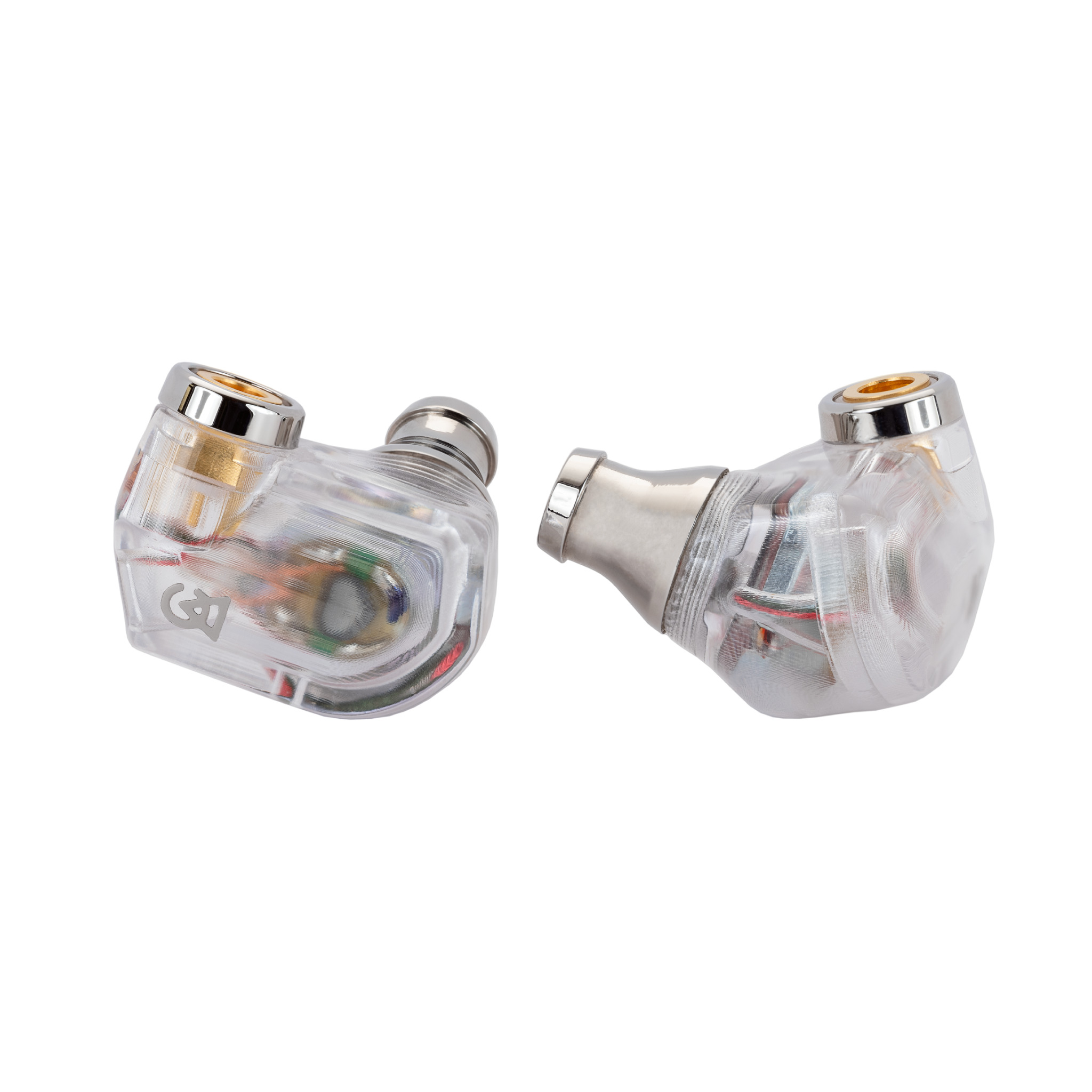
| Housing | Transparent acrylic, stainless-steel nozzle |
| Warranty | Two-year manufacturer warranty (Campfire) |
| Price as documented | €399.00 at the-soundkitchen.com, 12 November 2026 |
Amplifier compatibility
At 14.8 Ω at 1 kHz the impedance sits in the range of typical in-ears. Headfonia does not treat driveability as a hurdle; the review covers long sessions and comparisons in the price class without making a dedicated amplifier a requirement. Campfire includes both an unbalanced 3.5 mm cable and a balanced 4.4 mm cable. On a typical vinyl chain with a headphone output the Iris hangs from the 3.5 mm plug. Whether a given phono preamp or portable player reaches the level you want remains device-dependent; the present record points to uncritical use on ordinary outputs.
Rating criteria in detail
The Vinyl BotPro index on this page is not a second calculation but the list record of 12 November 2026. The Expert tier now holds seventeen models; the mapping uses the 70–84 band, with the strongest raw score at 84 and the weakest at 70, and shared indices are allowed. The earlier mid-band opening for the Final A5000 (index 74 as the only Expert model) lapses with this expansion.
The sound-evidence score of 7.6 rests on the Headfonia listening report: a warm V-shaped signature, a mature and coherent presentation under US$500, convincingly controlled bass, a slightly recessed midrange, and an upper treble that is deliberately lifted and can turn sharp on poor recordings. Build/comfort 8.4 follows from the build described as excellent, the compact comfortable fit, and the generous accessory kit. Drive 8.6 follows from the low impedance and the absence of a drive complaint in the review. Value 7.6 follows from €399.00 and Headfonia’s explicitly strong value judgement; the highest P subscore in the Expert tier is now the Aspire 1 (P 8.0), so the value badge sits with the Moondrop Blessing 3; the Iris holds the Sound badge on K 7.6.
Manufacturer and concept
Campfire Audio is based in Portland, Oregon, and is known in the in-ear field for models such as Andromeda, Solaris and Trifecta. Headfonia presents the Iris as a newer model in the universal range, aimed at a different audience and a lower price segment than the dearer flagships. The apparent goal is an engaging, musical presentation while keeping the tonal coherence that often becomes harder as driver counts rise. The Iris therefore stays with a relatively straightforward hybrid: a 10 mm dynamic driver with an ADLC diaphragm for the lower range, and a custom balanced-armature driver for the treble.
The shell is a compact, transparent, 3D-printed acrylic piece with a stainless-steel nozzle and Campfire’s familiar MMCX sockets. Headfonia recognises the design language immediately as a Campfire product: a clean industrial line, precise joints, smooth edges. The faceplates sit flush; the metal nozzle and the connector implementation are meant to inspire confidence in daily use.
How the technology works
A hybrid splits the work between a dynamic driver, which brings area and excursion for bass, and a balanced-armature driver that defines the treble. Campfire assigns the 10 mm ADLC driver to the low and mid bands and the balanced-armature driver to the treble. ADLC denotes a diamond-like carbon coating on the diaphragm; the manufacturer page speaks of rich, dynamic lows and an energetic, detailed overall sound. This analysis has no measurements of its own; the technical figures come from the official product page (12 November 2026).
The stated 14.8 Ω at 1 kHz and the sound-pressure figure of 94 dB at 1 kHz referred to 17.26 mVrms describe an electrical and level specification, not a lab judgement of sound. THD is given as less than 0.5 percent, frequency response as 5 to 20 kHz. The Time Stream Metal cables use four SPC conductors; the carton includes a 3.5 mm and a 4.4 mm version. Anyone who uses balanced outputs does not have to buy a second cable at once. That does not change the fact that typical phono chains remain unbalanced at the headphone jack.
What the international specialist press hears
Character
Berkhan describes the Iris as a warm V-shaped signature with an emphasis on musicality: smooth, natural in timbre, easy to live with for long sessions, and at the same time unexpectedly rounded and mature for the price. Rather than excelling in one area and giving way elsewhere, the presentation feels coherent and relatively balanced and exceeds expectations at US$349. Headfonia adds the Iris to its Best IEMs page and calls it one of the strongest options under US$500.
Tonal balance
Bass is treated as one of the Iris’s strongest sides: the authority and fullness of a more expensive monitor, impact without bloat or smear, a lean towards the mid-bass, yet controlled and clearly defined. Warmth gives instruments and drums body without masking detail or spilling into the midrange. The midrange stays with the theme of balance: voices and instruments tonally accurate, slightly fuller than a neutral reference, yet transparent and clean. The only reservation is that the midrange does not stand out much; definition in that range could have been more emphasised. The conclusion therefore lists a “recessed mid-range” among the limits.
The treble is given deliberate weight in the upper region so that the Iris does not sound dark or overly relaxed. That adds definition and clarity, but in Berkhan’s account it costs a little coherence. On poor recordings, sharpness and aggressive peaks can appear; the author recommends the supplied foam tips to tame the effect. Extension is respectable for the price; the approach is not aggressively analytical, but contrasted and articulate.
Dynamics, bass and stage
Technically the Iris performs above what its price would suggest. The soundstage is very respectable, spacious and believable; depth is not class-leading, but adequate for the category and not congested. Layering and separation are competent rather than exceptional — that is where more expensive models pull ahead. What stands out is the balance between tonality and technical performance, not a single lab figure. Headfonia does not publish measurements or lab scores in this piece; the assessment remains a listening review.
Strengths and limits
Headfonia lists excellent build quality, a comfortable fit, an engaging signature, good technical performance and a strong accessory package as strengths. The limits are a slightly aggressive upper treble, a recessed midrange, and a shell that may be too small for very large ears. The Iris may not be the most ambitious product in Campfire’s catalogue, but it delivers the qualities that have made the brand popular with enthusiasts, and it feels like one of Campfire’s strongest value propositions in recent years.
Research consensus
This analysis rests on one substantial editorial listening review, not a second international magazine report of the same depth. The consensus is therefore Headfonia’s finding, read against the data sheet and the documented euro price: a compact, comfortably fitting hybrid with a musically warm V, strong controlled bass, slightly recessed mids, and treble that brings energy and can turn sharp on weak productions. Eligibility for a tier badge follows the single rule, not a second, tighter magazine list. YouTube, forums or retailer copy are not used as a listening pillar.
Features and daily use
The unboxing, Headfonia writes, feels distinctly premium for a US$349 in-ear. The handmade Portuguese leather wallet (Sage) is the primary case; it feels substantial and matches Campfire’s design language. In the carton are both Time Stream Metal cables, nine sets of tips (foam, silicone, and High & Clear in several sizes), a cleaning tool, a microfiber cloth and the familiar Campfire lapel pin. The two cables alone add practical value; the leather wallet underlines the aim of offering more than a price target.
The fit is described as very comfortable over long sessions. The shell is extremely compact and light, comparable with more recent Sennheiser in-ears or the older Sony IER-M9, and closer to the IE 600 and IE 900. It sits naturally, seals securely and without excessive pressure points. Isolation is very good, suitable for home and portable use. Fit always depends on the ear; Berkhan himself wore the Iris for long periods without discomfort. For very large ears the mini shell can feel tight — that is listed explicitly among the limits.
Price and availability
Campfire lists the Iris on the official product page at US$349.00 (as retrieved on 12 November 2026). This analysis does not convert that amount into euros. The documented euro price is €399.00 at the-soundkitchen.com, also taken from the product page on 12 November 2026. Whether a shop has stock is a snapshot and is not recorded here as a guarantee. Prices change, without guarantee.
In the Expert tier (about €250–600) €399.00 sits in the middle of the frame. Headfonia calls the Iris one of Campfire’s strongest value propositions in recent years and places it among the best in-ears under US$500. That judgement, read against the documented euro price, supports the P subscore of 7.6. The tier’s value badge now sits with the Moondrop Blessing 3. The Iris remains ahead of the cheaper Final A5000 (€299.00, P 6.8), whose magazine review was more reserved on value.
At the amplifier and on a vinyl system
As a wired in-ear with a supplied 3.5 mm cable, the Iris hangs from typical phono chains that provide a headphone output. A 4.4 mm cable is also in the box, but it does not help on phono preamps with a classic jack. Headfonia describes no weakness in drive; the official impedance is low. A dedicated headphone amplifier is not a requirement on the present record, though it can add headroom on quiet outputs. The review itself mentions studio and portable sources in the comparison section, not a specific phono stage. Anyone listening to records should read the report especially for the upper treble: weak cutting or pressing quality can bring out the sharpness described, and foam tips are the first remedy the author names.
Who is the Iris for?
The Iris suits listeners who want a compact, comfortably fitting wired in-ear with a warm, musical V-shaped signature, who value strong, controlled bass, and who will use the generous cable and case kit. Anyone who wants a strictly neutral midrange or deliberately restrained treble will find clear caveats in the same review. Anyone with very large ears should take the note on shell size seriously. On the shortlist of 12 November 2026 it holds the Expert Sound badge and rank 1; the value badge in this tier sits with the Moondrop Blessing 3, whose Headfonics review describes the more comprehensive, less coloured tuning, but which is dearer and portrayed as more demanding to drive.
How it compares
Headfonia sets the Iris against the Campfire Axion (also under US$500, straight-down cable) and the Meze Alba. Berkhan describes the Axion as darker, meatier and aimed at casual listening; the Iris has better resolution, clarity and transients, feels more direct in its note delivery and more spacious, the monitor-style fit suits him better, and the accessory kit is richer. Against the Alba (then US$159, fewer accessories, zinc-aluminium rather than acrylic and steel) the Iris has stronger, more textured bass, meatier, warmer mids, more open and energetic treble and a larger stage; the Alba is more controlled and subdued in the treble.
On the list of 12 November 2026 the Alba sits in the Premium tier, not in Expert, at index 66 and without a badge (the Premium Sound badge is held by the Sony IER-M500, the value badge by the DUNU Titan S2). The direct comparison of price and tuning remains a review comparison, not list competition in the same tier. Inside Expert itself the Iris is followed by the Westone MACH 30 (index 70, no badge), the Westone MACH 20 (index 71) and the Final A5000 (index 71, previously 74 as the tier’s only model).
How it sits on the opened list
With the Iris, the MACH 20 and the MACH 30 the Expert tier had grown from one model to four; with the Aspire 1 and Aspire 2 it now holds nine models. The Iris’s Vinyl BotPro index is 84, rank 1, Sound badge. The raw score of 7.9 sits clearly above the 7.4 cluster (rounded to one decimal) of the other three Expert models; the index gap (84 against 76) records that difference. All four models are eligible under the single rule. The Sound badge goes to the best remaining K subscore, here the MACH 30 (K 7.4) ahead of the MACH 20 (K 7.2) and the A5000 (K 7.0). The A5000 remains without a badge; its index falls from 74 to 70 because the mid-band opening lapses once the tier has several models.
FAQ
What exactly is the Campfire Audio Iris?
A wired universal-fit in-ear from Portland with a hybrid of a 10 mm ADLC dynamic driver and a balanced-armature tweeter, 14.8 Ω at 1 kHz, a 5–20 kHz frequency response, MMCX, and two Time Stream Metal cables (3.5 and 4.4 mm) in the carton. The shell is transparent acrylic with a stainless-steel nozzle.
Does the Iris need a headphone amplifier?
Campfire quotes 14.8 Ω at 1 kHz and 94 dB at 1 kHz / 17.26 mVrms. Headfonia does not treat drive as a hurdle. A dedicated amplifier is not a requirement on this record; on quiet outputs it can add headroom. A 3.5 mm cable is included for typical phono chains.
Is it suitable for listening to records?
Yes. As a wired in-ear with a 3.5 mm plug it hangs from typical phono chains with a headphone output. The review describes a warm V-shaped signature with strong, controlled bass and an upper treble that can turn sharp on poor recordings. On older or restless pressings the note about foam tips is relevant. The 4.4 mm cable is not a substitute for a phono stage.
What does the Iris cost?
At the EU shop the-soundkitchen.com the price on 12 November 2026 was €399.00. Campfire lists US$349. This analysis does not convert the dollar price into euros. Prices change, without guarantee.
Is the Iris eligible for a tier badge?
Yes. Headfonia (Berkhan, 20 June 2026) is a dated listening review of the exact model in an independent international online specialist outlet of the same class that already supports the live Monarch MKIV pillar. Under the single rule of 12 November 2026 it is eligible; in the Expert tier it holds the Sound badge because, after the Aspire 1 takes the value badge (P 8.0), its K subscore of 7.6 is the best remaining sound evidence.
Does this page rest on a listening test by the VinylCination team?
No. There was no in-house listening test and no measurement of our own. The assessment draws on Campfire Audio’s manufacturer data and the international Headfonia listening review (Berkhan, 20 June 2026). The list figures (Expert, rank 1, index 84, Sound badge) come from the list package of 12 November 2026.
Conclusion
The Campfire Audio Iris is a clearly documented wired hybrid for the expanded Expert tier: compact, comfortable, supplied with two cables, with a documented euro price and a listening review that records maturity, controlled bass and a deliberately energetic upper end. The list record of 12 November 2026 is Expert rank 1, index 84 and the tier’s Sound badge. Anyone planning €399.00 and looking for a musical V-shaped tuning on a vinyl system will find a solid source base here. Anyone expecting restrained treble or prominently forward mids should read the review at exactly those points.
About this AI analysis
This section is an AI summary of a published international listening review and Campfire Audio’s own data. Vinyl BotPro places the findings and links them to the data sheet, the specialist-trade price and the list record; VinylCination does not have listening tests or measurements of its own, and every source is linked at the end of the page. Prices and availability change (as of 12 November 2026, without guarantee). Subscores and the index come from the list package of the same day.
Sources
- Campfire Audio — Iris (official product page and packshot, retrieved 12 November 2026)
- the-soundkitchen.com — Campfire Audio Iris (EU shop price €399.00, as of 12 November 2026)
- Headfonia — Campfire Audio Iris Review (Berkhan, 20 June 2026, page 1)
- Headfonia — Campfire Audio Iris Review (Berkhan, 20 June 2026, page 2)