
In-ear analysis · Premium · as listed
FiiO FP3 Analysis
The FiiO FP3 sits on the in-ear shortlist of 12 November 2026 in the Premium tier, now expanded to thirty-four models, in rank 21 with a Vinyl BotPro index of 61 and no tier badge. This analysis takes the list record as published and does not run a second calculation.
In brief
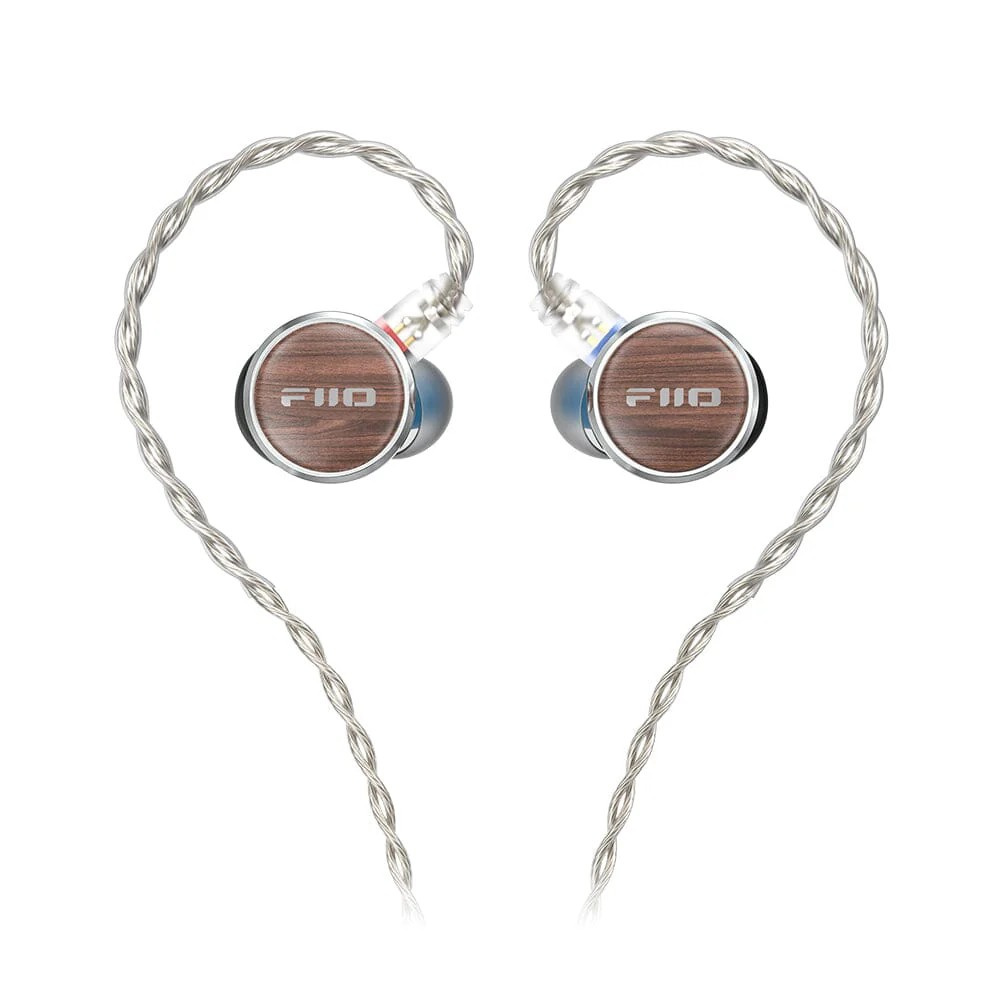
The FiiO FP3 is a wired planar in-ear in the walnut finish, not the USB-C FP3 TC variant and not the FiiO FH3 or the FiiO FD15. The official page lists a planar driver, a frequency response of 10 Hz–40 kHz, 36 Ω at 1 kHz, 105 dB/mW at 1 kHz, about 6.5 g per side excluding the cable, a 0.78 mm 2-pin connector, a 1.2 m four-strand 392-wire silver-plated copper cable with a 3.5 mm jack, and faceplates in rosewood or walnut. Walnut is a standard finish of the same model, not a limited edition. The USB-C FP3 TC variant is a different model and is not scored here. On the in-ear shortlist of 12 November 2026 it sits in the Premium tier, now expanded to thirty-four models, in rank 21 with a Vinyl BotPro index of 61 and no tier badge. It shares index 61 with the Kiwi Ears Aether; the Aether sits ahead of the FP3 with a sound-evidence score of 7.4 against 7.0, in rank 20, and the FP3 follows in rank 21. The subscores and the linear mapping onto the 55–69 band are documented in the list package; this page repeats the list record and does not run a second calculation.
The listening report comes from Headfonics (Meldrick, 22 December 2024): a dated listening review of the exact model in an independent international online specialist outlet of the same class already used for other in-ears on this list. The text covers the wired FP3. The USB-C FP3 TC variant is a different model and is not used here as a substitute pillar. Under the single badge rule of 12 November 2026 — including addendum t647s3962 — the FiiO FP3 is eligible; its pillar here is the written review. The documented euro price is €99.00 at FiiO-Shop.de (official German shop, colour walnut, €99.00 tax incl., in stock, delivery 1–3 days, Add to cart, retrieved 12 November 2026). The Sound badge in the tier remains with the Sony IER-M500, and the value badge with the DUNU Titan S2.
Technical data (published)
| Design | Wired planar universal in-ear, walnut finish (official FP3 page and FiiO-Shop.de, colour walnut). Not the USB-C FP3 TC variant. |
|---|---|
| Impedance | 36 Ω at 1 kHz (official page) |
| Sensitivity | 105 dB/mW at 1 kHz (official page) |
| Frequency response | 10 Hz–40 kHz (official page) |
| Weight | about 6.5 g per side excluding the cable (official page) |
| Connection | 0.78 mm 2-pin, 1.2 m four-strand silver-plated copper cable to a 3.5 mm jack |
| Price | €99.00 tax incl. at FiiO-Shop.de, colour walnut, in stock, delivery 1–3 days, 12 November 2026 |
Amplifier compatibility
FiiO lists 36 Ω at 1 kHz and 105 dB/mW at 1 kHz. Headfonics describes the FP3 as easy enough to drive, without a large amplifier being needed, but concedes that a little more level than with very sensitive hybrids can help.
The drive subscore of 8.2 follows that official, still light driveability. It sits below the Hexa’s 8.6 and the Nova’s 8.8, and above typical 8.0 figures for heavier loads.
A low-noise output remains useful. 36 Ω and 105 dB/mW are not a heavy load on a phono amplifier with a headphone output, but they ask for a little more level reserve than 120 dB/Vrms.
The USB-C FP3 TC variant with its own converter sits outside this score; the subscore applies to the wired model.
A change of the stock cable does not, according to the review, alter driveability in a fundamental way. A modular connector is missing; that is a limit of the kit, not of the impedance.
Scoring criteria in detail
The Vinyl BotPro index on this page is not a second calculation, but the list record of 12 November 2026. The Premium tier now holds thirty-four models; the mapping uses the 55–69 band linearly across the unrounded raw score. With a raw score of 7.740 the FiiO FP3 sits at index 61 and rank 21. It shares index 61 with the Kiwi Ears Aether; the Aether sits ahead of the FP3 with a sound-evidence score of 7.4 against 7.0, in rank 20, and the FP3 follows in rank 21. Shared indices are allowed; rank remains unique. The mapping follows the decision of 12 November 2026: the unrounded raw score is placed linearly on the tier band, strongest model at the ceiling, weakest at the floor, with no required gap between places. Shared indices within a tier are allowed; rank remains unique (higher index first, then higher sound-evidence score, then lower documented euro price, then alphabetical name).
The subscores are sound 7.0, build 7.4, drive 8.2 and value 8.6. The sound-evidence score sits below the Kiwi Ears Aether (7.4) on the shared index 61 and below the Hexa (7.3). The build score of 7.4 follows Headfonics’ account of a light shell with a wood faceplate and a secure fit, with the clearly named limits of a non-modular cable and a plastic desk case that does not replace a travel case. The drive subscore of 8.2 reflects 36 Ω and 105 dB/mW. The value score of 8.6 follows the documented price of €99.00 and takes no badge.
The manufacturer and the concept
FiiO presents the FP3 as a planar in-ear with faceplates in rosewood or walnut. Walnut is a standard finish of the same model. The USB-C FP3 TC variant is a different model.
Meldrick at Headfonics listened to the wired FP3. The text covers this model, not the FP3 TC, not the FH3 and not the FD15.
The shop price comes from the official German FiiO-Shop.de in the walnut colour, €99.00 tax incl., in stock, delivery 1–3 days, retrieved on 12 November 2026.
The shell photograph follows the official shop still at native size, without enlargement.
On the same official page FiiO also presents the FP3 TC. That is a different model with a USB-C connector and its own converter, and it sits outside this score.
The planar diaphragm and the wood faceplate remain the fixed design of the wired FP3. This page does not carry a score from another FiiO in-ear over to this entry.
The technology, explained
A planar driver works in the stated span of 10 Hz–40 kHz. Officially fixed are 36 Ω at 1 kHz, 105 dB/mW at 1 kHz and about 6.5 g per side excluding the cable.
Headfonics describes a V-shaped, bright tuning with a tangible bass that can let sub-bass bleed into the mids, with mids perceived as metallic and a treble that becomes sharp on some voices. Vocals can sit behind a veil.
The cable is fixed to 3.5 mm, without a modular connector. The supplied case is judged a desk box, not a travel case.
No water resistance is stated. The fit is described as secure and light.
A change of tips alters fit and perceived bass in the review, without reversing the V-shaped basic tuning.
The official sensitivity of 105 dB/mW at 1 kHz and the impedance of 36 Ω at 1 kHz remain the reference figures for the drive subscore. This page does not convert them into dB/Vrms.
Headfonics names the FP3 as an entry into planar in-ears, not as a substitute for hybrids with a different tuning. The V-shape remains the heard baseline.
What the international specialist press hears
Headfonics — FiiO FP3 Review (Meldrick, 22 December 2024)
Meldrick places the FP3 as an affordable planar entry, with a V-shaped, bright tuning. The bass is tangible but can bleed into the mids; the mids can sound metallic, the treble sharp on some voices, and vocals sometimes veiled.
As further limits the pillar names the non-modular cable and a plastic case that belongs on the desk more than in a bag.
Driveability remains good if a little more level is on hand than with very sensitive hybrids. A large amplifier of its own is not needed.
The text covers the wired model, not the USB-C FP3 TC variant.
Research consensus
One pillar of the same class is on hand, describing the FP3 as an affordable planar entry with a V-shaped, bright tuning. The clearest sonic limits are sub-bass bleed into the mids, metallic mids, a sharp treble on some voices and veiled vocals.
The sound-evidence score of 7.0 follows that placement as a coherent but not leading Premium model, below the Aether on the shared index 61.
The USB-C FP3 TC variant is a different model and is not heard here as a substitute.
Accessories and use
Headfonics describes a non-modular 2-pin cable with a fixed 3.5 mm connector, tips and a plastic case judged a desk box, not a travel case.
The walnut wood faceplate is a standard finish. A change to rosewood remains the same model, not a different design.
No water resistance and no microphone are stated. The weight of about 6.5 g per side excluding the cable is perceived as low.
This page does not judge aftermarket cables itself. Remarks on the kit come from the published pillar and the official inventory.
Price and availability
The documented euro price is €99.00 tax incl. at FiiO-Shop.de, article HL02511, colour walnut, retrieved on 12 November 2026. The shop states “in stock”, delivery 1–3 days and “Add to cart”.
Walnut is a standard finish of the same FP3, not a limited edition. The USB-C FP3 TC variant is not mixed with this price.
In the Premium tier, €99.00 sits near the Hexa (€89.91) and well below the Nova (€189.99) and the Aether. The subscore of 8.6 follows that frame and takes no badge; the tier’s value badge remains with the Titan S2 in rank 7.
FiiO-Shop.de is the manufacturer’s official German shop. A marketplace price without this evidence chain is not used.
On an amplifier and on a vinyl system
On a typical phono amplifier with a headphone output, 36 Ω and 105 dB/mW are still easy to drive, but they ask for a little more level reserve than very sensitive hybrids.
Anyone who takes the pillar as the basis will find, at the record player, a V-shaped, bright tuning. Sub-bass bleed into the mids, metallic mids and a sharp treble on some voices are the named limits, especially on brightly cut discs.
The non-modular cable and the desk case play a smaller part at home than on the move. The fit remains secure and light.
This page has no measurement programme of its own. Remarks on the tuning come from the published pillar.
Anyone who listens to brightly cut pressings should keep in mind the sharpness in the treble and the metallic mids named in the pillar. More quietly cut discs carry the tuning more easily, according to the review.
Who is the FiiO FP3 for?
According to Headfonics the FP3 suits listeners who want an affordable planar entry with a V-shaped tuning and wish to stay in a price frame around €99.
It is a poorer match for a wish for calm, unveiled voices, for a modular cable or for a travel case. The USB-C FP3 TC variant is a different model.
As a planar sister model below the Aether on the shared index 61, the pillar supports the FP3. It does not put it in the place of the IER-M500 or the Titan S2.
This page does not carry a score from the FH3 or the FD15 over to the FP3.
Anyone looking for a planar in-ear in this price frame for the first time will find in the pillar a coherent account with clearly named limits. Anyone who wants voices at the front should take the remark on veiled vocals seriously.
How it compares
Against the Kiwi Ears Aether on the shared index 61 (rank 20, sound 7.4) the Aether remains ahead with the higher sound-evidence score; the FP3 follows in rank 21 with a sound-evidence score of 7.0 and €99.00.
Against the Truthear Hexa (rank 5, index 67, sound 7.3, €89.91) the Hexa remains the model with the higher index, the higher sound-evidence score and a slightly lower price.
Against the DUNU Titan S2 (rank 7, index 67, €66.25) the tier’s value badge stays with the Titan S2; the FP3 does not take it.
Against the FiiO FD15 (rank 9, index 65, €159.00) the FD15 remains ahead with the higher index, at a higher price; the two are different designs and are not mixed.
Against the FiiO FH3 (rank 12, index 65) the FH3 remains ahead with the higher index; the FP3 is the planar entry, not the same hybrid.
Place on the expanded list
The in-ear shortlist of 12 November 2026 carries, after this expansion, 80 wired models: eight in Starter, thirty-four in Premium, seventeen in Expert and twenty-one in Master. The FiiO FP3 belongs in the Premium tier and does not move the badges of that tier.
The Premium mapping still uses the 55–69 band. There is no required gap between places. The FiiO FP3, at a raw score of 7.740, sits at index 61 and rank 21. It shares index 61 with the Kiwi Ears Aether; the Aether sits ahead of the FP3 with a sound-evidence score of 7.4 against 7.0, in rank 20, and the FP3 follows in rank 21.
This analysis is reachable from the shortlist. The package remains an isolated product package without list, sitemap or kb.js files. Upload is not approved; automatic submission of new URLs is not provided for.
FAQ
Is the FP3 the same as the FP3 TC?
No. This entry covers the wired FP3 in the walnut finish. The USB-C FP3 TC variant is a different model with its own converter and is not listed here.
Is walnut a limited edition?
No. FiiO names rosewood and walnut as standard faceplates of the same model.
Which shop price applies?
On 12 November 2026, €99.00 tax incl. at FiiO-Shop.de is documented, colour walnut, in stock, delivery 1–3 days, with an “Add to cart” button.
Does the FP3 take a Premium-tier badge?
No. The Sound badge remains with the Sony IER-M500, and the value badge with the DUNU Titan S2 in rank 7.
Conclusion
In the review to hand, the FiiO FP3 remains an affordable planar entry with a V-shaped, bright tuning, easy driveability and the clear limits of sub-bass bleed into the mids, metallic mids, a sharp treble on some voices, veiled vocals, a non-modular cable and a desk case. The USB-C FP3 TC variant sits outside this score.
On the shortlist of 12 November 2026 it sits in the Premium tier, now expanded to thirty-four models, in rank 21 with index 61, with no badge, at €99.00 at FiiO-Shop.de, colour walnut, in stock. It shares index 61 with the Aether; the Aether sits ahead of it with the higher sound-evidence score.
The analysis takes the list record and the published pillar as they stand; this page does not conduct in-house listening tests or measurements.
About this AI analysis
This section is an AI summary of published international listening reviews and the manufacturer’s published figures. Vinyl BotPro places those findings against the data sheet, a documented euro price and the list record; VinylCination does not conduct in-house listening tests or measurements, and every source is linked at the end of the page. Prices and availability change (as of 12 November 2026, without guarantee). Subscores and the index come from the list package of the same day. The Vinyl BotPro index maps the unrounded raw score linearly onto the tier band; equal or closely spaced raw scores may share an index.