
In-ear analysis · Premium · as listed
Final E5000 Analysis
The Final E5000 sits on the in-ear shortlist of 12 November 2026 in the Premium tier in rank 33 with a Vinyl BotPro index of 55 and no badge. This analysis takes the list record as published.
In short
The Final E5000 is the wired flagship of Final’s E series (S’Next, Japan). On the in-ear shortlist of 12 November 2026 it sits in the newly opened Premium tier in rank 33 with a Vinyl BotPro index of 55. It carries no champion badge, even though a magazine listening review exists: on sound-data it is tied with the Westone Pro X10, which receives the Sound badge after the Alba takes the value badge, because its raw score is higher and its review is more recent. The subscores are documented in the list package; this page repeats the list record.
A 6.4 mm dynamic driver sits in a cylindrical stainless-steel shell. Final quotes 14 ohms and 93 dB sensitivity — the second figure sits well below typical in-ears on this list. The cable uses MMCX sockets, is silver-plated OFC and was, according to Hi-Fi+, developed with Junkosha (JUNFLON). Swing-fit tips allow the sound tube to be angled. Buzz Hughes described the model on 25 June 2019 for Hi-Fi+ in a full magazine listening review: elegant simplicity, a fit “second to none”, a rich, solid midrange, treble outstanding after running in; a wider stage and a more aggressive bass line on funky music would have been welcome.
In European specialist trade (allsound.at) the price on 12 November 2026 was €249.00. On the same date the item was marked not in stock there; the euro price is documented, this page does not guarantee availability. The review quoted £219 / $279 in 2019; this analysis does not convert those historical prices. VinylCination has not listened to the E5000 and has not measured it.
On a vinyl system the E5000 is a wired in-ear with a documented specialist-trade price and an older, but complete, magazine review. The low sensitivity is the practical reservation on a plain jack. Anyone seeking the rich midrange Hughes describes will find support in his text.
Technical data (public)
| Form | Wired universal-fit in-ear, cylindrical stainless-steel shell |
|---|---|
| Driver | Single 6.4 mm dynamic driver (Final / Hi-Fi+) |
| Impedance | 14 Ω (Final / Hi-Fi+) |
| Sensitivity | 93 dB (Final / Hi-Fi+) |
| Weight | 24 g (Final, manufacturer figure) |
| Cable | MMCX, silver-plated OFC, with Junkosha / JUNFLON (Hi-Fi+ / Final) |
| Tips | Swing-fit, colour-coded, plus ear hooks (Hi-Fi+) |
| Price as of 12 November 2026 | €249.00 at allsound.at (EU specialist trade; not in stock on the research date) |
| List record 12 November 2026 | Premium rank 9 · index 55 · no badge |
| Origin | Final / S’Next, Japan |
Amplifier compatibility
14 ohms alone would suggest easy drive; 93 dB sensitivity contradicts that. Typical in-ears on this list often quote figures around 108 to 124 dB in various reference units; 93 dB is, even with cautious comparison, a clearly less sensitive claim. Hi-Fi+ repeats the data-sheet figures and does not claim that a phone output is enough. The drive subscore in the list package (7.0) rests on exactly that documented sensitivity, not on a measurement of our own.
For a vinyl system that is a clear hint: a headphone stage with a little more voltage, or a small converter after the phono stage, is on this data more reasonable than with the Alba or the IE 200. An expensive reference flagship as a required partner is not documented. As a single driver without a crossover the E5000 remains less sensitive to output impedance than a low-impedance multi-way in-ear; the limiting factor is level, not a crossover.
More volume will not turn the rich character Hughes described, which smoothed after running in, into bass agility; it only makes the earphone loud enough for the midrange richness he heard to be usable.
Rating criteria in detail
The four subscores and the index of 55 stand in the list package of 12 November 2026 and are taken here as the list record. The sound-data score of 7.3 is tied with the Pro X10; the Sound badge sits with the Sony IER-M500 and the value badge with the Moondrop Aria 2. The E5000 carries no badge. (The older comparison with the Pro X10 remains as source context; 2024 against 2019). No badge sits on this model.
Manufacturer and concept
Final (S’Next) is based in Japan and presents the E series as a deliberately value-minded line. Hughes called the E5000 the flagship of that range in 2019 and a possible benchmark for what could be done under £220 or $300. Everything, he wrote, conveys elegant simplicity and quiet confidence, the culmination of years of fine-tuning, not an effects box.
The concept stays wired: a small driver, a cylindrical stainless-steel shell with a mirror-like finish, a replaceable MMCX cable, swing-fit tips and ear hooks. No app, no wireless path. For a vinyl system that simplifies the signal path. The later A5000 from the same brand sits in the newly opened Expert tier and is not compared here with an invented index gap.
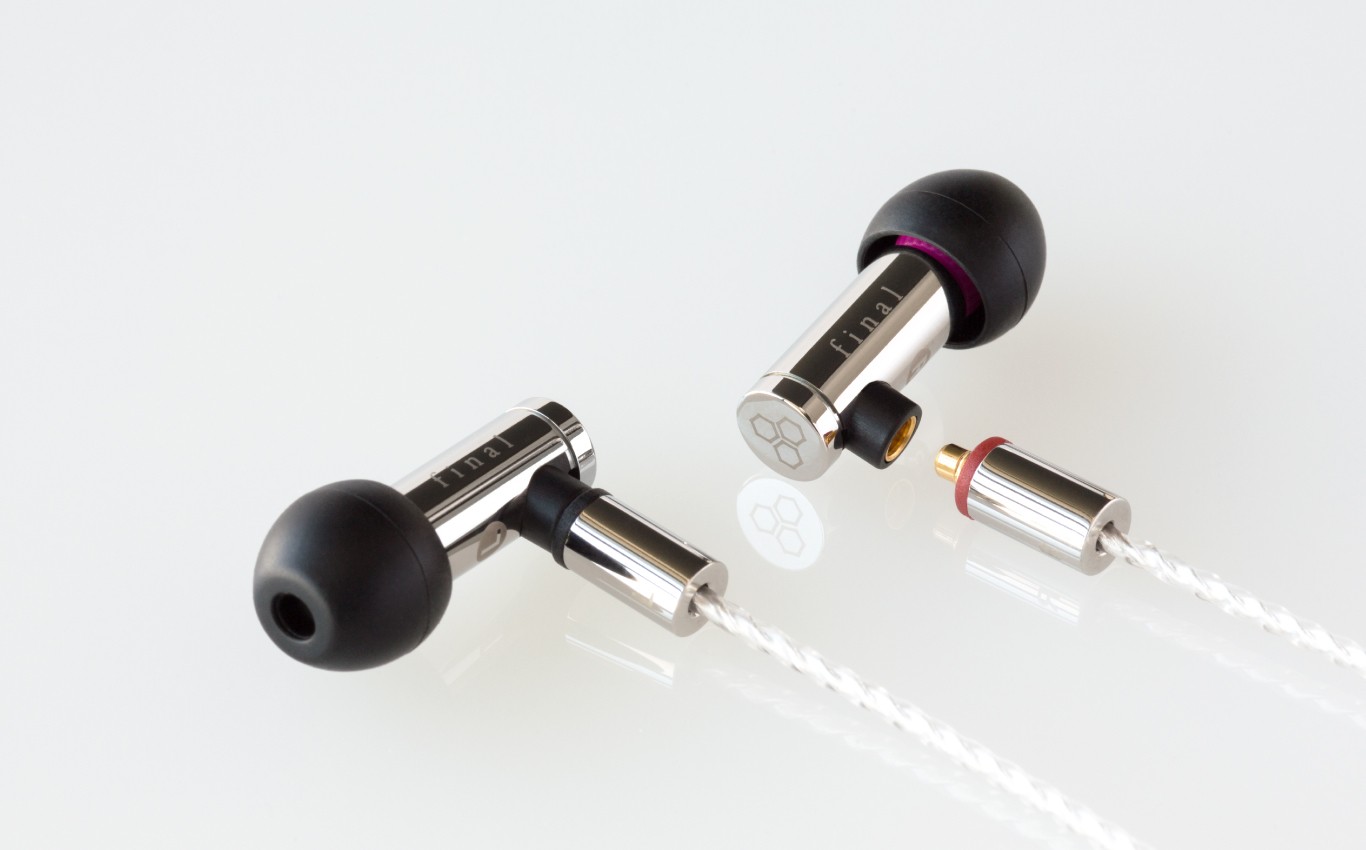
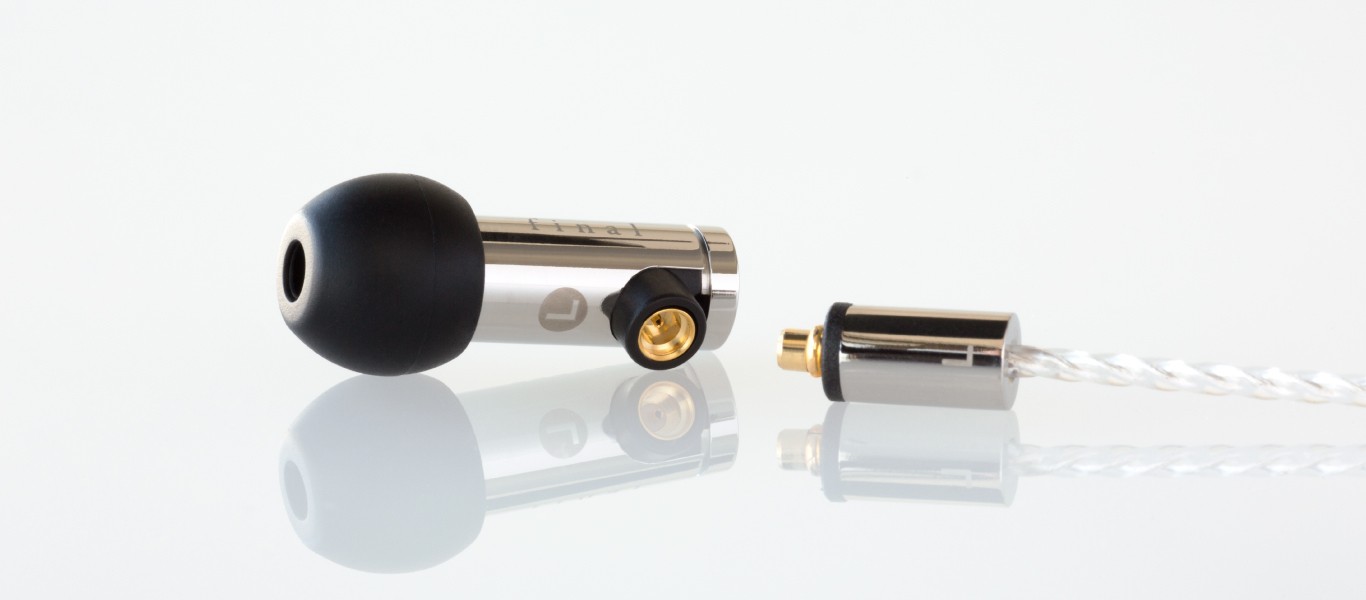
The official packshot on this page shows both earphones with the MMCX cable detached and the “final” lettering readable; a second manufacturer photo shows the L side. Cutaway or diagram images do not belong in the product gallery.
How the technology works
A 6.4 mm wide-band driver with a small aperture works in the shell. Final describes an acoustic filter and a uniquely shaped chamber behind the driver, plus a pressure-lowering diaphragm pipe at the rear of the housing meant to keep the low frequencies in balance. Those are manufacturer claims, not measurements of our own. Hughes relays them as the background to a tuning intended to make masked front-to-back depth cues more audible.
The swing-fit tips and pivoting sound tubes are meant to adjust the angle, keep hard parts off the ear canal and improve the fit. Hughes calls the fit “second to none” and confirms the supplied ear hooks. The colour-coded tips have, according to the review, a semi-rigid grooved inner silicone nozzle and a soft outer layer.
The MMCX cable was, according to Hughes, developed with Junkosha; JUNFLON cables are treated in his text as sonically serious and meant to unlock fast attack and clarity. The conductors are silver-plated OFC, and the 3.5 mm plug is designed to withstand more than 50,000 bends. Handling noise is meant to stay low because of that construction.
What the international specialist press hears
Character
Hughes holds the E5000 to be a fantastically well-rounded earphone and writes that it may well define the mark of what sub-£220 or sub-$300 earphones can do. In his listening it produced a rich, solid midrange above par for the price class. On Curtis Mayfield’s “Underground” he describes bite and body in the midrange groove that moves the listener toward the music.
Tonal balance
He felt the treble was a little harsh out of the box; towards the end of his tests, close to the 200-hour mark, it had become “truly outstanding”. That is a clear statement in the review about running-in, not an in-house observation and not a promise from this page that every listener will hear the same course. A sharp treble peak that masks other bands is exactly what Final says this series tries to avoid; Hughes’s course — a little edgy at first, later smooth — stands beside that as a listening report, not as proof of the theory.
Dynamics, bass and stage
Hughes would have liked a wider stage and a more aggressive bass line on hard-driving funky tunes. He puts both as wishes, not as a break: the E5000 is already a well-rounded earphone, and it is “scary to think” he is only just in sight of the 200-hour mark. Dynamically and in imaging, then, the text stays sympathetic with documented limits, not unreserved.
Strengths and limits
Strengths in the review: elegant simplicity, a fit second to none, a rich midrange, treble after running in, a carefully made cable, a steel shell. Limits: a stage not as wide as the author would like, bass on funky music not as agile, treble a little harsh at first, plus the low sensitivity on the data sheet, which the review does not sell as easy to drive. The 25 June 2019 review is a classic magazine listening test and therefore t646u-eligible; the list package still awards no badge to this model, because the Pro X10 in the same tier has the same sound-data score and a higher raw figure.
Research consensus
Manufacturer data and the listening review form a stable, older picture. The E5000 is a carefully built wired in-ear with a stainless-steel shell, a replaceable cable and a magazine review that records a rich midrange and, after running in, outstanding treble, while leaving wishes open on stage and bass agility. The documented euro price sits at the upper Premium edge; on the research date the specialist-trade listing was not in stock. The low sensitivity remains the documented reservation on drive. Those sentences are a consensus of the sources, not an in-house listening judgement.
Features and daily use
According to the review and the manufacturer the carton holds the in-ear, the MMCX cable, an array of colour-coded swing-fit tips and ear hooks. The official packshot on this page shows both sides with the cable detached and the “final” lettering; a second manufacturer photo shows the L side with the plug. The pictures are for orientation and come from the manufacturer. A cutaway of the shell is deliberately not used as a product photograph.
In daily use the fit and the chosen angle of the sound tube matter. Hughes ranks the fit above much of what he has heard elsewhere. Anyone who recognises the initially harsh treble in the review should read its note about running-in, without turning that into a compulsory number of hours. There is no remote; at the system that barely matters.
Price and availability
On 12 November 2026 the E5000 stood at €249.00 at allsound.at. That is the documented European specialist-trade price the list uses. The same page marked the item as not in stock on the research date; this analysis does not invent an alternative stock claim and does not convert the historical £219 / $279 into a second euro price. Street prices and availability at other dealers may differ, without guarantee.
At the amplifier and on a vinyl system
On a phono chain the E5000 hangs from the jack after the phono stage. 14 ohms are uncritical; 93 dB sensitivity is not: a slightly stronger headphone stage or a small converter is, on the data, the sensible first step before blaming the model for a timid presentation. An expensive reference amplifier is not documented as required for that.
The rich midrange Hughes describes suits, according to the review, groove-led and vocally dense recordings. Anyone expecting a very wide recorded stage or maximum funk bass will find exactly those wishes in his text, not their fulfilment. In a living room without a closed listening space the passive seal of the isolating tips helps keep the level moderate.
The Final A5000 from the same brand sits in Expert and has a more recent SoundStage listening review at a higher euro price. A direct index comparison between the tiers is not made here.
Who is it for?
The E5000 suits listeners who want a wired in-ear with a stainless-steel shell, a documented specialist-trade price and a magazine review that describes a rich midrange and, after running-in, smooth treble. It fits less well if you want to listen from a very weak jack with no reserves, if you expect a very wide stage or maximally agile funk bass, or if you are looking for a badge in the Premium tier. The list package places it in rank 33 with index 55.
How it compares
In the ten-model Premium tier the neighbours include the Sony IER-M500, the Meze Alba, the Moondrop Aria 2, the Sennheiser IE 200, the Westone Pro X10 and the Sennheiser IE 300. The Sound badge sits with the Sony IER-M500 and the value badge with the Moondrop Aria 2; the Pro X10 and the Alba carry no badge in this list record. The E5000 is dearer in euros than the Alba and the IE 200 and sits close to the Pro X10 in price. Those relations are the list record, not in-house listening comparisons.
How it sits on the opened list
The in-ear shortlist of 12 November 2026 opens Premium and Expert and expands Master. The Final E5000 sits there in the Premium tier in rank 33 with a Vinyl BotPro index of 55 and carries no badge. That figure is the list record from the four documented subscores and from mapping onto the 55–69 band. The reasons appear in the list package’s overview of the models.
As neighbours the list names the Westone Pro X10 immediately above it and the Sennheiser IE 300 below it. A gap of a few index points describes order within the tier, not the size of a sonic difference. Anyone weighing the E5000 against the Pro X10 should read both magazine reviews, the two euro prices and the drive note (93 dB against typically more sensitive figures), not only the index number.
For listening to records the practical point remains the headphone stage after the phono stage: fit, seal and, on this model, enough level reserve matter more than an expensive extra box for its own sake. The sources do not describe a heavy multi-way drive requirement, but they do describe an unusually low sensitivity.
FAQ
What exactly is the Final E5000?
A wired universal-fit in-ear and flagship of Final’s E series (S’Next, Japan) with a 6.4 mm dynamic driver, a stainless-steel shell, swing-fit tips, an MMCX cable with silver-plated OFC, and data-sheet figures of 14 ohms and 93 dB sensitivity.
Does the E5000 need a headphone amplifier?
14 ohms looks low, but the 93 dB sensitivity is clearly lower than typical in-ears on this list. Hi-Fi+ quotes the figures but does not claim that a phone output is enough. A small converter or a stronger headphone stage is, on this data, more likely to be needed than with the Alba or the IE 200. An expensive flagship as a required partner is not documented.
Is it suitable for listening to records?
As a wired in-ear with a 3.5 mm plug it hangs from typical phono chains. Hi-Fi+ describes a rich, solid midrange, treble that became outstanding after running in, and an all-round successful character; a wider stage and a more aggressive bass line on funky music would have been welcome. The low sensitivity is the practical point on a plain jack.
What does the E5000 cost?
In European specialist trade (allsound.at, Audio Tuning) the price on 12 November 2026 was €249.00. On the same date the item was marked not in stock there; the price is documented, this page does not guarantee availability. Hi-Fi+ quoted £219 / $279 in 2019. Prices change, without guarantee.
How important is running-in?
Buzz Hughes wrote that the treble was a little harsh out of the box and, towards the end of his listening, close to the 200-hour mark, had become “truly outstanding”. That is the review’s statement, not an in-house observation.
Does this page rest on a listening test by the VinylCination team?
No. There was no in-house listening test and no measurement of our own. The assessment draws on Final’s manufacturer data and the international Hi-Fi+ magazine listening review (Buzz Hughes, 25 June 2019). The list record (Premium, rank 33, index 57) comes from the list package of 12 November 2026.
Conclusion
The Final E5000 is a clearly documented wired in-ear for the opened Premium tier: a stainless-steel shell, a replaceable cable, a documented euro price and a 2019 magazine review that records a rich midrange and, after running in, outstanding treble, while leaving wishes open on stage and bass agility. The list record of 12 November 2026 is Premium rank 33, index 55, with no badge. Anyone planning €249.00 and taking the low sensitivity into account will find a solid source base here. Anyone expecting immediate stock at a single dealer, or a badge, must read the research date and the tier’s badge rule as well.
About this AI analysis
This section is an AI summary of a published international magazine listening review and of Final’s own data. Vinyl BotPro places the findings and links them to the data sheet, the specialist-trade price and the list record; VinylCination does not carry out its own listening tests or measurements, and all sources are linked at the end of the page. Prices and availability change (as of 12 November 2026, without guarantee). Subscores and index come from the list package of the same day.