
On-ear headphones · AI analysis · Premium, rank 1
Grado Signature S150 Review
AI analysis (research): open-back on-ear with new 44 mm driver, 38 Ω, 220 g – manufacturer data and an international listening review, no listening test of our own.
Summary
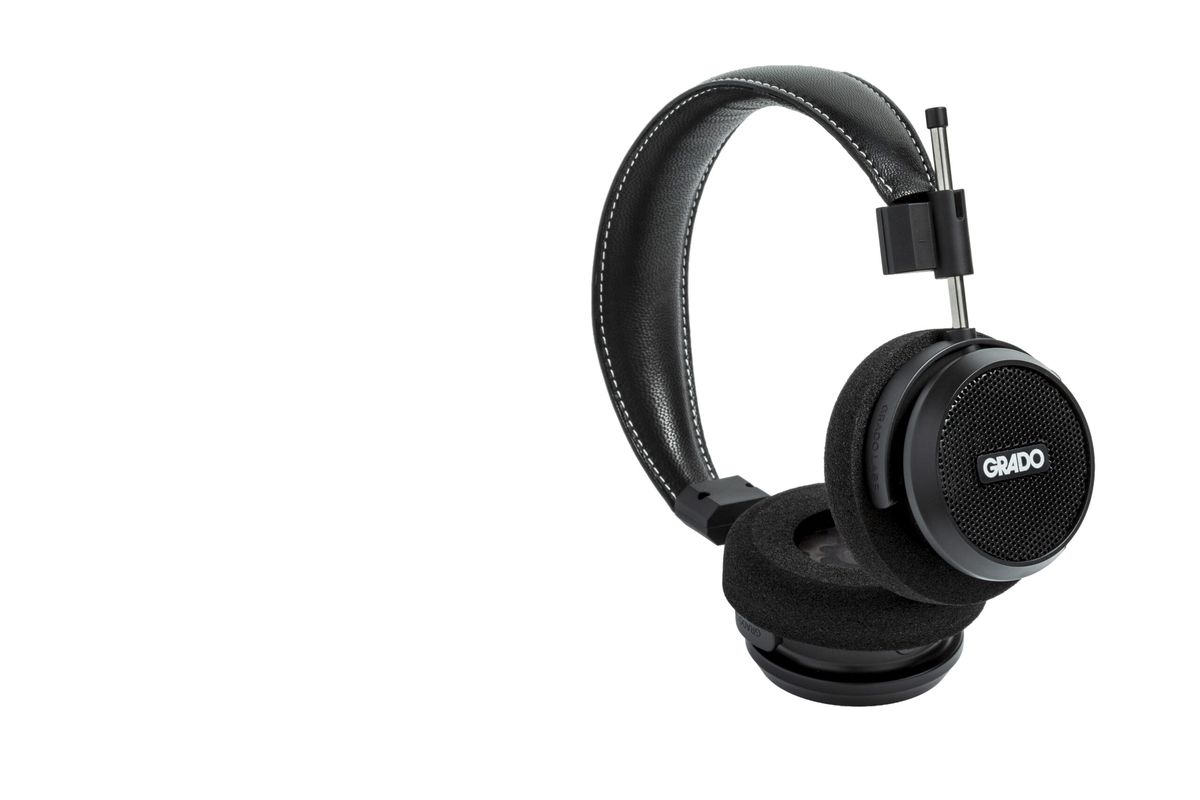
The Grado Signature S150 is an open-back on-ear headphone: its flat F cushions rest on the outer ear rather than surrounding it. Grado introduced it on 22 October 2026 as the new entry point to its Signature line. It costs 295 US dollars or 295 pounds; in European retail it sells for around €379 according to retailer listings (as of 7 Nov 2026, no guarantee). New are a purpose-built 44 mm driver with a paper-composite diaphragm, a single-piece ABS housing, detachable cables and the revised Signature headband. With 38 Ω and 104 dB SPL at 1 mW it runs from practically any headphone output.
The first detailed international listening review describes it as fast, dynamic and noticeably more refined than Grado's older entry models, with tight, well-defined bass and a wide soundstage. The treble can sound hard with bright sources, and the headphone leaks a lot of sound. In our new on-ear ranking it takes first place in the Premium tier (index 68) and holds the Value Vinyl BotPro Champion title. Its lead over the SR325 Classic and Hemp is small in the weighted raw score (7.38 vs 7.33 and 7.30); within a tier the index mainly reflects the order – an AI assessment based on manufacturer data and a single listening review, not our own listening impression.
Specs (manufacturer)
| Design | open-back, supra-aural (on-ear), dynamic |
|---|---|
| Driver | 44 mm S driver, paper-composite diaphragm |
| Frequency response | 16 Hz – 34 kHz |
| Impedance | 38 Ω |
| Sensitivity | 104 dB SPL at 1 mW |
| THD | < 0.3 % at 100 dB |
| Driver matching | 0.05 dB |
| Weight | 220 g |
| Cable | Signature Bronze, detachable, 2 × 3.5 mm at the cups; 3.5 mm plug with 6.3 mm adapter |
| Cushions | F cushions (L/G/S/B compatible) |
| Price | $295 / £295 (MSRP); approx. €379 in Europe per retailer listings, as of 7 Nov 2026, no guarantee |
Scores in detail
Vinyl BotPro Index 68 (Premium 55–69) · sub-scores 0–10, weights 35/20/15/30 · weighted raw score 7.4, mapped within the tier onto 56–68: the index shows the order within the tier, not measured differences in sound. Editorial synthesis, not a lab value · Sub-score rationale.
Manufacturer and concept
Grado Labs of Brooklyn is a family business that has hand-assembled open-back headphones in small batches for decades. The brand became famous with the SR60 and SR80, which offered a very direct, lively sound for little money. Ever since, round open housings, foam cushions and a deliberately simple headband have been typical of Grado. Comfort and features long took a back seat to sound; fixed cables and a stiff leather headband were part of the brand image.
With the Signature line, Grado has taken a different path over the past two years. Models such as the HP100 SE, S950 and S550 received newly developed drivers, detachable cables and an adjustable headband. These models, however, start at around 1,000 US dollars. The S150 is meant to bring the most important innovations into the price class of the well-known entry models. In price it sits between the SR80 and the SR325 of the Classic series renewed in March 2026, but technically it belongs to the Signature family.
Important for classification: Grado calls the S150 an open headphone and refers to the "Open Air" operating principle. The form factor is on-ear. The supplied F cushions are flat and sit on the ear. That is why we do not include the S150 in the over-ear ranking but in its own on-ear list. Larger Grado cushions such as L or G will fit, but they are not included and change both fit and tuning.
Technology explained
The new 44 mm S driver
At its heart is a dynamic driver with a 44 mm diameter that Grado developed specifically for this model. The diaphragm is made of a paper-composite material. It is derived from the larger 52 mm drivers in the HP100 SE and S950, but was retuned for the smaller format. Paper-composite diaphragms are considered light and well damped; they can suppress resonances without making the diaphragm heavy. How this plays out in practice depends on the whole design: magnet, voice coil, housing volume and cushions all work together.
The S150 does not use the X2 drivers of the Classic series, even though those are also 44 mm. Same diameter does not mean same technology here. According to Grado, the drivers are matched to within 0.05 dB. That figure describes how closely the left and right channels match and mainly contributes to a stable centre image.
Manufacturer data at a glance
According to Grado, the frequency response extends from 16 Hz to 34 kHz, and distortion is below 0.3 % at 100 dB. Nominal impedance is 38 Ω and sensitivity 104 dB at 1 mW. Grado states the weight as 220 g. All figures come from the manufacturer; VinylCination does not carry out its own measurements.
A one-piece housing
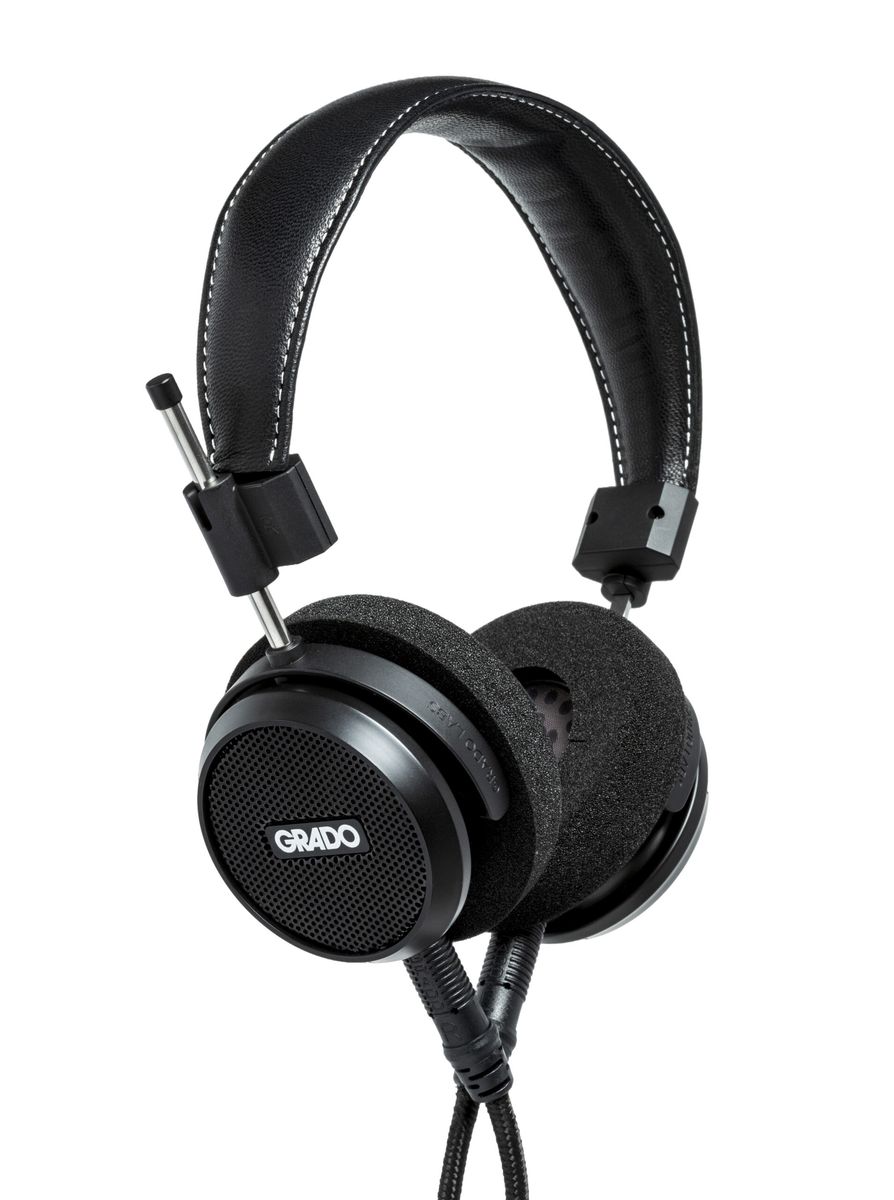
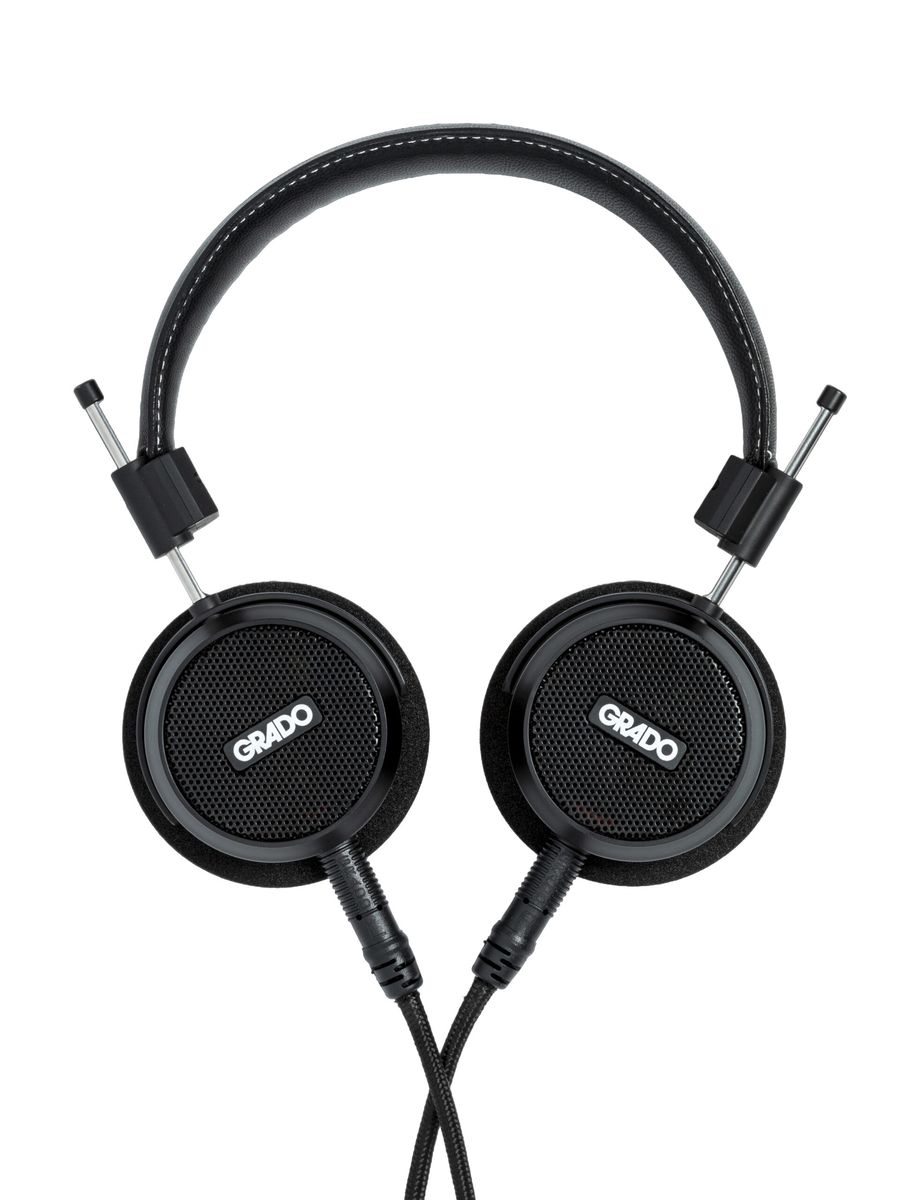
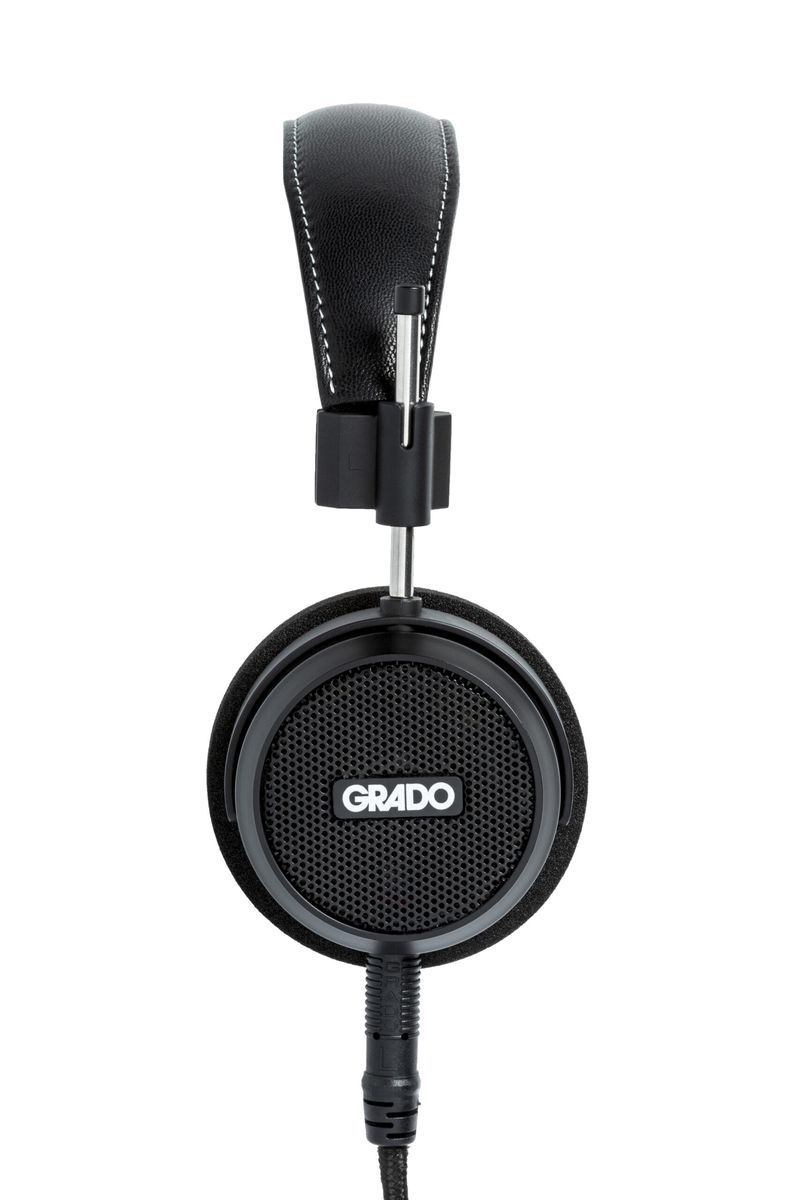
Instead of the wood or machined aluminium of the more expensive Signature models, the S150 uses a single-piece acoustic chamber moulded from ABS polymer in matte black. One part instead of several means fewer joints and more consistent manufacturing. At the same time, weight stays low. In the hands of one reviewer the polymer first felt basic, but compared directly with an older SR80x it came across as better made.
Headband and mechanics
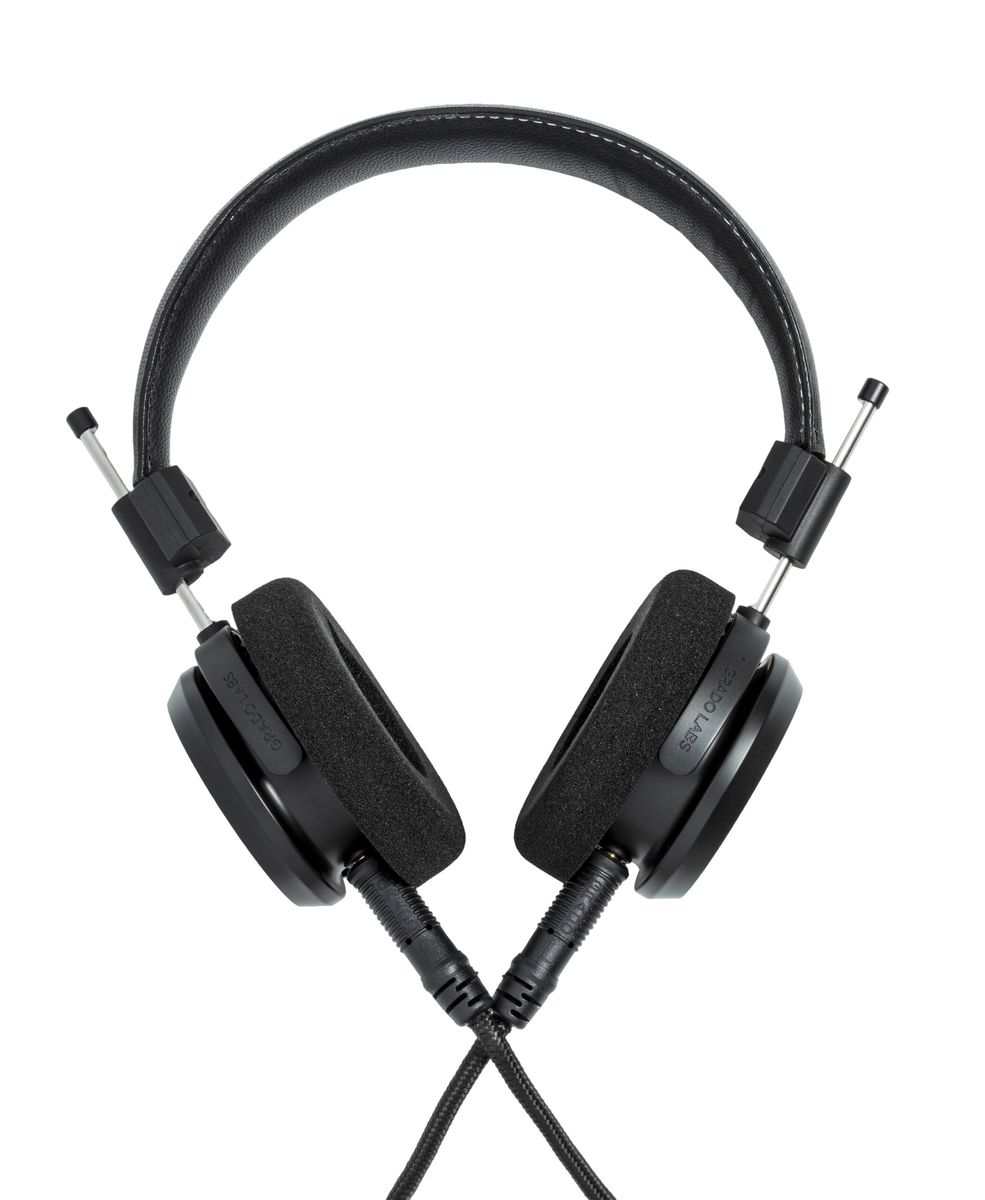
The new Signature headband has a padded leather strap. Inside sits a flexible steel band that can be carefully bent. This lets you set the clamping force yourself – a point that matters especially with on-ear headphones, because the cushions rest directly on the ear. Add to that polymer gimbals, stainless-steel height rods and reinforced junction blocks. The earcups rotate in a controlled way and can be turned flat for storage. Grado also sells the headband assembly separately; it fits compatible older Grado models.
Detachable cable
The Signature Bronze cable plugs into its own 3.5 mm socket on each earcup. It is detachable and, according to Grado, lighter and more supple than previous cables. At the source end it terminates in a 3.5 mm plug with a screw-on 6.3 mm adapter. Other terminations can be chosen when ordering. The more expensive Signature models use four-pin mini-XLR connectors; the S150 makes do with two simple jack sockets, which makes it easier to swap in cables from other makers.
What the international specialist press hears
The following points are an AI summary of the international listening review available so far. VinylCination does not carry out its own listening tests or measurements; all sources are linked at the end of the page. Because only one detailed listening review exists so far, the picture is still narrow.
Sound character
The S150 sounds fast, direct and energetic – recognisably a Grado, but more polished than the old entry models. Voices are clear and present at the front, and rhythm and timing are seen as its greatest strength. It plays in an engaging rather than an analytical way and avoids a deliberately soft, forgiving tuning.
Bass
According to the review, bass is one of its strengths: tight, well defined and with little thickness in the mid and upper bass. It does not reach the physical impact of a closed-back headphone in the deepest range. Anyone expecting a lot of sub-bass is looking at the wrong model.
Midrange and treble
The midrange comes across as immediate and well articulated. In the upper midrange and treble it can sound pronounced, at times hard, with bright sources. According to the review, this impression faded after about a week of playing time. Warmer DACs and amplifiers suited it better than lean combinations.
Soundstage and imaging
For its price class the soundstage is wide; instruments are spread beyond the earcups and cleanly separated. Depth does not quite match the width. The S150 does not flatter poorly produced, heavily compressed recordings.
Consensus and open questions
Because only one detailed listening review is currently available, it is too early to say whether other reviewers will judge the treble similarly. The review and the launch reports agree on weight, comfort and the detachable cables. Points of criticism are the basic plastic feel, strong sound leakage and the lack of a carrying pouch.
Features and everyday use
The box contains the headphones, the cable and the adapter. A pouch or case is missing, which the review explicitly criticises. At 220 g the S150 is among the lightest headphones in its price class. Clamping force is moderate; the fit stays stable even when moving, without pressing. The foam cushions stay airy even in warm weather.
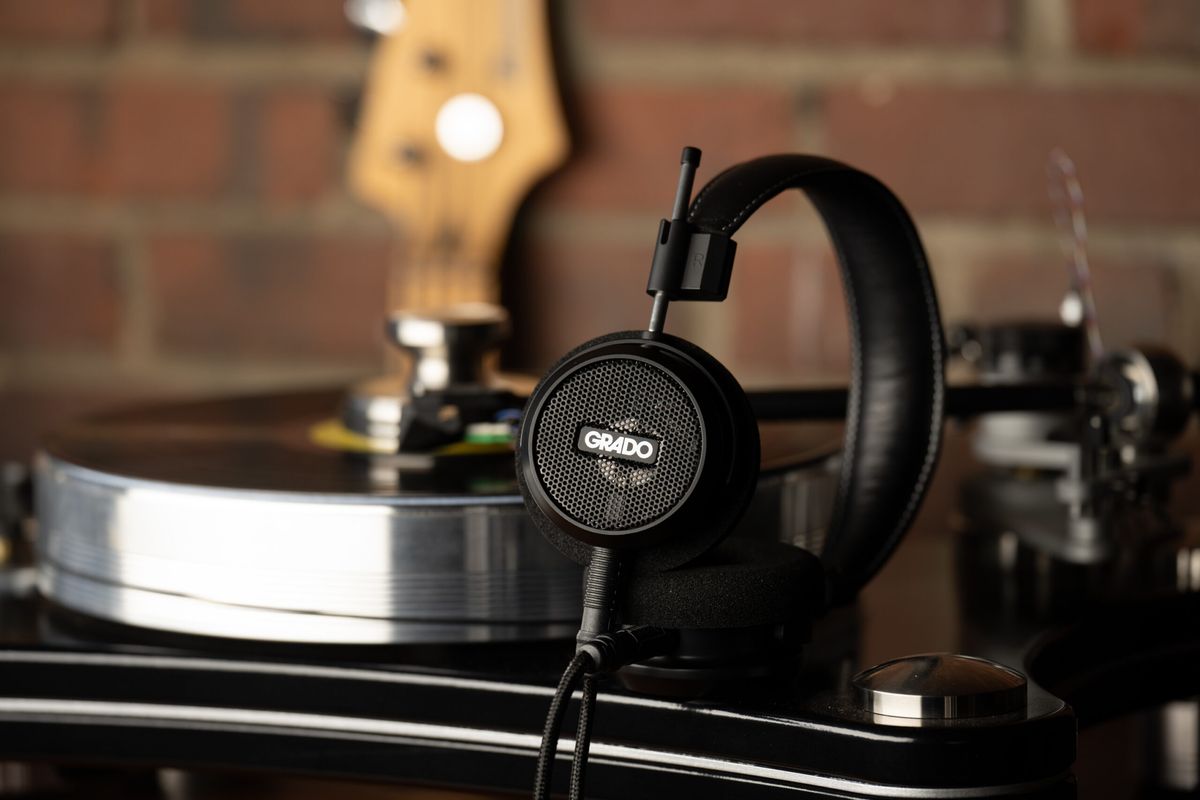
Like every open-back headphone, the S150 barely isolates. In the review, music was still audible three to five metres away. That makes it hardly suitable for trains, open-plan offices or cafés. At home by the turntable, where nobody is disturbed, this property turns into an advantage: an open design means less pressure on the ears and a more airy presentation.
A practical tip: Grado encourages experimenting with different cushions. The supplied F cushions are part of the tuning. If you want more distance to the driver, you can try L or G cushions; but then the character changes too, and the headphone no longer sits on the ear in the classic way.
With amplifiers and in a vinyl system
With 38 Ω and 104 dB SPL at 1 mW, the S150 is very easy to drive. It works from the headphone output of an integrated amplifier, portable players and USB dongles. A separate headphone amplifier is not necessary but can shape the tonal balance: in the review, warmer sources were a better match. If you own a bright, analytical headphone amplifier, keep that in mind.
In a vinyl system, the signal travels from the turntable through the phono preamp into the amplifier and from there to the headphones. Many phono preamps and integrated amplifiers have their own headphone output. For an easy-to-drive on-ear like the S150, that is usually enough. Because the treble reacts sensitively to the source, the voicing of your cartridge is worth considering: by this logic, a warmer, rounder cartridge is a better partner than a very bright one.
Who is the S150 for?
The S150 suits listeners looking for a light, open-back headphone for home use who prefer a lively, rhythmic sound to a soft, relaxed tuning. According to the review, rock, jazz and acoustic music benefit most. If you currently use an SR60 or SR80 and are annoyed by the fixed cable or the hard headband, the S150 is an obvious next step.
It is less suitable for use on the move, for noisy surroundings and for listeners who want a lot of deep bass. If you generally find on-ear cushions uncomfortable, an over-ear model is the better choice; you will find those in our best over-ear headphones ranking.
Comparison with alternatives
Grado SR325 Classic: The aluminium model of the Classic series costs a little more and uses the X2 driver with a fixed cable. It is regarded as clear and detailed but, according to one listening review, loses some of its predecessor's verve. The S150 offers the detachable cable and the new headband for less money.
Grado Hemp (Reference series): The model with a maple and hemp housing costs considerably more; a Classic version now exists. The review of the Reference version praises a large, well-organised soundstage; comfort is viewed as critically there as with many Grados. In the Premium tier, the Hemp stands for the strongest sound evidence, the S150 for the best balance of features and price.
Grado SR80x and Sennheiser HD 25: In the Starter tier these are the cheaper alternatives. The SR80x is being phased out (successor SR80 Classic) and offers the classic Grado sound with a fixed cable, while the closed-back HD 25 isolates much better and therefore also works on the move.
The complete classification is in our best on-ear headphones ranking.
Images
FAQ
Is the Grado Signature S150 an on-ear or an over-ear headphone?
With the supplied F cushions it is an open-back on-ear: the cushions rest on the outer ear. Larger Grado cushions can be fitted later but are not included.
How much does the S150 cost?
Grado quotes 295 US dollars and 295 pounds. In European retail it sells for around €379 according to retailer listings (as of 7 Nov 2026, no guarantee).
Does the S150 need a headphone amplifier?
No. With 38 Ω and 104 dB SPL at 1 mW it runs from practically any headphone output. The choice of source does affect the treble, though; warmer amplifiers were a better match in the review.
Can I replace the cable?
Yes. The cable plugs into a 3.5 mm socket on each earcup and is detachable. Grado offers other plug options when ordering.
Is the S150 suitable for use on the go?
Only to a limited extent. It is light, but as an open-back headphone it leaks a lot of sound and barely isolates. It is the better choice for home listening.
Verdict
The Grado Signature S150 brings the most important innovations of the expensive Signature models – new driver, detachable cable, adjustable headband – into a price class where Grado previously offered only its classic models. The first listening review describes a fast, dynamic sound with well-controlled bass and a wide soundstage, but also a treble that needs a suitable source. The plastic housing, the missing pouch and strong sound leakage are the compromises. As an AI we have no ears for an on-ear to press on – so we stick to the 220 grams, and they speak in its favour. For vinyl listeners seeking a light, open on-ear with Grado character for home use, the S150 is a natural option on current evidence; a broader picture will emerge once further listening reviews are available.
The special features of this analysis
This AI analysis combines manufacturer information, technical data and the verdicts of the specialist press into a compact assessment. It shows where the sources agree, which strengths are mentioned again and again and which system the headphone suits best.
Sources
- Grado — Signature S150 (manufacturer)
- Grado Newsroom — Grado Introduces the Signature S150 (22.10.2026)
- ecoustics — Grado Signature S150 Headphones Review (Ian White, Nov. 2026)
- ecoustics — Grado Signature S150: New Driver, Detachable Cables (22.10.2026)
Created by Vinyl BotPro (AI) · As of 7 Nov 2026 · All information without guarantee.