
Streaming Amplifier · AI Analysis · Master, Rank 2
Linn Majik DSM: Analysis
AI analysis (research): streaming integrated amplifier with Linn Selekt DAC, 2 × 100 W Class D, Space Optimisation room correction, MM and MC phono inputs and HDMI eARC. Based on manufacturer data and press reviews, no listening test.
Summary
Value-for-money Vinyl BotPro Champion Best value-for-money estimate of the tier on the data basis (no listening test).
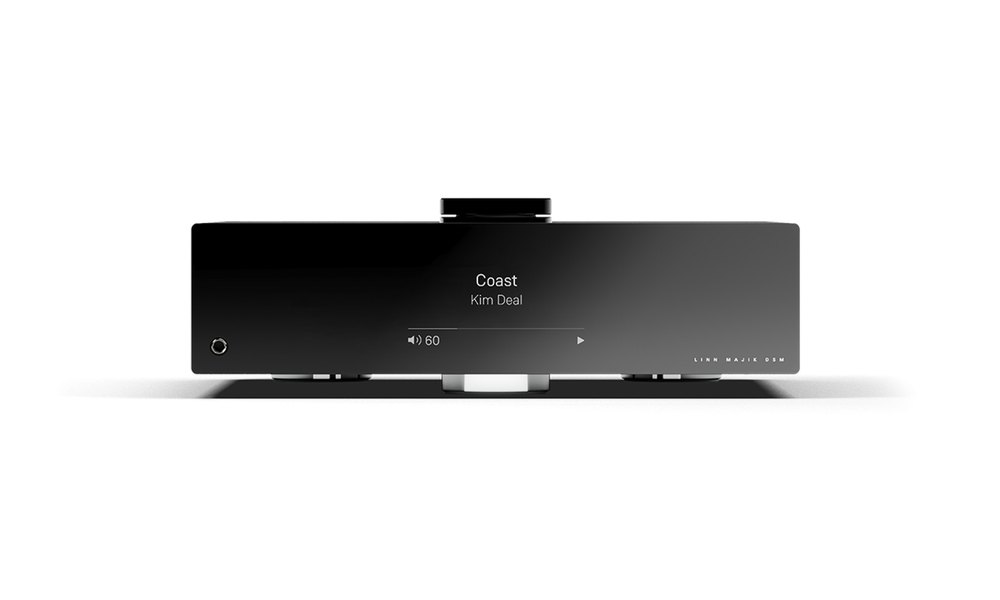
The Linn Majik DSM version 2025 is the fifth generation of the compact Linn streaming integrated amplifier. At its core is the streaming DAC from the Selekt with its own clocking and upsampling; added to that are a Class D power stage with 2 × 100 W according to Linn, Space Optimisation, MM and MC phono, HDMI eARC, a headphone output and streaming with AirPlay 2, Connect services and Roon Ready. The international specialist press describes the performance as surprisingly powerful and calls the Majik one of the few that combine high sound quality with streaming platform and effective DSP. Price guide about €5,100–5,500 (as of Oct. 2026, without guarantee).
Assumptions
- Price per device according to the manufacturer or DE-Market price; UK/US-prices rounded, Stand Oct. 2026, no guarantee
- Operation with passive speakers; vinyl via the phono input of the device or an external phono stage at the line input
- Streaming via WLAN or Ethernet; available services can change via firmware
- No in-house measurements or listening tests
Specifications (manufacturer)
| Type | Streaming integrated amplifier · Class D |
|---|---|
| Power | 2 × 100 W Class D (Linn, no impedance stated) |
| DAC | Linn Select Standard DAC · Upsampling |
| Phono | MM and MC (one RCA input each) |
| Streaming | Linn App · AirPlay 2 · Spotify, Tidal and Qobuz Connect · Roon Ready |
| HDMI | HDMI eARC |
| Space correction | Space Optimization |
| Price guide | approx. €5,100–5,500 · UK 4,299 £ · as of Oct. 2026 · without guarantee |
Manufacturer specifications (Linn)
| Power amps | 2 × 100 W Class D |
|---|---|
| Resolution | up to 24-bit/384 kHz |
| Integrated services | TIDAL, Qobuz, Spotify Connect, Deezer, AirPlay 2, Roon Ready, airable, TuneIn, Calm Radio |
| HDMI | HDMI 2.0 eARC (4K/60 Hz, HDCP 2.2, HDR, CEC) |
| Inputs | HDMI eARC, Toslink, S/PDIF (configurable in/out), USB-C, 2 × line (RCA), MM phono, MC phono |
| Outputs | 2 pairs of speaker terminals, RCA out, 2 × subwoofer (RCA), 6.3 mm headphone |
| Network | Ethernet, Wi-Fi 802.11ac, Bluetooth 4.2, Exakt Link |
| Room correction | Space Optimisation |
| Dimensions (W × H × D) | 350 × 114 × 372 mm |
| Weight | 5.7 kg |
Source: Linn – official specifications · As of 16 October 2026 · subject to change by the manufacturer
Rating criteria in detail
The four criteria feed into the Vinyl BotPro Index with weights of 25/20/25/30. The index is scaled across all tiers (see Methodology); that is why we do not show individual sub-scores.
Strengths
- According to SoundStage! excellent sound quality
- Room optimisation room correction
- MM and MC phono, HDMI eARC and headphone output
- Compact and high quality processed
Weaknesses
- Linn states the power without impedance or distortion conditions
- For large, low-efficiency speakers, SoundStage! advises on the NAD M33
- No microphone-based room measurement
- Room optimisation requires room data input
System matching
Works well with
- Shelving and floorstanding loudspeakers with normal sensitivity
- Housing with problems of installation
- Turntables with MM or MC system
Less suited
- Very large rooms with low efficiency loudspeakers
- Listeners looking for maximum power (the NAD M33 V2 offers 200 W per channel)
Specs & Features
The Majik DSM is essentially a high-quality streaming DAC with Linn's own clocking and upsampling; the pre-amplification works digitally in front of the DAC. According to Linn, the Class D power stage delivers 2 × 100 W and uses additional feedback after the output filter.
Room optimisation calculates the room adjustment from room dimensions, speaker model and placement. Added to that are MM and MC phono, HDMI eARC, a headphone output, two subwoofer outputs and streaming with AirPlay 2, Connect services and Roon Ready.
Research Consensus
SoundStage! Simplifi (Roger Kanno, 1 January 2026) calls the fifth-generation (2025) Majik DSM seriously competitive: excellent sound, a power stage that feels strong and one of the few combinations of high sound quality, streaming platform and effective DSP. For large, low-efficiency speakers, Kanno would rather use the NAD M33.
VinylCination summarizes this as AI summary of the specialist press, without its own listening test.
Specialist press in detail
Summaries in own words (AI), per magazine with source; no quotes, no listening test of our own.
SoundStage! Simplifi (Roger Kanno, 1 January 2026)
Kanno calls the fifth-generation Majik DSM seriously competitive: excellent sound, a power stage that feels strong, intuitive operation and one of the rare combinations of high sound quality, streaming platform and effective DSP. For performance-hungry speakers, he refers to the NAD M33. For the report
Placement, use & Room
The Majik DSM is compact and flat. Room optimisation calculates the room adjustment from room dimensions, speaker model and position, without microphone measurement; this helps especially with near-wall placement.
With 2 × 100 W according to Linn, it suits most realistically paired loudspeakers; a further review describes the performance as surprisingly strong.
Matching Speaker, Turntable & Cartridge
- Speaker: Shelf and Floorstanding speaker with normal sensitivity, for example from the Top list Bookshelf speaker. For large, low-efficiency speakers, SoundStage! recommends the NAD M33.
- Turntables and cartridges: separate MM and MC inputs take cartridges from the best cartridges list directly; a phono stage from the best phono preamps list is optional.
Streaming platform & app practice
The Linn app controls library, services, and space customization, along with AirPlay 2, the Connect features of Spotify, Tidal, Qobuz, and Roon Ready.
Kanno and StereoNET (David Price, 4 April 2025) praise the intuitive operation on the device and in the app.
Analysis: Linn Majik DSM in detail
Scope and sources
On the existing VinylCination page the Linn Majik DSM carries the title Value Vinyl BotPro Champion in the Master tier, with Vinyl BotPro Index 94 and rank 2 in that tier (analysis 09/2026). The live page expressly names the 2025 version as the fifth generation. That ranking remains the live page’s; this long analysis adds named, checked international listening reports of that fifth generation and the official manufacturer data. VinylCination has neither heard nor measured the Majik DSM itself.
Three specialist texts of the exact 2025 model (Majik DSM/5, called “5G” by some magazines, here in the sense of the fifth generation, not the Wi-Fi band) are the pillars. SoundStage! Simplifi (Roger Kanno, created 1 January 2026) hears the 2025 iteration in his system with MartinLogan Masterpiece Classic ESL 9 speakers, a Beelink mini PC running Roon and a Technics SL-1500C with an Ortofon 2M Black. StereoNET (David Price, 4 April 2025) hears the new unit among other things with Linn’s 119, Yamaha NS-1000M and Wharfedale Diamond speakers. Hi-Fi+ (Simon Lucas, 3 November 2026) describes the same fifth model with attention to tonal balance, treble and stage. Listening reports of the fourth generation from 2020 (Majik DSM/4) we do not use as a pillar.
The Linn manufacturer page (Majik DSM, retrieved 12 November 2026) and the LinnDocs specification for the DSM/5 variant state, among other things, Class D output stages, streaming to 24-bit/384 kHz and DSD256, separate MM and MC phono inputs, HDMI eARC, two subwoofer outputs, Exakt Link, Space Optimisation, 350 × 114 × 372 mm and 5.7 kg. The live table is left unchanged. The live page gives about €5,100 to €5,500 and £4,299 (as of October 2026, without guarantee). Kanno quotes US$5,950, CA$8,085, £4,299 and €4,300 plus taxes.
Place in the range
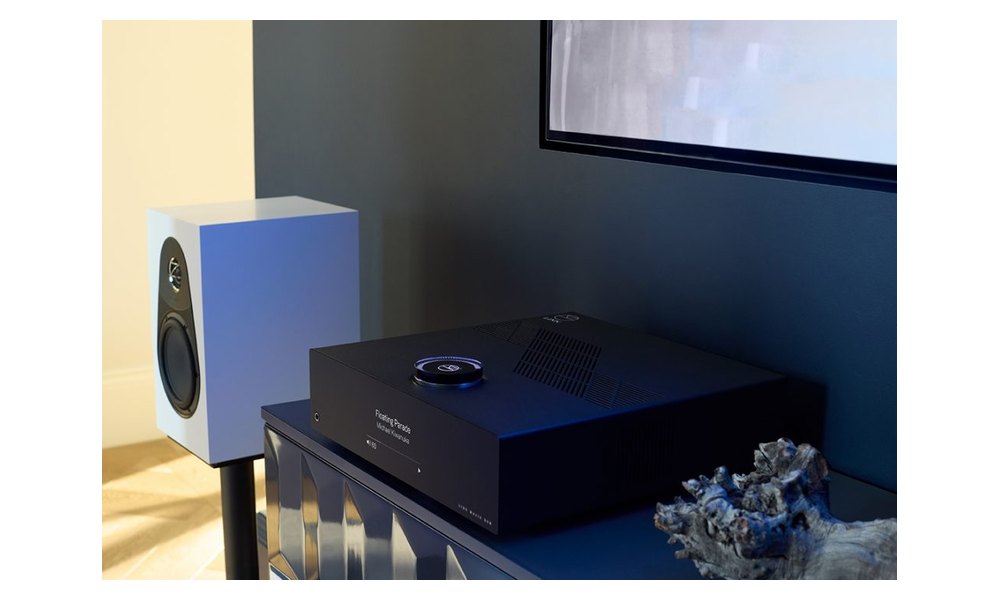
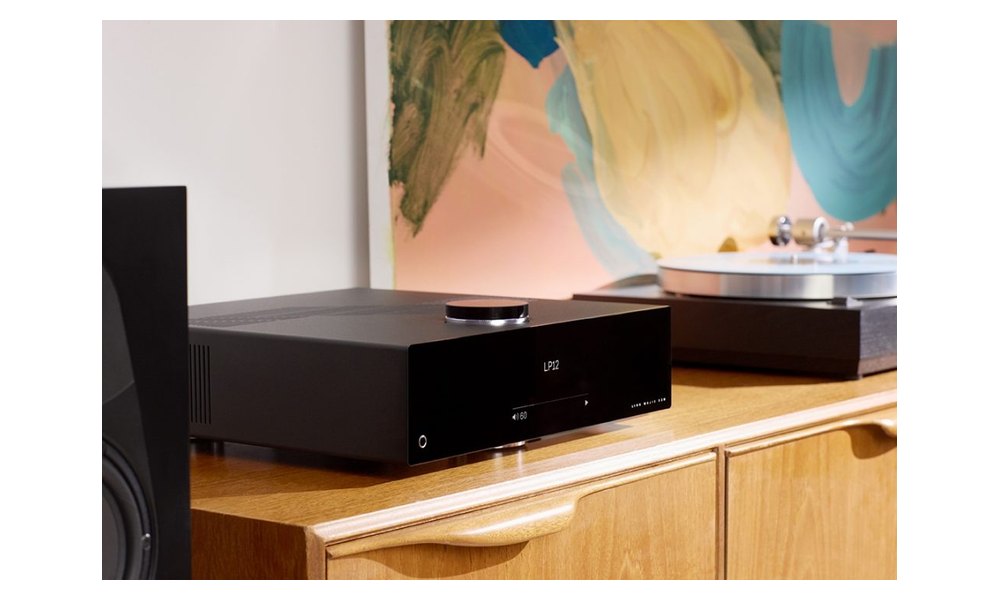
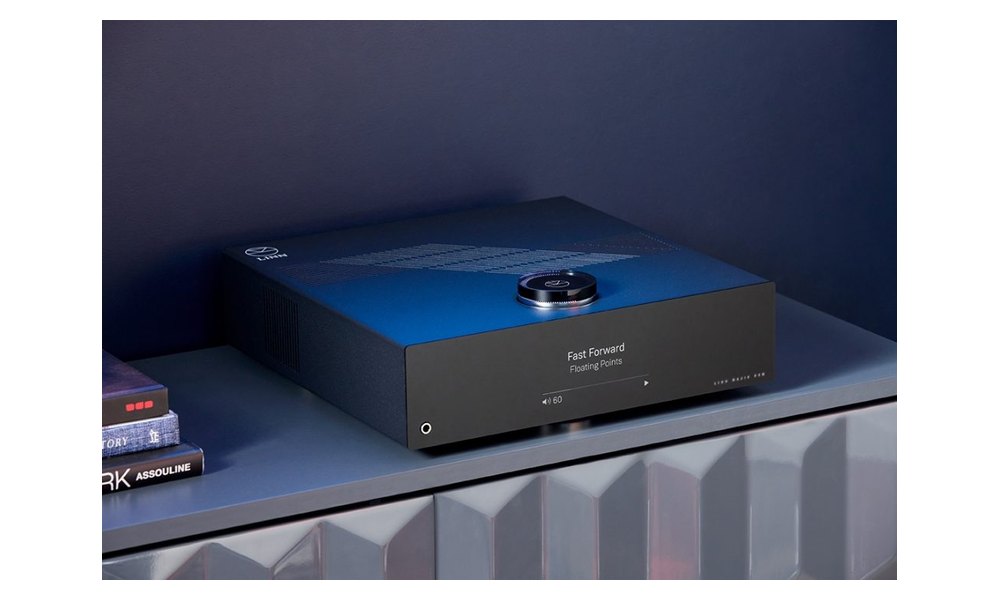
The 2025 Majik DSM is the fifth generation of Linn’s compact streaming integrated amplifier, successor to the Majik DSM/4 (2020 to April 2025). Outwardly it stands closer to the Selekt and Klimax language: an acrylic front, an illuminated glass control dial, powder-coated aluminium. Against the fourth generation the live page names, among other things, the Selekt Standard DAC, HDMI eARC, separate MM and MC inputs, two sub outputs and the larger, heavier cabinet. Listening texts that describe only the 2020 unit do not replace those facts.
The existing page lists it in the Master tier of streaming amplifiers as value champion with Index 94 and rank 2, behind the NAD M33 V2 (Index 96). The Naim Uniti Star and Arcam SA45 sit in the comparison table. This long analysis takes that order and does not recalculate the index.
Price recalls the line from the 2009 Majik DS-I through the DSM generations to 2025, and the company’s remark that the new unit distils what Linn can offer in a compact box. That is context, not a listening judgement.
Design and manufacturer data
According to the live table and the maker, the Class D output stage delivers 2 × 100 W, without Linn stating impedance and distortion conditions at that point. Kanno and Price report the figure as 50 W into 8 ohms and 100 W into 4 ohms, with additional feedback after the output filter, derived from the Selekt modules. We take that impedance breakdown as the specialist press’s reading and do not change the live table, which leaves the maker’s missing impedance figure in the open. The DAC is, according to Linn and Kanno, the Selekt Standard DAC with proprietary clocking and upsampling; Price mentions AKM converter chips in Linn’s own surrounding circuitry. Preamplification sits in the digital domain before the DAC.
Inputs include HDMI eARC, Toslink, assignable S/PDIF, USB-C, two line RCA, MM phono and MC phono; outputs two speaker pairs, RCA, two subwoofers and a 6.3 mm headphone jack. Network: Ethernet, Wi-Fi, Bluetooth 4.2, Exakt Link. Space Optimisation calculates room correction from dimensions, loudspeaker model and placement, without a microphone. Kanno gives the phono stage as 47 kΩ / 100 Ω, 100 pF / 470 pF and 40 dB / 54 dB for MM and MC. These figures are manufacturer or report values, not measurements of our own.
The fifth-generation cabinet measures 350 × 114 × 372 mm and weighs 5.7 kg — larger and heavier than the 2020 variant (100 × 350 × 350 mm, 4.1 kg according to LinnDocs, cited here only to tell the generations apart). Control is through the current Linn app, a web interface and the supplied remote. The earlier Kazoo app has, according to Kanno, not been developed further since 2023, after Tidal withdrew support.
What the specialist press heard and measured
Kanno has Space Optimisation set up in his room by a Linn trainer. On Def Leppard’s Hysteria and “Photograph”, and on Falco, Mozart (Deutsche Grammophon Original Source vinyl) and Supertramp, he describes a surprisingly robust-sounding output stage on the none-too-easy MartinLogan electrostatics, lively guitars, quiet vinyl playback through the MM input, and a headphone output that surprised him on “Desert Rose” and Yellow Magic Orchestra and drove HiFiMan HE400se headphones better than the output of his Oppo UDP-205. He sets the built-in phono stage beside a miniDSP ADept: similarly quiet, the miniDSP with a touch more sparkle, depth and bite on saxophone. For large, inefficient loudspeakers he would rather take the NAD Masters M33, which in his text is more expensive. Overall he calls the Majik seriously competitive: high sound quality, a capable streaming platform and effective room correction in one box, with a flawless app and web interface.
Price hears an entertaining, even, detailed and rhythmically coherent unit that does not push a warm or romantic colouring. On Fleetwood Mac, Roxy Music, Zero 7, Nirvana and Beethoven he describes spatial presentation, a neutral studio-like balance and the ability to carry very different programmes equally well. The phono stage is no afterthought: on Bowie’s “Ashes to Ashes” an open, quiet picture without hiss. In his report the unit drove large Yamaha NS-1000M monitors as well as small Wharfedale Diamonds, not only Linn’s own 119, which he rates as fairly demanding (86 dB, 4 ohms). Control via app and remote he calls clear and practical.
Lucas finds the fifth generation visually close to the fourth, with the familiar glass control dial. Tonally the unit is even and neutral; the treble can seem a little forthright with already sharp speakers, but in a sympathetic chain it supplies bite and shine without splash. Bass may at first seem slightly tentative, then reveals itself as firmly controlled. The soundstage is wide, orderly and plausible, and the temporal togetherness — Linn’s concern with time alignment — especially convincing. By Linn’s standards the price can even look like a bargain, provided the loudspeakers are chosen with care.
The live page already carried Kanno’s formula of a robust-sounding output stage, the rare combination of sound, streaming and DSP, and the pointer to the NAD M33. We now assign it by name to SoundStage! Simplifi (1 January 2026) and add Price (4 April 2025) and Lucas (3 November 2026) as further magazine reports of the same generation.
Setup and system
The Majik DSM is compact and meant for living rooms in which Space Optimisation should help especially with near-wall placement. Correction is calculated from room data without a microphone; Kanno notes that in complicated rooms it is typically a dealer job, and recalls that Linn regards microphone measurements as prone to error. That is the company’s logic and his report experience, not a ban on other correction systems.
With the power Linn states and the press reading of 50/100 W, the unit will, in Kanno’s view, suffice for most speakers it would realistically be paired with, though not necessarily for large, inefficient models. Price nevertheless also drove more demanding boxes. The live page and Kanno point to the NAD M33 V2 for more power. Separate MM and MC inputs take cartridges from the list directly; an external phono stage remains optional. Two sub outputs can be configured mono or stereo and with or without a high-pass on the main channels (Kanno: 60, 80 or 120 Hz).
Streaming runs through the Linn app, AirPlay 2, Connect services and Roon Ready. Kanno and Price praise the everyday usefulness of the app, the web interface and the remote. The monochrome display is, in Kanno’s text, plainer than some rivals’ colour screens, but remains legible. There is no microphone correction in the Dirac sense.
Anyone using vinyl as a source can connect MM or MC directly. Kanno’s comparison with an external miniDSP stage and Price’s session on Bowie remain report chains, not a general ranking of built-in against external phono stages. This long analysis invents no listening comparison of its own from that.
Price and availability
The existing page gives about €5,100 to €5,500 and £4,299, as of October 2026, without guarantee of day-to-day retail prices. Kanno and the manufacturer communication quote £4,299 including VAT and €4,300 plus taxes, or US$5,950; those are local prices in the respective texts and are not set against the live page’s euro range. This long analysis does not recalculate Index 94 and does not make a buying appeal.
In the Master tier the Majik DSM remains value champion and rank 2, as the least expensive entry to that tier on the live page. The NAD M33 V2 sits above it in price and index and, in the table, offers more power and Dirac Live. That is the placing of the existing list, supported by the three named listening reports of the 2025 generation, not by a listening experience of our own.
What we do not use
VinylCination has not heard the Majik DSM itself and has not measured it. Listening reports of the fourth generation from 2020 concern a different unit with different dimensions, weight and connections. Forum posts, dealer copy and video channels do not replace the pillars. Manufacturer claims that the unit sets the benchmark for all-in-one players remain marketing insofar as they go beyond the named listening texts.
German specialist press alone would not suffice under t646u; SoundStage! Simplifi, StereoNET and Hi-Fi+ supply three international magazine reports of the exact fifth generation. We do not treat award texts as a listening pillar.
Conclusion of the analysis
The 2025 Linn Majik DSM is a fifth-generation streaming integrated amplifier with a Selekt Standard DAC, a Class D output stage (Linn: 2 × 100 W without an impedance figure; specialist press: 50 W into 8 ohms and 100 W into 4 ohms), Space Optimisation, MM and MC phono, HDMI eARC and a headphone output, in a 350 × 114 × 372 mm cabinet at 5.7 kg. SoundStage! Simplifi (Roger Kanno, 1 January 2026) hears a surprisingly robust output stage, effective room correction and a competitive combination of sound, streaming and DSP, with a pointer to the NAD M33 for large, inefficient speakers. StereoNET (David Price, 4 April 2025) describes an entertaining, even, detailed unit with a capable phono stage. Hi-Fi+ (Simon Lucas, 3 November 2026) stresses neutrality, control and stage and advises careful speaker matching because of a forthright treble.
This long analysis supports the live page’s existing champion ranking with these three named international listening reports of the fifth generation, without its own measurement and without a buying appeal. Limits remain the respective chains, the differing reading of the power rating, and the deliberate decision not to use 2020 texts as a pillar.
Sources
- SoundStage! Simplifi, Roger Kanno, Linn Majik DSM Streaming Integrated Amplifier, created 1 January 2026: https://www.soundstagesimplifi.com/index.php/equipment-reviews/299-linn-majik-dsm-streaming-integrated-amplifier
- StereoNET, David Price, Linn Majik DSM 5G One-Box System Review, 4 April 2025: https://stereonet.com/reviews/linn-majik-dsm-5g-one-box-system-review/
- Hi-Fi+, Simon Lucas, Linn Majik DSM (5th Gen), 3 November 2026: https://hifiplus.com/articles/linn-majik-dsm-5th-gen/
- Linn, Majik DSM manufacturer page, retrieved 12 November 2026: https://www.linn.co.uk/network-music-players/majik-dsm
- VinylCination, existing Linn Majik DSM product page (guide about €5,100–€5,500, UK £4,299, as of October 2026; champion ranking Master Value, Index 94, rank 2; 2025 version, fifth generation).
Created by AI (Vinyl BotPro) from the sources named; no in-house listening tests or measurements. A detailed human fact-check is still outstanding.
In comparison: direct competitors from the list
| Model | Key data | Difference to Linn Majik DSM |
|---|---|---|
| NAD M33 V2 | Master · Index 96 · approx. €6,700 · Phono MM/MC · HDMI eARC | Twice the power, Dirac Live with microphone and touchscreen; around 1,200–1,600 € more expensive. |
| Naim Uniti Star | Master · Index 86 · approx. €5,500–6,000 · Phono – · HDMI ARC | With CD drive, but without phono input; slightly more expensive. |
| Arcam SA45 | Expert · Index 81 · approx. €5,000 · Phono MM + MC · HDMI eARC | Expert tier: Dirac Live with microphone; cheaper. |
Budget & Upgrade Path
With around 5,100–5,500 €, the Majik DSM is the value for money champion of the master level. More power and Dirac Live: NAD M33 V2.
Typical buyer questions
Does Space Optimization need a microphone?
No, the adjustment is calculated from room dimensions, speaker model and placement.
Can the Majik DSM MC-Cartridge?
Yes, Linn lists one MM and one MC phono input.
Is 2 × 100 W enough?
According to the specialist press, yes for most suitable speakers; for large, low-sensitivity models the editors recommend more power.
What makes this AI analysis special
This section is an AI summary from Manufacturer data and reports from international specialist media. Vinyl BotPro had no physical access, no measurement of our own chain and no listening test. This is based on Linn's specifications and the review from the international specialist press. The expected performance is derived from construction, datasheet and the judgements of the Specialist press. Prices and availability change (as of Oct. 2026, no guarantee); please check technical values against the current data sheet.
Vinyl BotPro Score Logic
The Vinyl BotPro Index runs from 0–100 across all tiers and weights build/technology, features, expected performance and value for money at 25/20/25/30. Master typically sits at ~85–97. Linn Majik DSM receives 94 (Rank 2 Master). Best price/performance share of the Master tier with high expected performance; power stated without impedance. In the stage, the model bears the title Value for money Vinyl BotPro Champion. Rank is not Laboratory Evaluation — no Listening test. Details on weighting · Methodology.
Sources
Created by Vinyl BotPro (AI) · AI analysis · As of 11.10.2026 · Corrections: info@vinylcination.de · Prices without guarantee.