
In-ear analysis · Master · as listed
Meze Astru Analysis
The Meze Astru sits on the in-ear shortlist of 12 November 2026 in the Master tier, now expanded to twenty-one models, in rank 5 with a Vinyl BotPro index of 94 and no tier badge. This analysis takes the list record as published and does not run a second calculation.
In short
The Meze Astru is a wired universal-fit in-ear from Baia Mare with a 10 mm dynamic driver whose diaphragm Meze describes as a composite of 80 ultra-thin gold layers and a titanium coating over PEEK, in a CNC-machined titanium shell. On the in-ear shortlist of 12 November 2026 it sits in the Master tier, now expanded to twenty-one models, in rank 5 with a Vinyl BotPro index of 94 and no tier badge. The subscores and the mapping onto the 85–97 band are documented in the list package; this page repeats the list record and does not run a second calculation.
The listening report is SoundStage! Solo (Geoffrey Morrison, 1 July 2026): a dated review of the exact model in a t646u magazine, Sound 8.0/10, Value 7.0/10. Under the single badge rule of 12 November 2026 the Astru is eligible. The Master value badge sits with the 64 Audio Aspire 3 (P 8.2, €649.00), the Sound badge with the Sennheiser IE 900 (K 8.6). The documented euro price is €899.00 on mezeaudio.eu and at allsound.at (12 November 2026). SoundStage! Solo quoted €899 or US$899 (as of late June); the dollar price is not converted.
Technical data (public)
| Type | Universal-fit in-ear, wired, single 10 mm dynamic driver |
|---|---|
| Diaphragm | 80 gold layers plus a titanium coating over PEEK (Meze) |
| Housing | CNC titanium, 13.4 g (Meze) |
| Impedance | 32 Ω (Meze) |
| Sensitivity | 111 dB SPL/mW at 1 kHz (Meze) |
| Frequency response | 5 Hz–35 kHz (Meze) |
| THD | less than 0.1 % at 1 kHz (Meze) |
| Connection | 2-pin, 1.2 m cable with a 4.4 mm Pentaconn plus a 3.5 mm adapter (SoundStage! Solo / Meze) |
| Price as documented | €899.00 at mezeaudio.eu and allsound.at, 12 November 2026 |
Amplifier compatibility
At 32 Ω and 111 dB SPL/mW at 1 kHz the Astru sits in the range of typical, sensitive in-ears. Morrison writes that even the weak amplifier in a Sony NW-A306 reached a usable volume, and that better amplifiers brought more bass at higher levels. A dedicated headphone amplifier is not a requirement on this record, though it can unlock the bass described. The supplied cable ends in a 4.4 mm Pentaconn; a short adapter is included for typical phono chains with a 3.5 mm headphone output.
Rating criteria in detail
The Vinyl BotPro index on this page is the list record of 12 November 2026. The Master tier now holds twenty-one models on the 85–97 band shared indices are allowed: Advar 97 (no badge), 64 Audio Aspire 3 96 (value), 64 Audio Aspire 4 95, Astru 94, Westone MACH 40 94, THIEAUDIO Monarch MKIV 92, Shure SE846 Gen 2 92, Campfire Audio Andromeda 10 91, Sennheiser IE 900 90 (Sound), Sennheiser IE 600 90, Westone MACH 60 88, Campfire Audio Grand Luna 87, Westone MACH 80 85. The Astru’s raw score of 7.8 sits between the Aspire 4 (7.9) and the SE846 (7.7).
The sound-evidence score of 7.6 rests on SoundStage! Solo, Sound 8.0/10: a warm presentation with strong, deep bass that has a little less control than some in-ears but is not muddy; a lift in the upper midrange and lower/mid treble that is “a little too much” and comes up to Morrison’s personal line without crossing it. That sits level with the Advar (K 7.6, a different magazine listening review). Build/comfort 8.4 follows from the titanium shell, 13.4 g, a very comfortable fit, five tip sizes, a hard case, and a cable Morrison describes as more substantial than the Advar’s. Drive 8.8 follows from 32 Ω, 111 dB and the easy drive in the review, the same frame as the Advar. Value 7.2 follows from €899.00 and Value 7.0/10, clearly below the Advar (€699.00, P 8.0). That is why this page carries no badge.
Manufacturer and concept
Meze Audio works in Baia Mare, Romania, and has made headphones since 2011. Morrison points back to the less expensive Alba, which SoundStage! Solo gave a Reviewers’ Choice award the previous year, and presents the Astru as several steps up in price (US$899 / €899 as of late June). The turbine shape recalls the Alba, but the material is titanium. Inside is a single 10 mm dynamic driver with the gold-titanium-PEEK diaphragm described above. Whether it sounds as elaborate as that description reads is exactly the question of the review.
The official data sheet also lists 5 Hz to 35 kHz, THD of less than 0.1 percent at 1 kHz, a 2-pin connector and 13.4 g. Meze speaks of a full, full-bodied sound and of the resolution of a multi-driver design in a single driver; those are manufacturer claims, not a lab judgement on this page.
How the technology works
A single dynamic driver avoids a crossover between several ways. The diaphragm is meant to stay stiff and light through the multi-layer composite; this analysis has no measurements of its own to confirm that. 32 Ω and 111 dB SPL/mW at 1 kHz describe an electrical and level specification that fits Morrison’s impression that the Astru already gets loud enough on a weak player.
The 1.2 m cable uses 2-pin connectors at the ear and 4.4 mm at the source. The supplied adapter steps down to 3.5 mm. Morrison would have liked a slightly longer cable because his amplifier sits beside the desk, not on it; that remains a personal preference, not a defect. He describes cable noise as low.
What the international specialist press hears
Character
Morrison describes a warm sound with a bump in the upper midrange and treble that adds presence and crispness — perhaps a little too much. On “Anything Goes” by Tony Bennett and Lady Gaga the cymbals were a bit louder than with other in-ears, both voices appropriately forward, the midrange overall quite accurate. There was no excessive sibilance, even though the Astru leans in that direction. The soundstage was decently wide, with the backing extending out over the shoulders: not as wide as open-back headphones, but not as closed-in as some in-ears.
Tonal balance
Bass, in Morrison’s account, is the great strength and also a matter of taste. On Armin van Buuren’s “This Is What It Feels Like” the bass hit hard and extended deep, clearly above a neutral presentation, with a little less control than he has heard from some in-ears, but overall fun and neither muddy nor too bottom-heavy — thanks to the extra energy in the upper midrange and lower/mid treble. That range is typically his least favourite; the Astru came up to the line but did not cross it. He did not love the treble, but he did not hate it either.
Dynamics, bass and stage
On Kenji Kawai’s “Making of a Cyborg” (Ghost in the Shell) the big drums sounded as if they came from a powerful subwoofer, the bells clear, almost too crystalline. The women’s chorus was not overwhelmed, though in the highest registers voices and bells took on an intensity. Different amplifiers and sources changed the level; better amplifiers brought more bass at higher volume. There is no measurement of stage width here; the text remains a listening review with a score of 8.0/10.
Strengths and limits
Compared with the Advar (then described as discontinued and listed at US$699) Morrison found the Advar’s treble a little smoother, but the Advar lacked the Astru’s bass. The Advar was closer to neutral, a little less fun, with very little punch. One could argue the Astru has too much punch; he thinks most people would prefer that to less. The Astru’s cable is more substantial and less likely to tangle at once. Against the Rai Penta (also described as discontinued) the Penta had the best treble of the three, perhaps because of multiple balanced-armature drivers; its bass sat between the other two. In the closing line: if you like bass and are not as much of a lower-treble hater as Morrison, you will enjoy the Astru a lot.
Research consensus
The source is a SoundStage! Solo listening review with published scores, not a second international magazine report of the same depth. The consensus: a light titanium in-ear with a warm, bass-heavy presentation, a deliberately set presence in the upper mids and treble, a decently wide stage, and a drive requirement that already gets typical outputs loud enough. The model is eligible; in the Master tier both badges sit with other models that have demonstrably stronger subscores (Advar P, IE 900 K). YouTube, forums or retailer copy are not used as a listening pillar.
Features and daily use
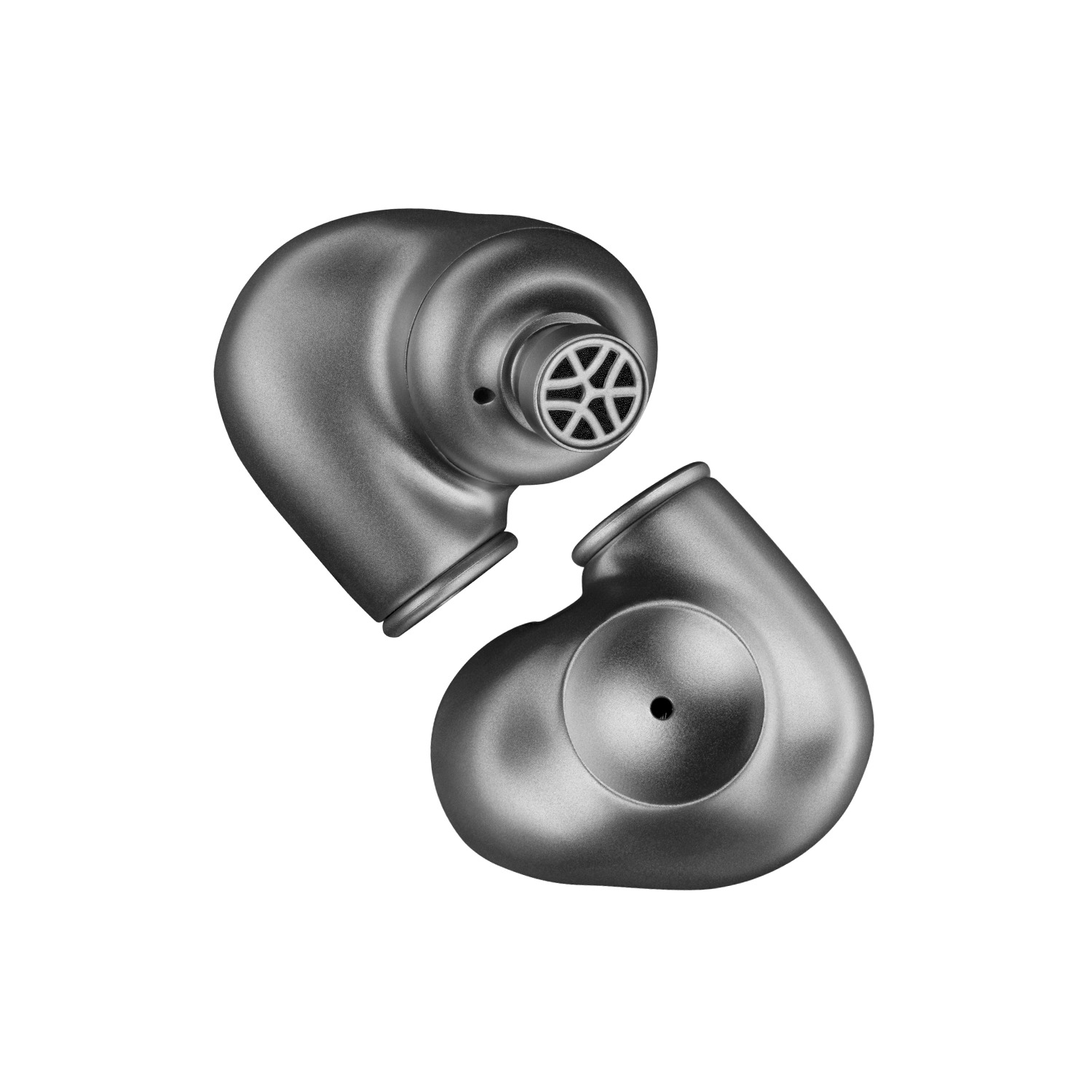
In the carton, according to Morrison, are the 1.2 m cable with a 4.4 mm plug, the short adapter to 3.5 mm, silicone tips in five sizes (XS to XL), a small pouch and a hard-shell case. The shape, the soft cable and the soft silicone tips combined to a very comfortable fit. The cable is not microphonic. Meze quotes 13.4 g; the official packshot on this page shows the titanium shell in the familiar turbine shape.
allsound.at listed the Astru on 12 November 2026 at €899.00 with the note “Vorrätig” (in stock). That is a snapshot, not a lasting stock guarantee. The official EU page mezeaudio.eu quoted the same euro price.
Price and availability
On 12 November 2026 the price on mezeaudio.eu and at allsound.at was €899.00. SoundStage! Solo quoted €899 / US$899 in late June 2026. This analysis does not convert the dollar price and uses the documented euro price. Prices change, without guarantee.
In the Master tier (from about €600) €899.00 sits above the Advar (€699.00, the lowest documented Master price, P 8.0) and below the Aspire 4 and the dearer models in the tier. Value 7.0/10 and the higher euro price support the P subscore of 7.2. The value badge sits with the Aspire 3.
At the amplifier and on a vinyl system
Through the 3.5 mm adapter the Astru hangs from typical phono chains with a headphone output; the 4.4 mm cable does not help on a classic jack without an adapter. Morrison describes easy drive and bass that gains on better amplifiers at higher level. A dedicated headphone amplifier is not a requirement, though it can support the punch described. Anyone listening to records should read the review for the strong bass and the presence in the upper mids and treble; quiet, bass-light pressings, and listeners who specifically avoid that treble range, will find in the Advar from the same brand the smoother, less punchy counterpart in the same review — on the list with the value badge and a lower euro price.
Who is the Astru for?
The Astru suits listeners who want a light titanium in-ear with a warm, bass-heavy presentation and a touch of extra presence, who are planning €899.00, and who want to use typical outputs. Anyone who puts neutrality and smoother treble ahead of punch sits, according to the same author, closer to the Advar. Anyone looking for maximum midrange resolution and a brighter, more bass-light monitor will find the Westone MACH 60 in the same tier (index 85) — dearer, with more restrained bass and Value 6.0/10. The Astru itself remains without a badge, but it is eligible and clearly documented in rank 4.
How it compares
Morrison compares the Astru with the Advar and the Rai Penta. On the list of 12 November 2026 the Advar is in rank 1 (index 97, no badge), the Astru in rank 5 (index 94), the MACH 60 in rank 11 (index 88). The IE 900 holds the Sound badge in rank 9 (index 90), because its sound-evidence score of 8.6 sits clearly above the Astru and the Advar (both 7.6). The Aspire 4 is in rank 3 (index 95) without a badge.
The review itself calls the Advar closer to neutral and smoother in the treble, the Astru bassier and more fun. That is a difference of taste, not of badges: the value badge follows the Aspire 3’s higher P subscore at the lower euro price, not a preference for punch or neutrality.
How it sits on the opened list
With the Astru and the MACH 60 the Master tier had grown to eight models; with the Aspire 3, Grand Luna, Andromeda 10 and MACH 80 it now holds twelve and is remapped onto 97–87 and 85. The Astru receives no badge. Live pages whose rank changes are updated in the same list package: the Monarch MKIV sits in rank 6 (index 92, still without a badge), the IE 900 in rank 9 (index 90, Sound badge kept). The list package as a whole also removes the Master value badge the Monarch previously carried live; that was the consistency-review correction of the same day and does not change again because of the Astru.
FAQ
What exactly is the Meze Astru?
A wired universal-fit in-ear from Baia Mare with a 10 mm dynamic driver (gold-titanium-PEEK diaphragm) in a CNC titanium shell, 32 Ω, 111 dB SPL/mW at 1 kHz, 13.4 g, a 2-pin connector, and a 1.2 m cable with a 4.4 mm plug and a 3.5 mm adapter.
Does the Astru need a headphone amplifier?
Meze quotes 32 Ω and 111 dB SPL/mW at 1 kHz. Morrison already reached a usable volume on a weak Sony NW-A306; better amplifiers brought more bass at higher level. A dedicated amplifier is not a requirement.
Is it suitable for listening to records?
Yes. Through the supplied 3.5 mm adapter it hangs from typical phono chains with a headphone output. The review describes a warm, bass-heavy presentation with extra presence in the upper mids and treble. Anyone who wants smoother treble and less punch should read the same comparison with the Advar.
What does the Astru cost?
On mezeaudio.eu and at allsound.at the price on 12 November 2026 was €899.00. SoundStage! Solo quoted €899 / US$899. This analysis does not convert the dollar price. Prices change, without guarantee.
Why does the Astru have no tier badge even though it is eligible?
Eligibility and badges are separate. The value badge goes to the highest P subscore (Aspire 3, 8.2), the Sound badge to the best remaining K subscore (IE 900, 8.6). The Astru sits behind both at P 7.2 and K 7.6.
Does this page rest on a listening test by the VinylCination team?
No. There was no in-house listening test and no measurement of our own. The assessment draws on Meze’s manufacturer data and the international SoundStage! Solo listening review (Geoffrey Morrison, 1 July 2026). The list figures (Master, rank 5, index 94, no badge) come from the list package of 12 November 2026.
Conclusion
The Meze Astru is a clearly documented titanium in-ear for the expanded Master tier: light, comfortable, easy to drive, with a documented euro price and a magazine listening review that records warm, strong bass and a deliberately set presence in the upper mids and treble. The list record of 12 November 2026 is Master rank 5, index 94, with no badge. Anyone planning €899.00 and putting punch ahead of neutrality will find a solid source base here. Anyone who wants smoother treble at the lower Master price should read the Advar, which holds the value badge in the same tier.
About this AI analysis
This section is an AI summary of a published international magazine listening review and Meze Audio’s own data. Vinyl BotPro places the findings and links them to the data sheet, the shop price and the list record; VinylCination does not have listening tests or measurements of its own, and every source is linked at the end of the page. Prices and availability change (as of 12 November 2026, without guarantee). Subscores and the index come from the list package of the same day.