
In-ear headphones · AI analysis · Starter, rank 3
Moondrop Chu II: Analysis
AI analysis (research): single-driver 10 mm in-ear, 18 Ω, 119 dB/Vrms, detachable 2-pin cable – manufacturer data and an international listening review, no listening test of our own.
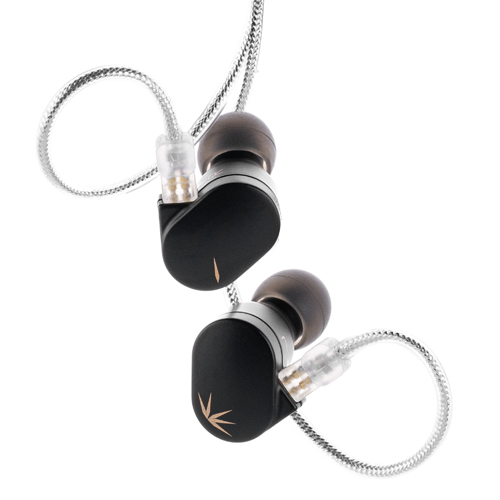
Summary
The Moondrop Chu II is a wired in-ear headphone with a single dynamic driver, released in July 2023 by the Chinese manufacturer Moondrop as the successor to the original Chu. It costs $18.99 in the US; in the European store of the distributor Linsoul it was listed at €21.25 on 7 November 2026. That makes it the most affordable model in our in-ear ranking. Compared with its predecessor, Moondrop changed two things above all: the cable is now detachable, and it is routed over the ear, which improves the fit.
The listening review we evaluated describes a balanced, pleasant sound that tracks a neutral target closely in the bass and midrange but stays somewhat reserved in the top octave. It praises price, tuning and fit and criticises the noticeable weight of the metal housings and only average isolation from outside noise. In our in-ear ranking the Chu II sits in the Starter tier at rank 3 (index 53) and carries the title Value Vinyl BotPro Champion because it has the best value sub-score of the four Starter models. That is an AI assessment based on manufacturer data and the SoundGuys review, not a listening impression of our own; we evaluate further measurements and reviews in the analysis below.
Specs (manufacturer)
| Design | in-ear, wired, single driver |
|---|---|
| Driver | 10 mm, dynamic |
| Impedance | 18 Ω at 1 kHz |
| Sensitivity | 119 dB/Vrms at 1 kHz |
| Housing | zinc alloy, brass nozzle |
| Weight | approx. 8 g per earpiece (per review) |
| Cable | 1.27 m, 0.78 mm 2-pin, angled 3.5 mm |
| Accessories | 3 pairs of silicone tips (11/12/13 mm), faux-leather pouch |
| Released | 6 Jul 2023 (per review) |
| Price | €21.25 in Linsoul EU store, as of 7 Nov 2026; $18.99 (US) |
Scores in detail
Vinyl BotPro Index 53 (Starter 40–54) · sub-scores 0–10, weights 35/20/15/30 · weighted raw score 7.9, mapped within the four-model tier onto the 40–54 band: the index shows the order within the tier, not measured differences in sound. Editorial synthesis, not a lab value · Sub-score rationale.
Manufacturer and concept
Moondrop is based in Shenzhen and has for several years been one of the best-known names in affordable in-ear monitors. The company builds models from around €20 well into four figures and is known above all for tuning towards published target curves instead of cultivating a strongly coloured house sound. The Chu II is the entry model: a single dynamic driver, a metal housing in the typical Moondrop shape, a simple cable and few accessories.
The concept is simple. The Chu II is meant to show that a cleanly tuned wired in-ear does not have to be expensive. To get there Moondrop leaves out everything that costs money without contributing to the sound: there is no hard-shell case, no choice of cables and no tuning filters. What remains is a small headphone that works with almost any device that has a headphone socket, or with a basic USB-C adapter.
For our ranking it matters that there are two versions: the Chu II without a microphone and a variant with an in-line microphone. The listening review refers to the version without a microphone. According to the manufacturer the two do not differ acoustically, but strictly speaking our assessment applies to the analysed version without a microphone.
The technology explained
A single dynamic driver
The Chu II uses a 10 mm dynamic driver. A dynamic driver works in principle like a very small loudspeaker: a voice coil moves a diaphragm that excites the air in the ear canal. Multi-way in-ears split the frequency range across several transducers and need a crossover. A single driver needs no crossover and therefore usually sounds very coherent, but it tends to reach its limits in the top octave. That is exactly what the review describes: treble above roughly 5.5 kHz is somewhat recessed and upper extension is limited.
Impedance and sensitivity
Moondrop specifies 18 ohms impedance and a sensitivity of 119 dB per volt. In plain terms: the Chu II needs very little voltage to play loud. A smartphone, a basic USB-C adapter or the headphone socket of an amplifier deliver more than enough. The review confirms that an iPhone with an adapter provided plenty of volume and that no headphone amplifier is needed.
Zinc-alloy housing
The housings are made of a zinc alloy, the sound outlet (nozzle) of machined brass. That feels more substantial than plastic but adds weight: the review quotes around 8 grams per earpiece. That is a lot for an in-ear; typical wireless earbuds weigh 4 to 6 grams. The over-ear cable routing takes some of the weight, but most of it still sits on the nozzle and ear tip.
Detachable cable with 2-pin connector
The cable is 1.27 metres long, ends in an angled 3.5 mm jack and plugs into the earpieces with the common 0.78 mm 2-pin standard. That is the most important step forward from the first Chu, whose cable was fixed: if the cable fails, the whole headphone is not lost. 2-pin is considered slightly less robust than MMCX, but in the review it could be removed and reconnected without any problems.
What international reviewers hear
Sound character
The review sums up the sound as balanced: bass and midrange follow the reference curve used there closely, with only minor deviations. Around 3 kHz there is a little more energy, while the top octave falls away. Overall, the verdict goes, you can hear all parts of the music well. For a headphone at this price that is a remarkably unspectacular tuning, inconspicuous in the best sense.
Bass
The bass is described as pleasant and improved over the predecessor, but not especially punchy. Anyone who listens to a lot of electronic music or hip-hop and expects clearly boosted sub-bass will find a restrained, clean presentation in the Chu II. For acoustic music, jazz and singer-songwriter recordings this restraint fits well.
Midrange and vocals
According to the review, the Chu II's strength lies in the midrange. Multi-layered vocals are explicitly described as sounding great, and a clean electric guitar is easy to pick out. The slight lift around 3 kHz brings voices a little forward without the review mentioning harshness.
Treble
Cymbals and harmonics come through well despite the restraint above 5.5 kHz, the review says. At the same time it names the limited extension into the highest frequencies as a typical limit of a single driver. Anyone looking for lots of air and sparkle will not find it in the Chu II; anyone sensitive to bright in-ears is more likely to benefit.
Spatial presentation
The review describes the stereo spread as average, neither particularly wide nor narrow. Fine details such as raindrops and birdsong in a recording sounded natural. A particularly large, three-dimensional stage is not to be expected in this class.
Weaknesses according to the review
Three points are named. First, the weight of the metal housings, which after a couple of hours can press uncomfortably where the antihelix meets the concha; a good hour is fine according to the review. Second, the only average passive isolation, which with the supplied silicone tips mainly damps high-pitched noise. Third, the very simple, flat faux-leather pouch, which offers little protection. There is also a note for allergy sufferers: Moondrop does not state the exact composition of the alloy.
Accessories and everyday use
The box contains three pairs of silicone ear tips (11, 12 and 13 mm), the cable and the pouch mentioned above. Nothing more. In everyday use that means anyone who wants better isolation has to invest in foam tips, which the review explicitly suggests. Because the nozzle has a common diameter, many third-party tips fit.
The cable is routed over the ear and keeps its shape there. That gives a stable fit and reduces cable noise when walking. The analysed version has no microphone; for calls or video conferences there is the variant with a microphone. For smartphones without a headphone socket a simple USB-C or Lightning adapter is enough.
With an amplifier and a vinyl system
In a vinyl system an in-ear usually connects to the headphone socket of the integrated amplifier or to a dedicated headphone amplifier. There is one particularity that matters for the Chu II: very sensitive in-ears make hiss and hum audible that stays in the background with large over-ear headphones. At 119 dB per volt the Chu II is one of the sensitive models. With some integrated amplifiers the volume is already high at a very small turn of the knob, and a faint noise floor can become audible in pauses.
That is not a flaw of the Chu II but a question of matching. In practice: with a turntable, phono stage and amplifier it is worth briefly checking whether the amplifier hisses in quiet passages. If it does, a headphone amplifier with low output noise or a small resistor adapter helps. At 18 ohms the output impedance of the source also matters: high output impedance can slightly change the tuning of a dynamic in-ear, though with a single driver and no crossover the effect is usually small.
On the train or at the desk the Chu II is uncomplicated. At the listening chair by the turntable it is a very affordable way to play records quietly in the evening without room acoustics, as long as you accept the limits in stage size and treble sparkle.
Who is the Chu II for?
The Chu II suits anyone looking for a first wired in-ear with clean tuning who wants to spend very little. It works as a second headphone for travel, as a replacement for cheap bundled earphones and as a way to find out whether in-ears suit your listening. According to the review it is also usable for gaming if you do not need a microphone.
It is less suitable for people with very small ears who might be bothered by the weight of the metal housings, for commuters in loud environments without foam tips and for anyone looking for strong, emphasised bass. Owners of the original Chu do not need to switch, according to the review; the most important difference is the detachable cable.
Comparison with alternatives
Our Starter tier contains three further models (list record 12 November 2026). The Truthear x Crinacle Zero:Red costs about three times as much, has two dynamic drivers, more bass and much better isolation with foam tips; it remains our Sound Champion of the tier. The 7Hz Salnotes Zero is priced almost the same as the Chu II but, according to the review evaluated, sounds brighter and is more prone to treble fatigue. The DUNU Subsurge closes the tier at index 40, as a bass specialist without a badge. If you want the most neutral sound for the least money, the evidence points to the Chu II; if you want more bass and accessories, to the Zero:Red.
Within Moondrop's range the Aria 2 is a more expensive model that, in the 12 November 2026 list record, sits in the Premium tier and holds that tier's value badge. A direct index comparison between the tiers is not made here.
FAQ
Does the Moondrop Chu II need a headphone amplifier?
No. At 18 ohms and 119 dB per volt it plays loud enough from a smartphone, USB-C adapter and amplifier headphone socket. With very noisy sources its high sensitivity can make background hiss audible.
Is the Chu II cable replaceable?
Yes. The cable attaches to the earpieces with 0.78 mm 2-pin connectors and can be replaced with standard cables. That is the main difference from the first Chu.
Does the Chu II have a microphone?
The analysed standard version has no microphone. Moondrop also offers a version with an in-line microphone.
How well does the Chu II isolate outside noise?
Averagely, according to the review. With the supplied silicone tips mainly high-pitched noise is damped; foam tips improve isolation.
Why is the Chu II the Value Champion but not in first place?
The index weights sound evidence, build, drive and value. The Zero:Red is narrowly ahead on the weighted total, but the Chu II has the highest value sub-score in the tier. Both titles are AI assessments based on the available evidence.
Is the Chu II still available?
Yes. Moondrop still sells it, and Linsoul's European store listed it at €21.25 on 7 November 2026. Prices change; the figure is without guarantee.
Conclusion
On the evidence, the Moondrop Chu II is an unusually well-balanced in-ear for around €20. Its strengths are the midrange, easy drive and the detachable cable; its limits are weight, average isolation and a reserved top octave. In our Starter tier it therefore carries the Value title, while the Zero:Red leads on sound and accessories. The basis is manufacturer data, one detailed international listening review and the further measurements and reviews evaluated in the analysis below, no listening tests or measurements of our own.
Analysis: the Moondrop Chu II in depth
What this analysis adds
The sections above are based on the manufacturer's information and on Jasper Lastoria's review at SoundGuys [2]. For this analysis we evaluated four further sources: the frequency response and isolation data published by SoundGuys [3], Amir Majidimehr's measurements and listening notes at Audio Science Review [4], the review by Mobile Audiophile from July 2023 [5] and a series of measurements by Pragmatic Audio of the DSP version of the Chu II [6]. Moondrop's current product page completes the picture [1]. The review samples came from different places: SoundGuys bought its unit [2], Audio Science Review borrowed one from a forum member [4], and Mobile Audiophile received a sample from Moondrop [5]. Vinyl BotPro has neither listened to nor measured the Chu II. Measurement and listening statements belong to the authors named; we label our own calculations and conclusions. The page's rank, index and price information remain unchanged.
What the measurements show
Audio Science Review measured the Chu II on a GRAS 45CA rig. Amir Majidimehr describes the gap between its frequency response and his target as very small, with an overshoot around 14 kilohertz as the most noticeable deviation [4]. He was particularly impressed by the low distortion, which he calls extremely good, if just short of the best in-ears he has measured [4]. He admits that in-ears are hard to seat precisely on his rig; with the Chu II he believes he got about 90 per cent of the way there [4].
SoundGuys measured on a B&K 5128 head and published the values as a table [3]. The normalised curve sits about 6 decibels higher at 20 hertz than at 125 hertz, dips to around minus 5 decibels at 500 hertz and then rises to a maximum of about 11 decibels at 3.15 kilohertz [3]. Our assessment: a rise like this around 3 kilohertz is normal for measurements on an ear simulator because it reproduces the natural resonance of the ear canal, and it is part of practically every common target curve. The absolute numbers are therefore not deviations. What matters is the comparison with the target, and SoundGuys describes that as a good match in the bass and midrange, with some extra energy around 3 kilohertz [2].
Pragmatic Audio also checked how closely the two channels match. The right earpiece showed slightly more bass, but overall channel matching was good [6].
Why the measurements diverge above 10 kHz
In the top treble the measurements appear to contradict each other. Audio Science Review sees a broad overshoot around 14 kilohertz [4], while the SoundGuys curve falls steeply above 12.5 kilohertz and sits about 16 decibels below the reference at 16 kilohertz [3]. Our assessment: above roughly 8 to 10 kilohertz, in-ear measurements depend heavily on how deeply the earpiece sits in the coupler and on which coupler is used. Different rigs and insertion depths can shift or create peaks there. For the Chu II, the top octave therefore cannot be pinned down clearly. The listening reports reflect this: verdicts on the treble diverge more than on bass and midrange.
Bass: more than its predecessor, but no powerhouse
All the reviews agree that the Chu II has more bass than the first Chu, but does not hit especially hard. SoundGuys describes the bass as pleasant but not overly punchy [2]. Mobile Audiophile hears it as clearly stronger than on the predecessor, but a little slow; with the supplied tips the sub-bass falls short [5]. On first listen Amir Majidimehr felt that some bass was missing and suspected a fit problem, which pushing the earpieces in further did not solve [4]. With an equaliser he lowered the mid-bass and then raised the deep bass with a filter to bring back warmth [4].
For listeners this means: anyone expecting rich, deep bass will not get it from the Chu II out of the box. How much bass arrives depends heavily on the fit.
Midrange and vocals
SoundGuys highlights the midrange as a strength: multi-layered vocals sound very good, and a clean electric guitar is easy to pick out [2]. Mobile Audiophile describes a slightly recessed midrange, with female vocals sounding better than male ones and some guitars coming across as a little thin [5]. Amir Majidimehr reports that with his equaliser settings clarity and the ability to hear fine detail such as strings and vibration in voices improved markedly [4]. Without the equaliser, however, the differences from his setting were very subtle [4].
Treble: where the verdicts diverge
On treble the verdicts range from restrained to bright. SoundGuys describes a relative under-emphasis above 5.5 kilohertz, with cymbals and harmonics still coming through well [2]. Mobile Audiophile calls the sound a fun V-shape with a slightly warm-bright signature and finds the treble harsh or undefined on some recordings; listeners coming from warm-sounding in-ears may find it too much [5]. Compared directly with the first Chu, the reviewer had to listen to the Chu II at a lower volume because it has more treble energy and therefore tends to cause fatigue in long sessions [5]. Amir Majidimehr lowered the overshoot around 14 kilohertz with an equaliser, which softened the highs, although he himself does not rule out a placebo effect [4].
Our assessment: the different listening impressions fit the different measured curves above 10 kilohertz. How bright the Chu II sounds is likely to depend heavily on ear shape, insertion depth and ear tip.
Ear tips as the most important tool
Mobile Audiophile achieved the clearest changes in sound not with cables but with different ear tips. Tips from KBEAR or NiceHCK tamed the treble a little and strengthened the bass, and wide-bore tips gave the best results; with the tips of the Truthear Hola, bass and soundstage became fuller and the treble more controlled [5]. A better cable, by contrast, made no audible difference [5]. SoundGuys recommends foam tips if isolation matters [2]. Amir Majidimehr notes that the nozzle is quite wide, which made fitting the tips a bit of a chore [4].
Moondrop specifies a brass nozzle and a new generation of replaceable acoustic filters for the Chu II [1]. Mobile Audiophile points out that these filters can be changed or supplemented with tuning foam [5]. According to the package contents on the product page, however, no additional filters are included [1].
Isolation in numbers
SoundGuys measured the passive attenuation with the standard tips [3]. Between about 30 and 600 hertz it is mostly between 3 and 11 decibels; above 1.5 kilohertz it rises to 22 to 33 decibels [3]. That fits the listening impression in the review, according to which mainly high-pitched noises such as clattering dishes and keystrokes are damped [2]. Low rumble, for example from trains or buses, is reduced only a little by the Chu II according to these values; that is our inference from the measurement data. At home by the turntable this hardly matters; on the move it is the main reason to switch to foam tips.
Comfort: different experiences
Experiences with comfort differ. SoundGuys cites about 8 grams per earpiece and felt pressure where the anti-helix meets the concha after a couple of hours [2]. Amir Majidimehr, on the other hand, found the Chu II lighter and smaller than other in-ears he had measured, and therefore more comfortable [4]. Mobile Audiophile describes fit and comfort as clearly better than on the first Chu [5]. Pragmatic Audio found the DSP version less comfortable than the first Chu because the 2-pin connector rubbed against the ear [6]. Our assessment: with in-ears, fit depends heavily on individual ear shape. The reports show that the Chu II fits many people well, but not everyone.
Variants: with microphone and as a DSP version
Besides the 3.5 mm version analysed here, there is the Chu II DSP with a USB-C cable that contains a digital converter with an equaliser. Pragmatic Audio measured this version [6]. With the tone controls switched off, the frequency response with the DSP cable was identical to the analogue cable, only about 3 decibels quieter; distortion stayed very low even with the equaliser active [6]. The parametric equaliser in the Moondrop app offered only five filters at the time, the lowest adjustable frequency was 40 hertz, and gain ranged from minus 12 to plus 3 decibels [6]. Pragmatic Audio found the cable itself cheap and prone to tangling, and the microphone weak; of the preset sound profiles, the reviewer liked the default best [6]. For smartphones without a headphone jack the DSP version is an alternative; for a vinyl system with an analogue headphone output, the 3.5 mm version is the right one.
How sensitive the Chu II really is
Moondrop specifies 119 decibels per volt at 18 ohms [1]. Our own calculation: 1 milliwatt into 18 ohms corresponds to about 0.134 volts. That results in a sensitivity of roughly 102 decibels per milliwatt. For 94 decibels the Chu II therefore needs only about 56 millivolts. The SoundGuys product page lists the figure as 119 dB/mW [3]; Moondrop explicitly states the unit as dB/Vrms [1], and we follow the manufacturer.
Amir Majidimehr describes the sensitivity as rather low for an in-ear, but higher than almost any standard headphone; on his converter a comfortable volume was at about minus 40 decibels [4]. In practice this confirms the assessment above: every headphone output is more than powerful enough, and the volume control of an integrated amplifier should be turned well down before inserting the earpieces.
Our verdict on the evidence
With two sets of measurements, two further listening reviews and the measurements of the DSP version, the evidence on the Chu II is much broader than when this page was published. It supports the core of the existing assessment: a single-driver in-ear tuned close to common target curves, with very low distortion, a detachable cable and a very low price [2][3][4]. Open questions remain about the top treble, where measurements and listening impressions diverge, and about the fit, which does not suit every ear. According to the reports, the best investment after purchase is a set of suitable ear tips [2][5]. Rank and index remain unchanged.
Sources for this analysis
- Moondrop: CHU II (Produktseite, abgerufen/accessed 09.11.2026). https://moondroplab.com/en/products/chu-ii
- SoundGuys: Moondrop Chu II review (Jasper Lastoria, 06.12.2023, aktualisiert/updated 02.12.2025). https://www.soundguys.com/moondrop-chu-ii-review-104977/
- SoundGuys: Moondrop CHU II review, price & specs – Messdaten/measurement data B&K 5128 (abgerufen/accessed 09.11.2026). https://www.soundguys.com/product/moondrop-chu-ii/
- Audio Science Review: Moondrop Chu II IEM Review (Amir Majidimehr, 16.06.2024). https://www.audiosciencereview.com/forum/index.php?threads/moondrop-chu-ii-iem-review.55179/
- Mobile Audiophile: Review: Moondrop CHU II – Bass Beans (27.07.2023). https://mobileaudiophile.com/in-ear-earphones-iem-iems-reviews/moondrop-chu-ii-bass-beans/
- Pragmatic Audio: EQ Measurements Review of the Moondrop Chu II DSP (01.04.2024). https://www.pragmaticaudio.com/reviews/2024/04/moondrop-chu-ii-dsp/
Created by AI (Vinyl BotPro) from the sources listed; no listening tests or measurements of our own. Detailed human fact-check pending.
About this analysis
For the Chu II we evaluated one detailed listening review with a frequency-response measurement by the reviewing lab and, in the analysis above, further published measurements and reviews; we did not produce any measurements of our own. The euro price comes from the European store of the distributor Linsoul on 7 November 2026. The product image comes from Moondrop's official product page and shows the Chu II in its standard version. The sub-scores and their rationale are listed for every model in the ranking.
Sources
- Moondrop — CHU II (manufacturer)
- Linsoul EU — Moondrop Chu II (Vertrieb)
- SoundGuys — Moondrop Chu II review (06.12.2023, aktualisiert 02.12.2025)
Created by Vinyl BotPro (AI) · As of 7 Nov 2026 · All information without guarantee.