
In-ear analysis · Premium · as listed
Moondrop Kadenz Analysis
The Moondrop Kadenz sits on the in-ear shortlist of 12 November 2026 in the Premium tier, now expanded to thirty-four models, in rank 27 with a Vinyl BotPro index of 59 and no tier badge. This analysis takes the list record as published and does not run a second calculation.
In brief
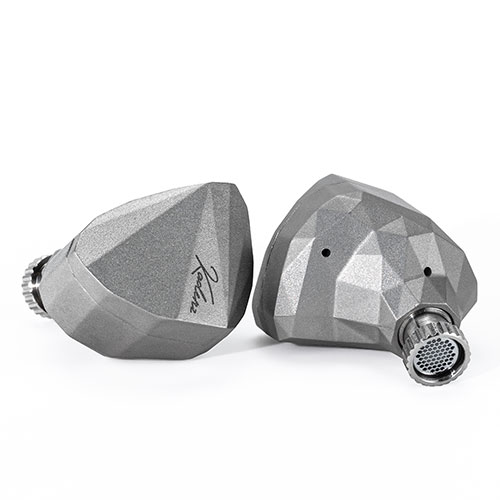
The Moondrop Kadenz is a wired universal in-ear with a 10 mm dynamic driver from the K series, the successor to the Kato, not the older Kato model itself. The official Moondrop product page lists a 10 mm dynamic driver, 35 Ω ±15 % at 1 kHz, 122 dB/Vrms at 1 kHz, 8 Hz–21 kHz (IEC61094, free field) or an effective range of 20 Hz–20 kHz (IEC60318-4, −3 dB), THD of at most 0.03 % at 1 kHz and 94 dB, and a 0.78 mm 2-pin connector. On the in-ear shortlist of 12 November 2026 it sits in the Premium tier, now expanded to thirty-four models, in rank 27 with a Vinyl BotPro index of 59 and no tier badge. It shares index 59 with the Kiwi Ears Quintet and the Westone Pro X10; at the same index the higher sound-evidence score of 7.4 against 7.3 ranks the Kadenz first, in rank 20, ahead of the Quintet and the Pro X10. The subscores and the linear mapping onto the 55–69 band are documented in the list package; this page repeats the list record and does not run a second calculation.
The listening report comes from Headfonics (Kurt, 11 November 2024): a dated listening review of the exact model in an independent international online specialist outlet of the same class already used for other in-ears on this list. The text covers the exact Kadenz model as the successor to the Kato. The Kato itself is not on this list; combined or carried-over Kato scores are not used. A reader score on the page is not taken as an editorial mark of this analysis. Under the single badge rule of 12 November 2026 — including addendum t647s3962 — the Moondrop Kadenz is eligible; its pillar here is the written review. The documented euro price is €205.70 at linsoul.de (JSON-LD InStock, available=true, “Add to cart” button, compare_at €242.00, retrieved 12 November 2026. A site-wide theme module mentions a preorder period; the product form itself is InStock and is not a preorder button.). The Sound badge in the tier remains with the Sony IER-M500, and the value badge with the DUNU Titan S2.
Technical data (published)
| Design | Wired universal in-ear, 10 mm dynamic K-series driver, faceted metal shell (moondroplab.com) |
|---|---|
| Impedance | 35 Ω ±15 % at 1 kHz (moondroplab.com; Headfonics confirms 35 Ω) |
| Sensitivity | 122 dB/Vrms at 1 kHz (moondroplab.com; Headfonics confirms 122 dB/Vrms) |
| Frequency response | 8 Hz–21 kHz per IEC61094, free field; effective range 20 Hz–20 kHz per IEC60318-4, −3 dB (moondroplab.com) |
| THD | at most 0.03 % at 1 kHz, 94 dB (moondroplab.com) |
| Connection | 0.78 mm 2-pin. According to Headfonics the kit includes a 4.4 mm cable plus a 3.5 mm adapter and a USB-C dongle, ECHO-B, with optional app tuning; the pillar’s listening passage uses the 4.4 mm cable in the normal tuning. |
| Price | €205.70 at linsoul.de, InStock, 12 November 2026; struck-through compare_at price €242.00, not used as the list price |
Amplifier compatibility
Moondrop lists 35 Ω ±15 % at 1 kHz and 122 dB/Vrms at 1 kHz. Headfonics describes higher-than-average sensitivity and impedance for an in-ear, still calls the Kadenz not difficult to drive from the ECHO-B dongle, though it wants a slight volume boost, and hears clear scaling on more capable DAC-amplifier combinations.
The drive subscore of 8.2 follows that basically easy but not wholly undemanding driveability. It sits below the IE 100 Pro and the IE 200 (both 8.8) and below typical 16-to-20-ohm designs in the tier, and above the Final E5000 (7.0), which is described in the same tier as markedly choosier.
On a vinyl system with a typical headphone output, a low-noise, voltage-capable output is useful, because the pillar describes differences between DAC chips and greater clarity on an R2R unit. A large power amplifier is not an end in itself.
The pillar’s listening passage uses only the 4.4 mm cable in the normal tuning. The app profiles Bass+, Bass++, Treble+ and Soundstage+ are mentioned only as comparisons and are not taken as a measurement by this page.
Scoring criteria in detail
The Vinyl BotPro index on this page is not a second calculation, but the list record of 12 November 2026. The Premium tier now holds thirty-four models; the mapping uses the 55–69 band linearly across the unrounded raw score. With a raw score of 7.64 the Moondrop Kadenz sits at index 59 and rank 20. It shares index 59 with the Kiwi Ears Quintet and the Westone Pro X10; at the same index the higher sound-evidence score of 7.4 against 7.3 ranks the Kadenz first, in rank 20, ahead of the Quintet and the Pro X10. Shared indices are allowed; rank remains unique. The mapping follows the decision of 12 November 2026: the unrounded raw score is placed linearly on the tier band, strongest model at the ceiling, weakest at the floor, with no required gap between places. Shared indices within a tier are allowed; rank remains unique (higher index first, then higher sound-evidence score, then lower documented euro price, then alphabetical name).
The subscores are sound 7.4, build 7.4, drive 8.2 and value 7.8. The sound-evidence score matches the Aria 2, the ER2SE and the Timeless (each 7.4), sits above the Quintet and the Pro X10 (each 7.3) on the shared index 59, and below the IER-M500 and the Alba (each 7.6). The build score of 7.4 follows the metal shell and cable described as high in quality, with the edge near the logo that led Kurt to a shallower fit and to aftermarket tips. The drive subscore of 8.2 reflects 35 Ω and the scaling described. The value score of 7.8 follows €205.70 and matches the Quintet (7.8 at €204.84), staying below the Titan S2 (9.2) and the Aria 2 (9.0), without taking a badge.
The manufacturer and the concept
Moondrop presents the Kadenz as the closing chapter of the dynamic K series, after the KXXS and the Kato. The official page describes a second-generation patented super-linear dynamic driver and a diamond-coated dome; Headfonics hears in that mainly a step beyond the Kato in bass clarity, treble reach and stage.
Kurt calls the Kadenz a proper successor: the familiar, eye-catching shell remains, the driver is revised for bass and treble, and the move to 4.4 mm plus a USB-C dongle makes the package a real upgrade. The Kato itself is a different model and is not on this list.
linsoul.de is the EU shop documented for this page. The technical figures come from moondroplab.com and are used as manufacturer data, not as an in-house measurement.
The technology, explained
The single 10 mm driver sits in a faceted metal shell. Headfonics describes bass that sounds clearer and less muddied than the Kato’s, with a clear split between sub-bass and mid-bass, without the greatest impact; in the normal tuning the mid-bass is said to be thick enough.
Kurt calls the midrange the real strength: musical timbre, forward, bright and clear without becoming shouty, with enough warmth to keep the sound from turning dry or analytical. Some listeners may find the brightness fatiguing; the app’s Bass+ profile eases that, but it is not the basis of the listening passage.
In the treble he hears more air and reach than on the Kato, but detail retrieval only just above average, with natural, rather slow transients. Sibilance is kept in check but can stay a little spicy. Stage and imaging come second after the midrange: a real sense of depth, precise placement, balanced dynamics.
The sharp edge near the logo started to press after a while in the review; Kurt moved to a shallower fit and later to DUNU S&S tips. That feeds the build subscore and is not a comfort test by this page.
What the international specialist press hears
Headfonics — MOONDROP Kadenz Review (Kurt, 11 November 2024)
Kurt listens to the Kadenz only on the 4.4 mm cable in the normal tuning. Almost every aspect of the bass is better than the Kato’s: clearer, more defined, with no bleed into the midrange, and a good sub-bass rumble to which he still wants a little more presence to balance the brightness. Bass-focused listeners may find the impact lacking without the app’s Bass+ or Bass++ profiles.
The midrange is the highlight, with timbre that can rival the Kato, proper note weight, forward, bright vocals that are not shouty, and enough warmth against dryness. The treble reaches farther and has more air than the Kato’s, but detail retrieval stays only just above average; transients sound natural but slower than ideal.
Stage and imaging come second after the midrange: more depth than the Kato, centred vocals, precise placement without clutter. Dynamics are well balanced. On the ECHO-B the model is not hard to drive, but it scales clearly; on the HeartField R1 (R2R) clarity was greatest in every range.
Against the LETSHUOER S12 2024 Edition, a different model that is not on this list, he gives the Kadenz the fuller mid-bass and the more natural timbre, and the planar design more treble nuance and better sibilance control. The verdict still calls the Kadenz a proper successor to the Kato.
Research consensus
One pillar is on hand. It paints the Kadenz as a clearer, airier successor to the Kato with a strong midrange, an improved stage and bass of good quality that can lack final impact, with a brightness that will not suit every listener for long sessions.
The official page supports that picture technically with 35 Ω ±15 %, 122 dB/Vrms and the 10 mm driver. A second dated listening review of the same class is not used here. App profiles and the comparison with the S12 2024 Edition remain marked as extras, not as a second Kadenz pillar.
Accessories and use
Headfonics describes two sets of tips: black silicone and Moondrop Spring Tips. The Spring Tips gave the better fit in the review, without damping bass or treble. There is also a 4.4 mm silver-plated copper cable, a 3.5 mm adapter and the USB-C dongle ECHO-B.
Kurt counts the cable among his favoured accessories: not stiff, not prone to tangles, with a white-and-silver look. The listening passage itself stays on the 4.4 mm cable; the 3.5 mm adapter was not heard.
The sharp shell edge near the logo remains the practical comfort limit. Anyone who cannot ease the pressure has, according to the review, to change the fit or the tips. That feeds the build subscore; this page does not judge aftermarket tips itself.
Price and availability
The documented euro price is €205.70 at linsoul.de, retrieved on 12 November 2026, with JSON-LD InStock, available=true and an “Add to cart” button. A struck-through compare_at price of €242.00 is documented but is not used as the list price.
A dollar price from the Headfonics review is not converted. A site-wide theme module on linsoul.de mentions a preorder period; the Kadenz product form itself is InStock and is not a preorder button. The documented availability of 12 November 2026 remains the basis.
In the Premium tier, €205.70 sits beside the Quintet (€204.84) and below the Timeless (€209.09). The subscore of 7.8 follows that frame and the performance described, not a converted original price.
On an amplifier and on a vinyl system
On a typical phono amplifier with a headphone output, the question is whether 35 Ω and 122 dB/Vrms find enough level and damping. Headfonics does not call the model hard to drive, but hears differences between DAC chips and greater clarity on an R2R unit.
Because the pillar describes a certain brightness and only just-above-average treble detail, a very open, sharp output is no help. A low-noise, well-controlled output remains the closer choice; the app profiles in the review are an optional tool on the dongle, not a substitute for the system.
The stage described, with a real sense of depth, supports quiet listening at the record player. Pressure from the shell edge remains a practical limit for long sessions, regardless of the system’s output.
Who is the Moondrop Kadenz for?
According to the pillar, the Kadenz suits listeners who want the Kato’s timbre in a clearer, airier form, who care about midrange and stage, and who will accept a rather bright profile that is not heavy in the bass.
It is a poorer match for a wish for the greatest possible amount of bass without app profiles, for a completely edge-free fit in the stock kit, or for treble drawing that reveals every fine source. Kurt states those limits openly.
As a successor inside the K series the review supports the model. It does not carry over a Kato score and does not put the Kadenz in the place of the IER-M500 in the same tier.
How it compares
Against the Kiwi Ears Quintet on the shared index 59 (rank 21, sound 7.3) the Kadenz remains the design with the higher sound-evidence score of 7.4 at almost the same euro price. The Quintet follows the Kadenz alphabetically and under the tie-break rule.
Against the Westone Pro X10 (rank 30, index 59, sound 7.3) stands a more expensive model at €249.99 with a higher build subscore of 8.2 but a lower value score of 7.2. The Kadenz remains the cheaper, slightly higher-scoring alternative on the same index.
Against the Moondrop Aria 2 (rank 3, index 67, sound 7.4) the same sound-evidence score meets a much lower Aria 2 price and a higher value score of 9.0. The Kadenz aims at the later K series and at stage and midrange, not at the Aria 2’s entry price.
Place on the expanded list
The in-ear shortlist of 12 November 2026 carries, after this expansion, 80 wired models: eight in Starter, thirty-four in Premium, seventeen in Expert and twenty-one in Master. The Moondrop Kadenz belongs in the Premium tier and does not move the badges of that tier.
The Premium mapping still uses the 55–69 band. There is no required gap between places. The Moondrop Kadenz, at a raw score of 7.64, sits at index 59 and rank 20. It shares index 59 with the Kiwi Ears Quintet and the Westone Pro X10; at the same index the higher sound-evidence score of 7.4 against 7.3 ranks the Kadenz first, in rank 20, ahead of the Quintet and the Pro X10.
This analysis is reachable from the shortlist. The package remains an isolated product package without list, sitemap or kb.js files. Upload is not approved; automatic submission of new URLs is not provided for.
FAQ
Is the Kadenz the same as the Kato?
No. The Kadenz is the successor. This page lists only the Kadenz, for which a dated listening review and a documented euro price exist. The Kato is not on the list.
Is the Kadenz a preorder?
On 12 November 2026 linsoul.de lists the Kadenz with JSON-LD InStock, available=true and an “Add to cart” button. A site-wide theme module mentions a preorder period; the product form itself is not a preorder button.
Does the Kadenz strictly need the USB-C dongle?
No. Headfonics listens to the model on the 4.4 mm cable in the normal tuning. The dongle and the app profiles are part of the kit and are described as options, not as a condition of the listening passage.
Does the Kadenz take a Premium-tier badge?
No. The Sound badge remains with the Sony IER-M500, and the value badge with the DUNU Titan S2.
Conclusion
In the review to hand, the Moondrop Kadenz remains a clearer, airier successor to the Kato with a strong midrange, an improved stage and bass of good quality that can lack final impact. The limits lie in the brightness, in treble detail that is only just above average, and in the shell edge near the logo.
On the shortlist of 12 November 2026 it sits in the Premium tier, now expanded to thirty-four models, in rank 27 with index 59, with no badge, at €205.70 at linsoul.de. It shares index 59 with the Quintet and the Pro X10; the higher sound-evidence score of 7.4 places it ahead of both.
The analysis takes the list record and the published pillar as they stand; this page does not conduct in-house listening tests or measurements.
About this AI analysis
This section is an AI summary of published international listening reviews and the manufacturer’s published figures. Vinyl BotPro places those findings against the data sheet, a documented euro price and the list record; VinylCination does not conduct in-house listening tests or measurements, and every source is linked at the end of the page. Prices and availability change (as of 12 November 2026, without guarantee). Subscores and the index come from the list package of the same day. The Vinyl BotPro index maps the unrounded raw score linearly onto the tier band; equal or closely spaced raw scores may share an index.