
Cartridge · AI analysis · Starter, rank 3
Nagaoka MP-110: Analysis
AI analysis (research): moving permalloy cartridge from Nagaoka, successor to the MP-11; based on manufacturer data (nagaoka.co.jp) and the international specialist press.
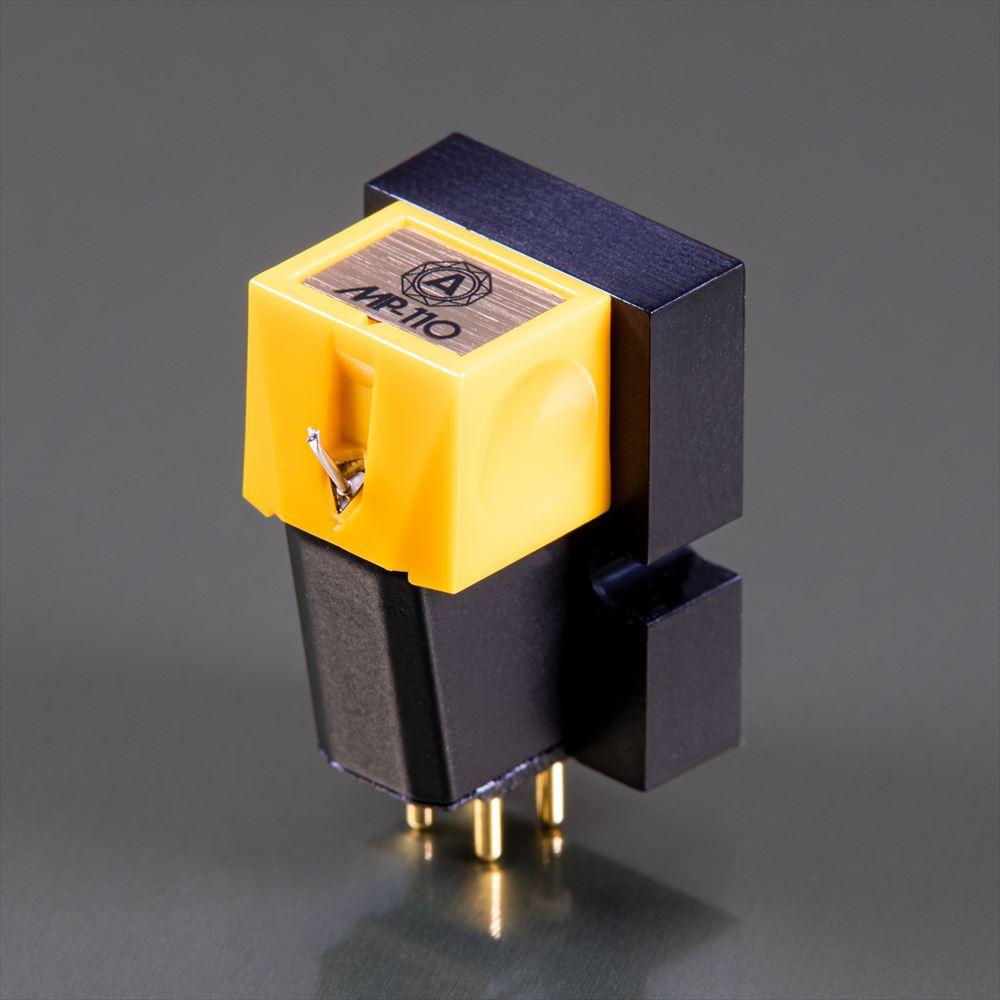
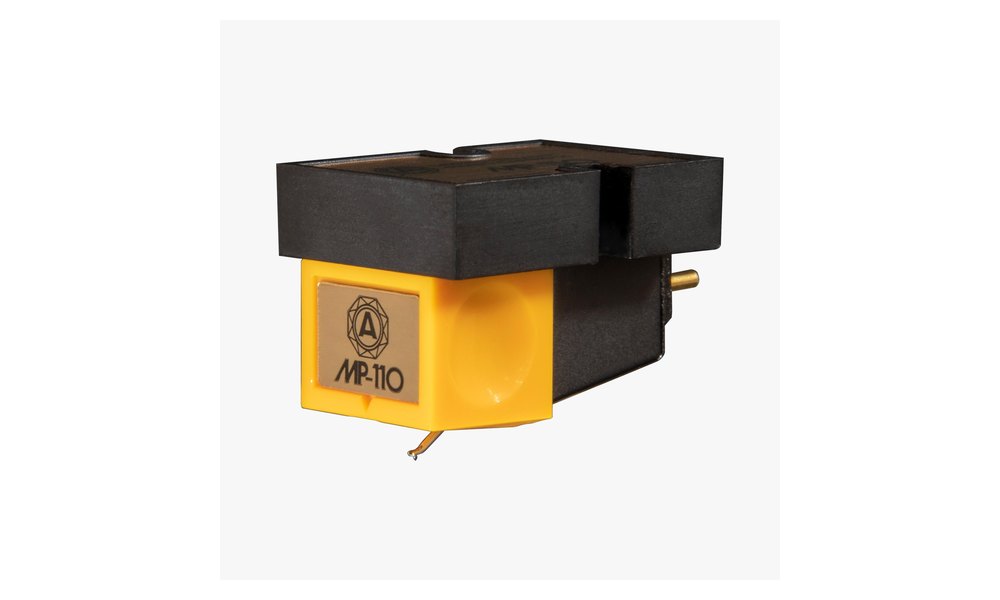
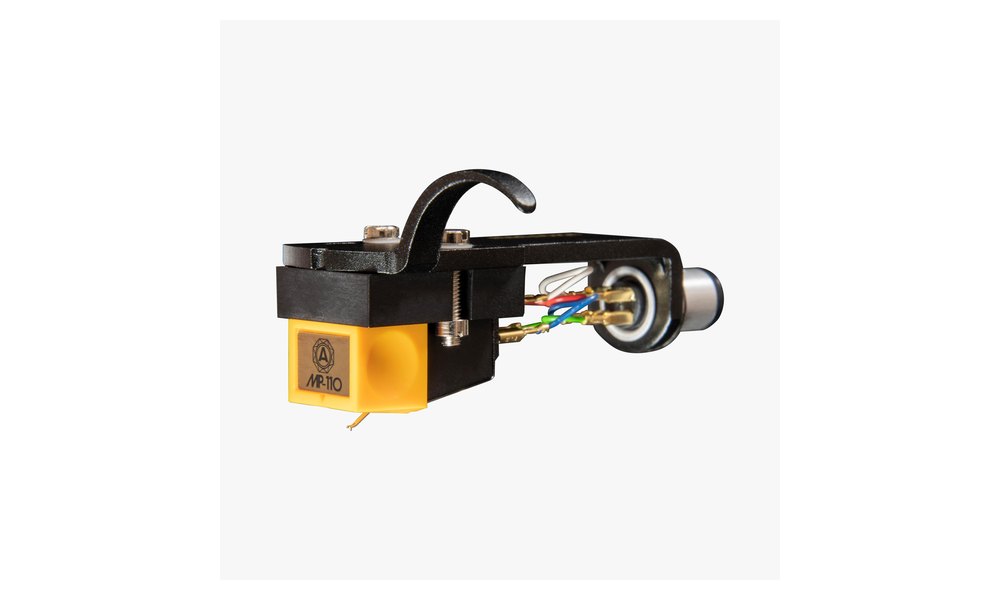
Summary
The MP-110 (approx. 130–160 €) is the successor to the MP-11, which according to Nagaoka won a Grand Prix in Europe. The moving permalloy cartridge delivers 5 mV and works with any MM input. A bonded elliptical diamond sits on an aluminium alloy cantilever. What Hi-Fi? (22 April 2010, 4/5) calls it a strong first upgrade; Stereophile (Herb Reichert, 31 July 2024) praises its tangible, solid presentation.
Assumptions
- MM-Phono 47 kΩ · 100 pF (manufacturer)
- tracking force 1.5–2.0 g
- No listening/laboratory measurements
Specs (public / manufacturer)
| Type / Stylus | Moving permalloy (MM input) · elliptical 0.4 × 0.7 mil, bonded |
|---|---|
| Cantilever | Aluminium alloy |
| Output | 5 mV (5 cm/s) |
| Frequency response | 20 Hz–20 kHz |
| Channel separation / balance | 23 dB (1 kHz) · ≤ 1.5 dB |
| Load | 47 kΩ · 100 pF |
| Tracking force | 1.5–2.0 g |
| Weight | 6.5 g (with headshell 16.5 g) |
| Replacement stylus | JN-P110 |
| Price guide | approx. €130–160 · Sept 2026 |
Manufacturer specifications (Nagaoka)
| Type | MP cartridge (moving permalloy, Nagaoka) |
|---|---|
| Output voltage | 5 mV (5 cm/s) |
| Frequency response | 20–20,000 Hz |
| Channel separation | 23 dB (1 kHz) |
| Channel balance | ≤ 1,5 dB |
| Recommended load | 47 kΩ |
| Capacitance | 100 pF |
| Cantilever | aluminium alloy |
| Stylus | 0.4 × 0.7 mil elliptical, bonded |
| Tracking force | 1.5–2.0 g |
| Cartridge weight | 6.5 g (16.5 g with headshell) |
Source: Nagaoka – official specifications · As of 16 October 2026 · subject to change by the manufacturer
Scores in detail
Vinyl BotPro Index: 52 · Index band Starter 40–54 · Guidance only, not a lab value.
Strengths
- 5 mV — works with any MM input
- Tangible, physical presentation
- Sweet midrange and fine detail
- Square body, easy to mount and align
Weaknesses
- Treble a little edgy
- A little more groove noise than the MP-200
- Priced at the top starter edge
Comparison models
| Ortofon 2M Red | Similar output, other character/motor |
|---|---|
| AT-VM95E | Cheaper + Stylus family |
| Sumiko Rainier | Similar Band, Upgrade Styli Olympia/Moonstone |
System matching
Works well with
- MM phono stage with 47 kΩ / 100 pF
- Beginners looking for a first upgrade
- Listeners who like a lively, physical presentation
Less suited
- Anyone looking for very silky, reserved treble
- Systems that already sound very bright
Technology in detail
The MP-110 works on Nagaoka's moving permalloy principle: the stylus does not move a magnet but a tiny piece of permalloy, a nickel-iron alloy. Electrically the cartridge behaves like an MM type and delivers 5 mV. It therefore works with any MM phono input.
The elliptical diamond (0.4 × 0.7 mil) is bonded to the aluminium alloy cantilever. Nagaoka specifies 20 Hz to 20 kHz, 23 dB channel separation at 1 kHz and a maximum channel imbalance of 1.5 dB. The tracking force is 1.5 to 2.0 g.
The cartridge weighs 6.5 g, 16.5 g with headshell. Nagaoka recommends a load of 47 kΩ and 100 pF. The replacement stylus is the JN-P110; according to the instruction sheet quoted in the international trade press, the stylus wears after 150 to 200 hours.
What the specialist press says
One international review awards four stars and calls the MP-110 a strong first upgrade that holds its own against tough competition: bright, immediate sound, sweet midrange and fine detail; only the treble could be a little more refined.
A further review describes the MP-110 as a popular, rather warm-sounding entry point with tangible physical presence: the musicians stand almost bodily in the room, more solid than with many MC cartridges.
Analysis: Nagaoka MP-110 in detail
Scope and sources
This analysis adds manufacturer data and two dated, independent listening reports to the short overview above for the Nagaoka MP-110. Vinyl BotPro compiled it from the sources named here; VinylCination has not listened to this cartridge and has not measured it. Nagaoka’s English product page (nagaoka.co.jp/en/item/mp_110.html, retrieved 12 November 2026) is the manufacturer source [1]. The technical figures in the existing table and in Stereophile (5.0 mV into 47 kΩ, a bonded elliptical diamond, an aluminium cantilever, moving permalloy) are taken as manufacturer or report figures, not as a measurement of our own. The listening sources are What Hi-Fi? of 22 April 2010 (4/5) [2] and Herb Reichert’s Gramophone Dreams #87 column in Stereophile of 31 July 2024 [3].
Both texts meet the test of international, independent listening reports. They describe the stock MP-110, not a later stylus-swap experiment. In the same Stereophile column Reichert also listens to an AudioQuest Yosemite tonearm cable and, later, to a “homebrew” combination of an MP-110 body and an MP-200 stylus. Those later passages do not count as the sound of the stock MP-110. Forums are left aside.
Place in the range
The MP-110 is Nagaoka’s moving-permalloy cartridge below the MP-150 and MP-200, described on the existing page as the successor to the MP-11, which according to the manufacturer won a Grand Prix in Europe. That is a manufacturer claim on the page, not an award text we have verified. In our list the MP-110 is the Sound champion in the Starter band (index 52, rank 3). That champion label is an AI assessment from the sources in front of us, not a listening session of our own.
What Hi-Fi? quoted a UK price of £62 in 2010 and treated the cartridge as a strong first upgrade. Reichert wrote in 2024 that he had wanted a review sample for two years, had not obtained one, and finally bought the cartridge on Amazon for $117.80; he could not find a US distributor at the time. The existing page note quotes around €130–€160 (as of September 2026). Those are three price points across 16 years, not three different cartridges.
Construction and manufacturer data
Reichert restates the construction as Nagaoka describes it: a moving-permalloy design with a bonded elliptical diamond on an aluminium cantilever, 5.0 mV output into 47 kΩ. What Hi-Fi? quotes a nominal tracking force of 1.8 g and found the square body easy to fit and align [2] [3]. The existing data table on this page is left unchanged. Where figures appear only in the table or in Reichert, we lean on those restated numbers, not on shop copy; the official product page remains the first manufacturer source.
The instruction sheet, Reichert reports, says the stylus wears after 150 to 200 hours and will then begin to affect sound quality. He works 200 hours into 545 sides of 22 minutes and arrives at about 21 cents a side at his purchase price. That is his running-cost arithmetic, not a durability measurement of this analysis. His speculation that an MP-150 with a nude diamond would likely sound quieter and more refined is something he has explicitly not yet heard; we do not take it as a finding.
What the specialist press heard
The two listening texts are 14 years apart and do not draw a single, blended character. That is why we keep them separate and do not average them into a compromise sound.
What Hi-Fi? in 2010 heard a bright, immediate cartridge that would work well in pepping up a dull system. The midrange was sweet, though they wanted more bass weight to support its light, breezy character. The treble was a touch edgy and not quite as refined as some closely priced rivals. Dynamically the cartridge aimed above its price bracket, handling the syncopation of Scott Walker’s “Montague Terrace In Blue”; detail subtleties were dealt with proficiently, as were the vocals on the Dixie Cups’ “Chapel of Love”. For the money it was a cheap and supremely cheerful cartridge, and a strong first upgrade [2].
Reichert, in 2024, calls the MP-110 a popular, famously “warmish”-sounding entry-level cartridge. The first record he played was a Columbia six-eyes pressing of Beethoven’s Quartet No. 12 in E-flat major, Op. 127, played by the Budapest String Quartet, on “The Complete String Quartets of Beethoven” (Columbia ML 4583). It came out sounding fat, raw, direct and highly tactile, with spot-on timbres. The combined effect was a frank realism he found extremely compelling. The only downside: it was a grainy, noisy beast. Even so, the MP-110 played this well-recorded 1952 mono disc in a manner that made it feel more physically present than most moving coils he had played it with, and put the performers on the floor in front of him, much more solid than his Denon DL-103. A Shure V15 III with a new Jico stylus, by contrast, sounded soft and emotionally detached [3].
Reichert speaks of a “meat and bones” believability, which he reads as proof of some as-yet-unmeasured form of accuracy that the majority of cartridges fail to achieve, and that every listener can identify at once. That is his criterion — solidity and realistic tone — not a lab figure, and not a contradiction that What Hi-Fi? had already phrased that way in 2010. The British magazine heard brightness, a sweet midrange, too little bass weight and a slightly edgy treble; Reichert heard warmth, fat, rawness, physical presence and grain. Both findings stand, both apply to the stock MP-110, and neither may swallow the other.
Arm, loading and system
Both reports assume a normal MM input at 47 kΩ. What Hi-Fi? stresses the easy fit of the square body and the 1.8 g tracking force; Reichert does not describe a different loading trial. Phono-input and arm-cable capacitance are not worked through as a separate variable for the stock MP-110 in either text — Reichert’s capacitance question to AudioQuest belongs to the Yosemite cable and to other cartridges, not to this listening seat.
What Hi-Fi? in 2010 explicitly frames the cartridge as a first upgrade on a starter deck. Reichert’s 2024 chain is a fully grown listening system, in which he holds the MP-110 against, among others, a DL-103 and a V15 III; that helps explain why his report puts physical solidity first, rather than the question of replacing a bundled cartridge. Anyone who reads only one of the two texts is given a different promise. Anyone who reads both has to allow for a cartridge that can sound bright and a touch edgy, and also fat, raw and physically present — depending on chain, record and expectation, without our having reconciled those reports on a seat of our own.
Price and availability
The existing page note quotes around €130–€160 (as of September 2026, without guarantee). What Hi-Fi? quoted £62 in 2010, Reichert $117.80 in 2024. Styli are consumables; the 150-to-200-hour figure on the instruction sheet belongs to the running-cost arithmetic, not to the champion score. In our list the MP-110 is the Starter Sound champion. That follows from the sources and from the two secured international listening texts, not from a group comparison we have not heard ourselves. The existing comparison table on this page places other cartridges alongside it; those are overview rows, not extra listening sources.
Whether a carton bought today still holds exactly the MP-110 heard in 2010 and 2024 is a matter of checking the model name. The MP-100, MP-150 and MP-200 are different cartridges. A foreign stylus in an MP-110 body is not the stock MP-110.
The gap between the two listening texts deserves a note of its own. In 2010 the MP-110 was, for What Hi-Fi?, a £62 upgrade with a bright, immediate attack; in 2024 Reichert buys a cartridge of the same model name as an inexpensive MM in a chain where he otherwise also listens to expensive MCs. Whether manufacturing, stylus batch or running-in have stayed identical over 14 years is something we cannot check. We treat both texts as reports on the stock MP-110 in front of each writer, not as proof that the character has not changed. Anyone buying today is buying a present-day sample, not Reichert’s Amazon unit and not the cartridge played in British listening rooms in 2010.
In practical terms the instruction sheet mainly means planning for the stylus as a consumable. 150 to 200 hours is a manufacturer figure, not a life we have counted ourselves. A timely stylus change keeps the stock MP-110; a dearer stylus from the MP-150 or MP-200 line makes it a different cartridge, even if the body looks the same. That is exactly the point at which Reichert later introduces the “homebrew” swap — and that is exactly why the swap stays outside the sound claims for the MP-110.
The champion mark on this page is a Sound score in the Starter band, not a Value-for-Money score. The existing page line that the price sits at the upper edge of the band remains as guidance and is not contradicted by the listening texts: What Hi-Fi? saw a strong first upgrade at the lower price of 2010; Reichert in 2024 still pays comparatively little and puts solidity and timbre ahead of the question of whether the cartridge is the cheapest in its class. We have not heard a direct price comparison with today’s rivals.
A last look belongs to the mono disc on which Reichert pins the sense of physical presence. Columbia ML 4583 is a well-recorded 1952 set, six-eyes, Budapest String Quartet. That an entry-level MM can play this record “fat, raw and direct” and more solidly than a DL-103 is the core of his report — and it was heard on exactly this disc and this chain. What Hi-Fi? heard other titles in another year and noted other weaknesses. Both protocols remain tied to their titles and chains.
What we are not using
In the same column Reichert listens to an AudioQuest Yosemite tonearm cable, including on an MP-200 and other cartridges. Those cable passages are not a listening report on the MP-110. Later he swaps in an MP-200 stylus and expressly calls the result a “homebrew” 200; he himself warns that it may not reflect the character of a genuine MP-200. For us the sharper point is: it is not the character of the stock MP-110 either. Piano and vocal observations after that swap, including comparisons with expensive MC cartridges, are left aside. Forum chatter about core laminations or body plastic, which Reichert could not verify, is left aside too. German texts on their own would not meet the rule; they are not used here as a second pillar. There is no in-house track list and no measurement.
Conclusion of this analysis
The sources portray the Nagaoka MP-110 as a moving-permalloy MM with a bonded elliptical diamond, an aluminium cantilever, 5.0 mV into 47 kΩ and a typical tracking force of 1.8 g — according to the restated manufacturer figures and the existing table [1]. What Hi-Fi? (22 April 2010, 4/5) describes a bright, immediate, midrange-sweet first upgrade with too little bass weight and a slightly edgy treble, heard among other records on Scott Walker and the Dixie Cups [2]. Stereophile (Herb Reichert, 31 July 2024) describes, on Beethoven’s Op. 127 (Budapest String Quartet, Columbia ML 4583), a fat, raw, direct, tactile, timbrally accurate, and at the same time grainy and noisy cartridge, more physically present than most MCs and more solid than a Denon DL-103, while a Shure V15 III (Jico) sounded soft and detached [3]. The two characters are not averaged. In our list the cartridge is the Starter Sound champion — an AI assessment from the sources in front of us, not a listening report of our own.
Sources for this analysis
- Nagaoka: MP-110, English product page (retrieved 12 November 2026). https://www.nagaoka.co.jp/en/item/mp_110.html. Address as given in the Stereophile footnote: Nagaoka, No. 1863-6 Kanzawa, Higashine City, Yamagata.
- What Hi-Fi?: Nagaoka MP110 Review (22 April 2010, 4/5). https://www.whathifi.com/nagaoka/mp110/review
- Stereophile: Herb Reichert – Gramophone Dreams #87 (31 July 2024). https://www.stereophile.com/content/gramophone-dreams-87-deejay-coolosities-audioquest-yosemite-tonearm-cable-nagaoka-mp-110
Created by AI (Vinyl BotPro) from the sources named; no in-house listening tests or measurements. Detailed human fact-checking pending.
Who is it for?
For vinyl listeners who are upgrading their first cartridge and want a lively, physical sound from a standard MM input.
What makes this AI analysis special
This AI analysis combines Nagaoka's technical data with international reviews. All measurements are manufacturer specifications. As of October 2026.
How the score comes about
The index reflects the high output, the proven moving permalloy principle, the easy installation and the positive reviews in international magazines. The Vinyl BotPro Index on this page remains 52 (Starter, rank 3) — guidance from manufacturer data and the specialist press, no in-house listening session. The four criteria engineering/build, features, expected performance and value for money are weighted 25/20/25/30 and scaled across all tiers. Methodology
Sources
- Nagaoka, MP-110 product page with specifications
- What Hi-Fi?, Nagaoka MP-110 review
- Stereophile, Gramophone Dreams #87 (Nagaoka MP-110)
Created by Vinyl BotPro (AI) · As of Sept 2026 · Corrections: info@vinylcination.de
Read more: best cartridges 2026 · Stylus shapes explained · What is hi-fi?