
Speaker cable · Short analysis · Premium, rank 12
Oehlbach Silverline SP-40 Review
Short analysis (research): 2 × 4.0 mm² · SPOFC (silver-plated), mini coil, without plugs · up to 400 W (manufacturer) — manufacturer specifications and retailer prices, no listening test.
Summary
Oehlbach Silverline SP-40 (bulk cable sold by the metre, 2-core, round): 2 × 4.0 mm² · SPOFC (silver-plated); mini coil, without plugs · to 400 W (manufacturer). Price: approx. €19.75/m · Price as of Sept 2026. Same cross-section as Speaker Wire SP-40 (€7.20/m), but around 2.7 beach so expensive per meter; a silver plating advantage is not documented at usual lengths.
At usual lengths (up to approx. 5–10 m), what matters most is an adequate cross-section and a clean, firm connection; audible sound differences between speaker cables are scientifically disputed.
Assumptions
- Prices: consumer prices incl. VAT, as of Sept 2026 (manufacturer or retailer page); they may change
- Details from the manufacturer’s shop or datasheet, or the retailer’s page; availability may differ and was not checked for every variant.
- Living-room system with cable runs of up to approx. 5–10 m
- No measurements or listening tests of our own
Specs (public / manufacturer)
| Type | Sold by the metre · 2-core |
|---|---|
| Cross-section / conductor | 2 × 4.0 mm² · SPOFC (silver plated) |
| Conductor material | SPOFC (silver-plated oxygen-free copper), silver content 8 g/kg |
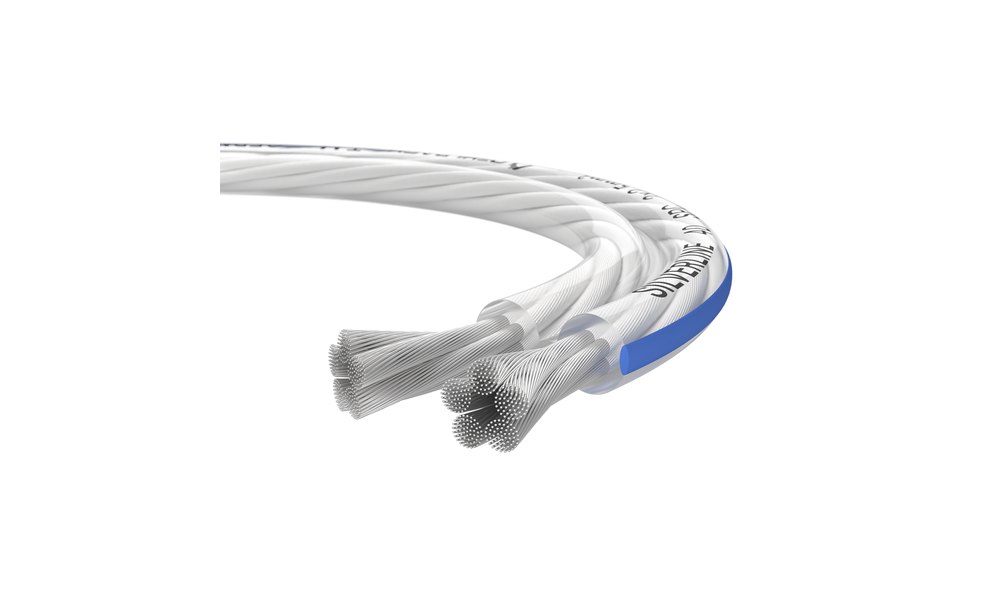
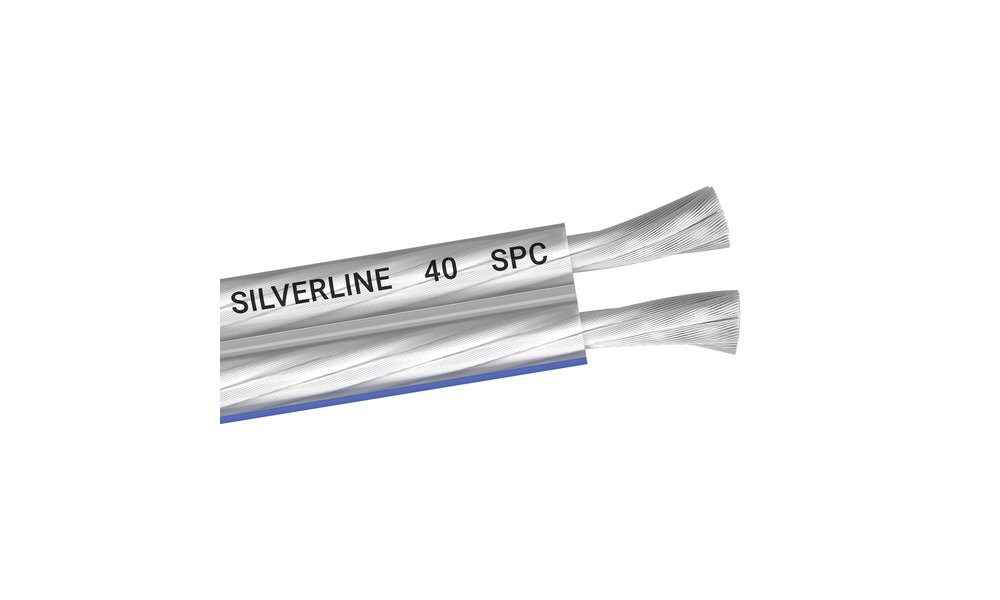
| Construction | transparent PVC jacket; geometry not specified by manufacturer |
| Termination / connection | coil, unterminated · Up to 400 W (manufacturer) |
| Length | 4, 10 or 20 m |
| Manufacturer / origin | Oehlbach, "Certified production in Europe" according to the shop |
| Price guide | 4 m Mini coil €79.00 (€19.75/m) · Price as of Sept 2026 |
Manufacturer specifications (Oehlbach)
| Type | stereo speaker cable |
|---|---|
| Cross-section | 2 × 4.0 mm² |
| Conductor | silver-plated OFC (SPC/OFC), silver content 8 g/kg |
| Insulation | PVC, transparent |
| Amplifier power (recommendation) | up to 400 W |
| Lengths | 4, 10 or 20 m |
| Resistance | not specified by manufacturer |
| Warranty | 30 years (per Oehlbach) |
Source: Oehlbach – official specifications · As of 16 October 2026 · subject to change by the manufacturer
Suits / less suited
- Suits: Who chooses silver-plated material deliberately
- Less suited: Price conscious buyers
Vinyl BotPro Index: 56 (Premium 55–69) · Label: AI research · Sept 2026 · All information is provided without guarantee; prices change and manufacturer specifications may differ.
Manufacturer and concept
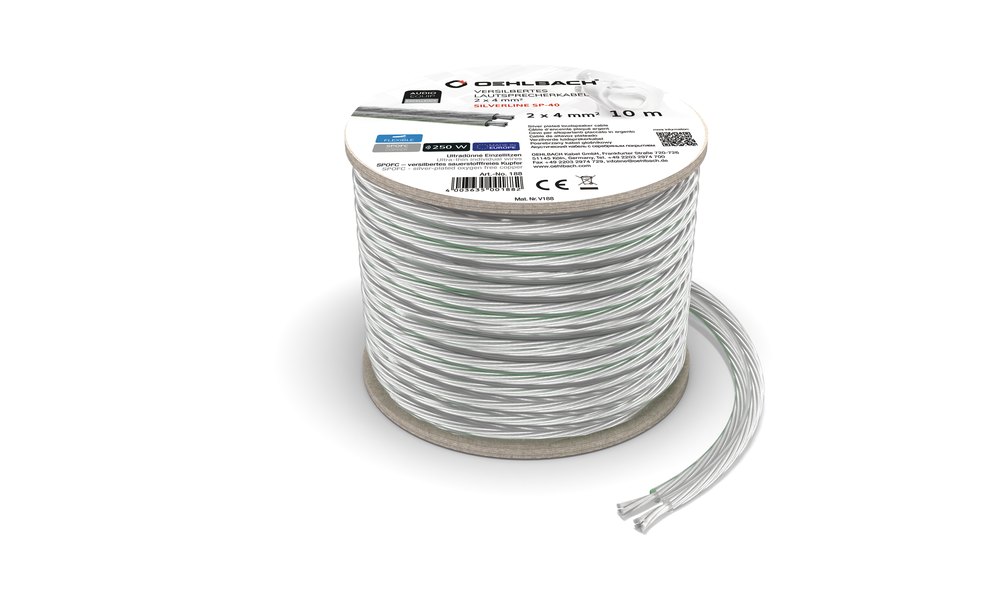
Oehlbach is a German cable and accessories specialist with a broad range, from simple cable by the metre to elaborate hi-fi leads. The Silverline range is Oehlbach's line with silver-plated copper conductors. The SP-40 is the range's speaker cable with 2 × 4.0 mm² cross-section, sold by the metre or on mini reels of 4, 10 or 20 m, without pre-fitted plugs. According to its shop, Oehlbach gives a 30-year warranty and states certified manufacturing in Europe.
The concept: a generously sized cable with silver-plated strands in a transparent jacket that shows off the material. In Oehlbach's own range it sits next to the plain Speaker Wire SP-40 with the same cross-section in bare copper, which is considerably cheaper.
Technology explained
What a speaker cable has to do
A speaker cable carries the signal from amplifier to speaker. Unlike phono or line cables, high currents flow at low voltage. The key electrical value is therefore resistance: every cable forms a voltage divider with the speaker, and too much resistance costs level and reduces the amplifier's control over the woofers. Capacitance and inductance play a minor role at normal lengths.
Cross-section and resistance
Copper has a resistivity of about 0.0175 Ω·mm²/m. At 4.0 mm² that is roughly 0.0044 Ω per metre of conductor. A 5 m cable has an outgoing and a return conductor, i.e. 10 m of conductor, giving about 0.044 Ω. Into an 8 Ω speaker that is a loss far below 0.1 dB, and negligible even into 4 Ω. For comparison, a thin 0.75 mm² cable would have about 0.23 Ω over the same length. A 4 mm² cable is thus generously sized for domestic lengths and only really needed for very long runs of 15 m or more.
Cable and damping factor
Damping factor describes how well an amplifier controls the movement of the speaker cone. It is speaker impedance divided by the amplifier's output resistance – and cable resistance adds to that output resistance. An amplifier with a damping factor of 200 into 8 Ω has an output resistance of 0.04 Ω. Adding 0.044 Ω of cable lowers the effective damping factor to just under 100. That sounds like a lot but is still a range in which woofer control is very good. With a thin 0.75 mm² cable it would drop to around 30 – the real reason for an adequate cross-section.
Silver-plated conductors
Silver conducts slightly better than copper, but only by a few per cent. With plating, only a thin silver layer sits on the copper strands; Oehlbach states a silver content of 8 g per kilogram. A frequently cited argument is the skin effect: at high frequencies current flows preferentially near a conductor's surface. For audio frequencies up to 20 kHz, however, this effect is very small in the thin strands of a speaker cable. A measurable advantage of silver plating at normal lengths has not been demonstrated; a practical advantage may be that the surface tarnishes less quickly than bare copper.
Jacket and construction
The jacket is transparent PVC. Oehlbach does not state the conductor geometry, and the data sheet gives no resistance per metre. The “up to 400 W” figure describes power handling and has no practical relevance for domestic systems, since thinner cables transmit such power easily over short runs.
Sound according to international reviews
We are not aware of reviews of the Silverline SP-40 by international magazines. That is typical for speaker cable: the press rarely reviews individual cables by the metre, and where it does, opinions differ widely. Regardless, the physical framework applies: with adequate cross-section and short length, the electrical differences between well-made cables are so small that audible differences are scientifically disputed. Our assessment is therefore based on the manufacturer data and these fundamentals; we do not run our own listening or measurement tests.
What really shapes a system's sound are the speakers, their placement and the room. To improve things with cables, ensure adequate cross-section, clean contacts and equal lengths for both channels.
Features and practice
Terminating
The SP-40 comes without plugs. Strip the ends about 10 to 15 mm and twist the strands. With screw terminals the bare end can be clamped directly; ferrules or banana plugs are neater and more durable. With 4 mm², make sure plugs and terminals accept this cross-section – not every spring clip on simple speakers does. Do not tin the ends, because solder creeps under pressure over time and the contact can loosen.
Polarity
Both conductors must be connected the same way at amplifier and speaker: plus to plus, minus to minus. Reversed polarity on one speaker leads to thin bass and vague imaging. If one conductor is marked, that helps; otherwise mark the positive conductor at both ends before laying the cable, for example with coloured tape or heat-shrink.
Length and routing
Both channels should be the same length, even if one speaker is closer to the amplifier. Lay surplus cable in loose loops, not tightly coiled. A 4 m mini reel is enough for two short runs of just under 2 m each; for typical living rooms, 10 m is the more suitable size. Speaker cables are insensitive to interference because they carry high currents at low impedance, but tidy routing still pays: not under rugs where furniture or footsteps can damage the insulation, and not tightly parallel to mains cables over long distances. Like any clear jacket, the SP-40's may discolour slightly with light over the years. Standard PVC speaker cable is not intended for installation inside walls; special installation cable exists for that.
Price
According to Oehlbach's shop, the 4 m mini reel costs €79.00, i.e. €19.75 per metre. The plain Speaker Wire SP-40 with the same cross-section costs about €7.20 per metre. The surcharge of almost three times mainly pays for the plating and the jacket, not for higher electrical performance.
When is a more expensive cable worth it at all?
A cable change makes sense if the existing cable is too thin, the contacts are oxidised or the length is wrong. Replacing a 0.75 mm² bundled cable with a decent 2.5 or 4 mm² cable measurably improves the electrical conditions. Beyond that, differences are small, and budget beyond a solid copper cable is usually better spent on speakers, stands or room acoustics.
Who it suits
The Silverline SP-40 suits buyers who deliberately want silver-plated material, a visually striking transparent cable or long runs with large cross-section. For price-conscious buyers, bare copper cable of the same cross-section is the sober alternative with the same electrical properties. For very short runs up to 3 m, 2.5 mm² is also enough.
Comparison with alternatives
- Supra Classic 2 × 4.0: same cross-section in tinned copper, less than half the price per metre.
- Supra Classic 2 × 2.5: sufficient for short runs, even cheaper.
- Oehlbach Speaker Wire SP-25: simple copper cable from the same company.
- Oehlbach Rattle Snake 3 SP-30: also Premium level, with a different construction.
All cables with index and price per metre are listed in our best speaker cables.
Frequently asked questions about the Oehlbach Silverline SP-40
Does silver-plated cable sound better?
An advantage at normal lengths has not been demonstrated. Silver conducts only a few per cent better than copper, and at 4 mm² resistance is very low anyway.
Which cross-section is right?
Rule of thumb: up to about 5 m, 2.5 mm² is enough; up to about 10 m, 4 mm² is generous; beyond that, more cross-section pays. With low-impedance speakers a little more does no harm.
Do I need banana plugs?
Not necessarily, but they make connecting and disconnecting easier and ensure a lastingly firm contact. They must be suitable for 4 mm².
Do I need two cables for bi-wiring?
Yes. Bi-wiring connects the treble and bass sections separately and therefore needs two cable pairs per speaker. The benefit is disputed; with a single, sufficiently thick cable such as the SP-40 and the jumpers fitted, you are electrically close to a bi-wired connection.
How long does a speaker cable last?
Practically indefinitely in normal use. The ends age first: bare strands can oxidise and should be re-stripped after some years. Plugs and ferrules protect against this.
Is there a direction?
Oehlbach specifies none for the SP-40. Electrically, a speaker cable without built-in electronics is direction-independent.
Verdict
The Oehlbach Silverline SP-40 is a generously sized speaker cable with 2 × 4.0 mm² silver-plated copper, a transparent jacket and a 30-year warranty. Electrically it is more than adequate for domestic lengths; a sonic advantage from the plating has not been demonstrated, and the surcharge over bare copper of the same size is considerable. In our best list it ranks 12th in the Premium level with an index of 56 – a cable for buyers who deliberately choose material and looks and accept the premium over equally thick copper cable.
Read more: best speaker cables 2026 · Improve your hi-fi system · What is hi-fi?