
In-ear analysis · Premium · as listed
Sennheiser IE 100 Pro Analysis
The Sennheiser IE 100 Pro sits on the in-ear shortlist of 12 November 2026 in the Premium tier, now expanded to thirty-four models, in rank 18 with a Vinyl BotPro index of 63 and no tier badge. This analysis takes the list record as published and does not run a second calculation.
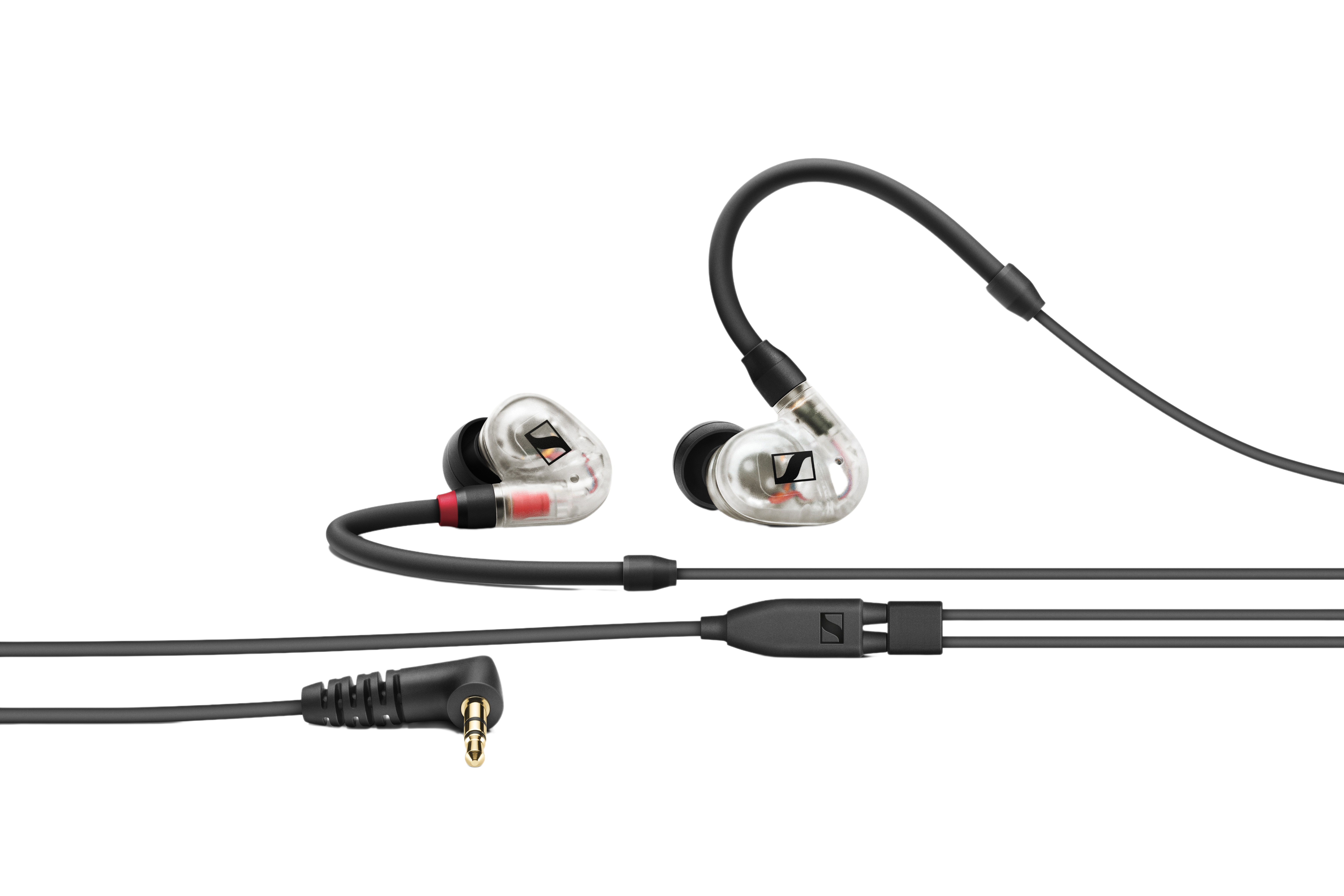
In brief
The Sennheiser IE 100 Pro is a wired universal in-ear with a dynamic 10 mm broadband transducer in Sennheiser’s entry-level IE Pro line, here in the clear version article no. 508941, not the IE 100 Pro Wireless bundle. Official datasheet SP_1293_v1.0 lists a dynamic 10 mm broadband transducer, 20 Hz–18 kHz, 20 Ω, 115 dB at 1 kHz / 1 Vrms, THD below 0.1 % at 1 kHz and 94 dB, noise attenuation of less than 26 dB and a 1.3 m cable. The sheet does not give an earpiece weight; the 160 g that appears on the mixed product page and in a review specification box is not taken here as a shell weight. On the in-ear shortlist of 12 November 2026 it sits in the Premium tier, now expanded to thirty-four models, in rank 18 with a Vinyl BotPro index of 63 and no tier badge. It shares index 63 with the Final A4000 and the Final A3000; at the same index the higher sound-evidence score ranks the A4000 (7.3) ahead of the A3000 (7.2), and the IE 100 Pro follows with 7.0 in rank 14. The subscores and the linear mapping onto the 55–69 band are documented in the list package; this page repeats the list record and does not run a second calculation.
The listening report comes from MusicRadar (James Grimshaw, 22 October 2026): a dated listening review of the exact model in an independent international online specialist outlet of the same class already used for other in-ears on this list. MusicRadar is part of Future Publishing, the same group as What Hi-Fi, and appears here for the first time as a pillar on this list. The text expressly covers the wired, passive IE 100 Pro in the clear finish; the wireless cable is mentioned only as an accessory and is not used as the subject of the listening passage. A SoundGuys product hub for the Wireless edition is not used as a pillar of the wired model. Under the single badge rule of 12 November 2026 — including addendum t647s3962 — the Sennheiser IE 100 Pro is eligible; its pillar here is the written review. The documented euro price is €89.00 at Thomann (Sennheiser IE 100 Pro Clear, meta price 89 EUR, schema.org/InStock, “Sofort lieferbar”, retrieved 12 November 2026). The Sound badge in the tier remains with the Sony IER-M500, and the value badge with the DUNU Titan S2.
Technical data (published)
| Design | Wired universal in-ear, dynamic 10 mm broadband transducer, Clear version, article no. 508941 (Sennheiser datasheet SP_1293_v1.0). The Black (508940) and Red (508942) variants share the same sheet; this page lists the clear version documented at Thomann. |
|---|---|
| Impedance | 20 Ω (SP_1293_v1.0; MusicRadar confirms 20 ohms) |
| Sensitivity | 115 dB at 1 kHz / 1 Vrms (SP_1293_v1.0). The sheet does not give a figure at 1 mW; the official reference is kept. |
| Frequency response | 20 Hz–18 kHz (SP_1293_v1.0) |
| THD | below 0.1 % at 1 kHz, 94 dB (SP_1293_v1.0) |
| Connection | 1.3 m cable to a 3.5 mm jack (SP_1293_v1.0 and MusicRadar). The datasheet does not list an earpiece weight. |
| Isolation | Noise attenuation of less than 26 dB (SP_1293_v1.0). MusicRadar refers to attenuation of up to 26 dB and compares that with typical musicians’ earplug figures around 21 dB; that remains a report from the pillar, not an in-house measurement. |
| Price | €89.00 at Thomann, IE 100 Pro Clear, InStock, 12 November 2026 |
Amplifier compatibility
Sennheiser lists 20 Ω and 115 dB at 1 kHz / 1 Vrms. MusicRadar writes that the low impedance is enough to drive the IE 100 Pro from practically any intended source, smartphones included, while still promising low distortion.
The drive subscore of 8.8 follows that easy driveability. It matches the Sennheiser IE 200 and the Shure SE215 in the same tier and sits below even less critical budget designs in Starter, without the review making a separate amplifier a requirement.
On a typical phono amplifier with a headphone output the IE 100 Pro is therefore undemanding. A low-noise output remains useful; a large surplus of power is not an end in itself according to the review.
The official sensitivity is referenced to 1 Vrms, not 1 mW. This page does not convert the figure and rests the placement on 20 Ω, 115 dB at 1 Vrms and on the everyday driveability described in the pillar.
Scoring criteria in detail
The Vinyl BotPro index on this page is not a second calculation, but the list record of 12 November 2026. The Premium tier now holds thirty-four models; the mapping uses the 55–69 band linearly across the unrounded raw score. With a raw score of 7.87 the Sennheiser IE 100 Pro sits at index 63 and rank 14. It shares index 63 with the Final A4000 and the Final A3000; at the same index the higher sound-evidence score ranks the A4000 (7.3) ahead of the A3000 (7.2), and the IE 100 Pro follows with 7.0 in rank 14. Shared indices are allowed; rank remains unique. The mapping follows the decision of 12 November 2026: the unrounded raw score is placed linearly on the tier band, strongest model at the ceiling, weakest at the floor, with no required gap between places. Shared indices within a tier are allowed; rank remains unique (higher index first, then higher sound-evidence score, then lower documented euro price, then alphabetical name).
The subscores are sound 7.0, build 7.6, drive 8.8 and value 8.6. The sound-evidence score sits below the IE 200 (7.2) and below the A4000 (7.3) and A3000 (7.2) on the shared index 63, and above the IE 300 (6.6) at the lower edge of the same tier. The build score of 7.6 follows MusicRadar’s account of a robust, not flimsy plastic shell that stays comfortable over longer sessions, with the limit of single-flange tips only and a soft pouch rather than a hard case. The drive subscore of 8.8 reflects easy driveability at 20 Ω. The value score of 8.6 follows the documented price of €89.00 and the stage use that the review expressly calls an example of value; it stays below the 9.2 of the DUNU Titan S2 and below the 8.8 of the FiiO FH3, and does not take the tier’s value badge.
The manufacturer and the concept
Sennheiser presents the IE 100 Pro as the entry point of its professional in-ear monitoring line. The official datasheet describes a newly developed dynamic 10 mm broadband transducer meant to give a precise overview on stage, and also lists isolation, a secure fit and a stage-proof cable with an internal cable duct.
James Grimshaw places the model among affordable in-ear monitors for bands, musicians and DJs who want an alternative to a wedge monitor or to bulky DJ headphones. The text covers the wired, passive unit; a separately sold wireless cable remains an accessory and is not the subject of this analysis.
The clear version, article no. 508941, is the variant documented at Thomann and the one MusicRadar had on the desk. Black and Red share the same datasheet; this page does not turn them into a different list place.
The technology, explained
A single dynamic 10 mm driver has to cover the stated 20 Hz–18 kHz range on its own. Sennheiser says the homogenous, low-distortion system reduces acoustic stress; MusicRadar hears an analytical frame with clear separation of parts, a focus on the midrange and upper midrange, and a noticeable treble roll-off.
Official noise attenuation is less than 26 dB, well below the 35–42 dB Etymotic quotes for deep insertion. MusicRadar still finds the isolation strong in use: at the desk, keystrokes and the front door disappeared, and in the rehearsal room the focus stayed on the in-ear signal against a loud PA.
The cable is 1.3 m long and ends in a 3.5 mm jack. MusicRadar describes posable hooks behind the ear that keep the fit, and a plastic shell that feels robust in the hand without becoming heavy. The datasheet does not list an earpiece weight, and none is invented here.
Single-flange silicone tips only and a soft pouch rather than a hard case are the practical limits the pillar names clearly. That belongs to the kit notes, not to a measurement by this page.
What the international specialist press hears
MusicRadar — Sennheiser IE 100 Pro in-ear monitors review (James Grimshaw, 22 October 2026)
Grimshaw calls the IE 100 Pro an example of value at the budget end of the in-ear-monitor price range. In loud surroundings it delivers exactly what you want to hear, isolates reliably and stays comfortable for long stretches. He would not recommend it for mixing at home; it suits musicians, front-of-house engineers and gigging DJs.
At the desk, with Qobuz through a laptop output, he hears remarkable separation of parts on Queens of the Stone Age’s “Era Vulgaris”, but also an impersonal, analytical frame that favours the midrange and especially the upper midrange and lets the treble roll off in a noticeable way. What at first feels biased makes sense to him on further use.
In the rehearsal room the low end he felt was missing simply arrives through the body. The preference for upper-range information helps fill in what a tight seal attenuates and makes mix decisions in loud rooms useful, while the same profile remains a poor match for mixing at home. He describes the isolation as strong enough that even the front door disappeared.
After longer wear, including time at DJ decks, the fit becomes so natural that he could easily have gone over an hour without a break. The conclusion still names a little missing low end and a noticeable but not gig-breaking treble roll-off as limits; anyone bothered by those has to raise the budget. As pluses he lists the snug fit, a full frequency range with great separation and reliable isolation; as minuses, the high-mid focus, single-flange tips only and the lack of a hard case.
Research consensus
One pillar is on hand. It paints the IE 100 Pro as an easy-to-drive, comfortable entry-level monitor with clear separation of parts, a focus on the midrange and upper midrange, reliable isolation below 26 dB and a profile that makes more sense on stage and in the rehearsal room than at a home mix desk.
The official datasheet supports that picture technically with the 10 mm broadband transducer, 20 Ω, 115 dB at 1 Vrms, 20 Hz–18 kHz and noise attenuation of less than 26 dB. A second dated listening review of the same class is not used here. The 160 g in the review’s specification box is not taken as an earpiece weight, because datasheet SP_1293 does not list one.
Accessories and use
The datasheet and the review list the 1.3 m cable, three sizes of silicone tips, one pair of foam tips, a cleaning tool and a soft pouch. MusicRadar describes the pouch as a pleather bag; a hard case is missing and is named as a minus.
The silicone tips are single-flange. Grimshaw personally likes that less, because more material sits in the ear and can lead to heat sooner, but calls the point nitpicky at this price. The posable section behind the ear keeps the fit when the hands move away.
The plastic shell is described as robust and not flimsy, without becoming heavy. The clear version is the one that was heard; a wireless cable is sold separately and is not part of the kit described here.
Price and availability
The documented euro price on this page is €89.00 at Thomann for the Sennheiser IE 100 Pro Clear, retrieved on 12 November 2026. The product page lists the model with a meta price of 89 EUR, schema.org/InStock and the note “Sofort lieferbar”.
Pound prices from the MusicRadar review are not converted into euros. The three colour variants share the datasheet; the list price is that of the in-stock clear version at Thomann, not an averaged basket.
In the Premium tier, €89.00 sits close to the LETSHUOER S12 (€83.00) and below the FiiO FH3 (€99.00) and the IE 200 (€149.90). The subscore of 8.6 follows that frame and the value the review describes as strong on stage, not a stand-in converted price.
On an amplifier and on a vinyl system
On a typical phono amplifier with a headphone output, the main question is whether 20 Ω and 115 dB at 1 Vrms find enough level with low noise. MusicRadar describes the IE 100 Pro as driveable from practically any intended source, including phones.
Because the review paints an analytical profile aimed at the midrange and upper midrange, a warm, bass-heavy output is not a substitute for the missing low end that Grimshaw offsets on stage through the body. A low-noise, low-impedance output remains the more useful choice.
For quiet listening on a system, the limit the pillar itself draws still stands: Grimshaw would not recommend the model for mixing at home. Isolation below 26 dB quiets the listening seat, but it does not replace a studio reference.
Who is the Sennheiser IE 100 Pro for?
According to the pillar, the IE 100 Pro suits musicians, front-of-house engineers and gigging DJs who want an easy-to-drive, comfortable entry-level monitor with reliable isolation and clear separation of parts in loud rooms.
It is a poorer match for a wish for a soft, bass-heavy profile for mixing at home, for multi-flange tips in the box, or for a hard case. MusicRadar states the high-mid focus, the treble roll-off and the kit limits clearly.
As a tool on stage and in the rehearsal room the review supports the model expressly. It does not describe it as a substitute for more expensive studio monitors or for in-ears with deep Etymotic insertion.
How it compares
Against the Sennheiser IE 200 in the same tier (rank 15, index 62, sound 7.2) the IE 100 Pro remains the cheaper, more stage-directed entry with a lower sound-evidence score. The IE 200 costs €149.90 in the manufacturer shop and is placed less exclusively for the loud rehearsal room.
Against the Shure SE215 (rank 13, index 65, sound 7.0) stands another model known for the stage, at €111.00. MusicRadar names the SE215 expressly as an alternative with a smoother profile; the same sound-evidence score of 7.0 meets a higher documented price here and a higher build subscore for the SE215.
Against the Final A4000 and A3000 on the shared index 63, the Final models remain the higher-scoring neighbours for sound. The IE 100 Pro follows in rank 18 because its sound-evidence score of 7.0 sits below 7.3 and 7.2, at a markedly lower euro price.
Place on the expanded list
The in-ear shortlist of 12 November 2026 carries, after this expansion, 80 wired models: eight in Starter, thirty-four in Premium, seventeen in Expert and twenty-one in Master. The Sennheiser IE 100 Pro belongs in the Premium tier and does not move the badges of that tier.
The Premium mapping still uses the 55–69 band. There is no required gap between places. The Sennheiser IE 100 Pro, at a raw score of 7.87, sits at index 63 and rank 14. It shares index 63 with the Final A4000 and the Final A3000; at the same index the higher sound-evidence score ranks the A4000 (7.3) ahead of the A3000 (7.2), and the IE 100 Pro follows with 7.0 in rank 14.
This analysis is reachable from the shortlist. The package remains an isolated product package without list, sitemap or kb.js files. Upload is not approved; automatic submission of new URLs is not provided for.
FAQ
Is the IE 100 Pro the same as the IE 100 Pro Wireless?
No. This page lists only the wired, passive model in the clear version, article no. 508941. The wireless cable is sold separately; a listening review of the Wireless edition is not used as a pillar here.
Why does MusicRadar count as a pillar here, when the list has not used the outlet before?
MusicRadar is an established international specialist outlet from Future Publishing, the same group as What Hi-Fi. James Grimshaw’s text of 22 October 2026 is a dated listening review of the exact wired model.
Why do some specification boxes say 160 g?
Official datasheet SP_1293_v1.0 does not list an earpiece weight. The 160 g figure appears on the mixed product page and in a box in the review; this analysis does not take it as a shell weight.
Is a phone enough as a source?
MusicRadar writes that 20 ohms is enough to drive the IE 100 Pro from practically any intended source, including phones. A separate amplifier is not made a requirement.
Does the IE 100 Pro take a Premium-tier badge?
No. The Sound badge remains with the Sony IER-M500, and the value badge with the DUNU Titan S2. The value subscore of 8.6 stays below the Titan S2’s 9.2.
Conclusion
In the review to hand, the Sennheiser IE 100 Pro remains an easy-to-drive, comfortable entry-level monitor with clear separation of parts, reliable isolation and a profile aimed at the midrange and upper midrange. The limits lie in the low bass, the treble roll-off and the deliberately plain kit; the pillar expressly advises against mixing at home.
On the shortlist of 12 November 2026 it sits in the Premium tier, now expanded to thirty-four models, in rank 18 with index 63, with no badge, at €89.00 at Thomann. It shares index 63 with the Final A4000 and the Final A3000; the lower sound-evidence score of 7.0 places it behind both.
The analysis takes the list record and the published pillar as they stand; this page does not conduct in-house listening tests or measurements.
About this AI analysis
This section is an AI summary of published international listening reviews and the manufacturer’s published figures. Vinyl BotPro places those findings against the data sheet, a documented euro price and the list record; VinylCination does not conduct in-house listening tests or measurements, and every source is linked at the end of the page. Prices and availability change (as of 12 November 2026, without guarantee). Subscores and the index come from the list package of the same day. The Vinyl BotPro index maps the unrounded raw score linearly onto the tier band; equal or closely spaced raw scores may share an index.
Sources
- Sennheiser — IE 100 PRO Clear, article no. 508941 (official product page, 12 November 2026)
- Sennheiser — Product Specification SP_1293_v1.0 IE 100 PRO (official datasheet of the wired version)
- Thomann — Sennheiser IE 100 Pro Clear (€89.00, InStock, 12 November 2026)
- MusicRadar — Sennheiser IE 100 Pro in-ear monitors review (James Grimshaw, 22 October 2026)