
In-ear analysis · Premium · list record
Sennheiser IE 200 Analysis
The Sennheiser IE 200 is a wired in-ear in the company’s audiophile IE range sits on the in-ear shortlist of 12 November 2026 in the Premium tier in rank 19 with a Vinyl BotPro index of 62 and carries no champion badge.
In short
The Sennheiser IE 200 is a wired in-ear in the company’s audiophile IE range and, in this expansion, is intended for the still empty Premium tier. This page does not carry a Vinyl BotPro index: that figure appears only when a list package opens the tier and maps the subscores of the models in it onto the 55–69 band. This analysis takes the list record (Premium, rank 19, index 62, no badge).
Sennheiser presents the IE 200 as an invitation into the same driver family as dearer models such as the IE 900. A 7 mm TrueResponse transducer sits in the shell, the cable uses MMCX sockets and ends in 3.5 mm, and the eartips can be mounted in two positions to change the bass balance. What Hi-Fi? described the model on 11 April 2023 in a listening review scored 4 out of 5: clear, rich and weighty, with decent bass and build quality for the class, but with no in-line remote and without the last degree of bite and fine dynamics the reviewers missed on attacking tracks.
In the official Sennheiser EU shop the IE 200 cost €149.90 including VAT on 12 November 2026; the lowest total price of the previous 30 days was the same figure. At publication the review quoted about £130 / $150 / AU$240. VinylCination has not listened to the IE 200 and has not measured it. All listening judgements come from that international magazine review, plus manufacturer and newsroom information dated 6 January 2023.
On a vinyl system the IE 200 is a light, low-impedance wired in-ear that typical headphone outputs will drive well and that, according to the review, can gain precision from a small portable converter. An expensive reference converter is not required. Fit, seal and the chosen tip position matter more.
Technical data (public)
| Form | Wired in-ear, closed, ear-canal |
|---|---|
| Driver | Single 7 mm TrueResponse dynamic transducer (Sennheiser) |
| Impedance | 16 Ω without cable / 18 Ω with cable (Sennheiser) |
| Sensitivity | 119 dB (1 kHz, 1 Vrms) (Sennheiser) |
| Distortion | below 0.08 % (Sennheiser) |
| Frequency claim | 6–20,000 Hz (Sennheiser data sheet) |
| Weight | 4 g (without cable, Sennheiser / What Hi-Fi?) |
| Cable | 1.2 m, braided, MMCX, angled 3.5 mm, no remote |
| In the box | Silicone and memory-foam tips in S, M, L; pouch (Sennheiser) |
| Price as of 12 November 2026 | €149.90 in the Sennheiser EU shop (incl. VAT) |
| Origin | Developed in Germany, assembled in China (Sennheiser) |
| SKU | 700249 |
Amplifier compatibility
16 ohms without the cable and 18 ohms with it, plus 119 dB for one volt, are figures that a typical headphone output will handle easily. The IE 200 does not need a dedicated amplifier to play loudly enough. What Hi-Fi? still places it on the threshold at which an inexpensive portable converter becomes worthwhile: the reviewers moved it from a MacBook Pro’s 3.5 mm output onto a Chord Mojo 2 and described clearly more precision in piano attacks, more texture and more impact in the drum foundation. At the same time the text calls the Mojo 2 overkill and an AudioQuest DragonFly Black the more appropriate class.
For a vinyl system that is a useful, limited hint. An integrated amplifier with a decent jack, or a small converter after the phono stage, can reveal detail that a very plain digital output does not. The review does not treat an expensive headphone flagship as a required partner. The dual tuning via tip position remains independent of the amplifier; it changes the bass balance at the ear, not the source’s output power.
As a single driver without a crossover, the IE 200 is less sensitive to output impedance than a low-impedance four-way in-ear. That makes it comparatively uncritical on older integrated amplifiers. More power will not turn the rather easy-going character the review heard on aggressive music into bite; it only makes the earphone louder and, on a better converter, more transparent.
Rating criteria in detail
The four subscores and the index of 62 stand in the list package of 12 November 2026 and are taken here as the list record. The method remains the same as on the existing headphone lists: sound-data, build and comfort, drive, value, then mapping onto the Premium 55–69 band. It carries no champion badge: the Sound badge sits with the Sony IER-M500 and the value badge with the Moondrop Aria 2.
Manufacturer and concept
Sennheiser uses the IE letters for a line of wired in-ears aimed expressly at demanding listeners. What Hi-Fi? recalls the earlier IE 800, which won awards despite a high price, and the IE 900, which the magazine judged to justify a four-figure tag. The IE 200 is meant to open that lineage at a price that sat around £130 in 2023 and at €149.90 in the EU shop on 12 November 2026. The press release of 6 January 2023 calls the IE 200 an invitation to hear details that ordinary headphones swallow, and points to fifteen years of TrueResponse technology.
The concept is deliberately plain: one driver, a braided, replaceable cable, two tip materials in three sizes, a pouch, no app, no wireless path, no remote on the cable. What Hi-Fi? cites the missing remote as a small deduction and makes clear that wired in-ears in this class have to argue chiefly through sound, not through the convenience features of wireless buds. For a vinyl system that is not a drawback but a simpler signal path.
The range is developed in Germany and assembled in China, according to the data sheet. The IE 200 carries article number 700249. It sits below the IE 600 and IE 900, not as a sonic copy of those models but as an entry into the same family. This analysis compares it with the already listed IE 900 only as a dearer sibling of the same brand, without inventing a shared index.
How the technology works
A 7 mm wide-band TrueResponse transducer works in the shell. Sennheiser promises very low distortion (below 0.08 per cent) and a frequency range from 6 Hz on the data sheet – laboratory figures that do not replace a listening judgement. The housing is small, black and unobtrusive; What Hi-Fi? describes it as discreet and compact, and the cable as reassuringly durable. Sleeves near the earphones are meant to hook around the ear and secure the fit.
Dual tuning is the most distinctive mechanical idea. The supplied tips can be pushed onto the nozzle in two positions. In the press release Sennheiser describes this as a choice between deeper, more emotional bass and a more texture-rich treble presence. This page takes that as a manufacturer claim, not as an in-house judgement. What Hi-Fi? stresses above all that without a secure fit and a tight seal the described richness and weight in the bass will not appear; anyone who cannot follow the review should first check tip size and position.
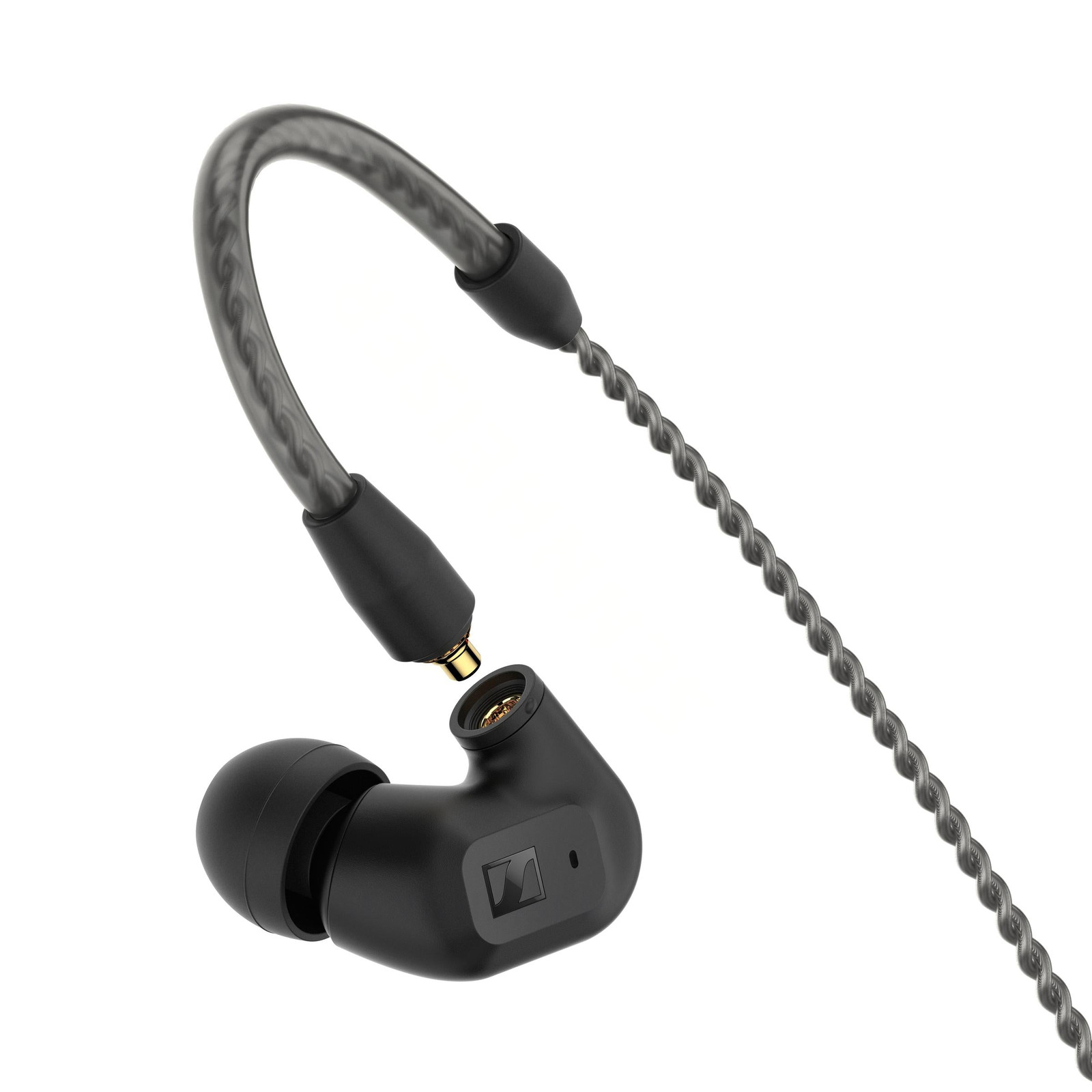
MMCX allows the cable to be swapped, the 3.5 mm plug is angled, and the length is 1.2 m. That typically reaches from the ear to an amplifier on a desk, unlike very short mobile cables. There is no in-line microphone or remote. The pouch, according to What Hi-Fi?, is plain but reasonable for the price. Silicone and viscoelastic foam in three sizes each are meant to cover different ears and a good seal.
What the international specialist press hears
Character
What Hi-Fi? recognises the familiar Sennheiser character in the IE 200 at once: clear, rich and weighty, and therefore immediately likeable for many listeners. Against wireless in-ears at the same price the reviewers describe more openness, clarity and insight. On Young Jesus’s “Rose Eater”, with operatic vocals and deep percussion, the IE 200 laps up the theatrical recording; the fullness across the range carries the piece.
Tonal balance
The midrange, the review says, is clear and agile. On Big Thief’s “Spud Infinity” the song’s joviality remains, widely panned effects show the breadth, and those effects stay audible under the vocal and guitar line – a hint of finer resolution. That, the reviewers write, is about as much get-up-and-go as the IE 200 likes to offer. When they put on deliberately aggressive, biting tracks – M.O.P., Eminem and The Chemical Brothers are named – the delivery felt a little restrained, like a sober guest in a loud bar. That is exactly why the score stops at four out of five: the last degree of attack and subtlety is missing, not the basic quality.
Dynamics, bass and stage
What Hi-Fi? calls the bass decently deep and present. The stage, in the description, has width, not necessarily the last depth of a dearer IE model. Dynamically the IE 200 gains, according to the review, when the source improves: the same title on the Mojo 2 showed more precise piano figures, more texture and more impact in the drums. That is a source hint, not a duty to buy an expensive converter. The verdict remains 4 out of 5, with the conclusion that design and sound justify a place under the audiophile IE umbrella, even if more sting in place of some of the smoothness would have been welcome.
Strengths and limits
Reasons to buy in the review: clear, rich and weighty, decent bass depth, build quality at this level. Reasons to pause: no in-line remote, not class-leading subtlety. Build and kit are treated as well considered for a company with this history. The review was published on 11 April 2023 and is a classic magazine listening test; for a later champion role in the Premium tier this pillar would, under t646u, be the right class of source. This page does not award a badge, because the tier is not yet open.
Research consensus
Manufacturer data and the listening review form a stable picture. The IE 200 is a very light, easy-to-drive wired in-ear with a replaceable MMCX cable, a second bass tuning via the tips, and a magazine review that praises a clear, rich, weighty presentation and notes less bite on aggressive music. The current EU shop price of €149.90 sits inside the suggested Premium frame. A dedicated amplifier is not required; a small converter can, according to the review, add detail. Those sentences are a consensus of the sources in hand, not an in-house listening judgement.
Features and daily use
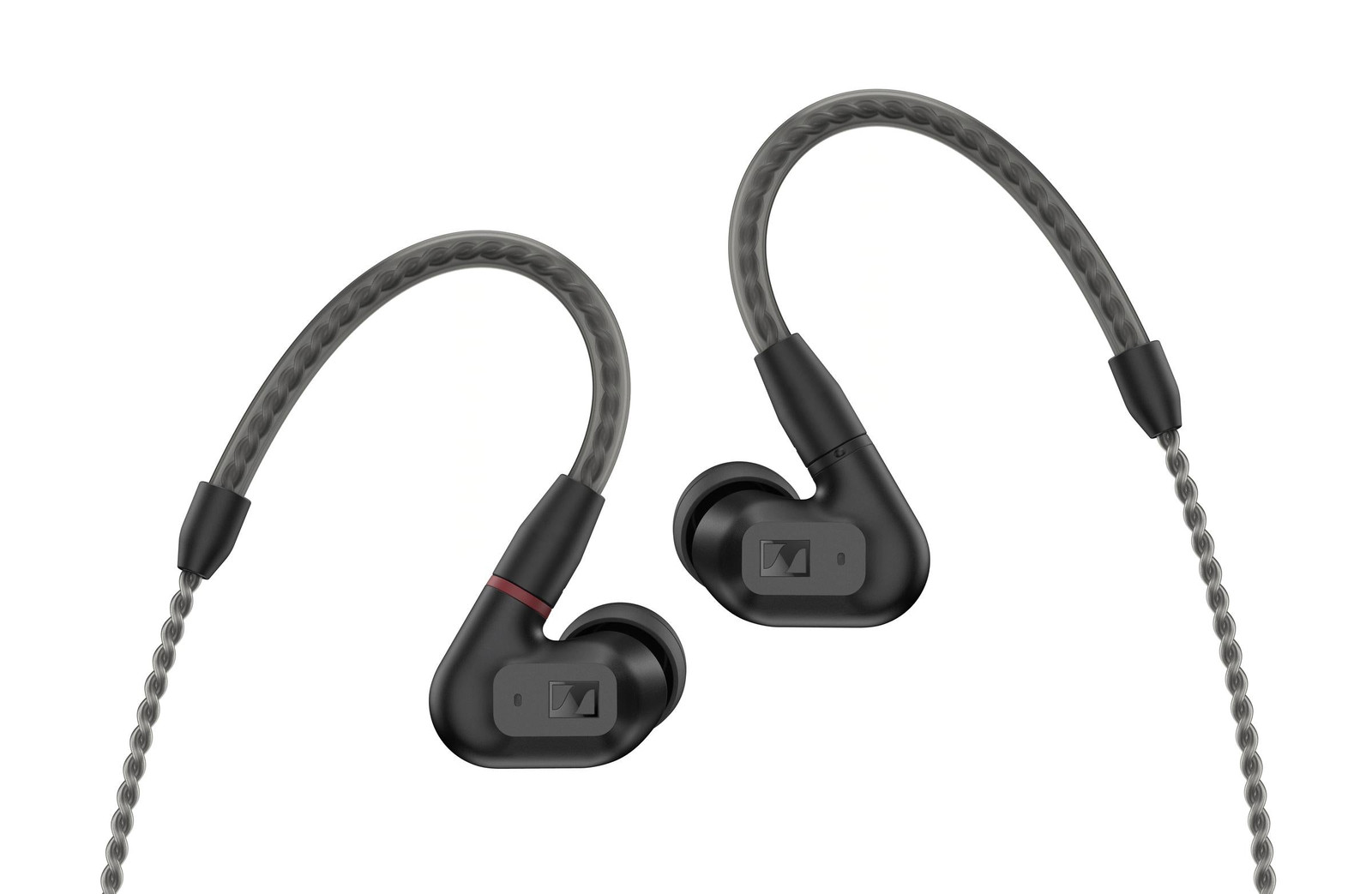
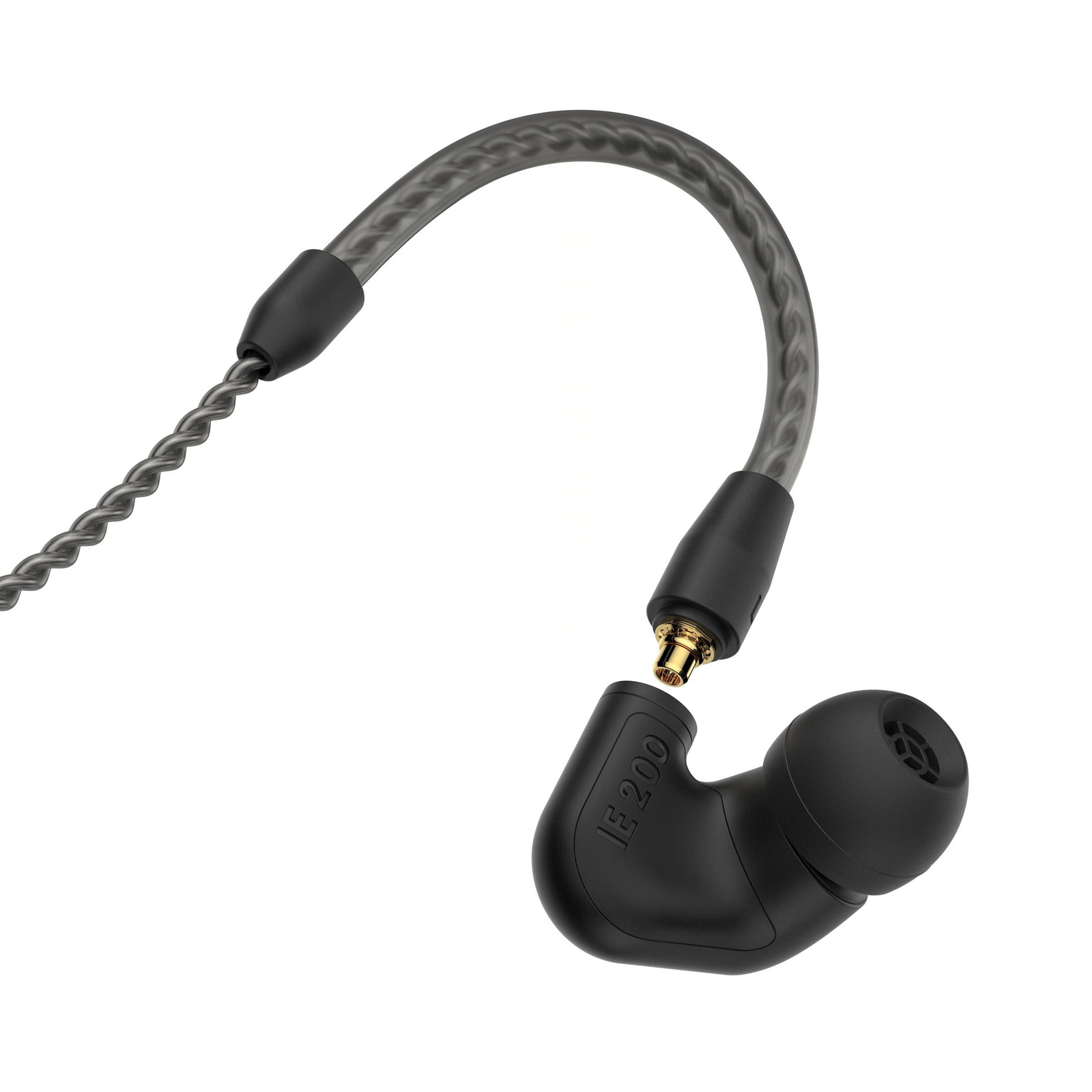
According to the manufacturer and the review the box holds the in-ear, the braided MMCX cable with a 3.5 mm plug, silicone and foam tips in three sizes, and a pouch. The official shop packshot on this page shows the black shell with the S logo and a red ring to mark the side; a second manufacturer photo detaches the MMCX cable from the shell, a third shows the back of the housing with the “IE 200” lettering. The pictures are for orientation and come from the manufacturer.
In daily use the over-ear fit matters. What Hi-Fi? expressly asks readers to use the hooks and try different tips before doubting the described richness. There is no remote; anyone who wants to skip tracks on the move uses the source. At the system that barely matters. The 1.2 m cable is typically long enough for an amplifier on a sideboard. The pouch protects the small shells on the move but is not a large case.
Price and availability
On 12 November 2026 the IE 200 stood at €149.90 including VAT in the Sennheiser EU shop, with free shipping from €49 and a 30-day low of the same €149.90. Street prices at dealers may be lower; this analysis uses the official shop price and does not convert the review’s historical pound price into euros. The model is a current wired product and is available in Germany from the manufacturer shop and from the trade. A Silver edition exists as a separate variant and is not the subject of this analysis unless it is the same SKU; here the model is the IE 200 of product page 700249.
At the amplifier and on a vinyl system
On a phono chain the IE 200 hangs from the jack after the phono stage. 18 ohms with the cable and high sensitivity make it an easy partner for integrated amplifiers and small converters. The review suggests that a better, but not expensive, converter improves definition; on a vinyl chain that matters mainly when the analogue signal already reaches a converter or an amplifier with a decent headphone stage. A dedicated, expensive headphone amplifier is not a requirement for using the IE 200 well.
Tip position is the lever Sennheiser provides for bass balance. Anyone playing records that already have a strong foundation can try the shallower position; anyone who wants more weight can try the deeper one. What Hi-Fi? will not make a robust statement about bass and richness without a tight seal. In a living room without a closed listening space the passive seal helps keep the level moderate. There is no active isolation.
The missing remote does not matter at the system. The braided cable is meant, according to the manufacturer, to reduce handling noise; What Hi-Fi? describes it as durable without a strong complaint about cable noise. Anyone who sits far from the amplifier has more reserve with 1.2 m than with short mobile cables. The IE 900 in the same brand line remains the dearer, already listed Master model and is not compared here with an invented index gap.
Who is the IE 200 for?
The IE 200 suits listeners who want a wired in-ear from Sennheiser’s IE range at a understandable euro price, who want a clear, full tuning and who can do without a cable remote. It fits a vinyl system that already has a jack and mobile sources with a dongle. It fits less well if you expect maximum bite on aggressive, driving music, if you need a microphone or buttons on the cable, or if you want to stay in the Starter tier. The list package already compares it in the Premium band with other models. A later list package will compare it in the Premium band with other models in that class; until then it remains without an index.
How it compares
On the live list there are not yet any neighbours in Premium or Expert. The useful references are therefore the already analysed Starter and Master models and the review’s comments on the IE family. The Starter in-ears on the list cost a fraction as much; they meet the same cable rule but sit in another price frame and rest on other review pillars. The Sennheiser IE 900 is the expensive single-driver flagship of the same brand, Master rank 9 and Sound champion on the list; a direct index comparison between the IE 200 and the IE 900 is not made here. What Hi-Fi? also mentions the IE 600 and the IE 300 as intermediate steps in the range, the IE 300 having been less convincing in that coverage; the IE 600 will receive its own page in this expansion only if an international magazine listening review is available as a pillar.
As a step up from the Starter tier, SoundGuys’ Salnotes Zero review expressly names the IE 200 as a recommendation. That is a hint in that review, not a score from this page and not a list place granted in advance.
FAQ
What exactly is the Sennheiser IE 200?
A wired in-ear in the audiophile IE range with a 7 mm TrueResponse driver, an MMCX cable, a 3.5 mm plug and a dual tuning via tip position. It is the least expensive model in that range.
Does the IE 200 need a headphone amplifier?
The data sheet (16 ohms without cable, 18 ohms with cable, 119 dB at 1 kHz and 1 Vrms, 4 g) points to easy drive from typical outputs. What Hi-Fi? places it on the threshold at which an inexpensive portable converter becomes worthwhile, and describes more precision on a Chord Mojo 2, while itself naming an AudioQuest DragonFly Black as the more appropriate class.
Is it suitable for listening to records?
Yes. As a wired in-ear with a 3.5 mm plug it hangs from typical phono chains with a headphone output. The review describes a clear, rich, weighty tuning; aggressive, driving tracks come across with less bite than on some rivals. A good eartip seal is a condition for the bass described in the review.
What does the IE 200 cost?
In the official Sennheiser EU shop the price on 12 November 2026 was €149.90 including VAT; the lowest total price of the previous 30 days was the same figure. What Hi-Fi? quoted about £130 / $150 / AU$240 at publication in 2023. Prices change, without guarantee.
Does the IE 200 have a remote on the cable?
No. What Hi-Fi? cites the missing in-line remote as a small deduction, which the IE 200 shares with the rest of the IE range.
Does this page rest on a listening test by the VinylCination team?
No. There was no in-house listening test and no measurement of our own. The assessment draws on Sennheiser’s manufacturer data and the international What Hi-Fi? listening review of 11 April 2023 (4 out of 5).
Conclusion
The Sennheiser IE 200 is a clearly documented wired in-ear for the Premium tier: light, easy to drive, with a replaceable cable, an official euro price and a magazine review that praises clarity, richness and weight and records less bite on attacking music. The list record of 12 November 2026 is Premium rank 19, index 62, with no champion badge. Anyone who wants a calm, rich tuning at a vinyl system and is planning €149.90 will find a solid source base here. Anyone who expects maximum attack, or a badge already awarded in the tier, will have to wait for the list package and for further models in this class.
About this AI analysis
This section is an AI summary of a published international magazine listening review and of Sennheiser’s own data. Vinyl BotPro places the findings and links them to the data sheet and comparison models; VinylCination does not carry out its own listening tests or measurements, and all sources are linked at the end of the page. Prices and availability change (as of 12 November 2026, without guarantee). A list index will be awarded only in a later list package.