
In-ear analysis · Premium · as listed
Sennheiser IE 300 Analysis
The Sennheiser IE 300 sits on the in-ear shortlist of 12 November 2026 in the Premium tier in rank 34 with a Vinyl BotPro index of 55 and no badge. This analysis takes the list record as published.
In short
The Sennheiser IE 300 is a wired in-ear in the audiophile IE range. On the in-ear shortlist of 12 November 2026 it sits in the newly opened Premium tier in rank 34 with a Vinyl BotPro index of 55. It carries no champion badge. The subscores and the mapping onto the 55–69 band are documented in the list package; this page repeats the list record and does not run a second calculation.
A 7 mm TrueResponse transducer with a resonator chamber sits in the shell. Sennheiser quotes 16 ohms, 124 dB at 1 kHz and 1 Vrms, 4 g, a 125 cm MMCX cable and a stated isolation of 26 dB. What Hi-Fi? described the model on 6 July 2022 (updated 27 June 2023) in a magazine listening review scored 3 out of 5: excellent build and comfort, impressive bass depth and a lush, full midrange, but without class-leading subtlety, rhythmically and dynamically behind the competition, and with no in-line remote. SoundStage! Solo (Brent Butterworth, 1 March 2021) is more sympathetic and describes rather charming, harmless traits, a large sense of space and a slight lift around 3 to 5 kHz.
In the official Sennheiser EU shop the IE 300 cost €189.90 including VAT on 12 November 2026 (SKU 509104, marked in stock). The earlier review quoted $299; this analysis does not convert that figure. VinylCination has not listened to the IE 300 and has not measured it. The leading pillar remains the magazine review scored 3 out of 5; the second text stands as a complement, not a replacement.
On a vinyl system the IE 300 is a very light, easy-to-drive wired in-ear. Anyone seeking the richness and bass depth What Hi-Fi? describes will find support in the sources. Anyone expecting maximum agility and subtlety in this price class must read the magazine review’s clear deduction as well.
Technical data (public)
| Form | Wired in-ear, closed, ear-canal |
|---|---|
| Driver | Single 7 mm TrueResponse dynamic transducer, resonator chamber (Sennheiser) |
| Impedance | 16 Ω (Sennheiser) |
| Sensitivity | 124 dB (1 kHz, 1 Vrms) (Sennheiser); Butterworth calculates about 106 dB at 1 mW |
| Frequency claim | 6–20,000 Hz (Sennheiser) |
| Isolation | −26 dB (Sennheiser, stated) |
| Weight | 4 g without cable (Sennheiser / What Hi-Fi?) |
| Cable | 125 cm, MMCX, 3.5 mm, no remote (Sennheiser EU shop) |
| In the box | Silicone and foam tips in three sizes each, case, cleaning tool (Sennheiser / SoundStage! Solo) |
| Price as of 12 November 2026 | €189.90 in the Sennheiser EU shop (incl. VAT, InStock, SKU 509104) |
| List record 12 November 2026 | Premium rank 10 · index 55 · no badge |
Amplifier compatibility
16 ohms and 124 dB for one volt are figures a typical headphone output will handle very easily. Butterworth makes clear that the manufacturer figure is not the usual 1 mW standard and estimates about 106 dB at one milliwatt — still a high figure. He listened to the IE 300 straight from a phone, among other sources, and described more subtleties there than on many other chains, while using an AudioQuest DragonFly Cobalt for the main listening.
For a vinyl system that means: an integrated amplifier with a decent jack is, according to the sources, enough for level. An expensive headphone amplifier is not a requirement. As a single driver without a crossover, the IE 300 is less sensitive to output impedance than a low-impedance multi-way in-ear.
More power will not turn the rich, bass-heavy character What Hi-Fi? describes into agility; it only makes the earphone louder. Anyone hoping a dear converter will cancel the magazine review’s rhythmic and dynamic deductions will not find evidence for that in this text.
Rating criteria in detail
The four subscores and the index of 55 stand in the list package of 12 November 2026 and are taken here as the list record. The method is the same as on the other headphone lists. On sound-data the list package follows the weaker, but t646u-relevant, magazine verdict of 3 out of 5 and records the more sympathetic second test; no champion badge in this tier sits on this model.
Manufacturer and concept
Sennheiser uses the IE letters for a line of wired in-ears. What Hi-Fi? places the IE 300 in a market that revels in wireless features, active isolation and voice control, and reminds readers that such features have little to do with sound. In the same family the text names the later, less expensive IE 200 and suggests its performance-per-pound may be better.
The concept is deliberately plain: one driver, a replaceable MMCX cable, silicone and foam tips, a case, no app, no wireless path, no remote. Butterworth describes the appearance as determinedly unflashy — matte charcoal, a thin grey cable, a plain plug — and notes how hard it must be to sell such unspectacular-looking single-driver earphones at the then price of $299 when the claim sits in the transducer and the tuned chamber.
The IE 300 carries article number 509104 in the EU shop. It sits in price between the IE 200 and the IE 600. This analysis compares it with the already described sibling models only as a list record, without inventing an index gap inside the family.
How the technology works
A 7 mm foil-diaphragm TrueResponse transducer works in the shell, behind which Sennheiser provides a tuned chamber with a small rear path. What Hi-Fi? relays the manufacturer’s explanation that the chamber is meant to compensate for masking effects of trapped air in the ear canal; that is a manufacturer claim, not a measurement of our own.
The housing is small and unobtrusive, and the cable routes over the ear. Butterworth finds the fit easy despite that routing and the bendable hooks helpful; the stock tips were only just not large enough for his slightly oversized canals, and with other silicone tips he obtained a seal. What Hi-Fi? expressly names build and comfort as reasons to buy, and the 4 g weight.
MMCX allows the cable to be swapped, the plug is 3.5 mm, and the length in the current shop is 125 cm. According to the manufacturer and Butterworth the carton holds three sizes of foam, three of silicone, a case and a cleaning tool. There is no remote.
What the international specialist press hears
Character
What Hi-Fi? describes a strong first impression: bass depth, solidity across the range and a scale of sound that is hard to ignore from such small shells. On Mogwai’s “Ceiling Granny” there is meat and grubbiness behind the guitar lines, and a hefty sting in the high squeals. At the same time the reviewers make clear that Sennheiser does not aim in every model for class-leading neutrality and insight; in the IE 300 they find more of the richer, less universally appealing character.
Tonal balance
What Hi-Fi? calls the bass impressive but overstated: it steals the spotlight like a lead singer and relegates the treble to a withdrawn role. Richness at the low end comes at the expense of midrange crispness and sheds excitement. Voices, in this description, sound wonderfully full and smooth, while fine instrumental textures and the intricacies of a voice such as Cassandra Jenkins’s are rather overlooked next to the comparison model of the day. Butterworth tells a different, not contradictory in every point, but overall more sympathetic story: charming, largely harmless traits, a slight lift around 3 to 5 kHz that gave a voice a little extra buzz in the upper harmonics and may have contributed to the sense of space.
Dynamics, bass and stage
Rhythmically and dynamically What Hi-Fi? sees the IE 300 behind the class; the comparison model of the day is treated as more agile and snappier. Butterworth, by contrast, describes finely drawn guitar and bass detail on Nick Brignola’s “Tour de Force” without crudely boosting particular bands, and on Susie Arioli an almost open, wide-seeming space. This page does not average the two texts into a mean: the leading pillar for the list is the magazine review scored 3 out of 5, and the second test stands as a documented counter-account.
Strengths and limits
Reasons to buy in What Hi-Fi?: excellent build and comfort, impressive bass depth, a lush, full midrange. Reasons to pause: a lack of class-leading subtlety, rhythmically and dynamically outclassed, no remote on the cable. The text suggests the less expensive IE 200 may offer better performance per pound. Butterworth’s 2021 text remains a second, more sympathetic listening review of the exact same model, not a substitute for the magazine score. The list package does not award a badge to this model.
Research consensus
Manufacturer data and the two listening reviews form a split but documented picture. The IE 300 is a very light, easy-to-drive wired in-ear with a replaceable cable and an official euro price. The magazine review praises richness, bass depth, build and comfort and clearly deducts for subtlety, rhythm and dynamics (3 out of 5). The earlier SoundStage text is kinder and describes chiefly a sense of space and a mild midrange colouration. The list follows the weaker magazine verdict and records the second test. Those sentences are a consensus of the sources, not an in-house listening judgement.
Features and daily use
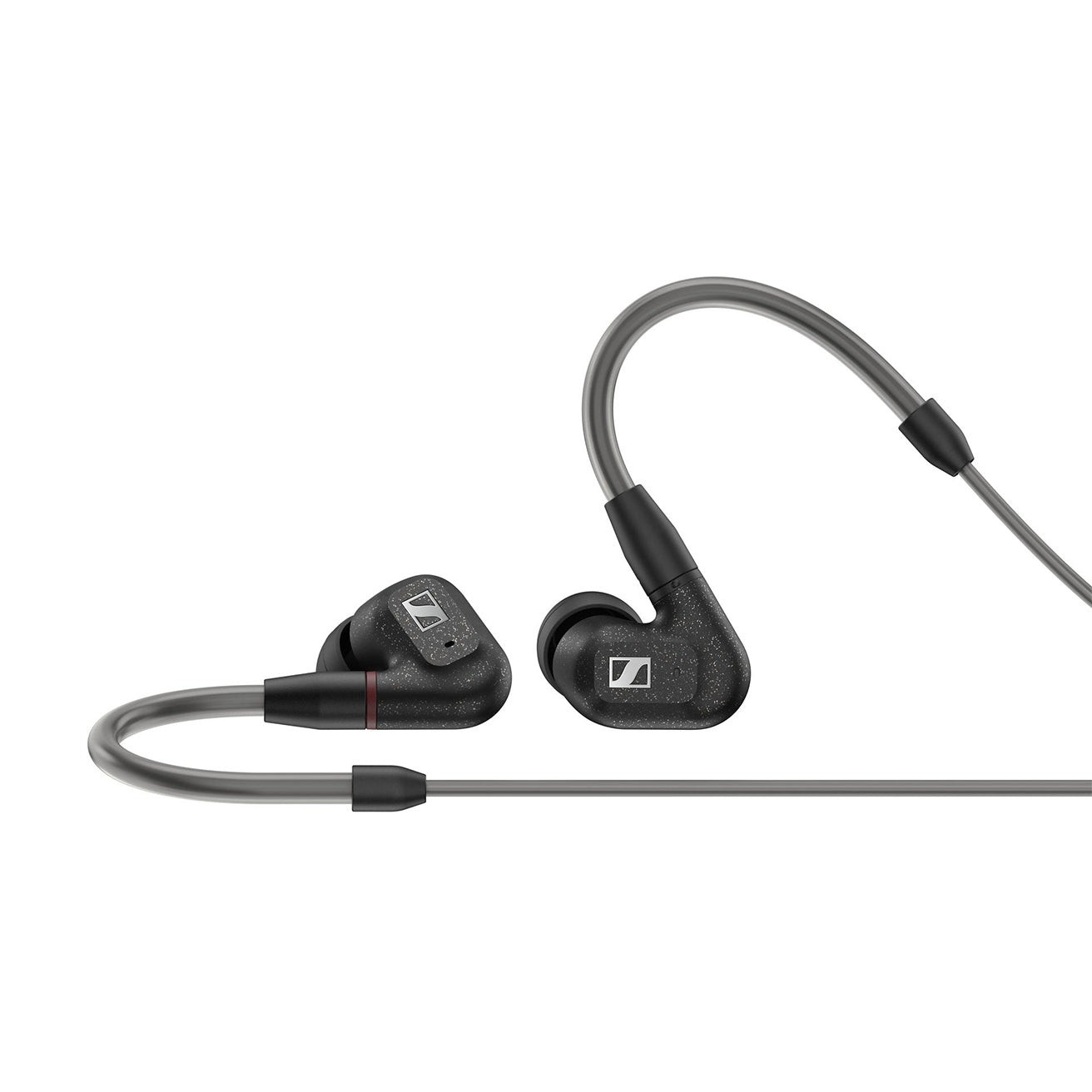
According to the manufacturer and the reviews the carton holds the in-ear, the MMCX cable with a 3.5 mm plug, silicone and foam tips in three sizes each, a case and a cleaning tool. The official shop packshot on this page shows the speckled shell with the S logo and a red ring to mark the side. The pictures are for orientation and come from the manufacturer.
In daily use the over-ear fit and the tip seal matter. Butterworth needed tips other than the stock sizes for his canals; anyone who cannot follow the bass described in the reviews should first check the tips before setting the review aside. There is no remote; at the system that barely matters. The 125 cm cable typically reaches an amplifier on a sideboard.
Price and availability
On 12 November 2026 the IE 300 stood at €189.90 including VAT in the Sennheiser EU shop, with article number 509104 and an in-stock mark. Street prices at dealers may be lower; this analysis uses the official shop price. The $299 launch price Butterworth quoted is a historical dollar figure and is not converted into euros.
At the amplifier and on a vinyl system
On a phono chain the IE 300 hangs from the jack after the phono stage. 16 ohms and the high, if 1 Vrms-referred, sensitivity make it an easy partner. The magazine review describes a rich, bass-heavy character that can make records which already have a strong foundation sound even fuller; that is a description, not advice to raise the system’s bass further.
In a living room without a closed listening space the stated passive isolation helps keep the level moderate. There is no active isolation. The missing remote does not matter at the system. Anyone who sits far from the amplifier has a little more reserve with 125 cm than with very short mobile cables.
The IE 200 in the same range sits higher in the same Premium tier in the list record and has a kinder magazine review (4 out of 5) at a lower euro price. The IE 600 and the IE 900 belong in the Master tier and are not compared here with an invented family gap.
Who is it for?
The IE 300 suits listeners who want a wired Sennheiser in-ear at an official euro price, with very easy drive and the full, bass-heavy character What Hi-Fi? describes, and who can do without a cable remote. It fits less well if you expect maximum subtlety, rhythmic precision or a badge in this class. The list package places it in Premium in rank 34 with index 55, at the lower end of the tier.
How it compares
In the opened Premium tier the neighbours include the Meze Alba, the Moondrop Aria 2, the Sennheiser IE 200, the Westone Pro X10 and the Final E5000. What Hi-Fi? itself points to the less expensive IE 200 as a possible better performance-per-pound choice; on the list the IE 200 does indeed sit above the IE 300. The Alba carries the value badge in the same tier, the Pro X10 the Sound badge. Those relations are the list record, not in-house listening comparisons. The Aonic 3 named as a comparison model in What Hi-Fi? is not included in this expansion, because no EU sale was documented on the research date.
How it sits on the opened list
The in-ear shortlist of 12 November 2026 opens Premium and Expert and expands Master. The Sennheiser IE 300 sits there in the Premium tier in rank 34 with a Vinyl BotPro index of 55 and carries no badge. That figure is the list record: it comes from the four documented subscores and from mapping onto the 55–69 band. The reasons for the subscores appear in the list package’s overview of the models.
As a neighbour in the tier the list names the Final E5000 immediately above it and, further up, the IE 200 of the same brand. A gap of a few index points describes order within the tier, not the size of a sonic difference. Anyone weighing the IE 300 against the IE 200 should read both magazine reviews and the two shop prices (€189.90 against €149.90), not only the index number.
For listening to records the practical point remains the headphone output after the phono stage: fit, seal and a quiet cable run matter more than an expensive extra box. The sources do not describe a heavy drive requirement. Cable noise and the missing remote are everyday issues at a sideboard, not extra scores from this page.
FAQ
What exactly is the Sennheiser IE 300?
A wired in-ear in the audiophile IE range with a 7 mm TrueResponse driver, a resonator chamber, a 125 cm MMCX cable, a 3.5 mm plug, 16 ohms, 124 dB at 1 kHz and 1 Vrms, and a weight of 4 g. The EU shop article number is 509104.
Does the IE 300 need a headphone amplifier?
The data-sheet figures (16 ohms, 124 dB at 1 kHz and 1 Vrms) point to very easy drive. Brent Butterworth explains that the 124 dB figure is referred to 1 Vrms and would be about 106 dB at 1 mW; even from a phone he heard plenty of detail. A dedicated amplifier is not a requirement.
Is it suitable for listening to records?
As a wired in-ear with a 3.5 mm plug it hangs from typical phono chains. What Hi-Fi? describes impressive bass depth and a lush, full midrange, but holds the model rhythmically and dynamically behind the class and the bass as overstated. Anyone wanting a rich, full character will find support in that review; anyone seeking maximum subtlety should take the 3 out of 5 deduction seriously.
What does the IE 300 cost?
In the official Sennheiser EU shop the price on 12 November 2026 was €189.90 including VAT, SKU 509104, marked in stock. SoundStage! Solo quoted $299 in 2021. This analysis does not convert historical dollar prices into euros. Prices change, without guarantee.
Does the IE 300 have a remote on the cable?
No. What Hi-Fi? cites the missing in-line remote as a reason to pause, which the IE 300 shares with other models in the IE range.
Does this page rest on a listening test by the VinylCination team?
No. There was no in-house listening test and no measurement of our own. The leading pillar is the What Hi-Fi? magazine listening review (6 July 2022, updated 27 June 2023, 3 out of 5). SoundStage! Solo (Brent Butterworth, 1 March 2021) is a second source. The list record (Premium, rank 34, index 55) comes from the list package of 12 November 2026.
Conclusion
The Sennheiser IE 300 is a clearly documented wired in-ear for the opened Premium tier: very light, easy to drive, with a replaceable cable, an official euro price and a magazine review that praises richness, bass depth and build and deducts to 3 out of 5 for subtlety, rhythm and dynamics. The list record of 12 November 2026 is Premium rank 34, index 55, with no badge. Anyone planning €189.90 and wanting the described rich character will find a solid, also contradictory, source base here. Anyone expecting maximum agility should take the magazine review seriously at exactly that point.
About this AI analysis
This section is an AI summary of published international listening reviews and of Sennheiser’s own data. Vinyl BotPro places the findings and links them to the data sheet, the shop price and the list record; VinylCination does not carry out its own listening tests or measurements, and all sources are linked at the end of the page. Prices and availability change (as of 12 November 2026, without guarantee). Subscores and index come from the list package of the same day.