
In-ear analysis · Master · as listed
Westone MACH 80 Analysis
The Westone MACH 80 sits on the in-ear shortlist of 12 November 2026 in the Master tier, now expanded to twenty-one models, in rank 21 with a Vinyl BotPro index of 85 and no tier badge. This analysis takes the list record as published and does not run a second calculation.
In short
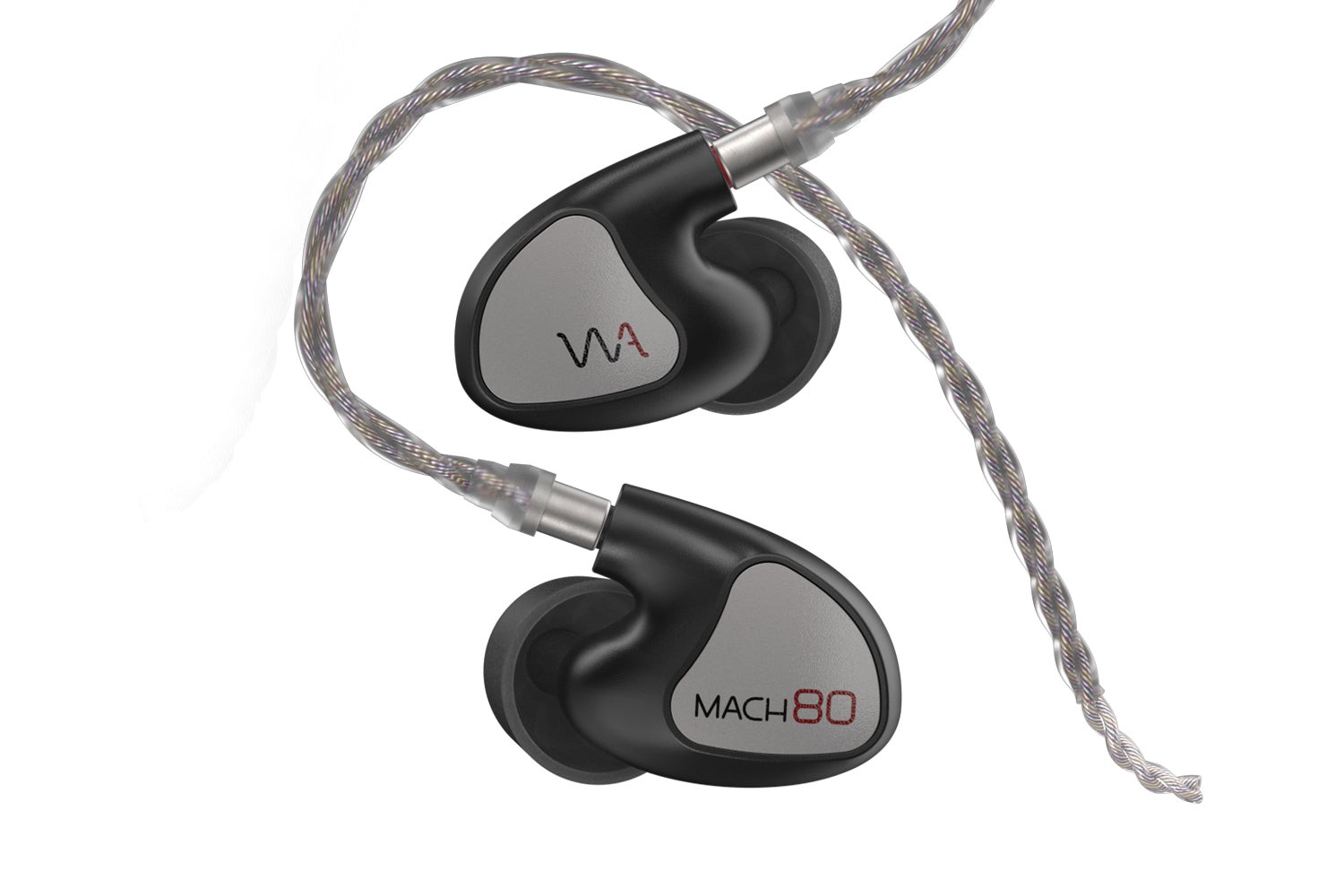
The Westone MACH 80 is a wired eight-driver in-ear with eight balanced armatures in a three-way split, a T2 connector and a Linum Estron UltraBaX cable. On the in-ear shortlist of 12 November 2026 it sits in the Master tier, now expanded to twenty-one models, in rank 21 with a Vinyl BotPro index of 85 and without a tier badge. The subscores and the mapping onto the 85–97 band are documented in the list package; this page repeats the list record and does not run a second calculation.
The listening report is Headfonics (James, 6 August 2022): a dated listening review of the exact model in an independent international online specialist outlet of the same class that already supports other MACH models on this list. Under the single badge rule of 12 November 2026 — including the t647s3962 addendum on YouTube listening tests by established, named reviewers — the MACH 80 is eligible; its pillar here is the editorial text, not a video. The documented euro price is the official EU list price of €1,699.99 at westoneaudio.eu (12 November 2026; the shop shows a back-in-stock notification, with no stock guarantee). The then British price of £1,599 in the review is not converted into euros.
Technical data (public)
| Type | Wired universal-fit in-ear, eight balanced armatures, three-way |
|---|---|
| Drivers | 8 BA: dual bass, dual mid, quad treble (Westone Audio) |
| Impedance | 66 Ω at 1 kHz (Westone, EU product page 12 November 2026) |
| Sensitivity | 104 dB at 1 kHz (Westone) |
| Frequency response | 5 Hz–22 kHz (Westone) |
| Connection | T2, Linum Estron UltraBaX, 127 cm |
| Housing | Light MACH shell, typically a slightly deeper fit |
| Price as documented | €1,699.99 at westoneaudio.eu, 12 November 2026 (official EU list price; the shop shows a back-in-stock button, no stock guarantee) |
Amplifier compatibility
At 66 Ω at 1 kHz and 104 dB at 1 kHz the MACH 80 is clearly more demanding to drive than the other new Master models in this expansion and than the MACH 60 (35 Ω, drive 8.4). Headfonics describes it as needing more voltage than the MACH 60, sounding flat on outputs that are too weak, and scaling with stronger sources, while remaining stable in tone and, even at high volume, strong in definition and low in distortion. A dedicated headphone amplifier can here — unlike on the Andromeda 10 or the Aspire models — add headroom; typical quiet outputs do not, on this report, suffice to lift the potential described.
The carton includes the Linum Estron UltraBaX cable with a T2 connector, 127 cm long, with an impedance of only 0.6 Ω according to Headfonics, so that the cable does not add further colour to the tuning. On a typical vinyl chain with a headphone output the MACH 80 hangs from the 3.5 mm plug of this cable. Whether a given phono preamp supplies enough voltage remains device-dependent; the review makes under-powering an explicit flattening of the sound.
Rating criteria in detail
The Vinyl BotPro index on this page is not a second calculation but the list record of 12 November 2026. The Master tier now holds twenty-one models; the mapping uses the 85–97 band, with the strongest raw score at 97 and the weakest at 85. The MACH 80 sits on the band floor of 85; between index 87 (Grand Luna) and 85 lies the only two-point step in the tier.
The sound-evidence score of 7.8 rests on the Headfonics listening report: exceptionally smooth, punchy and well articulated, more balanced than the W80, slightly lush in the lower midrange, highly resolving and free from coloration, a clear step above the MACH 60 in polish and extension. Level with the SE846 (K 7.8), below the Monarch (8.0) and the Andromeda 10 (8.4). The reader score of 8.8 on the Headfonics page is not taken over as an editorial subscore. Build/comfort 8.6 follows from the extremely light fit, excellent isolation and the UltraBaX cable plus a large case. Drive 7.2 follows from 66 Ω and the explicit flattening on outputs that are too weak. Value 5.4 follows from €1,699.99. Despite a higher sound-evidence score than the MACH 60, the raw score sits below it because of price and drive; the index follows the raw score, not the driver count. No tier badge.
Manufacturer and concept
Westone Audio comes from the professional in-ear-monitor field. The MACH series replaces older W models; Headfonics presents the MACH 80 as a successor that surpasses the previous generation in appearance and technical performance, especially in the delicate treble control that scales with stronger outputs. Eight balanced armatures work in three ways: two each for bass and midrange, four for treble. The aim, in Headfonics’ account, is an authentic, spacious, highly resolving picture without exaggerated coloration — closer to a monitor idea than to a fun-first tuning.
The MACH-line shell is typically very light and built for long professional sessions. Headfonics calls the MACH 80, in fit and weight, one of the most appealing options for listeners seeking a highly responsive, resolving, balanced high-end in-ear. Against the MACH 60, which sits on this same list, the review names two additional treble drivers and the more premium cable as a clear step in polish and extension; the MACH 60 remains the more everyday, easier-to-drive workhorse version.
How the technology works
Eight balanced armatures in three ways split bass, midrange and treble across separate driver groups. Westone quotes 66 Ω at 1 kHz, 104 dB at 1 kHz and 5 Hz to 22 kHz. This analysis has no measurements of its own; the figures come from the official EU product page, retrieved on 12 November 2026. The comparatively high impedance explains why Headfonics asks for more voltage and describes a flattening on outputs that are too weak: the MACH 80 scales, rather than already showing its full picture on every phone.
The Linum Estron UltraBaX cable is a quad-twisted design with 224 cores at only 0.6 Ω, 127 cm long, with a T2 connector, a slider and a lock against microphonics. Headfonics notes that it does not look overly thin and matches the tuning without adding impedance and colour. A typical aftermarket for 2-pin or MMCX is not the path here, as with the Aspire models; the connector follows Westone’s T2 standard.
What the international specialist press hears
Character
James describes the MACH 80 as exceptionally smooth, punchy and well articulated, overall more balanced than the W80, with less midrange coloration and a gentle lift in the lower midrange. You can hear every element clearly across the spectrum; the edges of each instrument are clearly defined and naturally separated, without overly stressing transients or certain frequencies. Overall it is a nicely balanced, subtly lush sound. Some may find the tuning slightly laid back or a tad dark in the first few minutes; after a few tracks the depth and spacious headroom grow on you. Paired with powerful gear and mixing interfaces the MACH 80 also yields high transparency and an uncolored tone, remains distortion-free and strong in definition even at very high volume, and stays consistent in tone across different devices.
Tonal balance
Two balanced armatures are dedicated to bass, without that meaning the bass is short of power compared with the four treble drivers. The bass extends very deeply, sounding punchy, with energy in the very low end; the smooth mid-bass allows the lower register to be clearly heard, including fast attacks and an expressive decay. On frequency-sweep tracks James hears the bass going deep and firm, decaying into the rendered space with excellent definition. A faint rumble in synth lines is audible and nicely layered; the image of bass instruments is dense and tight. With the supplied foam tips the bass sounds fuller; swapping to the flanges gives a more balanced output and enhanced control, especially in the low end.
The tuning remains, in Headfonics’ account, overall balanced and only subtly lush in the lower midrange. With two more tweeters and the more premium cable the MACH 80 sounds more polished and more effortlessly extended than the MACH 60 — a clear step above it. For those who can detect unnatural colorations or who want a little alteration in the output, this monitor can deliver the full spectrum authentically and spaciously, binding elements in the mix together and bringing out strong but not exaggerated transients on both ends.
Dynamics, stage and drive
Headfonics highlights the spacious imaging, the separation and the highly resolving, uncolored presentation, especially when enough voltage is present. The MACH 60 displays similar tonal qualities, is easier to drive and feels like a work-horse version for those subject to power constraints and who listen mainly outdoors. Against the Final A8000 (in the review, not on this in-ear list) the MACH 80 sounds more consistent in tone across different players, but needs a little more power to catch up; when power is sufficient it has more potential to scale up and sound richer in the bass, while remaining flat and unintrusive. On outputs that are too weak the same review describes a flattening — that is the documented reservation on drive.
Strengths and limits
In the verdict the MACH 80 has superseded the previous generation in appearance and technicalities, especially in the delicate treble control that scales with stronger outputs. Strengths: highly resolving and free from coloration, extremely light, an excellent fit, isolation, a premium cable, a large case. Limits that follow from the review and the list record: it needs voltage, sounds flat when under-powered, the official EU price sits at the upper end of the tier, and the raw score — and therefore the index — remains behind several less expensive Master models. Headfonics calls it one of the most appealing options for a highly responsive, resolving, balanced high-end in-ear; the tier badge on the list still sits elsewhere.
Research consensus
This analysis rests on Headfonics’ substantial listening review, not a second international magazine report of the same depth. The consensus is James’s finding, read against the data sheet and the euro price: an extremely light eight-BA monitor with a balanced, highly resolving, little-coloured tuning, a clear step above the MACH 60, but one that needs voltage and, at the official EU price of €1,699.99, falls behind less expensive, easier-to-drive Master models in the raw score. Eligibility follows the single rule of 12 November 2026, including t647s3962. Forums, retailer copy or manufacturer pages are not used as a listening pillar. The MACH 80 does not carry a tier badge.
Features and daily use
In the carton, according to Headfonics, are five pairs of flanges and five pairs of foam tips including the dense True-fit foams, a large case in the Pelican style valued by professionals, a cloth bag and cleaning tools. The UltraBaX cable has a smooth, locking slider against microphonics. The fit is described as excellent, the weight as extremely low, isolation as excellent with a slightly deeper fit. Foam tips seal strongly and make the bass fuller; silicone flanges give a more balanced, more controlled lower end. Fit always depends on the ear; this analysis does not set up a sitting test of its own.
Price and availability
The documented euro price is €1,699.99 at westoneaudio.eu on 12 November 2026, the official EU list price. The shop showed a button for a back-in-stock notification; that is not recorded here as a stock guarantee, nor is it read as proof that the model has left the range. The British price of £1,599 in the 2022 review is not converted into euros. Prices and availability change, without guarantee.
In the Master tier €1,699.99 sits between the Grand Luna (€1,499, P 5.6) and the Andromeda 10 (€1,949, P 5.2). The P subscore of 5.4 places that upper price. Together with the drive score of 7.2 the raw score of 7.2 sits below the MACH 60 (7.4) despite a higher sound-evidence score — index 85 follows exactly that calculation, not the driver count.
At the amplifier and on a vinyl system
As a wired in-ear with the supplied 3.5 mm UltraBaX cable, the MACH 80 hangs from typical phono chains with a headphone output. Whether the given output supplies enough voltage is the open question of the review: on outputs that are too weak the picture flattens, on stronger sources resolution, bass richness and treble control scale. A dedicated headphone amplifier can add headroom on quiet phono preamps; on this report it is closer to a requirement than on the sensitive Campfire and Aspire models in the same expansion.
The review names DAPs and mixing interfaces, not a specific phono stage. Anyone listening to records will find a balanced, highly resolving, little-coloured tuning that can carry fine cutting and pressing detail when enough level is present. The slightly reserved first impression and the gentle lower-mid lift can suit warmer pressings; the isolation and light fit lend themselves to long sessions, but they do not stand in for a claim about a particular system.
Who is the MACH 80 for?
The MACH 80 suits listeners who want an extremely light, highly resolving, little-coloured wired in-ear, who have a source with enough voltage, and who are planning €1,699.99 in the Master tier. Anyone who wants to listen on the move from weak outputs will find, in the same review, the MACH 60 as the easier-to-drive alternative (rank 11, index 88). Anyone looking for the Sound badge or the highest sound evidence in the tier stays with the IE 900; anyone looking for the value argument stays with the Aspire 3. In this list stand the MACH 80 sits in rank 13 at index 85, without a badge — at the floor of the tier, because the raw score and the mapping record the price and drive deductions, not because the review places it sonically last.
How it compares
Headfonics sets the MACH 80 mainly against the MACH 60 and the Final A8000. The MACH 60 shares tonal qualities, is easier to drive and feels like the workhorse version; the MACH 80 goes clearly beyond it in polish, extension and resolution. On the list of 12 November 2026 the MACH 60 sits in rank 11 at index 88, the MACH 80 in rank 13 at index 85: the index follows the raw score, into which the higher price and the more demanding drive enter. The Grand Luna (rank 21, index 87) sits just above it in raw score, but sounds, in Headfonia’s account, darker and more bass-forward. The Andromeda 10 (rank 14, index 91) and the IE 900 (rank 15, index 90, Sound badge) sit clearly higher in sound evidence.
How it sits on the opened list
With the Aspire 3, the Grand Luna, the Andromeda 10 and the MACH 80 the Master tier grows from eight models to twelve. The MACH 80’s Vinyl BotPro index is 85, rank 13, without a badge — the weakest place in the tier, on the band floor. The raw score of 7.2 sits below the Grand Luna (7.3) and the MACH 60 (7.4). All eighteen models are eligible under the single rule. The value badge goes to the Aspire 3 (P 8.2), the Sound badge remains with the IE 900 (K 8.6). The MACH 80 competes neither on the lowest price argument nor on the highest sound evidence; its place records that a technically highly praised, expensive and drive-critical monitor can fall behind less expensive siblings in the weighted raw score.
FAQ
What exactly is the Westone MACH 80?
A wired universal-fit in-ear with eight balanced armatures in three ways (dual bass, dual mid, quad treble), 66 Ω at 1 kHz, 104 dB at 1 kHz, a 5 Hz–22 kHz frequency response, a T2 connector and a Linum Estron UltraBaX cable (127 cm).
Does the MACH 80 need a headphone amplifier?
Westone quotes 66 Ω at 1 kHz and 104 dB at 1 kHz. Headfonics describes it as needing more voltage than the MACH 60 and sounding flat on outputs that are too weak. A dedicated amplifier can add headroom; typical quiet outputs do not, on this report, suffice for the potential described.
Is it suitable for listening to records?
Yes. As a wired in-ear with a 3.5 mm plug it hangs from typical phono chains with a headphone output. The review describes a balanced, highly resolving, little-coloured tuning that nonetheless needs voltage. The cable is not a substitute for a phono stage.
What does the MACH 80 cost?
In the official EU shop westoneaudio.eu the list price on 12 November 2026 was €1,699.99 (back-in-stock notification, with no stock guarantee). The British price of £1,599 in the review is not converted. Prices change, without guarantee.
Is the MACH 80 eligible for a tier badge?
Yes, it is eligible: Headfonics (James, 6 August 2022) is a dated listening review of the exact model. It does not hold a badge, because the Aspire 3 has the higher P subscore of 8.2 and the IE 900 has the higher sound-evidence score of 8.6.
Why does it sit in rank 13 despite a high sound-evidence score?
The index follows the weighted raw score, not the driver count and not the sound-evidence score alone. Price (P 5.4) and drive (A 7.2) pull the raw score below that of the MACH 60; the mapping places the weakest model in the tier at index 85.
Does this page rest on a listening test by the VinylCination team?
No. There was no in-house listening test and no measurement of our own. The assessment draws on Westone Audio and the Headfonics listening review (James, 6 August 2022). The list figures (Master, rank 21, index 85, no badge) come from the list package of 12 November 2026.
Conclusion
The Westone MACH 80 is a clearly documented eight-BA monitor for the expanded Master tier: extremely light, highly resolving, little-coloured, with a documented EU list price and a listening review that records the step above the MACH 60 as clearly as the need for voltage. The list record of 12 November 2026 is Master rank 21, index 85, without a tier badge — at the floor of the tier from raw score and mapping, not as a sonic demotion. Anyone planning €1,699.99 and who has a stronger source will find a solid source base here. Anyone listening on the move from weak outputs, or looking for the tier’s value argument, should read the same report and compare the MACH 60 or the Aspire 3.
About this AI analysis
This section is an AI summary of a published international listening review and Westone Audio’s own data. Vinyl BotPro places the findings and links them to the data sheet, the specialist-trade price and the list record; VinylCination does not have listening tests or measurements of its own, and every source is linked at the end of the page. Prices and availability change (as of 12 November 2026, without guarantee). Subscores and the index come from the list package of the same day.