
In-ear analysis · Premium · list record
Westone Pro X10 Analysis
The Westone Pro X10 is a very small, wired universal-fit in-ear with a single balanced-armature driver. On the in-ear shortlist of 12 November 2026 it sits in the Premium tier in rank 30 with a Vinyl BotPro index of 59 and carries no champion badge.
In short
The Westone Pro X10 is a wired universal-fit in-ear with a single balanced-armature driver. In this expansion it is intended as a candidate for the still empty Premium tier. This page does not set a Vinyl BotPro index; mapping onto the 55–69 band is for a later list package. No champion badge is being awarded.
Westone Audio describes the Pro X10 as a compact stage and everyday model: one full-range BA, 114 dB at 1 kHz, 20 Hz to 16 kHz, 19 ohms at 1 kHz, a proprietary T2 cable of 132 cm with 1.5 ohms of cable impedance, and typically 25 dB of passive isolation. Geoffrey Morrison described the model on 1 August 2024 for SoundStage! Solo in a listening review. He calls the sound lively and “fun”, not flat, with a strong midrange, enough bass and treble to hold the picture, a clean, rather delicate treble and a decently wide stage for in-ears. The earphones are tiny, comfortable and isolating, easy to drive, and the accessories outdo some dearer models. At the then list price of $199.99 he treats them as a strong deal for everyday listening; he would not necessarily use them himself as typical on-stage monitors.
In the official European Westone shop de.westoneaudio.eu the price on 12 November 2026 was €249.99, in stock, with free shipping from €100. The EU-responsible party is MIKA-Vertrieb in Lisse. This analysis does not convert the review’s dollar price into euros. VinylCination has not listened to the Pro X10 and has not measured it. All listening judgements come from that international magazine review, plus the EU shop’s manufacturer data.
On a vinyl system the Pro X10 is a light, easy-to-drive 19-ohm wired in-ear with a 3.5 mm plug and a comparatively long cable. The mid-forward, lively balance the review describes remains at every source. Tips and seal decide bass, isolation and long-session comfort.
Technical data (public)
| Form | Wired universal-fit in-ear, closed |
|---|---|
| Driver | Single full-range balanced-armature driver (Westone) |
| Crossover | No passive crossover (Westone, single driver) |
| Impedance | 19 Ω at 1 kHz (Westone) |
| Sensitivity | 114 dB at 1 kHz (Westone) |
| Frequency claim | 20 Hz–16 kHz (Westone) |
| Isolation | typically 25 dB (Westone) |
| Cable | proprietary T2, 132 cm, 1.5 Ω cable impedance (Westone) |
| In the box | 3 pairs of foam and 3 pairs of silicone tips, Mini Monitor Vault II, pouch, wax loop, cloth, manual (shop / review) |
| Shop warranty | Two years (Westone EU shop; statutory rights remain) |
| Price as documented | Review: $199.99; EU shop on 12 November 2026: €249.99 |
Amplifier compatibility
19 ohms at 1 kHz and 114 dB at 1 kHz sit in a range that typical headphone outputs, dongles and small converters will feed without strain. Morrison writes expressly that the Pro X10 is not difficult to drive; even on his comparatively underpowered Sony NW-A306 he reached plenty of volume. A dedicated amplifier is therefore not a requirement for playing the Pro X10 loud enough.
As a single balanced-armature driver without a crossover, the Pro X10 is less sensitive to output impedance than a low-impedance multi-way in-ear. The 1.5-ohm cable impedance remains small against the driver’s 19 ohms. On a vinyl system with an integrated amplifier or a phono stage with a jack that is uncritical. More amplifier power will not change the mid-forward, lively balance Morrison heard; it only makes the earphone louder and, on a better source, more transparent.
The 132 cm T2 cable typically reaches from the ear to an amplifier on a sideboard and is longer than many short mobile leads. The T2 connector is a proprietary Westone format; a swap for any 2-pin or MMCX cable is not a given. This analysis claims no sonic gain from aftermarket cables and only notes the format.
Rating criteria in detail
The four subscores and the index of 59 stand in the list package of 12 November 2026 and are taken here as the list record. The method remains the same as on the existing headphone lists. The €249.99 price sits at the upper edge of the Premium frame (about €60–250). It carries no champion badge.
Manufacturer and concept
Westone Audio in Fort Worth builds in-ear monitors for the stage and for everyday use. The Pro X10 is the entry model of the Pro X line with one driver; multi-way models such as the Pro X30 and Pro X50 sit above it. The EU shop emphasises a clear, balanced sound, a compact, ergonomic shell for long wear and typical isolation of 25 dB, and also notes less detail in the extreme lows and highs than on multi-way models. Those sentences are shop and manufacturer copy, not a listening judgement from this page.
Morrison notes that Westone has stopped selling custom in-ears in the US market; that does not affect universal-fit models such as the Pro X10. The review treats the X10 expressly as a model for listeners, not only for musicians on stage. He describes the shells as absolutely tiny: the larger tips practically double their volume. The cable uses the typical over-ear route, is thin, twisted, soft and smooth. He found a secure, comfortable fit with the pre-installed tips, which he calls a rarity; foam tips isolated even more.
In Europe the official shop de.westoneaudio.eu sells the model; the responsible party is MIKA-Vertrieb in Lisse. The Pro X10 is therefore current in EU trade, not only as an overseas import.
How the technology works
A single balanced-armature driver covers the listening range. There is no electrical crossover. The manufacturer claim of 20 Hz to 16 kHz is narrower than some full-range data sheets that cite 20 kHz; that is a manufacturer figure, not a measurement from this page. Typical isolation of 25 dB depends, as with any in-ear, on fit and tip.
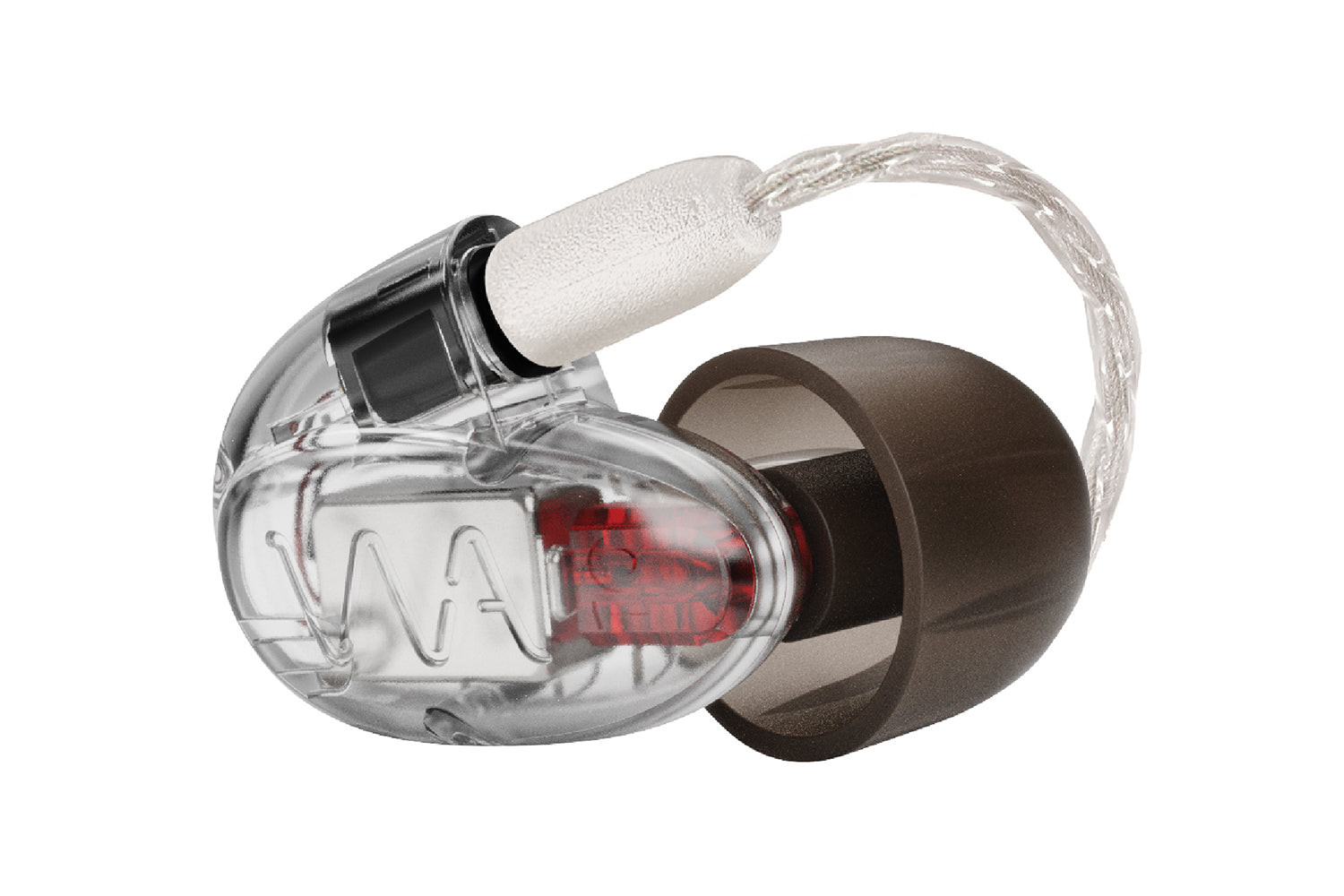
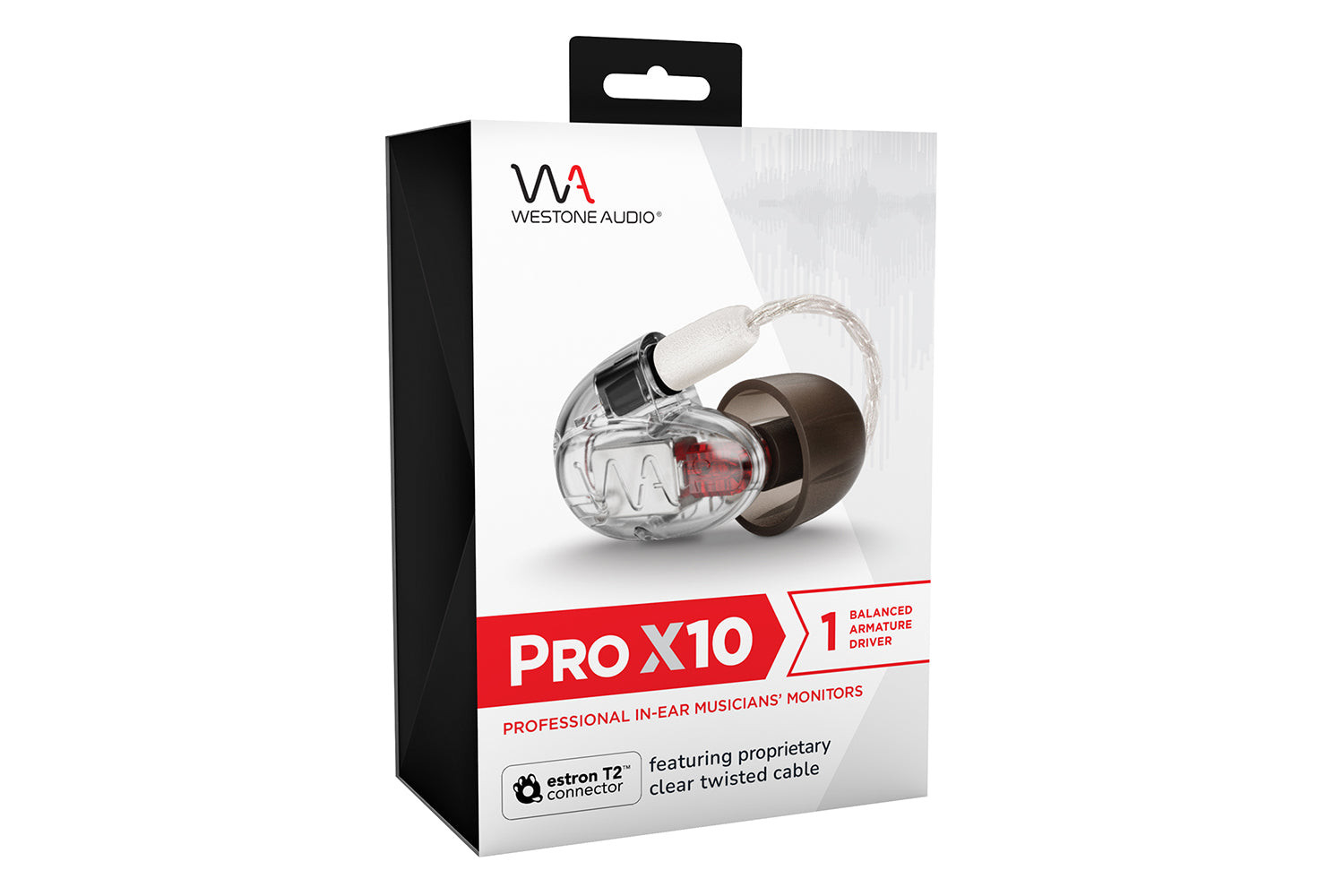
In the box, according to the shop and the review, are three pairs of foam and three pairs of silicone tips, a small translucent-red hard case (Mini Monitor Vault II) that Morrison compares to a miniature Pelican, plus a pouch, a wax loop, a cloth and the manual. Morrison writes that he has seen far more expensive headphones and earphones with far less in the box. The official packshot on this page shows the earphone with the WA logo; another manufacturer image shows the carton with the lettering “PRO X10 / 1 BALANCED ARMATURE DRIVER”.
The small size is the practical argument. A tiny shell sits deeper and more discreetly in the ear than large hybrid housings. For long sessions at the system and for use on the move that is the same advantage the review puts at the centre.
What the international specialist press hears
Character
Morrison describes a strong midrange, with enough bass and treble to mostly balance it out. On Yes’s “Owner of a Lonely Heart”, Jon Anderson’s tenor never got lost in the multi-layered production; guitars and synths were very present, there was not much low bass, and the treble was clean and rather delicate. For earphones, he calls the stage decently wide, with widely panned instruments out over the shoulders.
Tonal balance
On John Mayer’s “Gravity”, the snare and hi-hat had, according to the review, great snap and crack; Mayer’s Stratocaster sounded clear and smooth, and the voice stood out in the mix perhaps a little more than on other headphones. On Metronomy’s “Salted Caramel Ice Cream”, an electronic track with a strong bass beat, the X10 had plenty of bass when the recording required it – this is where it sounded its best, and the extra midrange was fine in a bass-rich song. Morrison would not call the Pro X10 “flat”, but “fun”: a lively sound that can supply lots of bass if required while keeping treble clear, with a bit of extra midrange, most notably with male vocals, but not excessively so.
Dynamics, bass and stage
Compared with the planar-magnetic Sivga Nightingale (then $229) on Juliette Armanet’s “Le Dernier Jour du Disco”, the Nightingale had a better sense of space and a bit more air in the upper treble, but far less bass. The X10 sounded smoother and warmer, with a wider stage. Against the older, bass-heavy Bowers & Wilkins C5 Series 2 (then $180, discontinued), the C5’s stage was even wider, but the X10’s midrange was far more apparent, for example on Paul Westerberg’s vocals and Chris Mars’s drums in “Can’t Hardly Wait”. The C5 had far more bass, which Morrison now found too much and fairly bloated; the X10’s bass was far more controlled. Between the two he would reach for the X10 today.
Strengths and limits
Strengths in the review: a lively, not overdone tuning, controlled bass when the recording needs it, clear treble, tiny comfortable shells, good isolation, easy drive, generous accessories, and a price around $200 that Morrison treats as a strong deal. Limits: not a typically flat monitor picture, low bass a little short on some recordings, and Morrison would not necessarily use the X10 himself as an on-stage monitor, but would for regular listening while blocking out the world. The text of 1 August 2024 is a magazine listening review from SoundStage! Solo; for a later champion role that would be the right source class under t646u. This page does not award a badge.
Research consensus
Manufacturer data and the listening review form a clear picture. The Pro X10 is a very small, comfortable single-BA in-ear with a T2 cable, typically 25 dB of isolation, easy drive and a lively, mid-forward sound that the review describes as “fun”, not “flat”. In the EU it costs €249.99; the review quoted $199.99. Placement at the upper edge of the suggested Premium frame remains a task for the list package. Those sentences are a consensus of the sources in hand, not an in-house listening judgement.
Features and daily use
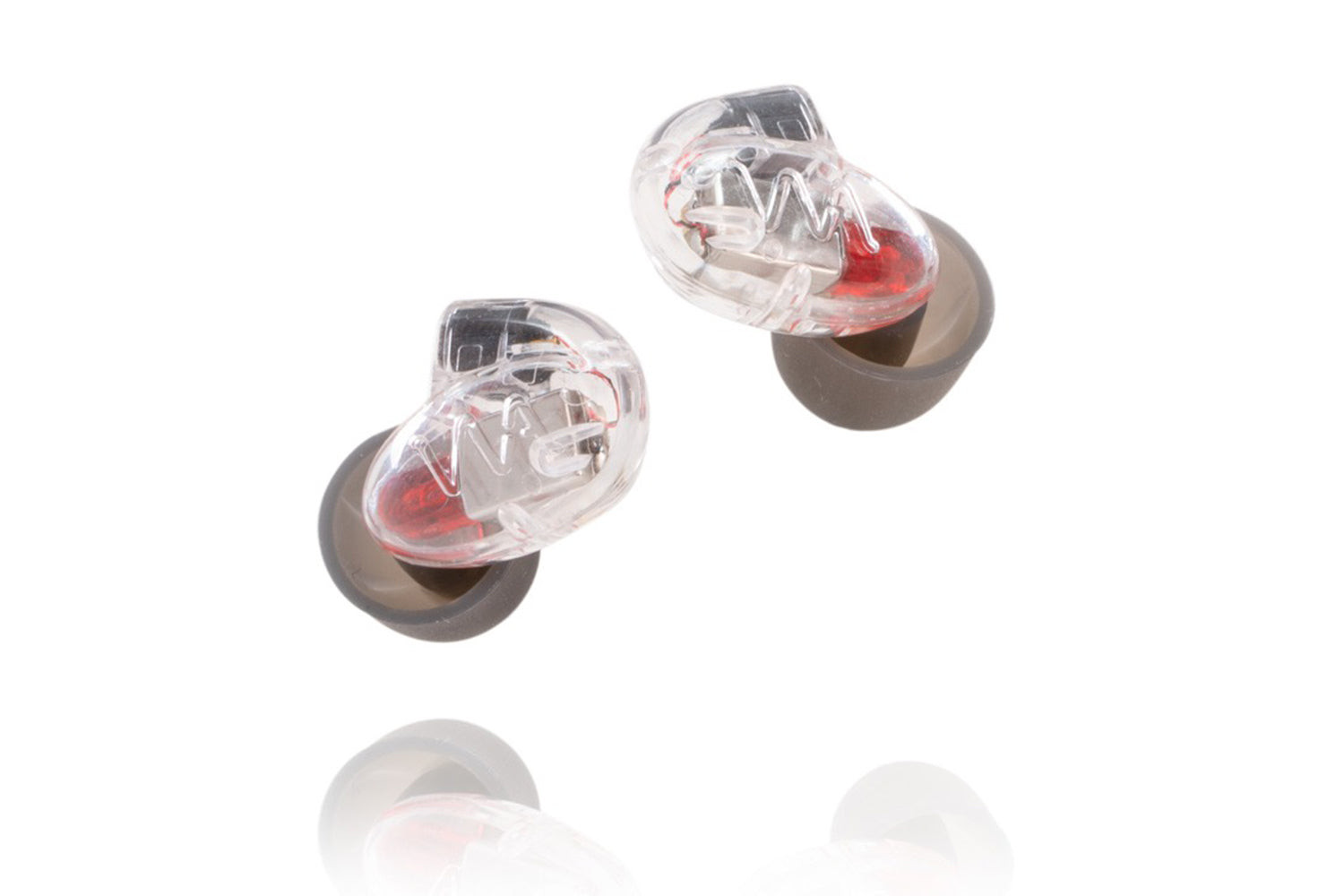
Six pairs of tips, a small hard case and a pouch make daily use easier than the price alone would suggest. The manufacturer photos on this page are for orientation: one of the earphone with the WA logo, one of the carton with the model and driver lettering, plus a further packshot. Morrison reports a secure fit already with the pre-installed tips and still stronger isolation with foam. Anyone using the Pro X10 at the system routes the soft cable over the ear and watches the seal, because isolation and bass depend on it.
The shop notes on hygiene and a 14-day change of mind concern unopened goods; statutory rights in the EU remain. The two-year shop warranty is a manufacturer or dealer promise, not a substitute for statutory claims.
Price and availability
The review quoted $199.99. On 12 November 2026 the price in the official EU shop was €249.99, in stock, with free shipping from €100. This analysis uses the documented euro price and does not convert the dollar figure. Whether individual dealers go lower changes; the current shop price is what counts. The model is available through the European shop, not only through imports.
At the amplifier and on a vinyl system
On a phono chain the Pro X10 hangs from the 3.5 mm jack after the phono stage. 19 ohms and 114 dB make it an easy partner. The mid-forward, lively balance from the review remains the same on an expensive phono preamp as on a player. Anyone playing records with strong vocals and guitars – rock and singer-songwriter, for example – at a high level meets exactly the situation in which Morrison describes voices standing out a little more in the mix. A different amplifier does not change that; tip and level do so more readily.
The 132 cm cable is typically long enough for a chair in front of the sideboard, and longer than the 48-inch cable Morrison later described as a little limiting for an amplifier on the desk when he reviewed the 64 Audio Aspire 4. The review calls the soft, twisted T2 cable smooth and soft; it does not contain a strong complaint about cable noise. Typical isolation of 25 dB helps keep the level moderate in a living room, provided the fit seals. Foam tips, according to the review, isolate even more.
In the same SoundStage! Solo corpus stands the Final A5000, which also receives an analysis in this batch. Morrison found the A5000 more even overall, the X10 more advantageous in some midrange. An index comparison between the two is not made here until a list package calculates the tier.
Anyone running the Pro X10 from a typical integrated amplifier with a jack should first change tips before attributing a thin bass balance to the electronics. Morrison describes plenty of bass when the recording requires it, and rather short low bass on Yes. That is a property of the tuning and of the single BA driver, not a sign of under-driving. More volume does not make the X10 bassier, only louder.
The decision not to recommend the Pro X10 as a typical stage monitor belongs in this analysis, because Westone markets the model in exactly that setting. Morrison separates the marketing copy from everyday listening: for sealing out the world and for relaxed listening he treats the package as a strong deal; on stage he himself would reach for a different tool. This page keeps that separation and does not turn the shop text into a stage recommendation of its own.
Anyone playing records in a living room with street noise or quiet conversation benefits from the isolation that the review and the manufacturer’s typical 25 dB figure describe – provided the tip seals. That is a practical argument alongside the tonal balance and independent of the amplifier. An open headphone on the same output does not isolate the room; the Pro X10 does, once the fit is right.
Who is the Pro X10 for?
The Pro X10 suits listeners who want a very small, comfortable, well-isolating wired in-ear with a documented magazine review and who are planning €249.99. It fits a vinyl system that already has a jack, if a lively, mid-forward balance is welcome. It fits less well if you want a flat monitor picture, especially deep bass, or an open cable format without a proprietary T2 connector. Until the list package it remains without an index and without a badge.
How it compares
In the ten-model Premium tier the models above it include the Sony IER-M500, the Meze Alba, the Moondrop Aria 2 and the Sennheiser IE 200; below it the Final E5000 and the Sennheiser IE 300. The Pro X10 sits at rank 8 with index 59 and no badge. Morrison compares the X10 with the Sivga Nightingale and the older B&W C5 Series 2; later he places the Final A5000 alongside it. The Sennheiser IE 200 sits below at €149.90 and has a different, What Hi-Fi?-described clear, rich and weighty balance. The shared index is in the list package.
FAQ
What exactly is the Westone Pro X10?
A wired universal-fit in-ear from Westone Audio with a single balanced-armature driver, a 132 cm T2 cable and a price that stood at €249.99 in the official EU shop on 12 November 2026.
Does the Pro X10 need a headphone amplifier?
According to the data sheet and the review, no. 19 ohms and 114 dB at 1 kHz are enough for typical outputs; Morrison also reached plenty of volume on a Sony NW-A306.
Is it suitable for listening to records?
As a wired in-ear with a 3.5 mm plug and a 132 cm lead, yes. The review describes a lively, mid-forward tuning with controlled bass and good isolation. Fit and seal matter more than an expensive amplifier.
Which cable does the Pro X10 use?
A proprietary Westone T2 cable, 132 cm, 1.5 ohms of cable impedance. A swap for any 2-pin or MMCX cable is not a given.
Does this page rest on a listening test by the VinylCination team?
No. There was no in-house listening test and no measurement of our own. The assessment draws on Westone’s manufacturer data and the international SoundStage! Solo listening review (Geoffrey Morrison, 1 August 2024).
Conclusion
The Westone Pro X10 is a very small, clearly documented wired model with a single BA driver and a magazine review that describes a lively, mid-forward, not-flat tuning, a good fit and strong isolation. The EU price of €249.99 sits at the upper edge of the Premium frame. The list record of 12 November 2026 is Premium rank 30, index 59, with no champion badge. Anyone who wants comfort, a seal and a lively balance will find a solid source base here. Anyone who expects a flat monitor picture or an open cable format will wait for the list package and for further models in this class.
About this AI analysis
This section is an AI summary of a published international magazine listening review and of Westone Audio’s own data. Vinyl BotPro places the findings; VinylCination does not carry out its own listening tests or measurements, and all sources are linked at the end of the page. Prices and availability change (as of 12 November 2026, without guarantee). A list index will be awarded only in a later list package.