
Bookshelf speaker · AI analysis · Starter, rank 3
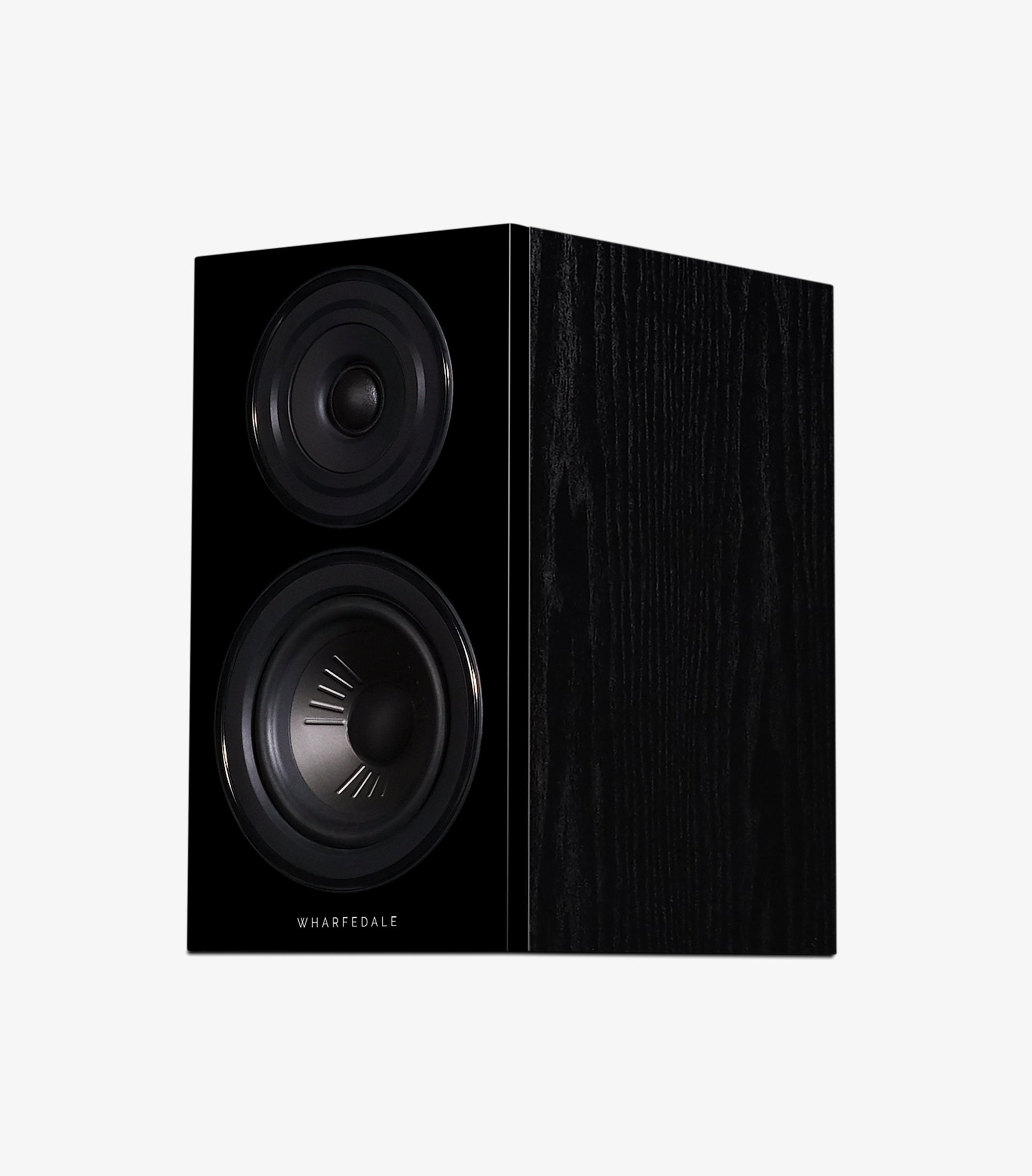
Wharfedale Diamond 12.1 Review
AI analysis (research): Diamond 12.1 with 88 dB, 8 Ω-compatible, 20–100 W — specifications and price band.
Summary
The Diamond 12.1 delivers 88 dB, 8 Ω nominal (min. 4 Ω), 20–100 W recommended and a Klarity 5″ bass driver. Market price approx. €298–349/pair — the clearest value-for-money window of the tier. Specialist press (What Hi-Fi?, StereoNET, HIFI.nl): full-bodied, rather forgiving sound; bass extension according to the manufacturer down to 60 Hz (−6 dB). Details and sources in the analysis below.
Assumptions
- Price per pair
- 8 Ω-compatible amps
- Check the price date (some remaining stock)
Specs (public / manufacturer)
| Type | 2-way bookshelf speaker · bass reflex |
|---|---|
| Sensitivity | 88 dB (2.83 V @ 1 m) |
| Impedance | 8 Ω compatible · min. 4.0 Ω |
| Rec. Amplifier power | 20–100 W |
| Frequency response | 65 Hz–20 kHz (±3 dB) · Bass −6 dB 60 Hz |
| Chassis | 130 mm Klarity™ · 25 mm polyester dome |
| Dimensions / weight | 312 × 180 × (250 + 28) mm · 6.8 kg/piece |
| Price guide | approx. €298–349/pair · Sept 2026 · Check the price date |
Manufacturer specifications (Wharfedale)
| Type | 2-way compact speaker, bass reflex |
|---|---|
| Drivers | 1″ (25 mm) textile dome · 5″ (130 mm) PP cone |
| Frequency response | 65 Hz–20 kHz (±3 dB) · bass extension 60 Hz (−6 dB) |
| Sensitivity | 88 dB |
| Impedance | 8 Ω compatible (min. 4.0 Ω) |
| Recommended amplifier power | 20–100 W |
| Max. SPL | 96 dB |
| Crossover frequency | 2.6 kHz |
| Dimensions | 312 × 180 × (250 + 28) mm (H × W × D) |
| Weight | 6.8 kg each |
Source: Wharfedale – official specifications · As of 16 October 2026 · subject to change by the manufacturer
Scores in detail
Vinyl BotPro Index: 52 · Index band Starter 40–54 · Guidance only, not a lab value.
Strengths
- Very good market band
- 88 dB / amp-friendly
- Full-bodied, forgiving sound (What Hi-Fi?, HIFI.nl)
Weaknesses
- Limited deep bass: 60 Hz at −6 dB (manufacturer)
- Successor Diamond 12.1i since 2025 — check availability
- Max. SPL 96 dB (manufacturer)
Comparison models
| Oberon 1 | More expensive, finer series |
|---|---|
| ELAC B6.3 | More bass, similar total price |
| Spektor 2 | Even cheaper, less sensitivity |
System matching
Works well with
- Budget vinyl chains
- Rega io / A-S301 / AXA35
- Anyone looking for warmth under €350
Less suited
- Bass-heavy large rooms without sub
- Anyone prioritising Meta/Uni-Q imaging
Analysis: the Wharfedale Diamond 12.1 in depth
What this is: an AI analysis, not a listening test
This page summarises what can be documented about the Wharfedale Diamond 12.1 from manufacturer material and international specialist publications. Vinyl BotPro has neither listened to nor measured the loudspeaker. We paraphrase sound descriptions in our own words as the named publications formulated them under their own conditions. Our own assessments are marked as such. This section does not change the rating, rank or index: the Diamond 12.1 remains at index 52 in third place in the Starter tier and holds the value-for-money champion award.
Model separation matters here. Wharfedale has sold loudspeakers under the Diamond name for decades, and the Diamond 12 series includes several sizes. Since 2025 there has also been the revised Diamond 12i series with the Diamond 12.1i. This page covers the Diamond 12.1 of the original Diamond 12 series. Where sources refer to the 12.1i, to other sizes or to home cinema packages, we say so explicitly. We quote prices only as dated press prices; they are not current euro market prices.
Background: Wharfedale and the Diamond line
According to the manufacturer, Wharfedale was founded in 1932 by Gilbert Briggs in Ilkley, Yorkshire; the name comes from the valley of the River Wharfe [4]. What Hi-Fi? writes that the first Diamond appeared in 1982, then as a single model rather than a range [5]. StereoNET also refers to the Diamond speakers since 1982 as the core of the brand's value-oriented offering [6].
According to Wharfedale, the Diamond 12 series was developed in collaboration with loudspeaker designer Karl-Heinz Fink [4]. StereoNET confirms this and quotes Fink's aim of offering young people an affordable way in; small speakers often end up in bedrooms, dorms or flats and therefore should not need much space around them [6]. HIFI.nl also names Fink as designer and describes low-resonance cabinets as his core theme [7].
The timeline according to the sources:
- Diamond 12 (2020): Wharfedale gives 2020 as the launch year of the series [3]. StereoNET published its Diamond 12.1 review on 18 December 2020 at £249 [6].
- Reviews in 2021: HIFI.nl published a review of several Diamond 12 models on 20 June 2021 and quoted €279 per pair for the 12.1 [7].
- What Hi-Fi?: The magazine lists the Diamond 12.1 as a 2024 Award winner; the review was last updated on 5 November 2024 and quotes a price of £249 [5].
- Diamond 12i (2025): In 2025 Wharfedale introduced the revised Diamond 12i series with new finishes and small acoustic changes [3][4].
Construction: a compact two-way loudspeaker
According to Wharfedale, the Diamond 12.1 is a traditional standmount or bookshelf speaker with two ways and a rear bass reflex port [1]. The manufacturer describes it as an all-rounder for stereo systems as well as home cinema [1]. What Hi-Fi? gives a height of 31 cm and points out that it sounds balanced even out in the room, whereas older Diamond generations tended to benefit from near-wall placement [5].
The manufacturer's specifications:
- Bass driver: 130 mm (5 in) with a polypropylene and mica cone [1].
- Tweeter: 25 mm (1 in) woven polyester dome [1].
- Sensitivity: 88 dB at 2.83 V and 1 m [1].
- Impedance: 8 ohm compatible, minimum 4.0 ohms [1].
- Recommended amplifier power: 20 to 100 watts [1].
- Peak SPL: 96 dB [1].
- Frequency response: 65 Hz to 20 kHz (±3 dB), bass extension to 60 Hz at −6 dB [1].
- Crossover frequency: 2.6 kHz [1].
- Cabinet volume: 8.2 litres [1].
- Dimensions and weight: 312 × 180 × (250 + 28) mm (H × W × D), 6.8 kg each [1].
Place in the Diamond 12 range
StereoNET describes the range at launch: it started with the Diamond 12.0 at £199 and went up to the Diamond 12.4 floorstander at £699 [6]. The 12.1 cost £50 more than the 12.0 and, according to StereoNET, offers more cabinet volume for beefier bass while staying compact enough for similar spots [6]. According to StereoNET, Fink himself expected the larger 12.2 to sell better [6].
The manual treats the 12.0, 12.1 and 12.2 as bookshelf speakers for stands or walls, and the 12.3 and 12.4 as floorstanders with spikes [2]. There are also the 12.C centre and surround models [2]. HIFI.nl reviewed the 12.1 together with the 12.3 floorstander and the 12.C centre; it describes the 12.3 as somewhat more mature and fuller, but also more expensive [7].
The bass driver with Klarity cone
Wharfedale calls the cone material Klarity, a blend of polypropylene and mica. The mica is meant to stiffen the cone so that it stays light yet flexes little [1]. What Hi-Fi? and StereoNET describe the aim similarly: a balance between rigidity and damping [5][6].
According to the manufacturer, the cone sits in a low-damping surround. By simulating many cone shapes and adding ribs, a flat response was achieved without resorting to a high-damping surround [1]. The magnet system has an aluminium compensation ring intended to reduce changes in inductance as the voice coil moves [1]. The voice coil is wound on an epoxy and glass-fibre former. Wharfedale calls this unusual at this price and cites higher power handling and no eddy currents compared with aluminium, and greater stiffness compared with Kapton [1].
Tweeter and crossover
According to Wharfedale, the 25 mm dome is made of woven polyester film with a high-loss coating. Magnet system and front plate are optimised for wide dispersion; the flat front plate exposes the dome as much as possible [1]. What Hi-Fi? names wide dispersion, a smooth response and strong dynamics as the goals [5].
According to the manufacturer, the crossover uses an acoustic Linkwitz-Riley 24 dB per octave topology and air-core inductors of the kind more often found in expensive speakers [1]. Because air-core inductors have higher resistance, the bass driver's magnet system was adapted [1]. StereoNET reports these as manufacturer claims [6]. We have no measurements of the crossover.
Cabinet and bracing
According to Wharfedale, the cabinet is built in several layers. Even the resonant properties of the glue between the layers were measured to find the best combination [1]. What Hi-Fi? describes panels made of MDF layers of different thicknesses bonded together to control resonances [5]. Inside, so-called Intelligent Spot Bracing connects opposite walls. According to the manufacturer, the braces were placed by computer simulation so that they reduce resonance rather than transfer it from one wall to another like a simple figure-of-eight brace [1]. StereoNET quotes Fink to the effect that a brace in the right position can make all the difference [6].
The bass reflex port is at the rear. What Hi-Fi? notes that previous Diamond generations used a more elaborate downward-firing port [5]. HIFI.nl describes invisibly mounted drivers and magnetically attached grilles, but notes that the fabric was not quite taut on one sample [7].
Terminals and finishes
HIFI.nl writes that all Diamond 12 models it reviewed have sturdy terminals that also allow bi-wiring and bi-amping [7]. The manual describes screw terminals and explains that the metal links between treble and bass terminals are removed for bi-wiring [2].
On the product page, Wharfedale lists Black Oak, Light Oak, Walnut Pearl and White Oak for the Diamond 12.1 [1]. HIFI.nl received white samples and describes a wood-pattern vinyl on MDF [7].
Amplifiers and home cinema use
What Hi-Fi? writes that speakers at this level must be forgiving enough for micro systems yet transparent enough for better components, and that the Diamond 12.1 manages this well [5]. HIFI.nl ran the speakers from a Bluesound PowerNode with 2 × 80 watts and describes them as easy to drive; an inexpensive amplifier would probably be sufficient [7]. StereoNET used, among others, a much more expensive integrated amplifier and notes that the speaker reveals poor recordings but is less analytical than some other standmounts [6].
According to Wharfedale, the Diamond 12.1 is also intended for home cinema [1]. HIFI.nl used it as a rear speaker in a 5.1 system with the 12.C centre, 12.3 floorstanders and a subwoofer from another manufacturer; the small boxes placed rear effects well [7]. With a subwoofer, pure stereo playback also gained [7]. This is the publication's observation in its room, not a general result.
Placement according to the manual
According to the manual, the bookshelf models in the range are intended primarily for stands; wall brackets or sturdy shelves are possible. The quality of the stands greatly influences performance, and flimsy products should not be used [2]. For the Diamond 12.0, 12.1 and 12.2, the manual recommends stand or wall mounting, with a rigid shelf as an option. Closer to the rear wall the bass increases, but too close it may become boomy and indistinct [2].
As a rule of thumb, the manual says the listener should be about as far from the speakers as they are from each other; the tweeters should be roughly at ear level [2]. StereoNET writes that the 12.1 does not need much room around it but should not be placed right against a wall [6]. The manual also recommends equal cable lengths for left and right and cable of adequate cross-section [2].
Dated prices
The following prices come from the respective review and apply only to that date and market:
- StereoNET, December 2020: £249 (RRP); the range then started at £199 for the Diamond 12.0 and ended at £699 for the Diamond 12.4 [6].
- HIFI.nl, June 2021: €279 per pair [7].
- What Hi-Fi?, as of November 2024: £249 [5].
The price guide at the top of this page (as of Sept 2026) is not affected.
What the specialist press writes about the sound
The following statements paraphrase the respective publication; they are not our own listening results.
StereoNET (December 2020): Jay Garrett describes the 12.1 as confident and refined, with pace, good articulation and surprising dynamics for its size. He calls the midband even-handed and slightly smoothing, which takes the edge off rough electronics at this price. Even this speaker cannot deliver the deepest bass; at very high volume with a large amplifier it reached its limit [6].
HIFI.nl (June 2021): The publication describes the 12.1 as slightly laid-back and warmer, very forgiving of different sources. In the midrange it would have liked a little less dullness on one voice. On a bass-heavy track it held on for a long time until it became too much at party level. As a rear speaker in a surround system it showed plenty of detail [7].
What Hi-Fi? (as of November 2024): The magazine describes a surprisingly bold, full-bodied sound with good organisation in busy music, a smooth, forgiving balance and good dynamics. Floor-shaking bass should not be expected from such small boxes. In comparison, it calls its then favourites, the Elac Debut B5.2, somewhat more transparent in the midrange and rhythmically snappier; the choice depends on taste and electronics [5].
Hi-Fi World (March 2021): According to Wharfedale's press compilation, the magazine awarded five globes and described a lively, engaging sound [8]. We have not seen the original article; we list the quote only as a manufacturer claim.
What these pieces share is the picture of a small speaker with a full, rather forgiving sound and more dynamics than its size suggests, with a clear limit in the deep bass. This is a summary of other people's impressions, not a measurement.
Distinction: Diamond 12.1, Diamond 12.1i and the home cinema package
The Diamond 12.1 is the model of the original Diamond 12 series from 2020 [1][3].
The Diamond 12.1i belongs to the revised Diamond 12i series from 2025. According to Wharfedale, the bass driver cones are unchanged; the changes are new finishes, revised bass port tuning and airflow, and internal damping [3]. The published figures for sensitivity, frequency response, dimensions and weight are identical on both product pages [1][3]. Reviews of the 12.1i do not automatically apply to the 12.1; we have not evaluated any for this analysis.
The Diamond 12.1 HCP is a home cinema package. Wharfedale writes that it won the What Hi-Fi? Awards 2025 category for best speaker package under £500 for the fifth consecutive year [1]. This award applies to the package, not to the single stereo pair.
Our own assessment: according to the manufacturer, the 12.1 and 12.1i differ mainly in bass port tuning, damping and looks. Whether this is audible is described only in reviews of the newer model.
Sources and conflicts
- Depth: Wharfedale gives 250 mm plus 28 mm [1]; StereoNET gives 310 × 180 × 280 mm [6].
- Power handling: StereoNET quotes a maximum of 100 watts RMS [6]; Wharfedale gives 20 to 100 watts as recommended amplifier power and states no power handling [1].
- Tweeter: Wharfedale's spec table says textile dome, the text says woven polyester film [1]. Both describe the same part.
- Bi-wiring: HIFI.nl describes bi-wire terminals on all models it reviewed [7]; the manual explains bi-wiring generally for the range [2]. We have not evaluated a photo of the rear panel.
Limits and compromises
- Limited deep bass: Wharfedale gives 60 Hz at −6 dB [1]; What Hi-Fi? and StereoNET point to the limits of small boxes [5][6].
- Limited maximum level: 96 dB according to the manufacturer [1]; HIFI.nl and StereoNET describe limits at very high volume [6][7].
- Placement-dependent: wall proximity increases bass but can make it indistinct [2].
- Successor on the market: since 2025 Wharfedale has offered the Diamond 12.1i [3]; availability of the 12.1 may vary by retailer.
Who the Diamond 12.1 suits
This assessment is guidance, not a buying recommendation.
Based on the sources reviewed, the Diamond 12.1 suits people looking for a compact, easy-to-drive speaker for a small to medium room who plan for stands, a wall bracket or a sturdy shelf. The reviews describe a forgiving sound that also works with inexpensive electronics. Anyone expecting deep bass or very high levels should, according to the sources, consider larger speakers or a subwoofer.
Sources for this analysis
- Wharfedale: Diamond 12.1 (Produktseite/product page). https://www.wharfedale.co.uk/products/diamond-12-1
- Wharfedale: Diamond 12 User Manual (PDF). https://www.wharfedale.co.uk/cdn/shop/files/Diamond_12_User_Manual_250729_R13.pdf
- Wharfedale: Diamond 12.1i (Produktseite/product page). https://www.wharfedale.co.uk/products/diamond-12-1i
- Wharfedale: History. https://www.wharfedale.co.uk/pages/history
- What Hi-Fi? (aktualisiert/updated 05.11.2024): Wharfedale Diamond 12.1 review. https://www.whathifi.com/reviews/wharfedale-diamond-121
- StereoNET (18.12.2020, Jay Garrett): Wharfedale Diamond 12.1 review. https://www.stereonet.com/reviews/wharfedale-diamond-12.1-loudspeaker-review
- HIFI.nl (20.06.2021): Wharfedale Diamond 12 review. https://hifi.nl/artikel/review-wharfedale-diamond-12-serie-in-stereo-en-surround
- Wharfedale: Reviews, Awards & Features (Pressespiegel/press compilation, PDF). https://www.wharfedale.co.uk/cdn/shop/files/WH_Review_Awards_Features_Jun-Oct_261028_I8.pdf
Created by AI (Vinyl BotPro) from the sources listed; no listening tests or measurements of our own. Detailed human fact-check pending.
Created by Vinyl BotPro (AI) · As of Sept 2026 · Corrections: info@vinylcination.de
Read more: best bookshelf speakers 2026 · Improve your hi-fi system · What is hi-fi?