
Integrated amplifier · AI analysis · Starter, rank 1
Yamaha A-S501: Analysis
AI analysis (research): Stereo-Integrated Amplifier with 85 W/8 Ω RMS, MM-Phono, optical/coaxial DAC and Pure Direct — specs/retailer prices, no listening test.
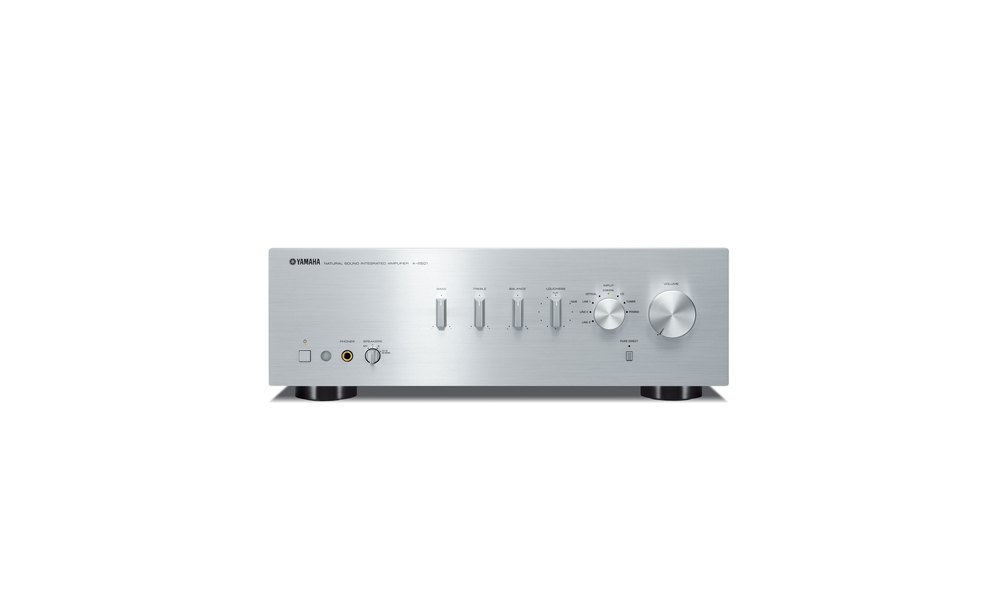
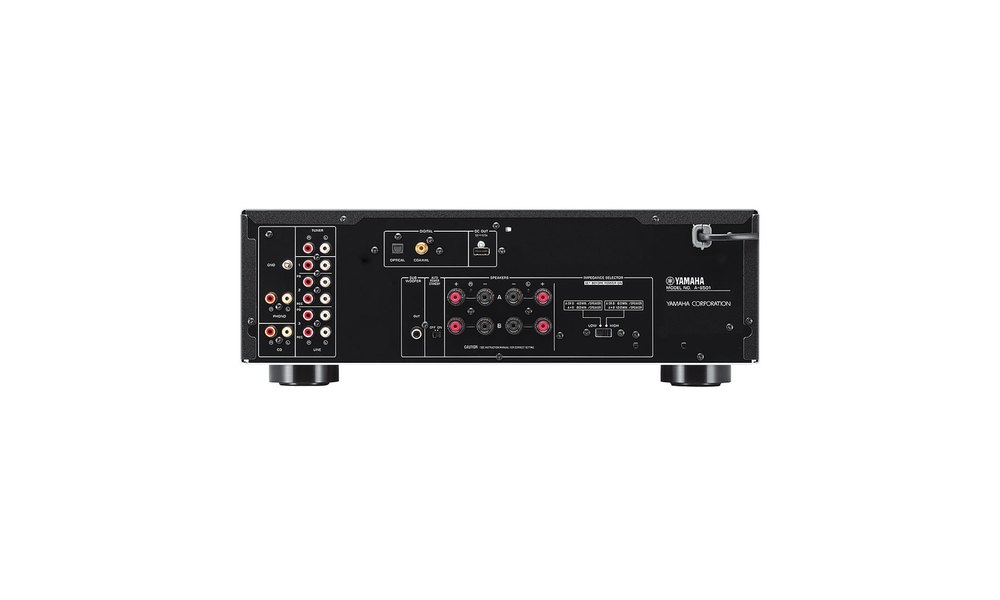
Summary
The A-S501 is, according to Yamaha, the ToP-ART-integrated amplifier with 85 W+85 W (8 Ω, 20 Hz–20 kHz), MM-Phono, digital-ins and sub-out. Market price often approx. €430–499 (price as of check). Makes sense as a vinyl centrepiece for efficient to medium-sensitivity speakers — not as a replacement for difficult low-impedance designs.
Assumptions
- MM system at the phono-in (no MC-low without external stage)
- Speaker 4–8 Ω, Living room, no own Performance/Clirr measurements
- Check the German price as of Sept 2026
Specs (public / manufacturer)
| Type | Stereo-integrated amplifier (2 channel) |
|---|---|
| Power | 85 W + 85 W RMS (8 Ω, 20 Hz–20 kHz, 0.019% THD) · maximum power 120 W + 120 W (4 Ω, 1 kHz, 0.7% THD, Europe) |
| Phono | MM · Yes |
| Digital | 1× optical · 1× coaxial (DAC) |
| Features | Pure Direct · Loudness variable · Sub-Out · Speaker A/B · Remote control |
| Connections | multiple line-in · Rec Out · Headphones · DC for optional BT adapters |
| Price guide | market price approx. €430–499 (without guarantee) · Sept 2026 · Check the price date |
Manufacturer specifications (Yamaha)
| Minimum RMS output power (8 Ω, 20 Hz–20 kHz, 0.019% THD) | 2 × 85 W into 8 Ω |
|---|---|
| Maximum power (4 Ω, 1 kHz, 0.7% THD, Europe) | 2 × 120 W |
| High dynamic power per channel (8/6/4/2 Ω) | 130 / 150 / 185 / 220 W |
| Damping factor | 240 |
| Frequency response | 10 Hz–100 kHz ±1.0 dB |
| Total harmonic distortion (CD to speaker out, 20 Hz–20 kHz) | 0.019% (50 W into 8 Ω) |
| Signal-to-noise ratio (CD) | 99 dB (input shorted, 200 mV) |
| Inputs | 8 audio inputs incl. phono (MM), optical, coaxial |
| Features | Subwoofer out, Pure Direct, ToP-ART |
| Standby power consumption | 0.5 W |
| Dimensions (W × H × D) | 435 × 151 × 387 mm |
| Weight | 10.3 kg |
Source: Yamaha – official specifications · As of 16 October 2026 · subject to change by the manufacturer
Scores in detail
Vinyl BotPro Index: 54 · Index band Starter 40–54 · Guidance only, not a lab value.
Strengths
- MM-Phono and digital-ins in one chassis
- Real 85 W-RMS specification
- Pure Direct / Sub-Out / A/B
Weaknesses
- No Bluetooth onboard (optional adapter)
- No MC-Phono
- Price at the starter roof
Analysis: Yamaha A-S501 in detail
How the cited material is used
This analysis adds manufacturer data and a dated independent listening report on the Yamaha A-S501 to the short overview above. Vinyl BotPro compiled it from the sources named below; VinylCination has not carried out its own listening session or measurement of this unit. The basis is Yamaha’s European product page (retrieved 12 November 2026) [1] and the What Hi-Fi? listening report (staff, 7 November 2014, rated 4 out of 5) [2].
What Hi-Fi? meets the requirement of an international independent listening report: the magazine describes build, features and sonic impressions on named loudspeakers and recordings, and sets the A-S501 against its predecessor, the A-S500, and against the Marantz PM6005. That is dated specialist press, not a manufacturer film and not a forum post. The SKU is the A-S501, not the lower-powered A-S301 and not the USB-DAC-equipped A-S801. Shop widgets and buying-guide modules that the What Hi-Fi? page carries today are not a second listening source.
Background and place in the range
The A-S501 belongs to Yamaha’s classic mid-2010s A-S line: an analogue integrated amplifier with ToP-ART circuitry, a moving-magnet phono input and — as the clearest step on from the A-S500 — optical and coaxial digital inputs. The European manufacturer page states 85 watts + 85 watts RMS into 8 ohms (20 Hz–20 kHz, 0.019% THD) and, for Europe, a maximum figure of 120 watts + 120 watts into 4 ohms (1 kHz, 0.7% THD) [1]. That same 85-watt RMS figure appears in the table on this page and in the What Hi-Fi? text. There is no USB DAC; Bluetooth is only available through the optional YBA-11 adaptor.
In our list the unit is the Starter-tier Sound champion (Index 54, rank 1). That placing is an AI assessment based on the available data, not a listening seat of our own. The existing short overview on the page remains in substance: a stereo integrated amplifier with 85 W/8 Ω RMS, MM phono, optical and coaxial conversion and Pure Direct, a sensible vinyl centrepiece for efficient to medium-sensitivity loudspeakers, not a substitute for difficult low-impedance loads. This analysis deepens that picture without overwriting the table.
Casework, connections and operation
What Hi-Fi? describes the A-S501 as chunky, well finished and deliberately retro; the appearance had barely changed from the well-liked A-S500, and the magazine was happy with that. The controls worked with a crisp precision rare at the price; the remote, too, was simple and pleasant to use. Unlike many rivals, the unit gave the impression that it would last for years [2]. The manufacturer page adds an aluminium fascia, gold-plated speaker and RCA terminals (CD, phono) and Auto Power Standby [1].
On connections, What Hi-Fi? lists five line-level inputs, a moving-magnet phono stage, a headphone output and a pair of digital inputs — optical and coaxial, both good for 24-bit/192 kHz. A USB input, which the magazine would have liked for easier computer hook-up, is absent; Yamaha, judging by the information pack, saw the amplifier used with a television or Blu-ray player rather than a computer. Bluetooth is not built in; the optional YBA-11 is powered from a USB socket (DC only) on the rear. The loudness control is adjustable and is meant to compensate for the familiar shift in sensitivity at the frequency extremes as level changes; What Hi-Fi? writes that it works and is well worth trying [2].
The existing table on this page speaks of eight audio inputs including phono (MM), optical and coaxial; that sits with the five line inputs plus phono and the two digital sockets. A subwoofer output and speaker A/B switching are stated on the manufacturer page. Pure Direct remains the shortest path. Those are feature statements, not listening findings; they do, however, explain why the page treats the A-S501 as a compact vinyl-plus-digital centrepiece and why a USB DAC is a deliberate omission. Yamaha gives dimensions of 435 × 151 × 387 mm and a weight of 10.3 kg [1].
Engineering and manufacturer data
ToP-ART is Yamaha’s shorthand for Total Purity Audio Reproduction Technology: a layout intended to run as directly and symmetrically as possible from input to output, backed by the ART Base (Anti-Resonance and Tough) and a double-bottom chassis with a stiffening centre bar. The manufacturer page emphasises a custom-made transformer, block capacitors and extruded heat sinks [1]. That is manufacturer language, not a measurement protocol of this analysis. What Hi-Fi? does not hang the sound on the acronym, but does treat the construction as unusually solid for the money.
The 85-watt RMS figure into 8 ohms across the full audio band, and at a very low stated distortion of 0.019% THD, is the continuous rating shared by the table, the manufacturer and the specialist press. The 120 watts into 4 ohms are a European maximum rating at 1 kHz and 0.7% THD — a different test condition, not a contradiction we need to resolve in the table. There is no built-in USB converter; digital sources stop at the optical and coaxial sockets. The phono stage is fixed and moving-magnet only. Anyone wanting to play a low-output moving-coil cartridge needs an external stage — exactly the limit the existing page already names.
Pure Direct bypasses the tone and loudness paths in favour of the shorter route. Variable loudness remains on board as an everyday control, unlike some purist designs. Yamaha expressly positions the digital sockets for television (optical) and Blu-ray (coaxial); the signal is meant to stay in the digital domain until the internal converter takes over. Anyone who wants to hook up a computer directly over USB will find that path only on the A-S801. That is a product-boundary statement, not a slight on the 501, and it belongs in the engineering section because it marks the difference from the next step in the same family [1].
What the specialist press heard
It is only on sound quality that What Hi-Fi? becomes less than wholly positive. First impressions were good: the A-S501 sounded more muscular than its predecessor, robust and tonally more even. The old A-S500, for all its appeal, had a rather lean and bright balance; the new one was better balanced. It went decently loud, as the 85 watts per channel would suggest. The magazine tried the amplifier with a range of loudspeakers from Wharfedale’s Diamond 220s right up to its reference ATC SCM50s, and writes that it drove every one as well as could be expected [2].
On Bob Marley’s Exodus the magazine was pleased with the amount of detail: the presentation was clean and clear, with plenty of weight in the hard-charging bassline, suitably expressive vocals and a sense of space. It was less successful at delivering the driving rhythm, underplaying that quality enough to take some of the excitement out of the music. On something more complicated, Saint-Saëns’ Danse Macabre, the results were mixed. Detail resolution and a fine sense of scale were good, the sound stage expansive, the instruments well defined. Composure, however, faltered a little when the music grew complicated: the A-S501 started to sound just a touch confused, losing track of subtle instrumental strands, without falling apart. The sense of control and stability diminished, as if the amplifier could not quite keep up [2].
In a direct comparison, Marantz’s PM6005 sounded much more settled and confident, and dynamically a more exciting listen as well. The magazine’s conclusion stays sober: overall the A-S501 is a capable amplifier, built very well and packed with useful features. The move to a more balanced sound is welcome, but compared with the best at the price it falls short of enthusiasm and a little composure. It is worth considering, but is overshadowed by the class best. The rating is 4 out of 5; the pluses are excellent build and finish, a good feature list, a spacious and detailed sound and good power, the minus the lack of the composure and excitement of the best [2].
That reservation belongs in the body because it limits the champion placing. Being the Starter-tier Sound champion does not mean What Hi-Fi? declared the A-S501 the class leader. The magazine itself puts it behind the PM6005 and speaks of extremely formidable opposition that it cannot match. Our list logic follows the data of this round, not a group comparison we have heard ourselves. We have not taken the PM6005 as a second listening source for this analysis; it appears only where What Hi-Fi? names it.
Placement, loudspeakers and everyday use
The magazine’s listening chain runs from inexpensive standmounts to demanding floorstanders. That the A-S501 drove the Diamond 220 and the ATC SCM50 “as well as we could expect” is a statement about adequate reserves in typical domestic rooms, not a licence for especially insensitive or low-impedance loads. The existing system-matching note (efficient to medium-sensitivity loudspeakers, not a substitute for difficult low-impedance monsters) therefore stays. We have not ourselves heard the A-S501 on those loudspeakers [2].
For everyday use the A-S501 is meant as an analogue centrepiece with a fixed moving-magnet input and two digital sockets. Anyone wanting vinyl and a television or an optically or coaxially fed player in one chassis will find exactly that combination. Anyone wanting to connect a computer over USB or to play DSD natively is better served by the A-S801 — that is a feature boundary, not a sonic comparison in this analysis. The optional YBA-11 remains an accessory path for mobile devices, not built-in streaming. A subwoofer output and speaker A/B switching allow typical living-room chains; Pure Direct remains the shorter path when the tone and loudness controls are to be left out of the way.
The comparison rows on the existing page (including the A-S801 and other boxes) are overview lines, not extra listening sources. A report on the A-S301 or the A-S801 may not stand in for a report on the A-S501. Nor do today’s shop pages, or the buying-guide modules on the What Hi-Fi? page, replace the report of 7 November 2014.
Price and availability
The page note gives a market price for September 2026 of often around €430–499, without guarantee. The What Hi-Fi? text dates from November 2014 and from another market; current shop widgets on that page are day prices, not a second listening report and not a converted spot rate for Germany. Loudspeakers, sources and cables are not typically in the box. A later street price does not change the listening notes, but it does change the field of today’s rivals. Before a purchase, the specification and the current price should be checked; the A-S501 is easily confused with the A-S301 or the A-S801.
The long market life of the A-S line explains why the 501 is still offered, even though the report is more than a decade old. What Hi-Fi? itself highlights the solid construction and the impression of a long service life. For this analysis that sets a clear limit. Continuity of the casework may stand as a manufacturer and press statement; it may not be used to lift older A-S500 texts quietly into the source list. Anyone looking for the sonic account of this model will find it in the report of 7 November 2014, including the chain from the Diamond 220 to the ATC SCM50 [2].
What we do not rely on
Listening reports on the A-S301, A-S500, A-S701 or A-S801 are not a substitute for a report on the A-S501. Forums, comment threads and today’s shop modules on the What Hi-Fi? page are left aside. There is no track list of our own and no measurement. We cite the PM6005 only in the frame of the What Hi-Fi? comparison, not as a second listening source we have evaluated ourselves.
Conclusion of the analysis
The sources portray the Yamaha A-S501 as a ToP-ART integrated amplifier with 85 watts RMS into 8 ohms, a fixed moving-magnet phono stage, optical and coaxial conversion to 24/192, Pure Direct, variable loudness and no USB DAC — according to the manufacturer page and the existing table [1]. What Hi-Fi? (7 November 2014, 4 out of 5) describes a more muscular, tonally more even sound than the A-S500, good detail and a wide stage on loudspeakers from the Diamond 220 to the ATC SCM50, but also reservations about rhythm, composure in complex passages and dynamic excitement next to the Marantz PM6005 [2]. In our list the unit is the Starter-tier Sound champion — an AI assessment based on the available data, not a listening test of our own.
Sources for this analysis
- Yamaha Europe: A-S501 product page (retrieved 12.11.2026). https://europe.yamaha.com/en/audio/home-audio/products/hifi-components/a-s501/
- What Hi-Fi?: Yamaha A-S501 review (staff, 7 November 2014 / 07.11.2014, 4/5). https://www.whathifi.com/yamaha/s501/review
Created by AI (Vinyl BotPro) from the sources named; no listening tests or measurements of our own. Detailed human fact-checking is still outstanding.
Comparison models
| Yamaha A-S301 | Cheaper, less continuous power |
|---|---|
| Denon PMA-600NE | BT onboard, slightly less continuous power |
| Marantz PM6007 | HDAM character, more expensive |
System matching
Works well with
- Vinyl + TV/streamer via digital
- Shelves/floorstanding speakers medium efficiency
- If you want Phono and DAC without extra speakers
Less suited
- Low-MC without external phono
- Very current-hungry exotic loads
- Only-Bluetooth without adapter
Created by Vinyl BotPro (AI) · As of Sept 2026 · Corrections: info@vinylcination.de
Read more: best amplifiers 2026 · Improve your hi-fi system · What is hi-fi?