
Floorstanding speaker · Short analysis · Premium, rank 9
KEF Q7 Meta Review
Short analysis (research): 3-way floorstanding speaker 87 dB / 4 Ω (min. 3.2 Ω), 15–200 W — specs/price, no listening test.
Summary
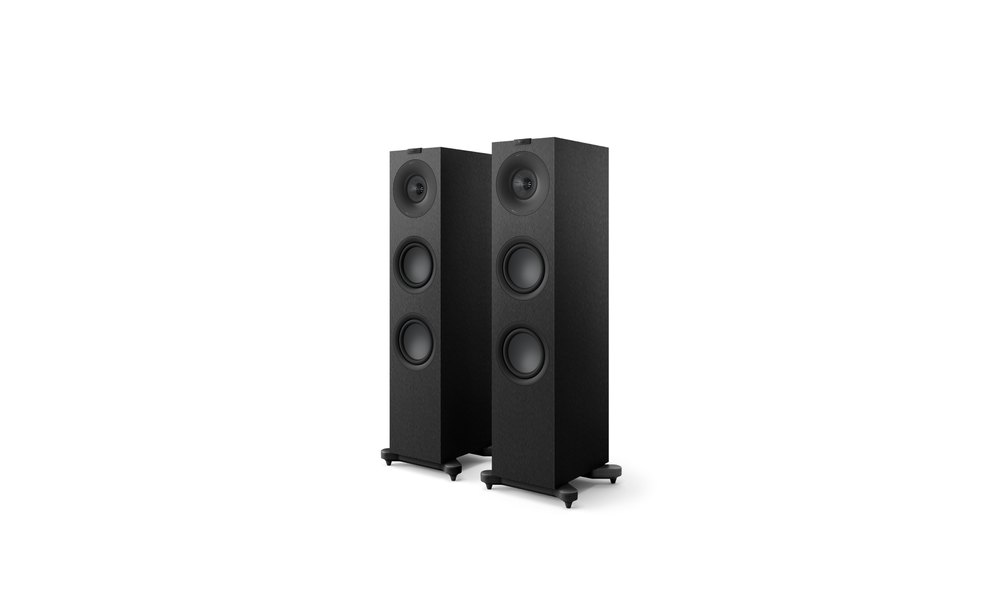
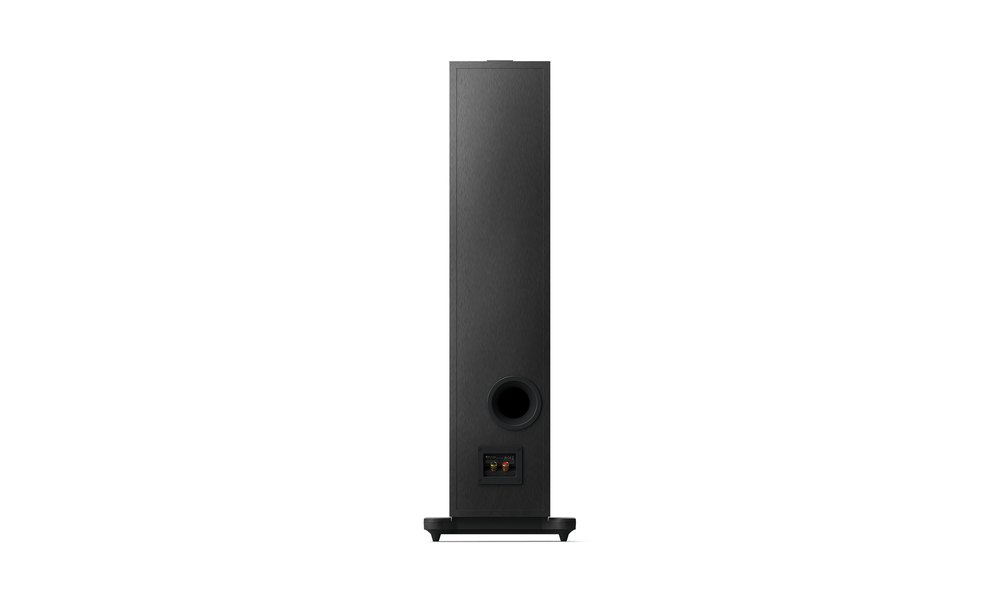
The Q7 Meta is KEF's medium floorstanding speaker of the Q-Meta series: 3-way with Uni-Q and MAT, 87 dB, 4 Ω (minimum 3.2 Ω), recommended 15–200 W, 46 Hz–20 kHz (±3 dB), 1001 mm with foot, approximately 18.4 kg. According to KEF Germany, the pair costs €1,598. More bass than any KEF shelf in the line; the amplifier should drive 4 Ω clean.
Assumptions
- Price per pair Sept 2026
- Load-stable amp (4 Ω)
- Placement with some distance from the wall
- No measurements or listening tests of our own
Specs (public / manufacturer)
| Type | 3-way floorstanding speaker · Uni-Q + MAT |
|---|---|
| Sensitivity | 87 dB (2.83 V/1 m) |
| Impedance | 4 Ω nominal (min. 3.2 Ω) |
| Rec. Amplifier power | 15–200 W |
| Frequency range | 46 Hz–20 kHz (±3 dB) |
| Dimensions / weight | 1001 × 317 × 315 mm (with foot) · Approx. 18.4 kg/piece |
| Price guide | €1,598/pair · Sept 2026 |
Manufacturer specifications (KEF)
| Type | 3-way floorstanding speaker · bass reflex |
|---|---|
| Drivers | Uni-Q: 19 mm vented aluminium dome with MAT · 100 mm aluminium midrange · 2 × 165 mm hybrid aluminium bass |
| Frequency response | 46 Hz–20 kHz (±3 dB) · 39 Hz–20 kHz (−6 dB) · typical in-room bass 28 Hz (−6 dB) |
| Sensitivity | 87 dB (2.83 V/1 m) |
| Impedance | 4 Ω (min. 3.2 Ω) |
| Max. SPL | 110 dB (1 m) |
| Crossover frequency | 440 Hz, 2.3 kHz |
| Recommended amplifier power | 15–200 W |
| Dimensions | 1,001 × 317 × 315 mm (H × W × D, with terminal and plinth); without plinth 950 × 210 × 315 mm |
| Weight | 18.4 kg |
Source: KEF – official specifications · As of 16 October 2026 · subject to change by the manufacturer
Matching tips
- Suits: Load-stable premium amps
- Suits: Medium sized rooms
- Suits: KEF fans
- Less suited: Weak amplifier
- Less suited: very small rooms
- Less suited: High sensitivity expectations
Vinyl BotPro Index: 63 (Premium 55–69) · Label: AI research · Sept 2026 · All information is provided without guarantee; prices change and manufacturer specifications may differ.
Manufacturer and concept
KEF is a British loudspeaker maker best known for its Uni-Q coaxial driver. For decades the Q Series has been the brand's affordable line, bringing technology from the pricier R and Reference ranges to a wider audience. With the Q Meta generation, KEF moved the twelfth-generation Uni-Q and its Metamaterial Absorption Technology (MAT) into the Q Series. The Q7 Meta is the smaller of the two floorstanders in the range; the Q11 Meta is the larger one.
The Q7 Meta is a three-way bass-reflex floorstander. At 1,001 mm tall including the plinth and 18.4 kg, it belongs to the popular "one-metre class" of compact floorstanders for ordinary living rooms. KEF Germany lists a pair price of €1,598.
The technology explained
Uni-Q: tweeter and midrange on one axis
In the Uni-Q, the 19 mm tweeter sits at the centre of the 100 mm midrange cone, and both radiate from a common point. With conventional speakers whose drivers are stacked vertically, the way they combine changes as soon as you move sideways or up and down. With the coaxial principle, the balance stays the same over a wider angle. That makes the speaker less sensitive to the exact seat and helps keep the centre image stable for several listeners.
MAT against tweeter back-wave
A tweeter radiates not only forward but also backward into the enclosure. That rear sound can be reflected and act on the dome again. MAT is a disc-shaped maze of many fine channels, each absorbing a particular frequency. KEF says it largely absorbs the tweeter's rear output. The aim is lower distortion and cleaner treble. The vented aluminium dome guides its rear output into this structure.
Bass and crossover
Two 165 mm hybrid aluminium woofers handle the bass. The crossover hands over at 440 Hz between bass and midrange and at 2.3 kHz between midrange and treble. The low 440 Hz crossover means the Uni-Q covers the entire vocal range while the woofers deliver only bass. KEF quotes 46 Hz to 20 kHz (±3 dB), 39 Hz at −6 dB and a typical in-room bass response of 28 Hz (−6 dB).
What the specifications mean
A sensitivity of 87 dB is average for a floorstander of this size. However, the 4 Ω nominal impedance with a 3.2 Ω minimum calls for an amplifier that can deliver plenty of current. KEF recommends 15 to 200 W. The "typical in-room bass" figure accounts for the way the walls of a living room reinforce bass, so it depends heavily on the room and placement.
Sound according to international reviews
The Absolute Sound describes the Q7 Meta as a speaker clearly voiced for the tastes of a wide audience: a slight lift in the upper bass, a smooth transition into the upper midrange and gently falling treble. The magazine sees this as a deliberate tuning for living rooms where the speakers also handle TV sound, and considers the Q7 Meta hard to beat for newcomers below 2,000 US dollars.
Hi-Fi Voice calls the Q7 Meta easy to listen to, relaxed and non-fatiguing; it slightly emphasises the low octaves and so fills the room with a little extra energy. Compared with the previous generation, the reviewers see the main progress in the new Uni-Q unit. Overall, the reviews paint the picture of a warm, full floorstander that suits long sessions and sounds less analytical than neutral studio monitors. We did not carry out our own listening or measurement tests; this assessment is based on these sources and the manufacturer's data.
What the Meta generation changes
Uni-Q technology dates back to the late 1980s, and KEF has refined it over many generations since. The Q Meta series uses the twelfth generation, previously found only in the more expensive ranges. The key change from the previous Q Series is MAT behind the tweeter, which should make the treble cleaner and less coloured. Hi-Fi Voice sees the biggest step forward from the predecessor in exactly this unit. The cabinet and bass driver complement stayed similar, so the speaker keeps its familiar full voicing.
Room size and listening distance
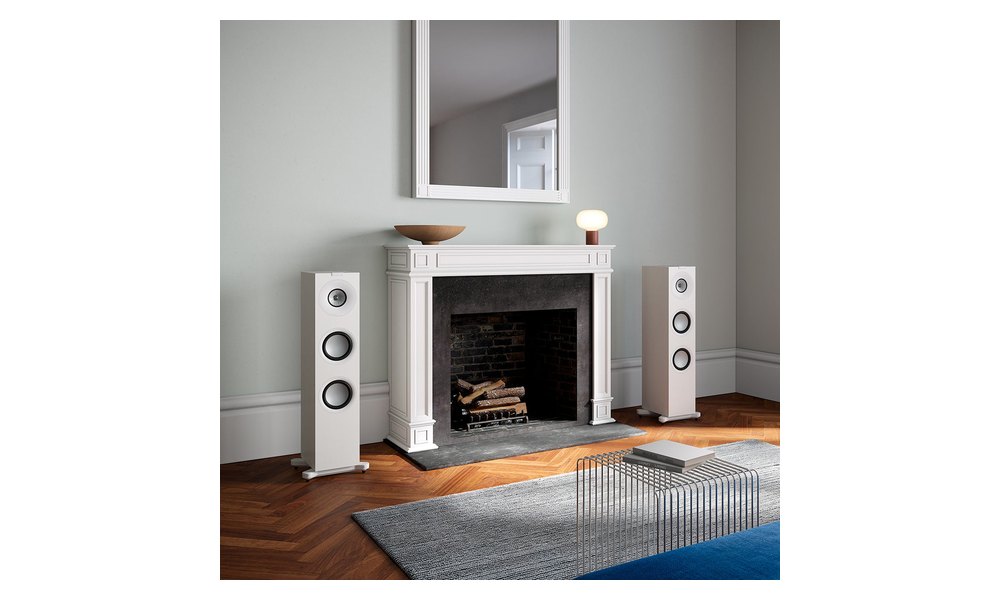
The Q7 Meta suits rooms of about 15 to 25 m². In small rooms its strong bass can quickly become too much; more distance from the wall or a lower level helps. A listening distance of 2 to 3 metres works well, with a similar spacing between the speakers. Because the Uni-Q radiates treble and midrange from one point, the two blend well even at short listening distances. On a speaker of this height, the tweeter sits roughly at the ear height of a seated listener, so no tilting is needed.
Care and grilles
The Q7 Meta has fabric grilles in front of the drivers. For the best treble reproduction, it is worth removing them for focused listening, since any grille slightly affects the sound. In everyday family life, the grilles protect the delicate aluminium cones from curious fingers. Dust on the cabinet comes off with a soft, dry cloth; the cones themselves should not be touched.
Placement and amplification
The Q7 Meta stands on a plinth that improves stability. Because KEF quotes in-room bass down to 28 Hz, the speaker should have some distance from the rear wall, and corners should be avoided so the bass does not boom. A good starting point is 40 to 60 cm from the rear wall; then move in small steps until bass and voices sound balanced. Slight toe-in towards the listening seat stabilises the centre; thanks to the Uni-Q, the speaker is less sensitive to this than many rivals.
Because of the 3.2 Ω impedance minimum, the amplifier should be stable into 4 Ω. Integrated amplifiers from about 50 W into 8 Ω with a strong power supply are a good match, for example from the Premium tier of our best amplifiers list. Very small amplifiers are fine for quiet music but quickly hit their limits at higher levels.
Stereo and home cinema
Alongside the floorstanders, the Q Meta series includes bookshelf speakers, a centre and effects speakers. If you start with the Q7 Meta as a stereo pair, you can later build a home cinema system from the same series. Because the Uni-Q works similarly in every model, the speakers match tonally. For pure music systems with a turntable, the stereo pair remains the main use.
The Q7 Meta in a vinyl system
With its warm, full voicing, the Q7 Meta pairs well with Starter and Premium tier turntables. Because the speaker reaches deep into the bass in a room, a subsonic filter in the phono stage is useful with warped records. The turntable should not sit on the same furniture as the speakers. Suitable decks are in our best turntables list, phono stages in the best phono preamps list.
Strengths and limits at a glance
- Strength: Uni-Q coaxial driver with MAT for a stable image even off-centre.
- Strength: warm voicing that suits long sessions, according to the press.
- Strength: powerful bass for a one-metre-class speaker.
- Limit: 3.2 Ω impedance minimum, needs a current-capable amplifier.
- Limit: less analytical than neutral monitors, gently falling treble.
- Limit: in small rooms under 15 m² the bass can feel too strong.
Who it suits
The Q7 Meta suits listeners with ordinary living rooms who want a compact floorstander with full sound and a stable image, and who also want to use the system for films. It is less suited to listeners who prefer a strictly neutral, analytical sound, and to weak amplifiers.
Compared with alternatives
- KEF Q11 Meta: the larger sibling with more cone area for bigger rooms.
- DALI Oberon 7: similarly priced, with a different sonic character.
- Triangle Borea BR08: French alternative with high sensitivity.
- Wharfedale EVO4.3: with an AMT tweeter.
All models are listed with index and price in our best floorstanding speakers list.
More questions about the KEF Q7 Meta
Q7 Meta or Q11 Meta?
The Q11 Meta has more woofers and is larger. For rooms up to about 25 m² the Q7 Meta is enough; in larger rooms the Q11 Meta plays with more authority.
Do I need a subwoofer?
For music in ordinary living rooms, usually not. For home cinema, a subwoofer can add the deepest effects.
Which amplifier fits?
An integrated amplifier that is stable into 4 Ω. KEF recommends 15 to 200 W.
Can I run the Q7 Meta from an AV receiver?
Yes, provided the receiver is rated for 4 Ω speakers. Many receivers have a menu setting for this. For very high levels in multichannel use, a stereo integrated amplifier or a strong power amplifier for the front pair is the more stable solution.
How close to the wall can the speaker stand?
That depends on the room. As a rule of thumb, allow 40 to 60 cm from the rear wall. Closer placement makes the bass fuller but also less precise.
Is it worth paying more than for the previous series?
According to the press, the biggest difference is the cleaner treble thanks to MAT. If you find the older Q Series cheaply used, you get similar bass foundations, but not the new Uni-Q generation.
Verdict
The Q7 Meta brings KEF's Uni-Q with MAT to a compact floorstander with powerful bass. The press praises its pleasant, full voicing and sees it as a very good choice for newcomers. If you own a current-capable amplifier and want a floorstander for an ordinary living room, this is a balanced Premium tier option. Before buying, check room size, distance to the rear wall and whether your amplifier handles 4 Ω; then the Q7 Meta shows its strengths without the bass dominating the room.