
Over-ear headphones · AI analysis · Expert, rank 1
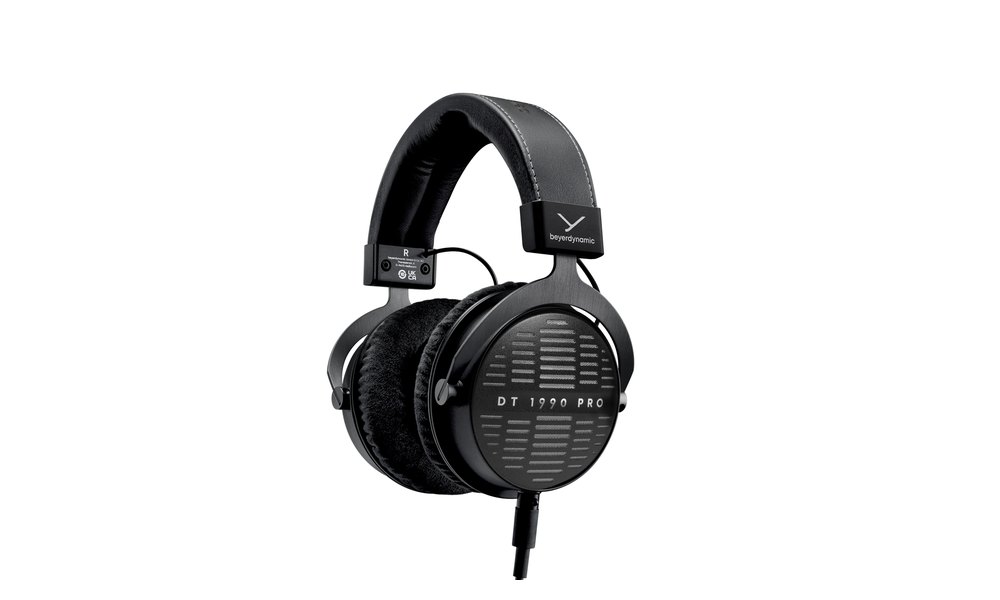
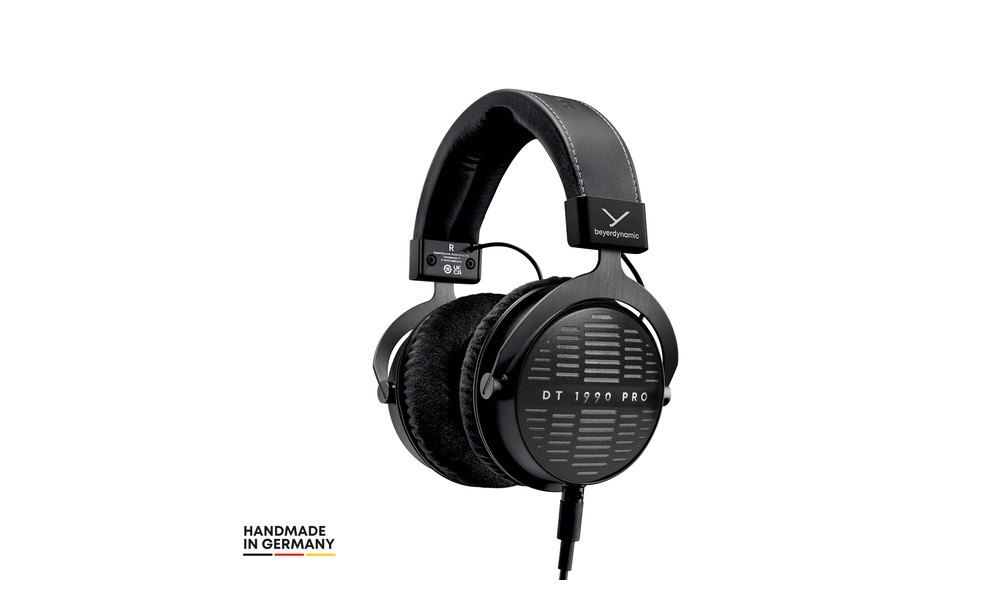
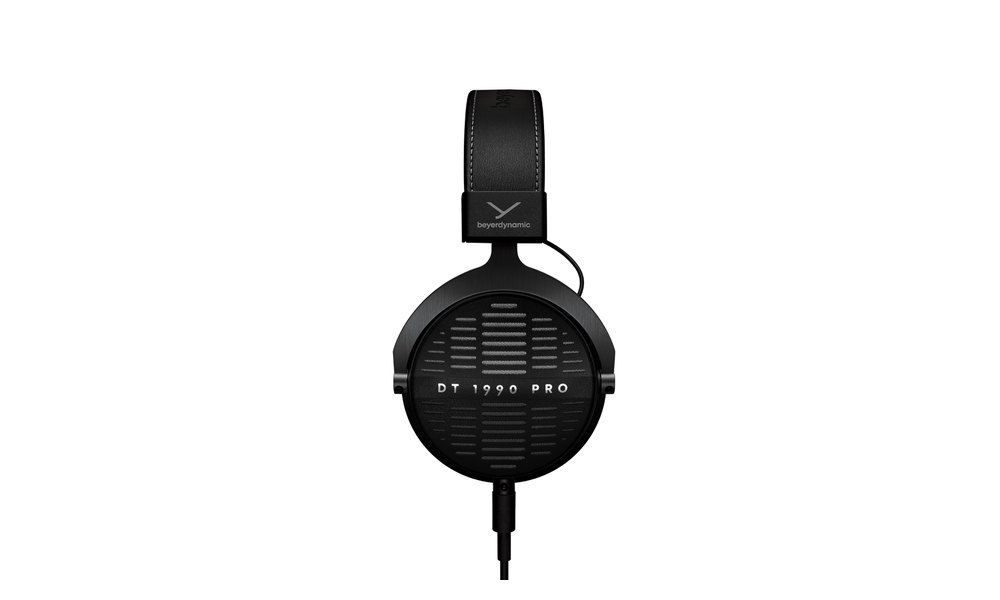
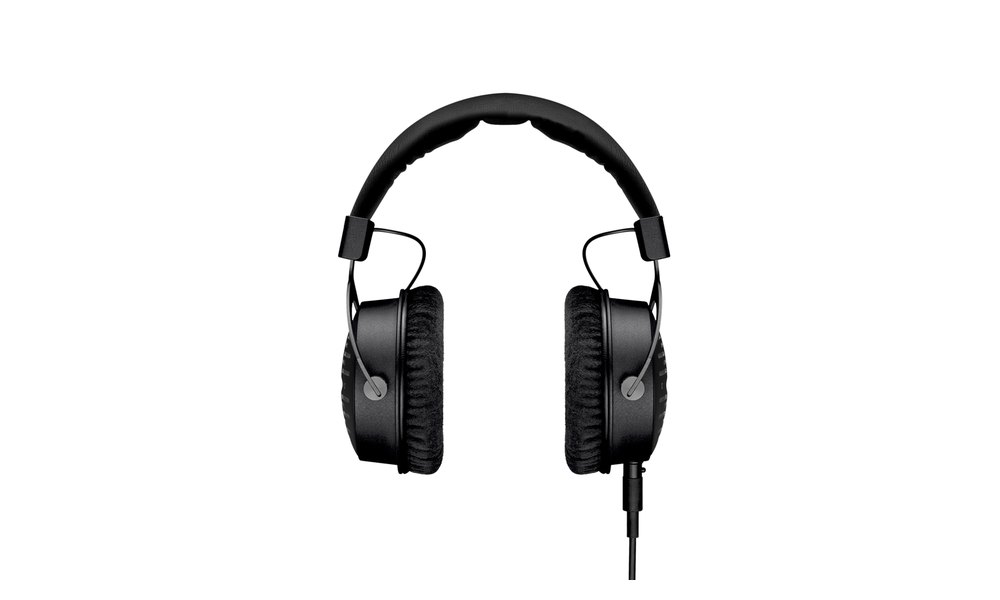
beyerdynamic DT 1990 PRO MKII: Analysis
AI analysis (research): open-back, 30 Ω, 94 dB SPL (1 mW/500 Hz) — manufacturer specifications, measurement sources and retailer prices, no listening test.
Summary
beyerdynamic DT 1990 PRO MKII (open, 30 Ω): dynamic (TESLA.45). Price: 539 € · price as of Sept 2026. The DT 1990 PRO MKII has TESLA.45 drivers, 30 Ω and two ear-pad sets (Producing / Mixing & Mastering). SoundGuys measures bass boost and distinctive treble at 7–8 kHz.
Value-for-money Vinyl BotPro Champion Best value-for-money estimate of the tier on the data basis (no listening test).
Assumptions
- Prices: consumer prices incl. VAT, as of Sept 2026 (manufacturer or retailer page); they may change
- Details from the manufacturer’s website or datasheet, or the retailer’s page; availability may vary by variant
- No measurements or listening tests of our own; statements about sound reflect published measurements and reviews
Specs (public / manufacturer)
| Design | open-back |
|---|---|
| Driver type | dynamic (TESLA.45) |
| Impedance | 30 Ω |
| Sensitivity | 94 dB SPL (1 mW/500 Hz) |
| Weight | 376 g without cable |
| Cable / connector | Two detachable cables: 3 m straight and 5 m spiral, Mini-XLR; adapter 6.35 mm |
| Price guide | beyerdynamic Europe €539 (regular €549) · Price as of Sept 2026 |
Manufacturer specifications (beyerdynamic)
| Headphone type | open, circumaural; TESLA.45 driver |
|---|---|
| Impedance | 30 Ω |
| Sensitivity | 94 dB SPL (1 mW / 500 Hz) |
| Frequency response | 5–40,000 Hz |
| Cable | 3-pin XLR, 6.35 mm jack; 3 m straight and 5 m coiled cable |
| Weight | 376 g (without cable) |
Source: beyerdynamic – official specifications · As of 16 October 2026 · subject to change by the manufacturer
Amp compatibility
30 Ω · 94 dB SPL (1 mW/500 Hz) · open-back.
30 Ω, 94 dB: designed for many devices, according to the manufacturer; a strong headphone output makes sense for good level reserve.
Headphone output on an integrated amplifier: according to their manufacturers, several models in the amplifier top list have a headphone output, including the Naim Nait XS 3, Hegel H190v, NAD C 368, McIntosh MA352, Rega Elicit MK5 and Yamaha A-S501. We have not checked the output power and output impedance of these outputs; the impedance and sensitivity above help with classification. For the signal path from the turntable: phono preamps · turntables.
Scores in detail
Vinyl BotPro Index: 83 (Expert 70–84) · Sub-scores 0–10 from sound data basis, build quality and comfort, drive and amplifier compatibility, and value for money (weights 35/20/15/30) · Guidance only, not a lab value.
Strengths
- Two upholstery sets and two cable
- High repairability (manufacturer specification)
- Calmed treble to predecessor (manufacturer)
Weaknesses
- Treble at 7–8 kHz according to measurement sources further distinctive
- Sensitivity only 94 dB
Analysis: beyerdynamic DT 1990 PRO MKII in detail
Scope and sources
This analysis adds manufacturer data and three dated, independent international texts on the beyerdynamic DT 1990 PRO MKII to the short overview above. Vinyl BotPro compiled it from the sources named here; VinylCination has not heard or measured these headphones. The basis is the official product page, still reachable on 12 November 2026 [1], Christian Thomas’s SoundGuys review of 9 March 2025 (6.4), with lab work and a listening section [2], Alex Schiffer’s Major HiFi listening review of 27 November 2024 [3], and Sam Inglis’s Sound On Sound review (January 2025), which treats the open MKII together with the closed DT 1770 PRO MKII [4].
All three texts meet the test of an international, independent listening report. SoundGuys adds measurements against its own target curves for both supplied pad sets. Sound On Sound offers a long technical conversation and a listening section, but Inglis had not heard the original DT 1990 PRO; that reservation is kept in view. Forums, shop copy and announcements do not count. The existing short overview remains research without a listening test of our own.
Place in the range
The DT 1990 PRO MKII is the second generation of beyerdynamic’s open flagship studio headphone, made in Heilbronn, the counterpart to the closed DT 1770 PRO MKII, with the new TESLA.45 driver. In our list it holds the Expert-tier Value-for-Money badge. That champion label is an AI assessment from the sources in front of us, not a listening session of our own, and it does not cancel the treble prominence SoundGuys names clearly.
The product page quotes acoustic engineer Ante Mihalj: the aim was a more balanced tuning, with slightly reduced highs against the predecessor, because modern productions often have very complex treble. That is a manufacturer statement, not a press listening finding. Sound On Sound describes the MKII as outwardly identical to the first DT 1990 PRO, but a very different story inside. A later model does not inherit this text.
Driver, pads and manufacturer data
The existing page and the product page quote an open dynamic design, 30 Ω, 94 dB SPL (1 mW/500 Hz), the TESLA.45 driver, two velour pad sets (Producing, fitted as standard, with a slight bass lift and many small holes on the back; Mixing & Mastering with exactly four holes), a fontanelle recess in the headband, mini-XLR, a straight 3 m cable and a 5 m coiled cable, and manufacture in Heilbronn [1]. These are manufacturer figures, not measurements of our own. The existing table is left unchanged.
Sound On Sound explains that the TESLA.45 reverts to a more conventional layout with the magnet inside the voice coil, still exceeds 1 T of flux density, and is designed to work in both the open and closed shells. Swapping pads is simple on paper, but not something Inglis would want to do regularly. Major HiFi stresses the drop to 30 Ω from the 250-ohm original: the MKII can be driven from almost any 3.5 mm or quarter-inch socket. The product page also claims extremely low distortion and precise bass down to the lowest octaves; that remains a manufacturer statement.
Two sound signatures via the pads are the central feature. SoundGuys measures the difference mainly in the bass: the stock Producer pads have a lift in the lows, the Mixing pads a ruler-flat bass and midrange; the very strong highs remain in both cases. The product page describes the same pair as a fuller Producing sound with a slight bass boost and a Mixing & Mastering variant. We align the names without turning the holes on the back into a measurement of our own.
What the specialist press heard and measured
Christian Thomas (SoundGuys, 9 March 2025, 6.4) sees the MKII as building on the previous version’s success, chiefly through the alternative tunings. Treble-sensitive listeners, though, may want to keep looking; content creators, and perhaps gamers with money to spend, might find a comfortable ally. Likes: build quality, removable pads and cable, cable choices, low power need. Dislikes: very prominent treble, mass, mini-XLR cables that are hard to replace. In the measurements the highs sit well off both the Headphone Preference curve and the Studio curve; the spike around 8 kHz is tough to ignore even if it is relatively narrow. Many will want to equalise the highs. The Producer pads help, because those strong highs are quite overpowering at volume; the Mixing pads have the flatter bass. The 6.4 score is a lab-and-listening verdict, not a buying recommendation from VinylCination. The author’s EQ presets are his suggestion, not ours [2].
Alex Schiffer (Major HiFi, 27 November 2024) finds the MKII close to the previous version in build, with a grille that has more slits and looks nearer the DT 990 Pro, and with the same firm, for him comfortable, velour pinch. The soundstage is there for stereo-accurate mixing and mastering: precise imaging, strict positioning, exact panning, strong channel separation, immersive without becoming holographic and distracting. Bass is dynamic, balanced and realistic, providing impact and rumble when the recording asks for it and almost no added low-end resonance otherwise; at its strongest it shows a deep vibration with clear detail. The midrange is the meatiest part of the signature, vibrant and clear, sometimes a little cold or clinical, but with transparency and weight, a definitive snap, and vocals that sit forward, more lush, yet still natural. In the treble, beyerdynamic’s familiar flavour remains: the MKII has a strong uptick, does not feel harsh to him, but you will hear sibilance, with a very cutting, edgy timbre and plenty of detail. Anyone who already took issue with the highs of the original DT 1990 will not be fundamentally relieved here [3].
Sam Inglis (Sound On Sound, January 2025) arrives without experience of the original DT 1990 PRO and places the MKII roughly with the Shure SRH1840, Neumann NDH-30 and Sennheiser HD 490 Pro, as plausible, slightly varied readings of an open studio headphone. The closed DT 1770 PRO MKII has a similar overall tonality with a slightly stronger smile curve. In the verdict: heavy-duty construction with many field-replaceable parts, a good case, pads that change the character somewhat, an attractive, non-fatiguing sound, comfortable even for long periods. The con: swapping the pads can be a struggle. A long conversation with the engineers explains the low-frequency aims, the role of pad geometry and the deliberate 30-ohm choice against older 250- or 600-ohm drivers; those are technical briefings, not second listening sentences [4].
The three texts meet on an open presentation aimed at mix and mastering work, and on the role of the two pad sets; they do not meet on how sharply the treble reservation is put. SoundGuys scores the 8 kHz spike and the departure from its targets firmly (6.4) and warns treble-sensitive listeners. Major HiFi hears sibilance and a cutting top, but is not himself bothered, having had no issue with the original’s treble. Sound On Sound speaks of an attractive, non-fatiguing sound. The Expert badge does not flatten that spread. Anyone who reads only the manufacturer line about slightly tamed highs at 8 kHz must take the measured and heard prominence in SoundGuys, and the sibilance in Major HiFi, just as seriously.
Setup and system
At 30 Ω the MKII, unlike the 250-ohm original, is aimed at many small outputs. That is an operating claim from Major HiFi and the product page, not a heard comparison of every phone. SoundGuys lists the low power requirement as a strength. Anyone who mainly wants stereo-accurate imaging and a bass that can be shifted with the pads will find that in Schiffer and in the SoundGuys traces. Anyone sensitive to a narrow, obvious 8 kHz spike must read the SoundGuys text and Schiffer’s sibilance note first, not the manufacturer’s promise of a more balanced top.
Swapping pads changes, on the measurements and on the manufacturer page, mainly the bass, not the treble. Inglis warns about the practical effort. Anyone who swaps often is buying that effort with the headphones. The closed DT 1770 PRO MKII is the sister model in Sound On Sound; sentences that apply only to it are not transferred. Mini-XLR cables are, after SoundGuys, hard to replace in daily use; that is a practical objection, not a sonic one.
Long sessions: Inglis finds the MKII comfortable even over long periods, and the product page stresses the fontanelle recess and breathable velour pads. SoundGuys lists mass as a weakness. The two sit side by side, without a wearing trial of our own.
Price and availability
The existing page note quotes €539 (as of September 2026, without guarantee). The product page showed €499, down from €549, on 12 November 2026. Those are two price points, not a single shop price and not a market check of our own. The box, after Major HiFi and the product page, includes a hard case, both pad sets, an adaptor and two cables.
In our list the DT 1990 PRO MKII is the Expert Value-for-Money champion. That follows from the sources and from the three secured international texts — including the 8 kHz spike, the sibilance and the two pad sets — not from a group comparison we have not heard. The existing comparison table is left untouched.
SoundGuys’ 6.4 and Sound On Sound’s non-fatiguing impression are not a contradiction we settle, but two protocols: one with a target curve and a narrow, obvious treble spike, and one with the impression of long, comfortable sessions. The champion placing presupposes the international listening texts, not the claim that all three writers softened the same treble reservation.
What we are not using
The short overview remains research without a listening test of our own. Sound On Sound had not itself heard the original DT 1990 PRO; comparisons with it therefore rest mainly on Major HiFi and on the manufacturer note, not on Inglis. Forum reports of worn-in pads, which SoundGuys mentions only as user comments, are left aside, as are sentences that apply only to the DT 1770 PRO MKII. There is no in-house track list and no measurement by VinylCination. Equaliser filters from the SoundGuys text are not adopted as a recommendation.
Conclusion of this analysis
The sources portray the beyerdynamic DT 1990 PRO MKII as an open dynamic studio headphone with a TESLA.45 driver, 30 Ω, 94 dB SPL (1 mW/500 Hz) and two velour pad sets, made in Heilbronn — according to the product page still reachable on 12 November 2026 and the existing table [1]. SoundGuys (Christian Thomas, 9 March 2025, 6.4) measures a bass lift on the Producer pads, flatter bass on the Mixing pads and a hard-to-ignore spike around 8 kHz, and warns treble-sensitive listeners [2]. Major HiFi (Alex Schiffer, 27 November 2024) hears precise imaging, realistic bass that can slam when asked, clear, sometimes cool mids, and a cutting top with sibilance, without himself being bothered [3]. Sound On Sound (Sam Inglis, January 2025) calls the sound attractive and non-fatiguing, with comfortable long-session wear and pads that are a struggle to swap [4]. In our list it is the Expert Value-for-Money champion — an AI assessment from the sources in front of us, not a listening report of our own.
Sources for this analysis
- beyerdynamic: DT 1990 PRO MKII product page (retrieved 12 November 2026). https://europe.beyerdynamic.com/p/dt-1990-pro-mk-2
- Christian Thomas: Beyerdynamic DT 1990 PRO MKII review, SoundGuys (9 March 2025, 6.4). https://www.soundguys.com/beyerdynamic-dt-1990-pro-mkii-review-133646/
- Alex Schiffer: Beyerdynamic DT 1990 Pro MKII Review, Major HiFi (27 November 2024). https://majorhifi.com/beyerdynamic-dt-1990-pro-mkii-review/
- Sam Inglis: Beyerdynamic DT 1990 PRO MkII & DT 1770 PRO MkII, Sound On Sound (January 2025). https://www.soundonsound.com/reviews/beyerdynamic-dt-1990-pro-mkii-dt-1770-pro-mkii
Created by AI (Vinyl BotPro) from the sources named; no listening tests or measurements of our own. Detailed human fact-checking is still outstanding.
Comparison models
| Meze Audio 109 PRO | open-back · 40 Ω · 799 € |
|---|
System matching
Works well with
- Headphone amplifier or strong output
- Who uses upholstery variants
Less suited
- Weak outputs
Technology in detail
Open-back studio headphones with two sets of pads and a calmer treble than the predecessor. Type: open, transducer: dynamic (TESLA.45), impedance 30 Ω, sensitivity 94 dB SPL (1 mW/500 Hz), weight 376 g without cable. Cable: Two detachable cables: 3 m straight and 5 m spiral, mini XLR; adapter 6.35 mm. 30 Ω, 94 dB: designed for many devices, according to the manufacturer; a strong headphone output makes sense for good level reserve.
What the specialist press says
SoundGuys measures raised bass with the DT 1990 PRO MKII and a distinct treble at 7–8 kHz; the two included cushions vary bass and midrange, which remains beyerdynamic-typical high-tone concrete. Major HiFi and Sound On Sound see better transparency and space than on the first DT 1990 PRO.
Beyerdynamic itself names a more balanced tuning as the goal, with slightly tamed treble at 8 kHz. With 30 Ω, the MKII is easier to operate than the 250-Ω-predecessor.
VinylCination presents this here as an AI summary of the specialist press, with no claim of a partnership.
Who is it for?
For listeners who want an open studio headphone with pad variants and swappable cables on a powerful headphone output.
The special features of this analysis
This AI analysis brings together manufacturer specifications, technical data and the verdicts of the specialist press in a compact assessment. It shows where the sources agree, which strengths come up again and again, and which system the product suits best. Prices as of Sept 2026.
How the score comes about
Vinyl BotPro Index 0–100; Expert ~70–84. beyerdynamic DT 1990 PRO MKII: 83 (rank 1 in the tier). Weights 35/20/15/30 for sound data basis, build quality and comfort, drive and amplifier compatibility, and value for money. Rank is not a lab test; champion titles are AI assessments, not listening-test results. Details · Methodology.
Sources
- beyerdynamic — DT 1990 PRO MKII (manufacturer)
- SoundGuys — DT 1990 PRO MKII
- Major HiFi — DT 1990 per MKII
- Sound On Sound — DT 1990 PRO MKII & DT 1770 PRO MKII
Created by Vinyl BotPro (AI) · As of Sept 2026 · All information is provided without guarantee; prices change and manufacturer specifications may differ.
Read more: best over-ear headphones 2026 · What is hi-fi?