
Phono preamps · AI analysis · Master, place 7
Musical Fidelity Nu-Vista Vinyl S Review
AI analysis (research): nuvistor phono stage from the Nu-Vista line — Vinyl 2 circuitry in the slimmer S chassis, true balanced and discrete, four inputs, RIAA/Decca/Columbia — guidance from manufacturer data and international listening tests, no own listening test.
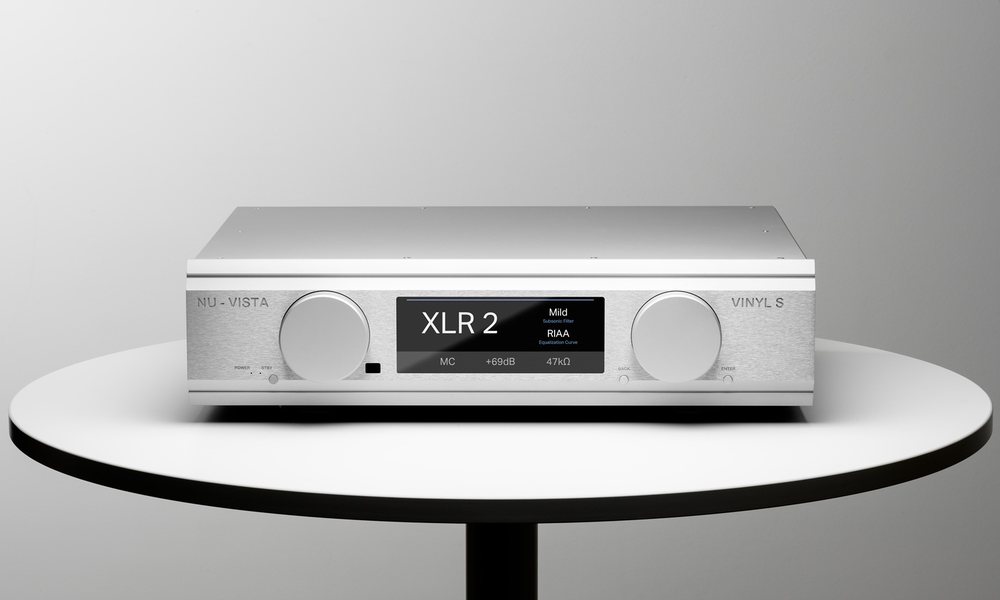
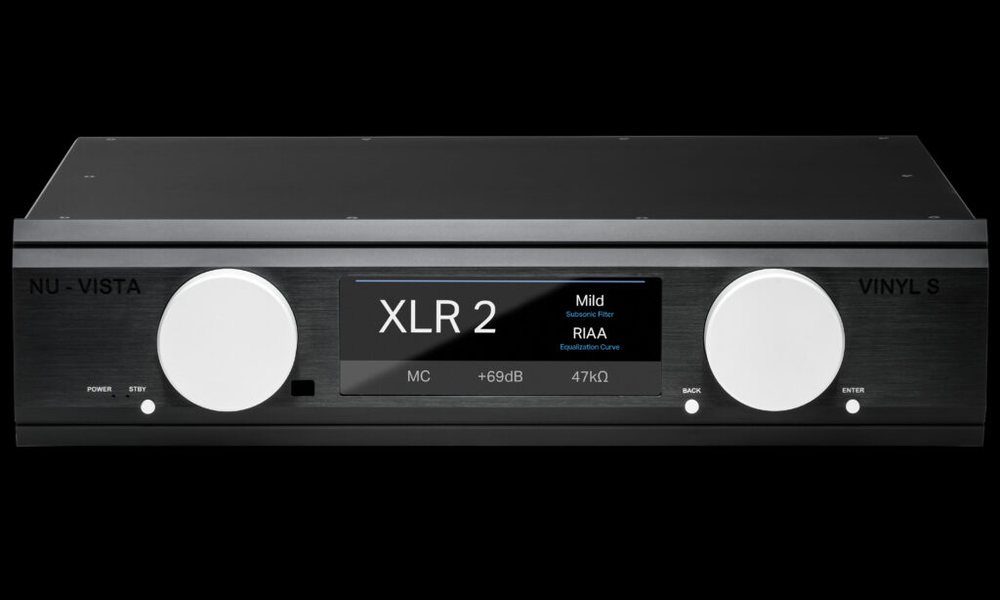
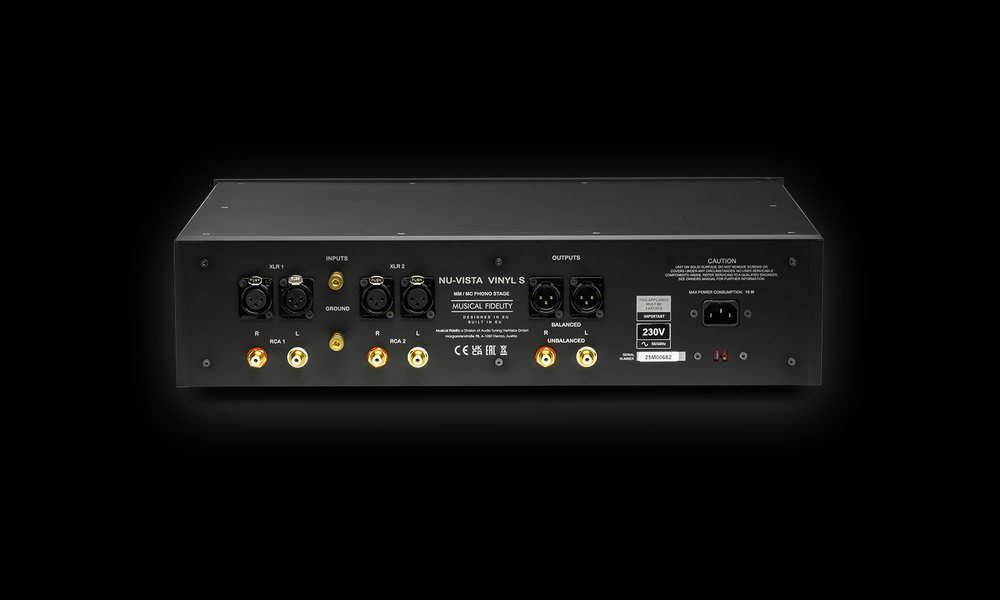
Summary
The Musical Fidelity Nu-Vista Vinyl S brings the circuitry of the Nu-Vista Vinyl 2 into a chassis around 45 % smaller: true balanced and discrete, three Class A gain stages with split passive equalisation, plus eight 7586 nuvistors as a balanced buffer stage. Four inputs (2× XLR, 2× RCA) with their own load and gain setting per input, equalisation to RIAA, Decca or Columbia, two-step subsonic filter, OLED display and aluminium remote. MSRP 5,990 € (as at 15.10.2026, without guarantee). In the Master field it lands with Index 91 on Rank 7 — level with the Pass Labs XP-17 (91), ahead of which it sits on value for money in a tie (more inputs and EQ curves at a similar price). The Sound and value Champions of the tier stay unchanged.
Assumptions
- MM or MC cartridges on one or more turntables; the XLR inputs are for MC only
- Line or XLR input on the preamp or integrated amp; a rack shelf for 483 mm width and around 14 kg
- No listening protocol; audio findings only from published international specialist press
Technical data (public)
| Type | MM/MC phono stage · true balanced, discrete · Class A · 8× nuvistor 7586 (buffer stage) |
|---|---|
| Gain MM | 40 / 43 / 46 / 49 dB (at XLR) · input impedance 47 kΩ · capacitance 50–400 pF |
| Gain MC | 60 / 63 / 66 / 69 dB (at XLR) · load 5 Ω to 47 kΩ · capacitance 400 pF fixed |
| Equalisation / filter | Split passive · RIAA, Decca, Columbia · subsonic off / mild (IEC) / standard (20 Hz, 18 dB/oct.) |
| Signal-to-noise / distortion | MM >101 dB(A), MC >82 dB(A) · THD MM <0.005 %, MC <0.008 % (manufacturer) · overload margin 32 dB |
| Connections | 2× RCA + 2× XLR in · 1× RCA + 1× XLR out (usable simultaneously) |
| Operation | Colour display with load readout, settings stored per input, aluminium remote |
| Dimensions / weight / consumption | 483 × 131 × 404 mm · 14 kg · max. 40 W, standby <0.5 W |
| Price guide | DE MSRP 5,990 € · approx. £5,499 / approx. $6,999 · silver or black · As of 15.10.2026 · without guarantee |
Manufacturer specifications (Musical Fidelity)
| Type | MM/MC phono stage · true balanced, discrete · Class A · 8× nuvistor 7586 (buffer stage) |
|---|---|
| Gain MM | 40 / 43 / 46 / 49 dB (at XLR) · input impedance 47 kΩ · capacitance 50–400 pF |
| Gain MC | 60 / 63 / 66 / 69 dB (at XLR) · load 5 Ω to 47 kΩ · capacitance 400 pF fixed |
| Equalisation / filter | Split passive · RIAA, Decca, Columbia · subsonic off / mild (IEC) / standard (20 Hz, 18 dB/oct.) |
| Signal-to-noise / distortion | MM >101 dB(A), MC >82 dB(A) · THD MM <0.005 %, MC <0.008 % (manufacturer) · overload margin 32 dB |
| Connections | 2× RCA + 2× XLR in · 1× RCA + 1× XLR out (usable simultaneously) |
| Operation | Colour display with load readout, settings stored per input, aluminium remote |
| Dimensions / weight / consumption | 483 × 131 × 404 mm · 14 kg · max. 40 W, standby <0.5 W |
Source: Musical Fidelity – official specifications · As of 16 October 2026 · subject to change by the manufacturer
Rating criteria in detail
The four criteria feed into the Vinyl BotPro Index with weights of 25/20/25/30. The index is scaled across all tiers (see Methodology); that is why we do not show individual sub-scores.
Strengths
- Vinyl 2 circuitry with nuvistor buffer at a little more than half the price
- Four inputs with their own load/gain — ideal for several turntables or tonearms
- Decca and Columbia curves for early pressings
- Four international listening tests with a clear consensus
Weaknesses
- No mono switch
- XLR inputs for MC only; MC capacitance fixed at 400 pF
- Despite the “S”, large and heavy (483 mm, 14 kg)
- In bass power the pricier Vinyl 2 stays ahead
Comparison models
| Luxman EQ-500 | Master Sound Champion, all-valve with SUT — Index 92, about 7,000 € |
|---|---|
| Pass Labs XP-17 | Same Index (91), one input, plenty of gain — similar price |
| Rega Aura MC | Pure MC reference from Rega — Index 90, a little cheaper |
| Musical Fidelity M6x Vinyl | In-house value Champion of the tier — Index 85, around a third of the price |
System matching
Works well with
- Systems with several turntables, tonearms or cartridges
- Low-output MC with loading needs, e.g. Ortofon MC Vertex (one review used the Vinyl S at 400 Ω)
- Collections with Decca or Columbia pressings
- Nu-Vista integrated amps 600.2/800.2 or balanced preamps
Less suited
- Lots of mono playback without a mono button on the preamp
- Small racks or sideboards
- Entry-level systems that cannot show the resolution
Specs & Features
According to the manufacturer, Musical Fidelity carries over the core circuitry of the Nu-Vista Vinyl 2 and saves cost through a new board and tube layout plus the slimmer “S” chassis. The phono stage works balanced from input to output: a low-noise input stage (20 or 40 dB), two correction stages and in between a passive equalisation in two parts. This is followed per channel by a balanced Class A stage with four nuvistors; the RCA and XLR outputs have their own drivers and can be used simultaneously. Loads and capacitances are switched by JFETs, gain by relays.
The power supply uses an encapsulated toroidal transformer, mains filtering with a DC blocker and a separate balanced supply per channel; every gain stage has a DC servo. Front and sides are milled from solid aluminium profiles and also act as shielding. It is built in Slovakia, with design work in Slovakia and Vienna. RRP 5,990 € (as of 15.10.2026, no guarantee), in silver or black.
What international reviewers heard
Several reviews from the international specialist press are available for the Musical Fidelity Nu-Vista Vinyl S. Here we summarise the overall picture in our own words; all sources are linked at the end of the page.
Sound character
- The international specialist press describes a detailed, open sound with an “in-the-room” presence that reinforces instruments without pushing them forward artificially. One review hears a powerful, confident delivery from the start that invites you to turn up the volume.
Tonal balance
- The voicing is described as rich rather than clinical: One review calls the balance rich, and Trei hears voices through an Ortofon MC 90X as warm and colourful. Another review highlights rich tone colours and very realistic attack.
Dynamics, bass & staging
- The reviewers describe the bass as deep, tight and well defined; on slap bass Trei even hears the fingers slide across the string windings. The stage stretches wide and deep, and only in sheer power and bass weight does the bigger Nu-Vista Vinyl 2 stay ahead.
Strengths
- Shared strengths are very quiet backgrounds and flexibility: four inputs, load and gain selection per input plus RIAA, Decca and Columbia. One international review praises that the MM and MC paths show the same open character without a change in sound.
Setup, room & partners
- Trei ran a Lyra Atlas Lambda, a Sumiko Oriole and an Ortofon MC 90X without intrusive noise; only right next to the tweeter was a faint hiss audible. Notes from the reviews: the XLR inputs are intended for MC only, there is no mono switch, and at around 14 kg the unit needs a full rack shelf.
Consensus & differences
- All four reviews see the Vinyl S as a successful offshoot of the Vinyl 2 that delivers much of its sound for little more than half the price. They differ in emphasis: A further review stresses the bass gap to the Vinyl 2, one review sees hardly anything more musical without double the budget, and another review recommends it only for already very resolving systems.
Research Consensus
The source base is broad: manufacturer page and data sheet, plus several listening tests from the international specialist press. Recurring patterns: rich, detailed voicing with a large stage; deep, tight bass; very quiet backgrounds; high flexibility in inputs and loading. The only clear gap: the Vinyl 2, at twice the price, has even more bass power. The verdict of the international specialist press is summarised in detail in the section What international reviewers heard.
In short: anyone in the Master band looking for a flexible phono stage for several turntables and early pressings, who wants valve colour without a classic valve stage, finds a strong candidate in the Nu-Vista Vinyl S. Anyone running just one cartridge and seeking maximum sonic purity per euro should also look at the Luxman EQ-500, Pass XP-17 or the in-house M6x Vinyl. VinylCination summarises these patterns as an AI summary of the press.
For whom / Matching
Cartridges
MM with 40–49 dB and selectable capacitance, MC with 60–69 dB and nine loads from 5 Ω to 47 kΩ. The 47 kΩ option on the MC path also suits low-output moving-iron cartridges. Connect low-output MCs balanced via the XLR inputs only if the tonearm cable allows it.
Turntable & chain
Four inputs allow up to four tonearms or turntables on one stage. Balanced tonearm cables make the best use of the true balanced design. At the output, RCA and XLR work simultaneously, for example for a preamp and a recorder.
Budget
At 5,990 € RRP (15.10.2026, no guarantee) the Vinyl S sits in the middle of the Master field. Turntable, tonearm and cartridge should be at a similar level — otherwise the resolution goes unused. For setup, it pays to choose gain and load impedance to suit the cartridge first and only then adjust finer details such as capacitance. Short, well-shielded cables between deck and phono stage keep noise low, and a position away from power supplies and power amplifiers avoids hum.
Upgrade
Coming from the M6x Vinyl or M8x Vinyl, the Vinyl S is the step into the Nu-Vista line; above it sits only the Nu-Vista Vinyl 2. With Index 91 it shares rank 7/8 with the Pass XP-17; Champion seals are not reassigned.
What makes this AI analysis special
AI summary published international listening tests and manufacturer data. VinylCination does not have its own listening tests or measurements — each source is linked. Prices and availability change (as of 15.10.2026, without guarantee).
Vinyl BotPro Score Logic
The Vinyl BotPro Index is cross-tier 0–100. Master sits at 85–97. The Nu-Vista Vinyl S receives 91 (Rank 7 Master): high technology/build shares (true balanced discrete, nuvistor buffer, split passive EQ), very high features (four inputs, three EQ curves, remote), high expected performance from four international listening tests and a good value weighting for the Master field. Tie with the Pass XP-17 (91) — per the methodology value for money decides, here in favour of the Vinyl S. Weights: tech/build ~25 · features ~20 · performance (expected) ~25 · value ~30. Rank ≠ lab score — no listening test. Details: Details on weighting · Methodology.
Sources
- Nu-Vista by Musical Fidelity — Vinyl S (manufacturer page)
- Musical Fidelity — Nu-Vista Vinyl S data sheet (PDF)
- Hi-Fi News — Musical Fidelity Nu-Vista Vinyl S
- Hi-Fi News — Nu-Vista Vinyl S Lab Report
- Analog Planet / Stereophile — Spin Doctor #36: Nu-Vista Vinyl S
- Haute Fidélité — Nu-Vista Vinyl S (review, FR)
- Jazz in Europe — Equipment Review Nu-Vista Vinyl S
- What Hi-Fi? — launch news Nu-Vista Vinyl S
Created by Vinyl BotPro (AI) · AI analysis · As of 15.10.2026 · Corrections: info@vinylcination.de · Prices without guarantee.
Read more: best phono preamps 2026 · What is hi-fi?