
Over-ear headphones · AI analysis · Premium, rank 4
Sennheiser HD 600: Analysis
AI analysis: open-back, 300 Ω, 97 dB SPL (1 V) — manufacturer specifications, measurement sources and retailer prices, no listening test.
Summary
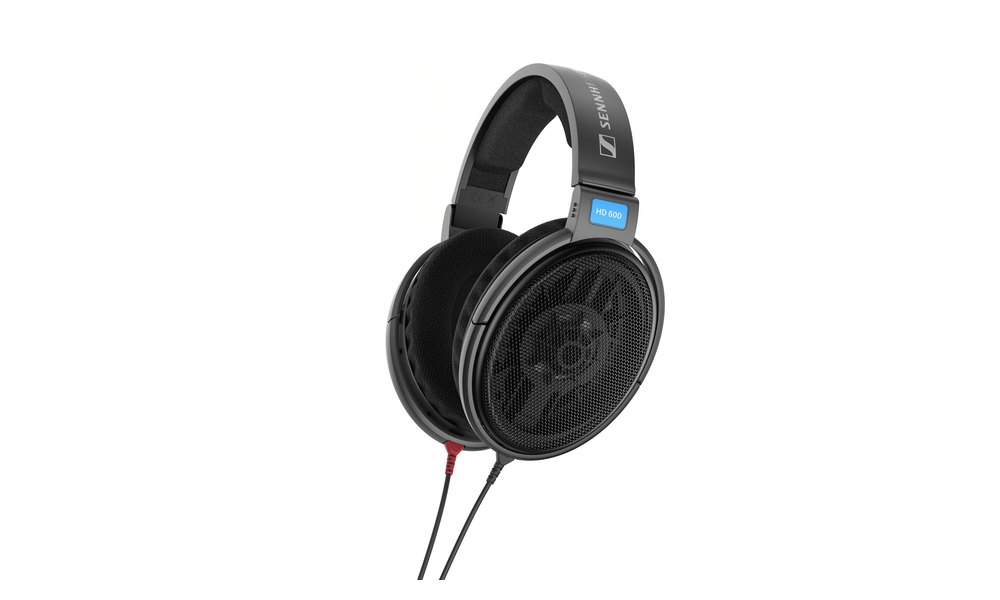
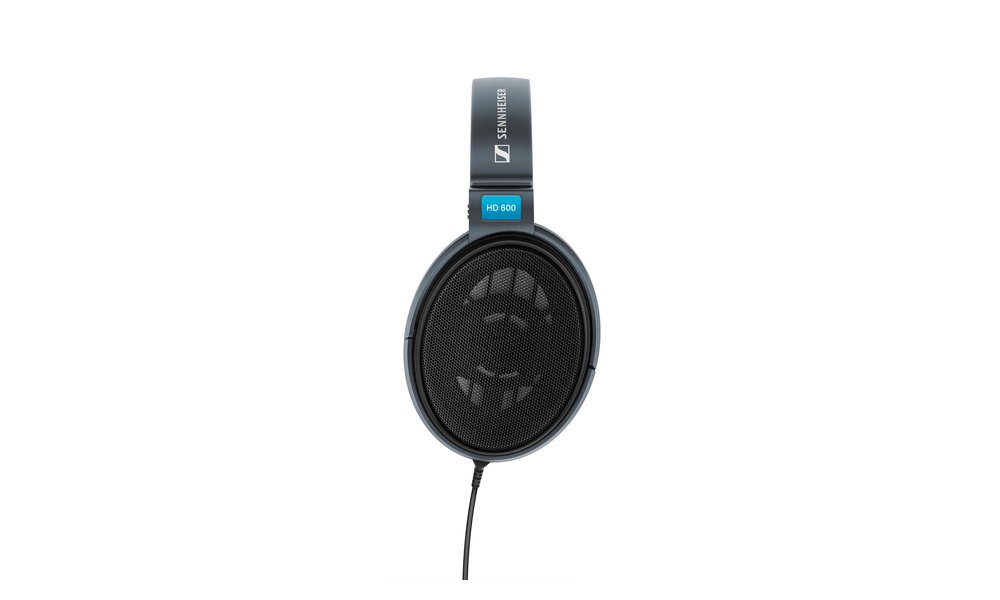
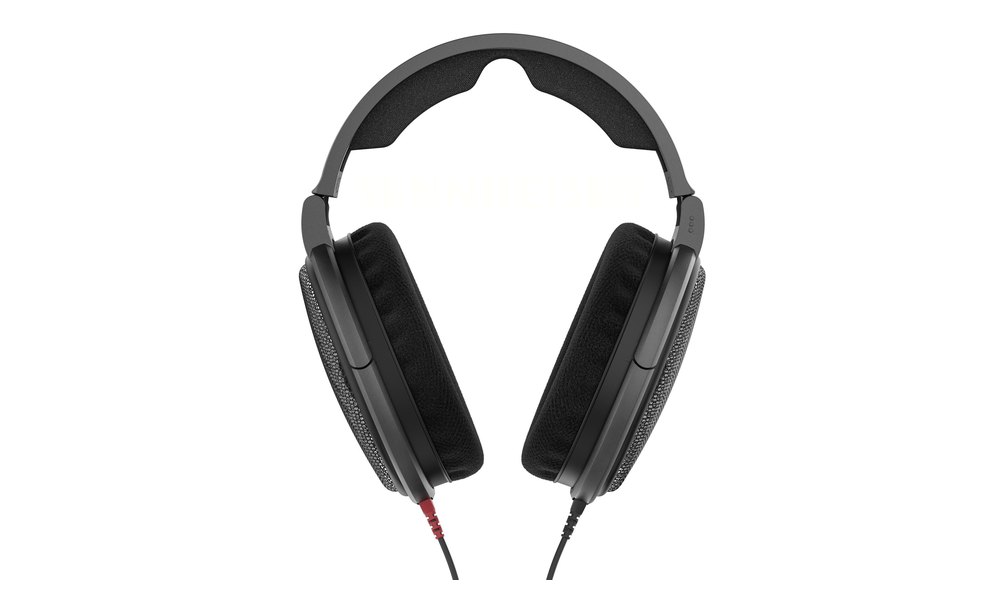
Sennheiser HD 600 (open, 300 Ω): dynamic. Price: €329.90 · price as of Sept 2026. The HD 600 is open-back with 300 Ω. The international specialist press and Reference Audio Analyzer show a largely linear range from 100 Hz to 4 kHz, a slight rise in presence and a sub-bass roll-off.
Sound Vinyl BotPro Champion Best sound data basis of the tier: the measurements and expert verdicts in the sources speak most clearly for this model. This is an AI assessment, not a listening test.
Assumptions
- Prices: consumer prices incl. VAT, as of Sept 2026 (manufacturer or retailer page); they may change
- Details from the manufacturer’s website or datasheet, or the retailer’s page; availability may vary by variant
- No measurements or listening tests of our own; statements about sound reflect published measurements and reviews
Specs (public / manufacturer)
| Design | open-back |
|---|---|
| Driver type | Dynamic |
| Impedance | 300 Ω |
| Sensitivity | 97 dB SPL (1 V) |
| Weight | 260 g |
| Cable / connector | Removable, 3 m, 3.5 mm; adapter to 6.3 mm |
| Price guide | Sennheiser €329.90 · Price comparison from approx. €278 · Price as of Sept 2026 |
Manufacturer specifications (Sennheiser)
| Headphone type | open, dynamic, circumaural |
|---|---|
| Impedance | 300 Ω |
| Sensitivity | 97 dB SPL (1 V) |
| Frequency response | 12–40,500 Hz |
| Distortion | not specified by manufacturer |
| Cable | 3 m, 3.5 mm jack, adapter to 6.3 mm |
| Magnetic field | 1.8 mT |
| Weight | 260 g |
Source: Sennheiser – official specifications · As of 16 October 2026 · subject to change by the manufacturer
Amp compatibility
300 Ω · 97 dB SPL (1 V) · open-back.
300 Ω: benefits from an amplifier with sufficient voltage swing; press measurements report an impedance rise to about 500 Ω at 100 Hz.
Headphone output on an integrated amplifier: according to their manufacturers, several models in the amplifier top list have a headphone output, including the Naim Nait XS 3, Hegel H190v, NAD C 368, McIntosh MA352, Rega Elicit MK5 and Yamaha A-S501. We have not checked the output power and output impedance of these outputs; the impedance and sensitivity above help with classification. For the signal path from the turntable: phono preamps · turntables.
Scores in detail
Vinyl BotPro Index: 64 (Premium 55–69) · Sub-scores 0–10 from sound data basis, build quality and comfort, drive and amplifier compatibility, and value for money (weights 35/20/15/30) · Guidance only, not a lab value.
Strengths
- Very well documented measurement curve
- Cable removable
- Proven, repairable construction
Weaknesses
- High impedance: needs voltage swing
- Sub-bass roll-off
- Cable 3 m, rather for stationary operation
Analysis: Sennheiser HD 600 in detail
Scope and sources
On the existing VinylCination page the Sennheiser HD 600 holds the Sound Vinyl BotPro Champion title in the Premium tier, with a Vinyl BotPro Index of 64 (analysis 09/2026). That placement stays the live page’s. VinylCination has neither listened to the HD 600 nor measured it in-house.
Two international listening sources on the exact model carry the analysis, widely separated in time and therefore read side by side on purpose. Stereophile (Wes Phillips, 9 February 1998, with a sidebar by Sam Tellig in the same issue) is the historic listening report of the production of the day: Phillips describes the HD 600 as a continuation of the HD-580 and the Jubilee; Tellig hears greater speed and resolution than on the HD-580. SoundGuys (Christian Thomas, 6 December 2024, later modified on 5 May 2025, score 6.5 out of 10) is the current-production report: after more than 25 years the HD 600 remains as close to a sure bet as this class offers, with very high comfort, a sub-bass roll-off and no isolation. German-language texts such as HIFI.DE alone would not suffice under t646u and are not used as a pillar here.
Sennheiser’s official EU page (retrieved 12 November 2026) lists an open dynamic design, frequency response 12 Hz–40,500 Hz, 97 dB SPL at 1 V, 300 ohms, distortion below 0.1 percent at 1 kHz and 1 V, a weight of 260 g, a circumaural fit and a detachable cable with a 3.5 mm plug and a 6.3 mm adapter. The live table on the existing page notes THD as “not stated by the manufacturer”; the official page retrieved on 12 November 2026 does state a figure below 0.1 percent. We do not change the table and we record THD as a figure from the official page of this retrieval. SoundGuys states 258 g, 300 ohms and 97 dB/1 Vrms; the 258 g sits beside the official 260 g.
Measurement pages that appear on the live page — for example Stereophile’s measurements of the HD 580, HD 600 and HD 650, or laboratories such as Reference Audio Analyzer — do not replace a listening report. Where the short overview mentions an impedance rise to about 500 ohms at 100 Hz, we treat that as a measurement note in the existing source set, without drawing a curve of our own in this pass.
Origin and place in the range
The HD 600 arrived in 1997; SoundGuys states expressly that the model has stayed on the market because it has made a great many listeners happy, and that competitors now exist, some for less money. Phillips, in 1998, fixes the lineage: after the HD-580 and the limited Jubilee with carbon fibre and steel grilles, the HD 600 became the non-limited, improved edition. Visible differences from the Jubilee were the marbled rather than woven carbon fibre and a darker grey on the stainless-steel screens. The fit was tighter, the unit seemed built to closer tolerances and stayed put once adjusted — Phillips even found them more comfortable for that reason.
In the Premium tier on the existing page the HD 600 stands at index 64 as the Sound champion, an open 300-ohm classic beside younger Premium headphones. This long analysis does not mix it with the Starter-tier HD 560S: 300 ohms versus 120 ohms, a 1997 reference line versus the later 500-series neutrality, a historic Stereophile text plus a current SoundGuys report versus a much younger model.
Phillips already stressed in 1998 that a walkperson can drive the HD 600 but that a dedicated headphone amplifier is needed to put it on song — the relatively large diaphragm wants to be taken in hand. That remains the technical constant of the 300-ohm design and is underlined by the official sensitivity of 97 dB at 1 V.
Construction and manufacturer data
Official data from 12 November 2026: frequency response 12 Hz–40,500 Hz, 97 dB SPL (1 V), 300 ohms, distortion below 0.1 percent (1 kHz, 1 V) on the retrieved manufacturer page, weight 260 g, open dynamic circumaural design, a detachable impedance-matched cable, 3.5 mm plug, 6.3 mm adapter. The live page also notes a magnetic field of 1.8 mT and a cable about 3 m long, a price orientation of €329.90 and street prices from about €278, as of September 2026. SoundGuys states 258 g, comfort 9.7, isolation 0.6 and a matte-grey current shell that has replaced the older speckled look. We keep 258 g as a SoundGuys figure beside the official 260 g.
300 ohms and 97 dB at 1 V explain the voltage demand: many phones and weak sockets will make sound; the reserve and control Phillips writes about arrive only with a dedicated stage. The open back explains SoundGuys’ almost non-existent isolation. The current matte-grey shell shows that ongoing production does not match the 1998 edition in every outward detail; Thomas’s listening report applies to that present version, Phillips’s and Tellig’s to the version of the day.
The live page’s short overview mentions an impedance rise to about 500 ohms at 100 Hz as a press measurement. We take that as orientation from the existing source set and do not change any table. We do not present an impedance curve of our own.
What the specialist press heard and measured
Wes Phillips (Stereophile, 9 February 1998) hears the HD 600 as a clear raising of the bar against the already fast, remarkably uncolored HD-580. Most listeners would notice it first in the bass: although both were rated as clean down to 16 Hz, the 580s sounded less punchy — Phillips wonders whether flimsier materials dissipated bass energy, without putting that out as a measurement. Very few loudspeakers could match the HD 600s for bass response; at the same time some people would miss the physical impact that low bass transmitted through the air imparts to the whole body. The 600s were extended and clean. Still more impressive to him was the freedom from noise, tizz and blur: no trace of “electronic” coloration, uncannily like live music. He mentions a recording of violinist Ida Levin in the Loretto Chapel, playing Schulhoff’s Sonata for Solo Violin; the continuation lies on page 2 of the report, which we do not hold as running listening text in this pass. We therefore record that session only as a listening context Phillips names, without inventing the sequel.
Sam Tellig, in the sidebar of the same issue, writes that the HD 600s are better than the HD-580s, offering greater speed and resolution, and are among the most resolving headphones he has heard, of any type. They lack the warmth, body and generosity of bass of the mahogany Grados. Those sentences are Tellig’s, not Phillips’s, and the Grado comparison is a difference of character, not a quality verdict on the Grados.
SoundGuys (Christian Thomas, 6 December 2024, modified 5 May 2025) scores 6.5 out of 10, comfort 9.7, and lists a sub-bass roll-off and the lack of isolation as weaknesses. Thomas describes the current HD 600 as a utilitarian open-back with a matte-grey shell that avoids many usual comfort traps: the weight and the contact area let him manage very long sessions without discomfort. The HD 600 is as close to a sure bet as this class offers; the price varies sharply with supply and season. Headphones in this class have had a long time to develop since 1997, and there are competitors, some cheaper. The detailed sound description in the text we have is brief and chart-heavy; we therefore rely on the points expressly stated (sub-bass roll-off, no isolation, high comfort, long market life) and do not reach for adjectives the text does not carry. Together with Phillips and Tellig that gives a picture across time: in 1998 already cleaner, punchier bass than the 580, high resolution, little electronic coloration, and a need for a headphone stage; in 2024/25 still a comfortable, sure open reference in the 300-ohm class, with a known sub-bass roll-off and no isolation.
Laboratories and the curves named on the live page (largely linear between 100 Hz and 4 kHz, a slight sub-bass drop, a presence rise around 3–7 kHz, an impedance rise near 100 Hz to about 500 ohms) remain measurement context. They sit roughly with Phillips’s clean bass and Thomas’s sub-bass roll-off, but they do not replace the listening texts.
Setup and system
300 ohms and 97 dB at 1 V fix the chain: a headphone stage or a sturdy amplifier output, not a hopeful run from a weak phone socket, even if Phillips allows that a walkperson can make sound that is not enough. Tellig’s high resolution and Phillips’s freedom from blur show themselves, in both historic texts, once the driver is taken in hand. SoundGuys’ current comfort score assumes long sessions — typical of a quiet seat, not of a train. The open back rules out isolation.
For vinyl systems the HD 600 typically means the headphone output after the phonostage, with enough voltage. A tube headphone stage may suit the purity historic listeners valued; Tellig and Phillips do not turn that into a required brand, and SoundGuys, in the passages we have, is not a tube report. We invent no preferred stage.
Anyone who silently equates the 1998 HD 600 with the 2024 HD 600 overlooks the changed exterior Thomas describes and the gap in time between the reports. We read both as reports of the same model name in different production years and keep the dates visible. Sub-bass roll-off and the lack of isolation are the standing limits; high resolution, comfort and the need for voltage are the standing strengths of the texts we have.
A comparison with the Starter-tier HD 560S is not a pillar of this analysis, but the ratings differ clearly (300 ohms versus 120 ohms, 97 dB at 1 V versus 110 dB, different weight and cable length). Anyone looking for neutrality at Starter money belongs in the 560S chapter; the HD 600 remains the 300-ohm classic of the Premium tier on the existing page.
Prices and availability
The existing page gives €329.90 as a price orientation and street prices from about €278, as of September 2026. SoundGuys, in the text we have, lists 399.95 US dollars and stresses sharp price swings. We take the live orientation as the local figure and the US figure as context from the report, without converting it into a live euro amount.
In the Premium tier the HD 600 stands at index 64 as the Sound champion. This long analysis does not re-score that index. It is not a buying appeal.
What we do not rely on
VinylCination has not listened to the HD 600 and has not measured it. German-language specialist press alone would not suffice under t646u. Measurement pages without a listening text are not a pillar. Page 2 of Phillips’s report is not in our hands as running listening text; we do not invent its contents. Tellig’s Grado comparison and Phillips’s bass and purity findings stay with their authors. The slight weight difference of 258 g versus 260 g, and the THD figure that appears on the official page of this retrieval, are recorded as such, without changing the live table.
Conclusion of the analysis
The Sennheiser HD 600 is an open dynamic over-ear officially rated at 300 ohms, 12 Hz–40,500 Hz, 97 dB SPL at 1 V and 260 g, at a price orientation of €329.90 on the existing page. Stereophile in 1998 (Wes Phillips and Sam Tellig) hears, against the HD-580, more bass punch, speed and resolution, little electronic coloration and a need for a dedicated headphone stage; Tellig also notes less warmth and bass generosity than with the mahogany Grados. SoundGuys (Christian Thomas, 6 December 2024) confirms the current HD 600 as a comfortable, sure open-back choice with a sub-bass roll-off and no isolation.
The long analysis supports the existing Premium Sound placement on the live page with the historic and the current listening report, without in-house measurement and without a buying appeal. The limits remain Phillips’s page 2, which we do not hold, measurement curves without listening text, and the difference between the 1998 and the present shell.
Sources
- Stereophile, Wes Phillips, 9 February 1998: https://www.stereophile.com/content/sennheiser-hd-600-headphones
- Stereophile, Sam Tellig, sidebar, 9 February 1998: https://stereophile.com/content/sennheiser-hd-600-headphones-sam-tellig-hd600s
- SoundGuys, Christian Thomas, 6 December 2024 (modified 5 May 2025): https://www.soundguys.com/sennheiser-hd-600-review-86269/
- Sennheiser official EU HD 600 page, retrieved 12 November 2026: https://eu.sennheiser-hearing.com/products/hd-600
- VinylCination, existing Sennheiser HD 600 product page (price orientation €329.90 / street from about €278, as of September 2026; Premium Sound, index 64).
Created by AI (Vinyl BotPro) from the cited sources; no in-house listening tests or measurements. Detailed human fact-checking is pending.
Comparison models
| Austrian Audio Hi-X55 | closed-back · 25 Ω · 299.95 € |
|---|---|
| Sennheiser HD 650 | open-back · 300 Ω · approx. €339–367 |
| beyerdynamic DT 900 PRO X | open-back · 48 Ω · 230 € |
System matching
Works well with
- Headphone amplifier or powerful amplifier output
- Long-term listening in quiet room
Less suited
- Smartphone/laptop without amplifier
Technology in detail
Reference classic for decades; sources cite neutral midrange and a slight sub-bass roll-off. Type: open, transducer: dynamic, impedance 300 Ω, sensitivity 97 dB SPL (1 V), weight 260 g. Cable: Removable, 3 m, 3.5 mm; adapter to 6.3 mm. 300 Ω: benefits from an amplifier with sufficient voltage swing; press measurements report an impedance rise to about 500 Ω at 100 Hz.
What the specialist press says
One international review documents the HD 600 in its Sennheiser measurements with a largely linear course between 100 Hz and 4 kHz, a slight drop in the sub-bass and an increase in presence between about 3 and 7 kHz. The impedance is nominally 300 Ω and rises by 100 Hz to around 500 Ω. Reference Audio Analyzer and DIY Audio Heaven confirm low distortion above 100 Hz and excellent channel matching.
A further review classifies it as neutral with a warm tendency. For vinyl systems this means above all: the headphone wants voltage. According to manufacturer specifications (97 dB at 1 V, 300 Ω), a headphone amplifier or a powerful amplifier output makes sense.
VinylCination presents this here as an AI summary of the specialist press, with no claim of a partnership.
Who is it for?
For listeners who want an established, well-measured open reference classic and have a suitable headphone amplifier or amplifier output.
The special features of this analysis
This AI analysis brings together manufacturer specifications, technical data and the verdicts of the specialist press in a compact assessment. It shows where the sources agree, which strengths come up again and again, and which system the product suits best. Prices as of Sept 2026.
How the score comes about
Vinyl BotPro Index 0–100; Premium ~55–69. Sennheiser HD 600: 64 (rank 4 in the tier). Weights 35/20/15/30 for sound data basis, build quality and comfort, drive and amplifier compatibility, and value for money. Rank is not a lab test; champion titles are AI assessments, not listening-test results. Details · Methodology.
Sources
- Sennheiser — HD 600 (manufacturer)
- Stereophile — Sennheiser HD 580, 600, 650 measurements
- Stereophile — Sennheiser HD 600
- SoundGuys — Sennheiser HD 600
- Sennheiser Support — HD 600 specifications
Created by Vinyl BotPro (AI) · As of Sept 2026 · All information is provided without guarantee; prices change and manufacturer specifications may differ.
Read more: best over-ear headphones 2026 · What is hi-fi?