
Floorstanding speaker · AI analysis · Premium, rank 5
Triangle Solstice 8 Review
AI analysis (research): 3-way floorstanding speaker from the new Solstice range, successor to the Esprit line and the Antal — new TZ2540MG horn tweeter, cellulose midrange, two 16 cm woofers, reflex port in the cast base, 91 dB — guidance from manufacturer data and international listening tests, no own listening test.
Summary
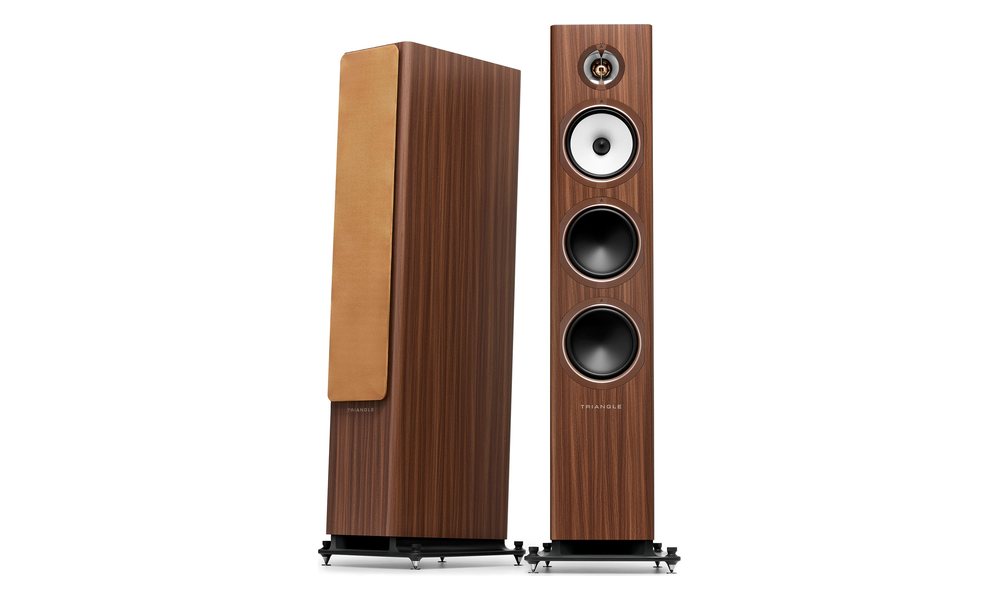
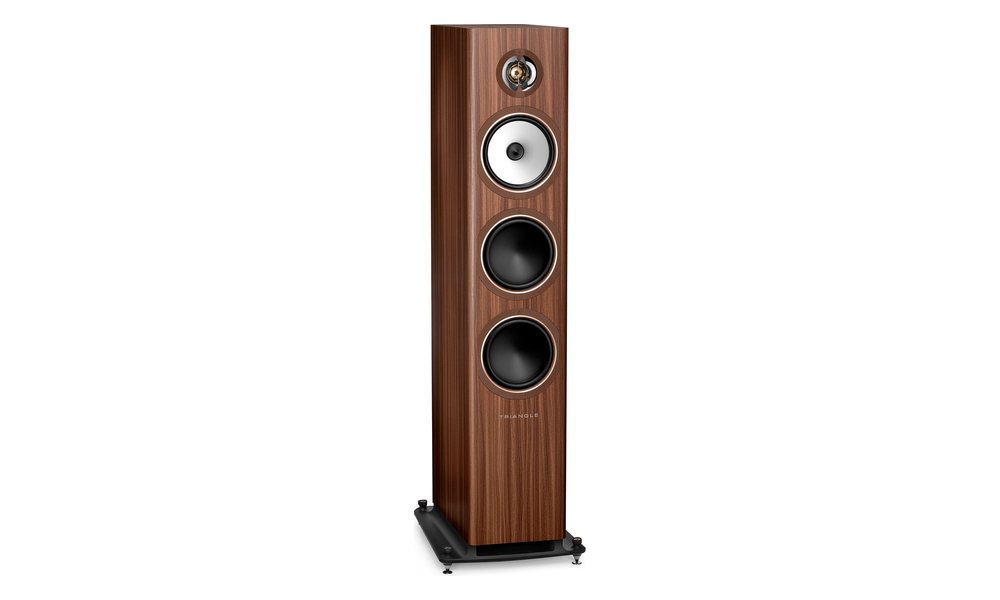
The Triangle Solstice 8 is the floorstanding model of the Solstice range presented in June 2026, which replaces the Esprit line at Triangle and directly follows the Antal. A 3-way bass-reflex system with a new 25 mm TZ2540MG horn tweeter (aluminium-magnesium dome), a 16 cm natural cellulose midrange and two 16 cm woofers without dust caps; the reflex port sits in the solid cast base, which also tilts the speaker back by 2°. With 91 dB sensitivity it is unusually easy to drive. RRP 1,999 € per pair (as of 16.10.2026, no guarantee). In the Premium field it lands at rank 5 with Index 66 — level with the DALI Oberon 5 (66), which stays ahead on a tie by value for money. The Sound and value Champions of the tier stay unchanged.
Assumptions
- Pair price in Germany according to Triangle, as of 16.10.2026
- Living room between 15 and 50 m² (manufacturer recommendation) with some distance from the walls
- Integrated amplifier with 60–200 W into 8 Ω according to the manufacturer; thanks to 91 dB, smaller amplifiers also suffice in medium-sized rooms
- No listening protocol; audio findings only from published international specialist press
Technical data (public)
| Type | 3-way floorstanding speaker · bass reflex with laminar reflex port in the base |
|---|---|
| Chassis | 1 × 25 mm aluminium-magnesium dome in a horn (TZ2540MG) · 1 × 16 cm cellulose midrange · 2 × 16 cm paper woofers without dust caps |
| Frequency response | 38 Hz–22 kHz (±3 dB) |
| Sensitivity | 91 dB |
| Impedance | 8 Ω nominal (min. 3.6 Ω according to the manufacturer) |
| Crossover points / crossover | 250 Hz and 3.7 kHz · bass 2nd order, midrange 2nd order, treble 3rd order · air-core inductors, MKT capacitors |
| Power handling / amplifier | 130 W RMS · recommended 60–200 W into 8 Ω |
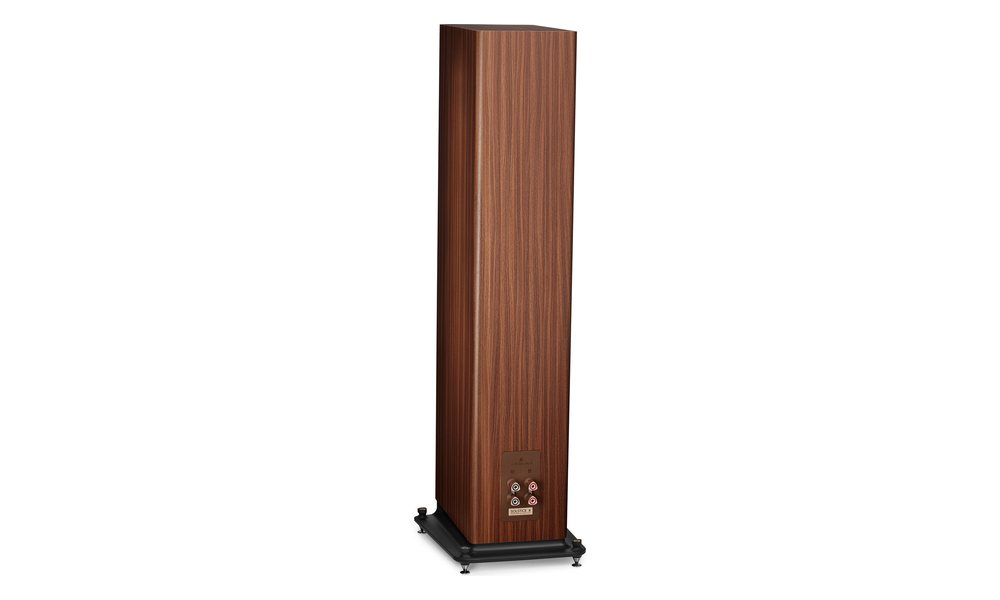
| Connection | Dual terminals for bi-wiring and bi-amping |
| Dimensions / weight | H 1,075 mm · W 308 mm · D 394 mm (each with base) · 30.4 kg per speaker |
| Finishes | Teak · Birch · White · Black Ash (colour-matched magnetic grille) |
| Price guide | MSRP 1,999 €/pair (DE) · approx. £1,999 / $2,799 · As of 16.10.2026 · without guarantee |
Manufacturer specifications (Triangle)
| Type | 3-way floorstanding speaker |
|---|---|
| Drivers | 1 × 25 mm magnesium alloy barrel tweeter · 1 × 16 cm cellulose midrange · 2 × 16 cm paper woofers without dust cap |
| Frequency response | 38–22,000 Hz (±3 dB) |
| Sensitivity | 91 dB |
| Impedance | 8 Ω nominal (min. 3.6 Ω) |
| Recommended amplifier power | 60–200 W RMS per channel into 8 Ω |
| Power handling | 130 W |
| Crossover frequency | 250 Hz / 3.7 kHz |
| Dimensions | 1,075 × 308 × 394 mm (H × W × D, with base) |
| Weight | 30.4 kg (with base) |
Source: Triangle – official specifications · As of 16 October 2026 · subject to change by the manufacturer
Rating criteria in detail
The four criteria feed into the Vinyl BotPro Index with weights of 25/20/25/30. The index is scaled across all tiers (see Methodology); that is why we do not show individual sub-scores.
Strengths
- 91 dB sensitivity: works even with small Class A and valve amplifiers
- Present, open midrange with cellulose midrange driver — voices take centre stage
- According to the AUDIO measurement a very even frequency response, also slightly off axis
- Solid base with reflex port, 2° tilt and spikes; dual terminals
Weaknesses
- Impedance minimum around 3.2 Ω at 110 Hz according to the AUDIO measurement — choose an amplifier with current reserves
- Bass quick and controlled rather than especially powerful
- Imaging not as precise as with considerably more expensive floorstanders
- 30.4 kg per speaker with base: plan for two people to set it up
Comparison models
| DALI Oberon 7 | Index 69, Sound champion Premium — 2-way with two 180 mm woofers, considerably cheaper, 88.5 dB |
|---|---|
| DALI Oberon 5 | Index 66, Value champion Premium — same Index, slimmer and less than half the price |
| Nubert nuLine 284 | Index 65 — same pair price, 3-way with three 150 mm drivers, 88.5 dB and 4 Ω |
| Triangle Borea BR08 | Index 62 — cheaper Triangle floorstander with a dome in a short waveguide instead of a horn |
System matching
Works well with
- Small to medium amplifiers, including Class A and valve (Steve Huff listened with 20 W Class A)
- Vocal, jazz and acoustic records where a present midrange matters
- Living rooms from 15 to 50 m², even with little distance from the wall (AUDIO)
Less suited
- Listeners looking for maximum deep bass and impact
- Very weak amplifiers without current reserves in the bass (minimum around 3.2 Ω)
- Already warm-sounding systems, if more treble sparkle is wanted
Specs & Features
According to the manufacturer, Triangle developed the Solstice range on a new technical platform, not as a refresh of the Esprit models. At its core is the TZ2540MG horn tweeter: a 25 mm aluminium-magnesium dome in front of a neodymium ring magnet with a rear absorption chamber, plus a one-piece phase plug and a “barrel” cut-out at the horn throat. According to Triangle, the horn profile follows an OS-SEW geometry (Oblate Spheroid Super Elliptical Waveguide) and is meant to spread the treble more evenly across the room. The 16 cm midrange uses an untreated natural cellulose cone glued from the rear so that a larger area radiates; the two 16 cm woofers have concave paper cones without dust caps. All drivers sit in new die-cast aluminium baskets.
The MDF cabinet is braced internally; each driver rests against a perforated internal brace via an EVA foam layer, which Triangle calls DVAS. The crossover divides at 250 Hz and 3.7 kHz and uses air-core inductors, MKT capacitors and cement resistors. The base is a cast iron honeycomb structure with a thick silicone layer: it decouples the speaker from the floor, tilts it back by 2° and houses the laminar reflex port. Spikes, lock nuts and floor protectors are included. It is developed in Soissons;, after checking with Triangle, the range is manufactured in China. In Germany the speaker has been available since July 2026 for 1,999 € per pair (as of 16.10.2026, no guarantee).
What international reviewers heard
International listening reviews of the Triangle Solstice 8 are available. Here we summarise what the reviewers report – in our own words, with the source for each point.
Sound character
- Andrzej Kisiel (AUDIO) describes a close, direct, lively and detailed sound in which the midrange sits up front and the treble does not stand out. According to the manufacturer, the international specialist press calls the presentation strikingly realistic, with plenty of air, space and depth.
Tonal balance
- According to AUDIO, Triangle has almost reversed its old voicing with gleaming treble and emphasised bass: an expressive, natural midrange now dominates. One review hears a full, silky sound without any harshness on warm amplifiers and more air in the treble on neutral amplifiers.
Dynamics, bass & staging
- AUDIO describes the bass as springy, disciplined and well integrated, quick and rhythmic rather than massive. Another review highlights a substantial, clearly defined bass that does not linger. One international review finds it plentiful on warm amplifiers, but a touch loose.
Strengths
- The AUDIO measurement shows a frequency response that is unusually even for Triangle, with around 91 dB sensitivity and very small deviations slightly off axis. A further review praises the wide listening area and how easy the speaker is to drive.
Setup, room & partners
- AUDIO measures an impedance minimum of about 3.2 Ω at 110 Hz and classes the speaker as a 4 Ω load, although not a critical one. Even close to the wall it did not sound thick or heavy there. One review ran it just as easily on a 20 W Class A amplifier as on more powerful units.
Consensus & differences
- All three reviews see the Solstice 8 as a successful fresh start with very good value and praise its midrange and bass discipline. They differ on imaging and deep bass: Another review stresses the depth of the soundstage, one international review hears less precision than from pricier speakers, and AUDIO sees larger rivals ahead in deep bass.
Research Consensus
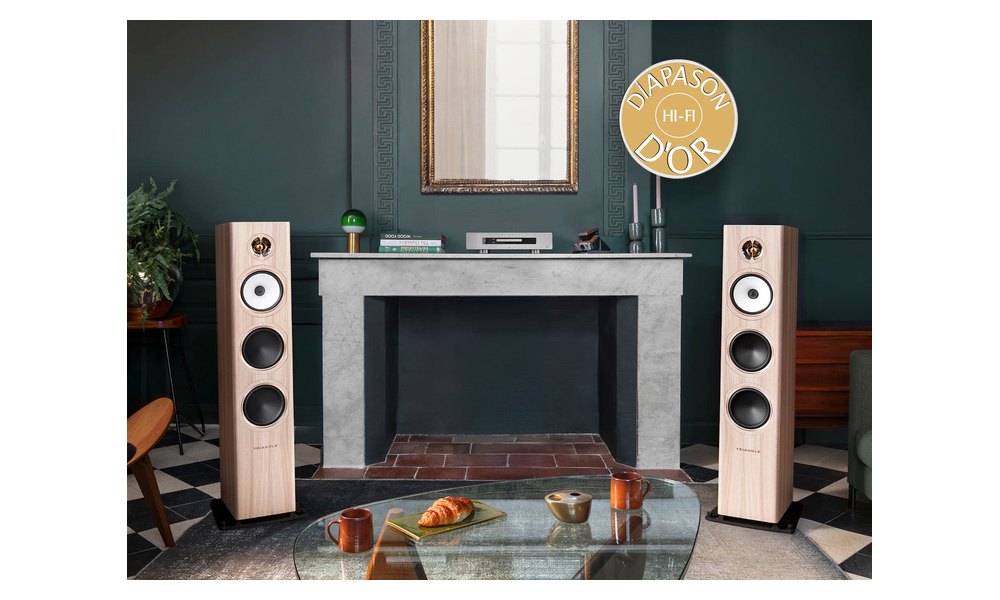
The sources are the manufacturer page and data sheet, the launch reports in the international trade press and three listening tests: AUDIO (Poland, with its own measurements), a first review (France, a further review d’Or award, here as reported by the manufacturer) and a second review (USA, with three amplifiers). Recurring patterns: a present, natural midrange; controlled, unobtrusive bass; treble that resolves finely without turning sharp; plus a speaker that is easy to drive and offers very good value. They differ on deep bass and imaging. The international listening tests in the section What the international specialist press hears are listed in detail.
In short: anyone looking for an easy-to-drive 3-way floorstander with a focus on vocals in the upper Premium band will find a strong candidate in the Solstice 8. Those mainly after deep bass or the best price should look at the DALI Oberon 7 and Oberon 5. VinylCination summarises these patterns as an AI summary of the trade press.
For whom / Matching
Amplifier
91 dB is a top value in the Premium field; one review ran the speaker without problems on 20 W Class A as well as on powerful solid-state amplifiers. The measured impedance minimum of around 3.2 Ω lies in the bass, where music carries the most energy — an amplifier with solid current delivery from the best-of list amplifiers (Premium) is the safe route. The dual terminals allow bi-wiring or bi-amping.
Turntable & phono
The present midrange brings voices and acoustic instruments on record up close; a balanced cartridge is a better choice here than one that already sounds bright. According to AUDIO the reflex port is tuned to 33 Hz and exits forwards from the base; with warped records a phono stage with a subsonic filter helps (best-of list phono preamps).
Room & placement
Triangle recommends rooms from 15 to 50 m². AUDIO found that the speaker does not sound thick or heavy even close to the wall. According to the measurement the best axis is at around 95 cm height, i.e. at seated ear level; the 2° tilt is matched to this. On parquet the rubber feet of the base are enough, on carpet use the supplied spikes.
Budget & upgrade
At 1,999 € per pair (as of 16.10.2026, no guarantee) the Solstice 8 sits in the upper third of the Premium price band, on a par with the Nubert nuLine 284 and within the price range of the KEF Q11 Meta. Coming from a Borea BR08, it is the step up to a horn and a cellulose midrange; above it at Triangle sit the French-made models for the 40th anniversary.
What makes this AI analysis special
AI summary published international listening tests and manufacturer data. VinylCination does not have its own listening tests or measurements — each source is linked. Prices and availability change (as of 16.10.2026, without guarantee).
Vinyl BotPro Score Logic
The Vinyl BotPro Index runs across all levels from 0–100. Premium sits at 55–69. The Triangle Solstice 8 receives 66 (rank 5 Premium): high technology/build shares thanks to the new horn tweeter, cellulose midrange and cast base, solid features for a passive speaker, high expected performance from three international listening tests with measurements and a good value-for-money weighting for a 3-way design. Tied with the DALI Oberon 5 (66) — per the methodology, value for money decides, here in favour of the considerably cheaper Oberon 5. The Solstice 8 sits ahead of the Nubert nuLine 284 (65) because of its easier load and the denser listening-test coverage. Weights: tech/build ~25 · features ~20 · performance (expected) ~25 · value ~30. Rank ≠ lab score — no listening test. Details: Details on weighting · Methodology.
Sources
- Triangle — Solstice 8 floorstanding speaker (product page DE, price and technical data)
- Triangle — Solstice 8 Hi-Fi Floorstanding Speaker (Specifications)
- AUDIO (PL) — Triangle Solstice 8 test with lab (06.08.2026)
- Triangle (manufacturer) — Diapason d’Or for the Solstice 8 (excerpts from Diapason)
- Steve Huff — Triangle Solstice 8 Review (08.09.2026)
- StereoNET — Triangle Solstice Speakers Mark A New Dawn Beyond ESPRIT (22.06.2026)
- What Hi-Fi? — launch report Triangle Solstice
Created by Vinyl BotPro (AI) · AI analysis · As of 16.10.2026 · Corrections: info@vinylcination.de · Prices without guarantee.