
Integrated amplifier · AI analysis · Expert, rank 4
Yamaha A-S1200: Analysis
AI analysis (research): analogue integrated amplifier from the HiFi series with floating and balanced design, 90 W/8 Ω, MM/MC phono stage and classic VU meters — specifications and retailer prices, no listening test.
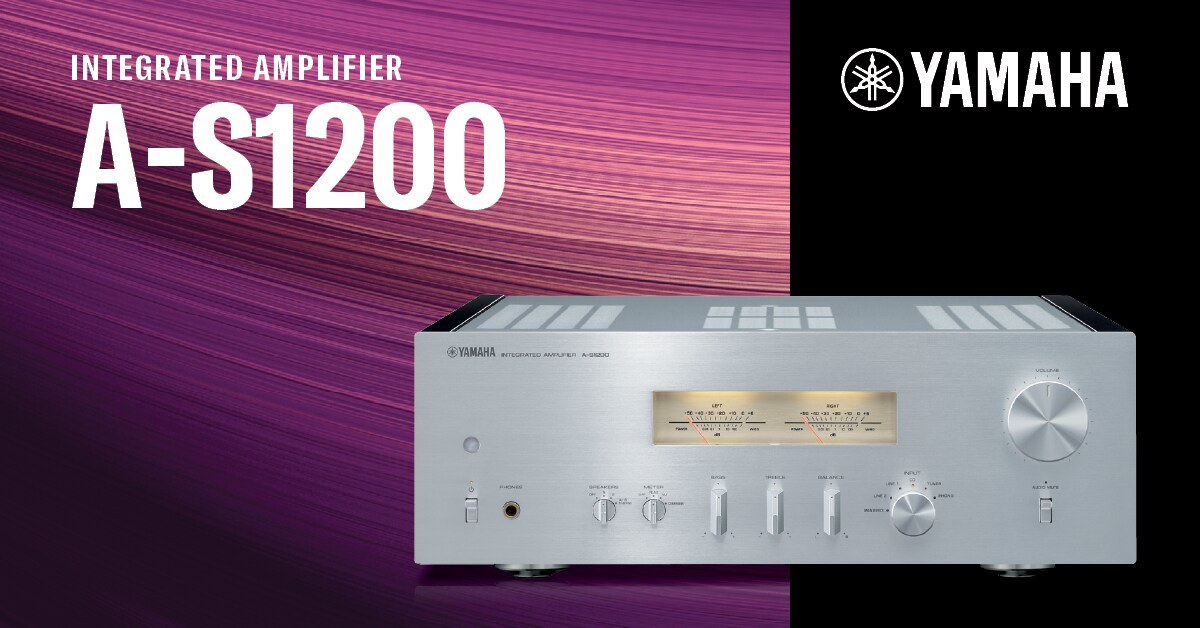
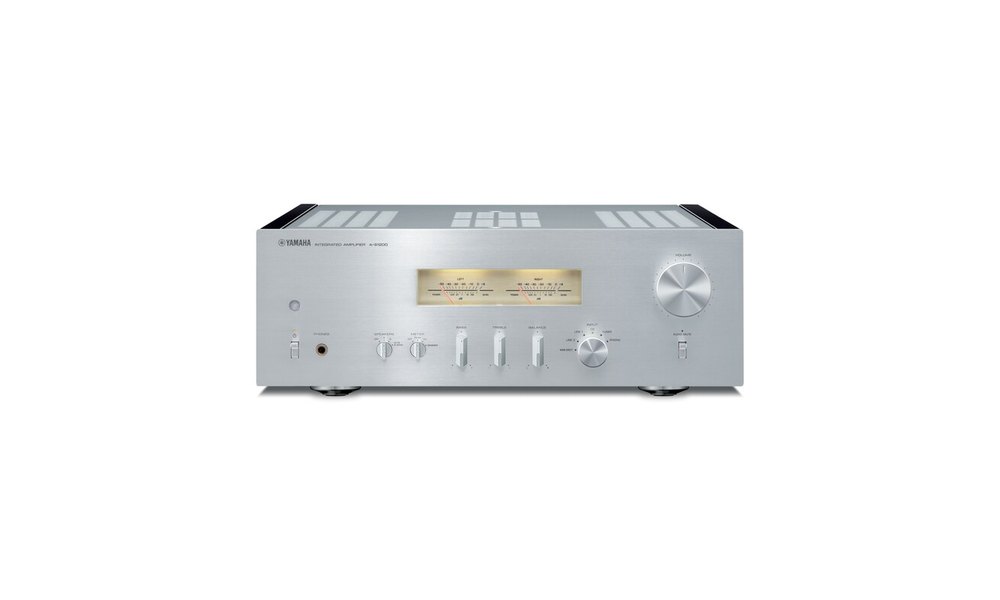
Summary
According to Yamaha, the A-S1200 deliberately remains analogue: 90 W + 90 W (8 Ω), floating & balanced design, MM/MC phono stage, pre-out/main-in and VU meters. Market price approx. €1,899–2,499. Sound champion of this tier for Vinyl+Line — DAC/Streamer external.
Assumptions
- Digital sources need external DAC/streamer
- MM/MC choice on phono correct
- Check the German price as of Sept 2026
Specs (public / manufacturer)
| Type | Stereo integrated amplifier · Floating & Balanced |
|---|---|
| Power | 90 W + 90 W (8 Ω) · 150 W + 150 W (4 Ω), each 20 Hz–20 kHz, 0.07% THD |
| Phono | MM/MC · Yes |
| Digital | No integrated DAC |
| Features | VU-meters · Toroid 625 VA · Pure Direct · Pre-Out |
| Price guide | market price approx. €1,899–2,499 (without guarantee) · Sept 2026 · Check the price date |
Manufacturer specifications (Yamaha)
| Rated output power (20 Hz–20 kHz, 0.07% THD) | 2 × 90 W into 8 Ω · 2 × 150 W into 4 Ω |
|---|---|
| Maximum power (4 Ω, 1 kHz, 0.7% THD, Europe) | 2 × 160 W |
| High dynamic power per channel (8/6/4/2 Ω) | 105 / 135 / 190 / 220 W |
| Damping factor | ≥ 250 (1 kHz, 8 Ω) |
| Frequency response | 5 Hz–100 kHz +0/−3 dB · 20 Hz–20 kHz +0/−0.3 dB |
| RIAA equalization deviation | ±0.5 dB (phono MM/MC) |
| Signal-to-noise ratio | Phono MC 90 dB · phono MM 96 dB · CD 110 dB |
| Input sensitivity | MC 150 µV/50 Ω · MM 3.5 mV/47 kΩ · CD 200 mV/47 kΩ · main in 1 V/47 kΩ |
| Transformer | 625 VA (toroidal) |
| Dimensions (W × H × D) | 435 × 157 × 463 mm |
| Weight | 22.0 kg |
Source: Yamaha – official specifications · As of 16 October 2026 · subject to change by the manufacturer
Scores in detail
Vinyl BotPro Index: 82 · Index band Expert 70–84 · Guidance only, not a lab value.
Strengths
- MM/MC-Phono
- Mechanics/Aesthetics Reference class
- Pre-out/main-in + tone bypass
Weaknesses
- No DAC/BT/Network
- ‘Only 90 W/8 Ω RMS
- More expensive than feature-rich competition
Comparison models
| Yamaha A-S801 | Premium: ESS-USB, less HiFi series |
|---|---|
| Marantz MODEL 40n | HEOS/HDMI, only MM |
| Musical Fidelity M6si | More Watt + USB |
System matching
Works well with
- Vinyl MM/MC + separate DAC
- Medium to demanding speakers
- Aesthetics-focused systems
Less suited
- All-in-one streaming without extra devices
- Budget under ~€1,800
Created by Vinyl BotPro (AI) · As of Sept 2026 · Corrections: info@vinylcination.de
Concept and positioning
Yamaha has a long hi-fi history and, besides consumer electronics, builds musical instruments, mixing consoles and concert hall technology. The A-S1200 is a classic stereo integrated amplifier from the Premium range and the third model from the top of the A-S series below the A-S3200 and A-S2200. Below it sits the A-S801. According to Yamaha Japan, the A-S1200 uses technology and experience from the C-5000 preamplifier and M-5000 power amplifier.
The A-S1200 is purely analogue. It has no built-in DAC, no streaming and no DSP processing. Instead it offers an MM/MC phono stage, tone controls, large level meters and a powerful output stage. It is aimed at listeners looking for a solid hub for a turntable, CD player and external streamer.
The technology explained
Floating & Balanced
Most power amplifiers use transistors of two polarities that alternately amplify the positive and negative half-waves. Yamaha uses MOSFETs of the same polarity in both halves of the A-S1200. This is meant to avoid sound differences caused by different devices. In addition, the entire power amplifier circuit is separated from ground, or "floating", to keep noise from the ground away. Note: "balanced" here refers to the output stage design, not to balanced XLR inputs. All inputs are single-ended.
Power supply
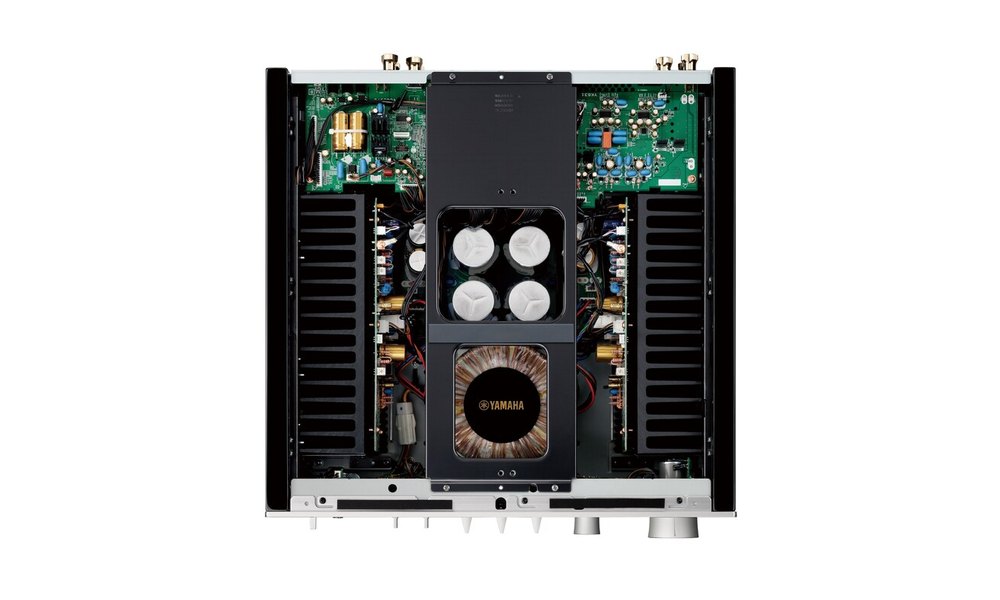
A large 625 VA toroidal transformer powers the amplifier. This is one of the key changes from the predecessor A-S1100, which used an EI-core transformer. A strong power supply helps above all with peaks and difficult loudspeakers.
Phono stage
The built-in phono stage accepts MM and MC cartridges. Input sensitivity is 3.5 mV at 47 kΩ for MM and 150 µV at 50 Ω for MC. The MC load is fixed, which suits many low-impedance MC cartridges. If you need adjustable loading, use an external phono stage.
What the manufacturer's data means
Yamaha specifies 2 × 90 W into 8 Ω and 2 × 150 W into 4 Ω (20 Hz to 20 kHz, 0.07% THD), plus 2 × 160 W maximum power into 4 Ω at 1 kHz. Dynamic power per channel is 105, 135, 190 and 220 W into 8, 6, 4 and 2 Ω. The fact that power keeps rising into 2 Ω points to a stable power supply. The damping factor is at least 250. Frequency response extends from 5 Hz to 100 kHz (+0/−3 dB). Signal-to-noise ratio is 90 dB for MC, 96 dB for MM and 110 dB for CD. The amplifier measures 435 × 157 × 463 mm and weighs 22 kg.
Features and operation
There are five RCA line inputs, one of which bypasses the volume control so the A-S1200 can serve as a power amplifier in a home cinema. Added to that are the phono input, a preamp output and a front headphone jack. Two pairs of brass speaker terminals are switchable and allow bi-wiring.
The front is dominated by two backlit meters, switchable between VU and power display, with adjustable brightness. Bass, treble and balance use Yamaha's typical rectangular controls. A mute button drops the volume by about 20 dB. When the bass and treble controls are centred, relays bypass the tone circuit automatically; the sources describe no separate Pure Direct switch. The remote has a brushed aluminium top plate.
Sound according to international reviews
Mark Gusew of StereoNET awarded 8.5 out of 10. He described a clean, balanced sound with strong bass, a neutral midrange and polite treble that was never harsh. With his large floorstanders, the bass was a little too strong for him. Yamaha told him the A-S1200 was voiced more for smaller speakers, and with stand-mounters the balance fell into place. The soundstage was wide but somewhat flatter in depth than with his far dearer reference, the Cambridge Edge A. With gentle music he missed a little drive.
Via the phono stage with an MM cartridge, Gusew found the soundstage opened up noticeably, with natural tonality and low surface noise. Gusew took this as a sign of a good built-in phono stage. In his verdict he praised build, power, grip and looks. Positive Feedback has also reviewed the A-S1200. All statements come from the trade press, not from our own listening tests.
Using the tone controls
Many hi-fi amplifiers do without tone controls. On the A-S1200 they are a useful tool: at StereoNET, cutting the bass by a couple of decibels was enough to improve the balance with large floorstanders. Tone controls can also compensate for room effects, such as booming bass in small rooms or a dull sound in heavily damped ones. For the shortest signal path, set bass and treble to their centre positions; relays then bypass the tone circuit. It is best to try both and decide based on your own room and speakers.
Matching speakers
With 150 W into 4 Ω and a stable power supply, the A-S1200 drives most speakers without trouble. It shows its strengths especially with stand-mount speakers, whose leaner bass benefits from the amplifier's fullness. With large, bass-heavy floorstanders, the bass control can help adjust the balance. Placement matters too: speakers close to a wall add further bass. Suitable models are listed in our best bookshelf speakers.
For vinyl
The built-in phono stage is sufficient for most MM cartridges and many low-impedance MC cartridges. According to StereoNET, it sounded good, with little noise. MC cartridges with very low output or specific loading needs benefit from an external phono stage, which can be connected to one of the line inputs. Suitable units are listed in our best phono preamps.
Digital sources
Because the A-S1200 has no DAC, streaming and digital sources need an external device, such as a streamer with a built-in converter or a separate DAC. That is a drawback compared with units with built-in streaming, but it has an upside: digital technology ages faster than an amplifier. If you want to replace the source later, the amplifier can stay.
Placement and connection
At 22 kg, the A-S1200 needs sturdy furniture. As a class AB amplifier, it runs warm. Leave some space above it so heat can escape; a closed cabinet without airflow is unfavourable. When connecting the speakers, observe polarity and screw the cables firmly into the brass terminals. For bi-wiring, use both terminal pairs and switch A and B on together. With a single pair of speakers, use one of the terminal pairs. The turntable's ground lead belongs on the ground terminal, otherwise there may be hum.
Subwoofer and preamp output
An active subwoofer can be connected via the preamp output, which can extend the bass of stand-mount speakers. Because the output has no filter for the main speakers, the subwoofer handles the crossover with its own low-pass filter, and the main speakers continue to play full range. Alternatively, the output can drive a more powerful power amplifier. Suitable subwoofers are listed in our best subwoofers.
Headphone use
The front headphone jack is a practical extra and is sufficient for most dynamic headphones. If you use particularly demanding, low-sensitivity headphones, consider a separate headphone amplifier.
Warranty
Yamaha's German product page lists an extended warranty of 2 + 3 years after product registration. For the UK, StereoNET reported a total of five years after online registration, plus a replacement within the first year should a fault occur. Warranty terms differ by country, so check the conditions of your local distributor before buying.
Strengths and limits at a glance
- Strength: powerful output stage, 150 W into 4 Ω, stable down to 2 Ω.
- Strength: large 625 VA toroidal transformer.
- Strength: MM/MC phono stage with good signal-to-noise ratio.
- Strength: VU meters, tone controls with automatic bypass, power amp input.
- Strength: very solid build, 22 kg.
- Limit: no DAC, no streaming.
- Limit: no balanced inputs.
- Limit: fixed MC load.
- Limit: somewhat bass-heavy with large floorstanders according to the press.
Who it suits
The A-S1200 suits listeners looking for a powerful, well-built analogue amplifier with a phono stage who connect digital sources via external devices. It is a particularly good match for stand-mount speakers. If you want everything in one box, look at models with streaming such as the Marantz MODEL 40n.
Compared with alternatives
The Yamaha A-S801 is cheaper and has a USB DAC. The Musical Fidelity M6si offers more power and USB. The Luxman L-507Z is a dearer alternative with a similar retro look. The NAD C 399 relies on class D and digital modules. More in our best amplifiers.
Analysis: the Yamaha A-S1200 in depth
What this analysis adds
The sections above briefly summarise the manufacturer's data and two voices from the specialist press. For this analysis we have broadened the source base considerably and tied every statement to a dated source: Yamaha's German product page with its model comparison and warranty note [1], the technical data sheet [2], the AUDIO review by Lothar Brandt with measurements from the Testlab [3], the double review by Holger Biermann at LowBeats [4], the review with lab measurements by Radek Łabanowski in the Polish magazine Audio [5], the review by Paul Rigby at The Audiophile Man [6], the review by Mark Gusew at StereoNET [7], the review by Ed Kobesky at Positive Feedback [8], the review by Bernhard Rietschel at HIFI.DE [9] and the extensive review by Sven Wunderlich at AREA DVD [10].
Vinyl BotPro has neither listened to nor measured the A-S1200. Statements about sound and measurements belong to the authors named; our own calculations and conclusions are marked as such. The rank, index and price information on this page remain unchanged. The reviews date from 2020 to 2024. According to LowBeats, the amplifier went on sale in May 2020 [4], and it is still listed on Yamaha's German website [1].
Important for context: four sources are German-language publications [3][4][9][10], one is a Polish magazine with its own lab [5], and three come from the UK and Australia [6][7] and the USA [8]. Measurements are available from two independent labs [3][5]. Prices differ considerably by country and date; we deal with them separately below.
Yamaha's premium range and where the A-S1200 sits
The A-S1200 is the smallest model in Yamaha's premium integrated amplifier range. Above it sit the A-S2200 and A-S3200; in 2020 AUDIO quoted prices of 2,000, 3,000 and 5,500 euros for the three models [3]. According to StereoNET, the A-S1200 draws on technology and experience from the C-5000 preamplifier and M-5000 power amplifier [7]. Compared with its predecessor, the A-S1100, Yamaha replaced the EI-core transformer with a 625 VA toroidal transformer [7][2].
Little has changed on the outside. LowBeats has used the A-S1100 since 2015 and describes the successor as almost indistinguishable from the outside; in sound, however, the A-S1200 is voiced in a much more moderate, balanced and "more beautiful" way [4]. HIFI.DE stresses the gap to the models below: the A-S1200 weighs about twice as much as the A-S701 and, like its bigger siblings, is built at Yamaha's main factory in Japan [9]. AREA DVD also reports production at the main plant in Japan [10].
In all three models Yamaha deliberately omits a DAC, Bluetooth and networking. The development team told LowBeats that digital signal processing has no place in amplifiers of this quality [4]. At the same time, LowBeats and HIFI.DE criticise that Yamaha offers no matching network player or DAC in this class [4][9]. Positive Feedback, by contrast, sees the omission as an advantage because there is no fast-ageing digital technology inside [8].
Circuit and construction
At its heart is the "Floating and Balanced" power amplifier. StereoNET explains that Yamaha uses MOSFETs of the same polarity on both sides of the push-pull stage, and that the entire power amplifier circuit floats free of ground [7]. LowBeats goes into more detail: each channel consists of two single-ended stages working in parallel with their own galvanically isolated supply rails, driven by an inverting and a non-inverting driver stage with separate feedback paths [4]. HIFI.DE classifies the circuit as a variant of the rarely used "Circlotron" principle, which is meant to deliver particularly low distortion [9]. Note that "balanced" refers to the output stage design. All inputs of the A-S1200 are single-ended [7][4].
AUDIO describes the power supply as follows: the toroidal transformer has separate taps for the control section, preamplifier, power amp input stage and the floating output stages; a metal bridge over the power supply shields it and stiffens the chassis [3]. HIFI.DE gives 635 VA [9]; Yamaha itself specifies 625 VA [2], and we follow that figure.
On the mechanical side Yamaha cites its "Mechanical Ground Concept": the bolts of the feet are welded directly to the chassis, and the heat sink, transformer and block capacitors are bolted directly to it [1]. HIFI.DE describes a sturdy steel frame, output stages arranged symmetrically around the central power supply, each with its own aluminium heat sink, and a phono board that is almost identical to that of the A-S3200 [9]. Audio from Poland found a preamplifier in its own, additionally shielded compartment, a discrete phono section and an Alps potentiometer for the volume; the lid is screwed down and lined with damping material [5]. LowBeats points out that relays work behind the front panel switches [4].
Manufacturer's data and what it means
Yamaha specifies 2 × 90 W into 8 Ω and 2 × 150 W into 4 Ω (20 Hz to 20 kHz, 0.07% THD), 2 × 160 W maximum power into 4 Ω, and dynamic power of 105, 135, 190 and 220 W into 8, 6, 4 and 2 Ω [2]. Our own calculation: 90 W into 8 Ω corresponds to about 26.8 V, 150 W into 4 Ω to about 24.5 V. An ideal voltage source would deliver 180 W into 4 Ω; Yamaha quotes 150 W, or roughly 83% of that. At 220 W into 2 Ω, the calculated peak current is about 10.5 A per channel.
According to Yamaha, the damping factor is at least 250 (1 kHz, 8 Ω) [2]. Our own calculation: this corresponds to an output impedance of no more than about 0.032 Ω. A speaker cable of 2 × 3 m with a 2.5 mm² cross-section already adds about 0.04 Ω, leaving an effective damping factor of around 110 at the speaker. That is still a high value for passive loudspeakers.
The input sensitivities refer to 100 W into 8 Ω: 150 µV for MC, 3.5 mV for MM, 200 mV for line level and 1 V for Main In [2]. Our own calculation: 100 W into 8 Ω is about 28.3 V. This gives a line-level gain of about 43 dB, a total of about 78 dB for MM and about 105.5 dB for MC. Subtracting the line gain leaves about 35 dB (MM) and 62.5 dB (MC) for the phono stage. That matches the data The Audiophile Man obtained directly from Yamaha: 35.6 dB for the equaliser stage and a total of 63.6 dB for MC, of which 28 dB come from the MC head amplifier [6].
According to Yamaha, the frequency response extends from 5 Hz to 100 kHz (+0/−3 dB), RIAA deviation is ±0.5 dB, and the signal-to-noise ratio is 90 dB (MC), 96 dB (MM) and 110 dB (line) [2]. Dimensions and weight: 435 × 157 × 463 mm, 22 kg [2].
Measurements by the specialist press
AUDIO's Testlab measured an unweighted signal-to-noise ratio of 80 dB for the MC input, 85 dB for MM and 105 dB for line level. Brandt calls the MC figure a lab record in this class; there, MC stages achieving more than 70 dB at 60 dB gain already count as quiet [3]. Yamaha's figure of 90 dB is not a contradiction: AUDIO measures to its own consistent reference (0.5 mV input to 10 V output), whereas manufacturers' figures are not standardised [3].
Audio from Poland measured the power amplifier [5]: 2 × 110 W into 8 Ω and 2 × 172 W into 4 Ω with both channels driven at 1% distortion, 110 and 191 W with one channel driven. The signal-to-noise ratio is 87 dB (A-weighted, referred to 1 W), the dynamic range 107 dB and the damping factor into 4 Ω 72. The frequency response shows no drop at 10 Hz and only −1 dB at 100 kHz into 8 Ω, or −1.5 dB into 4 Ω. Odd harmonics dominate the distortion spectrum: the third harmonic at −70 dB, the fifth at −80 dB, the seventh about 1 dB lower, the second at −76 dB and the fourth at −79 dB. THD+N falls below 0.1% above about 2 W (8 Ω) or 4 W (4 Ω).
Our own assessment: 110 W instead of the rated 90 W is about 22% or 0.9 dB more, 172 instead of 150 W about 15% or 0.6 dB more. On its own this difference is barely audible, but it shows that Yamaha rates the output conservatively. The measured damping factor of 72 into 4 Ω corresponds to an output impedance of about 0.056 Ω, which is in the same range as the manufacturer's figure for 8 Ω.
There are two findings on the level meters. Audio from Poland found them accurate: when the meter showed 1 W, the actual output was 0.9 W, and at 100 W it was exactly 100 W [5]. HIFI.DE points out that the meters essentially display output voltage; the actual power depends on the speaker impedance [9]. Our own consideration: if the scale is referenced to a fixed impedance, the same needle position means more power into a lower impedance (P = U²/R). The meters are useful as a guide, but only to a limited extent as a measuring instrument.
Sound according to eight specialist publications
The specialist press mostly describes the A-S1200 as powerful, controlled and refined. In the details, impressions differ. All of the following statements come from the reviews named, not from listening tests of our own.
AUDIO awarded 115 points for sound and "outstanding" for value. Even straight out of the box, Brandt heard no harshness, a three-dimensional portrayal of space with chamber music and, once warmed up, gripping dynamics; at the very top he missed "a touch of airiness". He counts the A-S1200 among his favourites in the 2,000-euro class, partly because of the MC stage [3].
LowBeats describes the sound as "baroque", rich and silky: powerful bass, fine and open treble, a wide soundstage and a relaxed rather than wiry gait. Compared with the Exposure 3010 S2D on Dynaudio Heritage Special speakers, the British amp sounded leaner and more agile in the midrange, the Yamaha grander and with more reserves for large orchestras. In the same comparison the A-S2200 sounded more precise still [4].
StereoNET awarded 8.5 out of 10. Gusew describes a clean, tonally civilised sound with a neutral midrange, polite treble and strong bass. With large floorstanders from JBL and Vienna Acoustics he turned the bass down by a couple of decibels; with Focal stand-mounters the balance was right. With gentle music he missed a little drive and intimacy, and depth perspective fell short of his far dearer Cambridge Edge A [7].
The Audiophile Man awarded 8 out of 10. Rigby praises focus, midrange precision, pacy bass, detail and build; as weaknesses he lists a smaller soundstage and slightly tense mids [6]. Positive Feedback describes confidence, control and precise placement; the midrange is present but somewhat lean and has less bloom than with tube amplifiers. Kobesky sees the Yamaha as a precision instrument with a smaller soundstage but more control and fine detail than his PrimaLuna tube amp [8].
Audio from Poland calls the sound universal, balanced and dynamic, with powerful, securely controlled bass, natural voices and slightly bolder treble than some competitors [5]. HIFI.DE heard a refined, unobtrusive character with silky, very accurate treble and large reserves in the bass; with dynamically exciting recordings Rietschel would have liked more contrast [9].
Our own assessment: the range runs from "rich and warm" [3][4] to "focused and rather lean" [6][8]. This can partly be explained by the speakers, rooms and reference components: listeners comparing it with tube amplifiers find the Yamaha rather sober, those comparing it with British transistor amps rather full. What all reviews share is praise for control, power reserves and a quiet background.
Phono stage: MM, MC and the fixed 50 Ω load
Several reviews regard the phono stage as a particular strength. AUDIO speaks of a "fantastic MC stage" [3], LowBeats of an extremely quiet stage that can keep up with good phono preamps in the upper three-figure price range; even with the input open, the volume had to be turned to 12 o'clock before any hiss became audible [4]. Using an MM cartridge, StereoNET heard a noticeably wider and deeper soundstage with little surface noise [7]. HIFI.DE combined the stage with a Luxman PD-191A and a Lyra Delos and found it by no means overstretched [9].
The limit is the fixed MC load of 50 Ω [2]. HIFI.DE considers the stage suitable for low-impedance MC cartridges and cites Ortofon's Quintet series and the Dynavector DV20X2L as examples. High-impedance MC cartridges are less ideal; the Lyra with 8 Ω coils, for which the manufacturer recommends around 100 Ω or more, sounded somewhat darker at 50 Ω but still very refined [9]. Positive Feedback went further: MC cartridges whose makers recommend at least 100 Ω sounded thick, dull and muffled; Kobesky then advises MM cartridges or an external phono stage [8].
Our own calculation (simplified, purely resistive): an MC with 8 Ω internal resistance loses about 1.3 dB of level into 50 Ω, one with 40 Ω around 5 dB. The tonal effect of electrical damping cannot be calculated this way, but the figures show why low-impedance cartridges are the better match.
The data sheet gives no capacitance figure [2]. The Audiophile Man was told by Yamaha that the input capacitance is 100 pF for MM and MC [6]; Positive Feedback suspected a higher value from listening comparisons and got a better balance with an Ortofon 2M Bronze than with an Audio-Technica VM750SH [8]. The statements do not match, so we present them side by side.
Our own calculation on levels: with 63.6 dB of gain [6], 0.4 mV from a typical MC becomes about 0.6 V, and 0.2 mV about 0.3 V. An MM with 5 mV gives about 0.3 V at 35.6 dB. All three values are above the line sensitivity of 200 mV [2], so there is enough level in hand for common cartridges.
Practically important: on the A-S1200 the MM/MC switch sits on the rear panel, on the A-S2200 on the front [4][9]. According to Audio from Poland, the mute function lowers the level by exactly 20 dB by turning back the motorised volume control – handy when lowering the stylus [5].
Operation, connections and everyday use
According to HIFI.DE, the A-S1200 offers three line inputs, a further one with a recording output (tape loop), the phono input, plus Main In and Pre Out [9]; LowBeats lists the same set of connections [4]. StereoNET counts Main In as a fifth RCA input [7]. Main In lets the A-S1200 work as a pure power amplifier, while Pre Out can feed a subwoofer or a more powerful power amplifier [9]. There are also 12 V trigger and remote connections [10][5].
None of the sources describes a dedicated Pure Direct switch. Instead, relays automatically bypass the tone controls as soon as the bass and treble controls are in their centre position [9][6][5]. The two pairs of speaker terminals are switchable. Officially, "A+B" is meant for bi-wiring; HIFI.DE warns against running two complete 4 Ω pairs in parallel, because this creates a 2 Ω load [9]. LowBeats observed that the protection circuit reliably switches off in an overload and releases again after switching off and on [4].
The auto standby function switches the amplifier off after eight hours without a signal and can be disabled [6][5]. The remote control can also operate a Yamaha CD player [10][7]. Opinions on its quality differ: StereoNET praises the brushed aluminium top plate [7], while Positive Feedback finds the handset, made largely of plastic, too lightweight for the price [8]. At Positive Feedback the headphone output drove a Philips Fidelio X2HR well [8]; only the A-S2200 has its own headphone level control [4].
Speaker choice, room and power reserves
Several reviews point to a voicing that works especially well with compact speakers. Yamaha told StereoNET that the A-S1200 was voiced more with smaller loudspeakers in mind [7]. LowBeats, on the other hand, found no speaker in its collection that resulted in a real mismatch [4]. Positive Feedback ran the amplifier with JBL L100 Classic speakers without fatigue [8].
Our own calculation on loudness: 90 W is about 19.5 dB above 1 W. A loudspeaker with a sensitivity of 87 dB (1 W, 1 m) thus reaches, in free-field terms, about 106.5 dB at 1 m and around 97 dB at 3 m; two speakers add about 3 dB. Real rooms add room gain on top. For living rooms the power is therefore sufficient even for loud levels, as LowBeats confirms for around 90% of all loudspeakers [4].
Practical tips from the reviews: with bass-heavy floorstanders or in small rooms the bass control helps [7]; placing speakers close to a wall adds further bass. If you add a subwoofer, use the Pre Out; the subwoofer's low-pass filter then handles the crossover.
A-S1200, A-S2200 and A-S3200 compared
LowBeats compared the A-S1200 and A-S2200 directly [4]. According to LowBeats, both have the same dimensions, the same 625 VA transformer and the same output of 2 × 160 W into 4 Ω; the A-S3200 delivers 2 × 170 W. The A-S2200 weighs 22.7 kg, the A-S3200 24.7 kg and the A-S1200 22 kg. The key difference: the A-S2200 has a balanced XLR input with a −6 dB attenuator and a phase switch, plus a headphone level control and the MM/MC switch on the front [4].
Yamaha's own comparison lists further differences: iron feet on the A-S1200, brass feet on the A-S2200 and brass spikes on the A-S3200; internal speaker wiring of "Super Thick Copper" at 2.0 mm on the A-S1200 and PC-Triple C at 2.7 mm on the larger models [1]. According to Yamaha, the "Low Impedance" concept with thick ground wires starts with the A-S1200 [1].
In sound, the A-S2200 was more precise and dynamic in the bass and lower midrange at LowBeats [4]. On value for money, however, LowBeats still puts the A-S1200 ahead; the A-S3200 costs almost three times as much [4]. Our own calculation: based on AUDIO's 2020 prices, the A-S2200 costs 50% more than the A-S1200 and the A-S3200 around 175% more [3]. If you have XLR sources, choose the A-S2200; if you only use RCA, according to LowBeats the A-S1200 mainly gives up a little precision and dynamics in the bass and lower midrange [4].
Prices, warranty and market situation
The prices in the sources differ considerably. In 2020/21 AUDIO and LowBeats quoted a recommended price of 2,000 euros [3][4]. HIFI.DE gave 2,499 euros in March 2024 [9], AREA DVD a recommended retail price of 2,099 euros in November 2024 [10]. In the UK the price was £1,999 in 2021 [7][6], in the USA $2,995 in 2023 [8] and in Poland 9,500 złoty in 2021 [5]. Our own calculation: 2,499 euros is 25% above the 2,000 euros of 2020. The price information on this page (market price approx. €1,899–2,499) remains unchanged; it is worth checking current prices before buying.
On warranty: Yamaha's German product page lists an extended warranty of 2 + 3 years after product registration [1]. StereoNET reported four plus one years and a replacement within the first year for the UK [7], Positive Feedback two years for the USA, extendable to five years at no charge [8]. The terms of the respective country apply.
Finishes: AREA DVD lists silver and black, each with piano-black side panels [10].
Verdict: who the A-S1200 suits
The A-S1200 is a heavy, elaborately built analogue amplifier with a strong output stage, good measured performance and a particularly quiet phono stage. The independent labs confirm more power than specified and very low noise [3][5]. The specialist press praises control, reserves and build quality; descriptions of its sonic character range from rich to focused.
It suits listeners who combine a turntable with external digital sources, use MM cartridges or low-impedance MC cartridges, and value tactile quality and classic controls. It is less suitable for high-impedance MC cartridges, for systems with XLR sources and for anyone who expects built-in streaming. If you need XLR, the A-S2200 is the next step up [4].
Sources for this analysis
- Yamaha Music Europe: A-S1200 – Produktseite Deutschland mit Ausstattung, Modellvergleich A-S3200/A-S2200/A-S1200 und Garantiehinweis/German product page with features, model comparison and warranty note (abgerufen/accessed 11.11.2026). https://de.yamaha.com/de/audio/home-audio/products/hifi-components/a-s1200/index.html
- Yamaha Music Europe: A-S1200 – Technische Daten/specifications (abgerufen/accessed 11.11.2026). https://de.yamaha.com/de/audio/home-audio/products/hifi-components/a-s1200/specs.html
- AUDIO (veröffentlicht bei/published on connect.de): Yamaha A-S1200 (Lothar Brandt, Messungen/measurements Testlab, AUDIO 8/2020, online 14.09.2020). https://www.connect.de/testbericht/yamaha-a-s1200-test-3201123.html
- LowBeats: Vollverstärker-Doppeltest Yamaha A-S1200 und A-S2200 (Holger Biermann, 06.02.2021). https://www.lowbeats.de/vollverstaerker-doppeltest-yamaha-as-1200-und-as-2200/
- Audio (Polen/Poland, audio.com.pl): Yamaha A-S1200 – Bericht mit Labormessungen/review with lab measurements (Radek Łabanowski, 21.02.2021). https://audio.com.pl/testy/stereo/wzmacniacze-stereo/3331-yamaha-a-s1200
- The Audiophile Man: A-S1200 Integrated Amplifier from Yamaha (Paul Rigby, 26.02.2021). https://theaudiophileman.com/a-s1200-amplifier-review-yamaha/
- StereoNET: Yamaha A-S1200 Integrated Amplifier Review (Mark Gusew, 19.03.2021). https://www.stereonet.com/reviews/yamaha-a-s1200-integrated-amplifier-review
- Positive Feedback: Yamaha A-S1200 Integrated Amplifier (Ed Kobesky, Issue 129, 28.09.2023). https://positive-feedback.com/reviews/hardware-reviews/yamaha-a-s1200-integrated-amplifier/
- HIFI.DE: Yamaha A-S1200 – Vornehmer Premium-Vollverstärker (Bernhard Rietschel, 31.03.2024). https://hifi.de/test/yamaha-a-s1200-test-178002
- AREA DVD: XXL-TEST: Yamaha A-S1200 – rein analoger Stereo-Verstärker im nostalgischen HiFi-Gewand (Sven Wunderlich, 11.11.2024). https://www.areadvd.de/tests/xxl-test-yamaha-a-s1200-rein-analoger-stereo-verstaerker-im-nostalgischen-hifi-gewand/
Created by AI (Vinyl BotPro) from the sources listed; no listening tests or measurements of our own. Detailed human fact-check pending.
Yamaha A-S1200 FAQ
Does the A-S1200 have a DAC?
No, it is purely analogue. Digital sources need an external converter.
Can I connect an MC cartridge?
Yes, the phono stage supports MM and MC. The MC load is fixed.
How much power does it have?
2 × 90 W into 8 Ω and 2 × 150 W into 4 Ω.
Can it be used as a power amplifier?
Yes, one input bypasses the volume control.
How heavy is it?
22 kg.
Verdict
The Yamaha A-S1200 is a powerful, very solidly built analogue amplifier with a phono stage, large level meters and classic Yamaha styling. The international press praises its power, grip, fullness and build. If you can do without built-in streaming and use stand-mount speakers or a well-matched system, you get a long-lasting amplifier.
Sources
Read more: best amplifiers 2026 · Improve your hi-fi system · What is hi-fi?