
Turntable · AI analysis · Expert, rank 10
Rega Planar 8: Analysis
AI analysis (research): Rega Planar 8 with RB880, Neo PSU and skeletonised plinth — specifications and recurring assessments from the specialist press, no listening test. Upper Expert / Master-borderline per Cartridge.
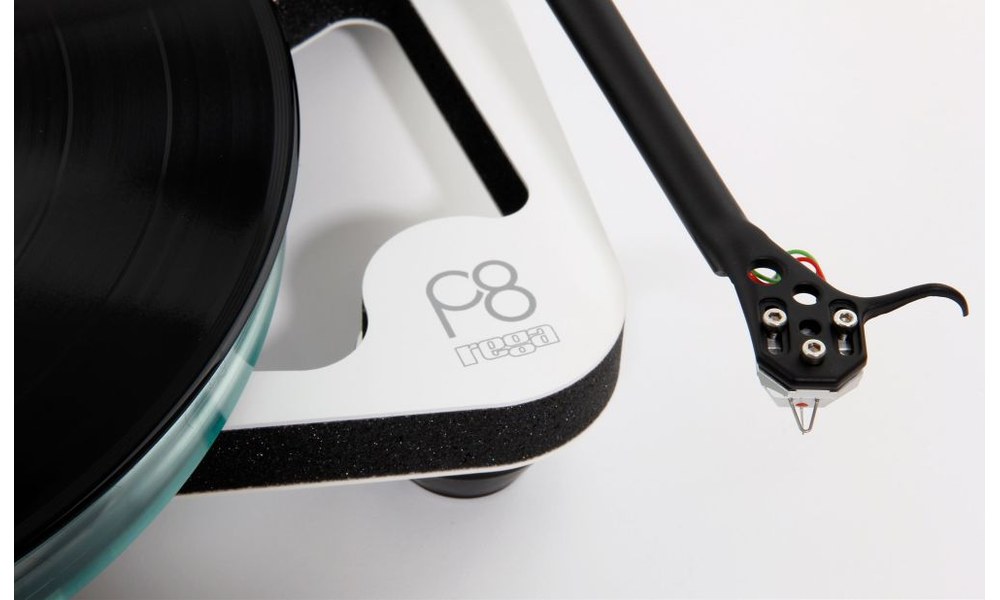
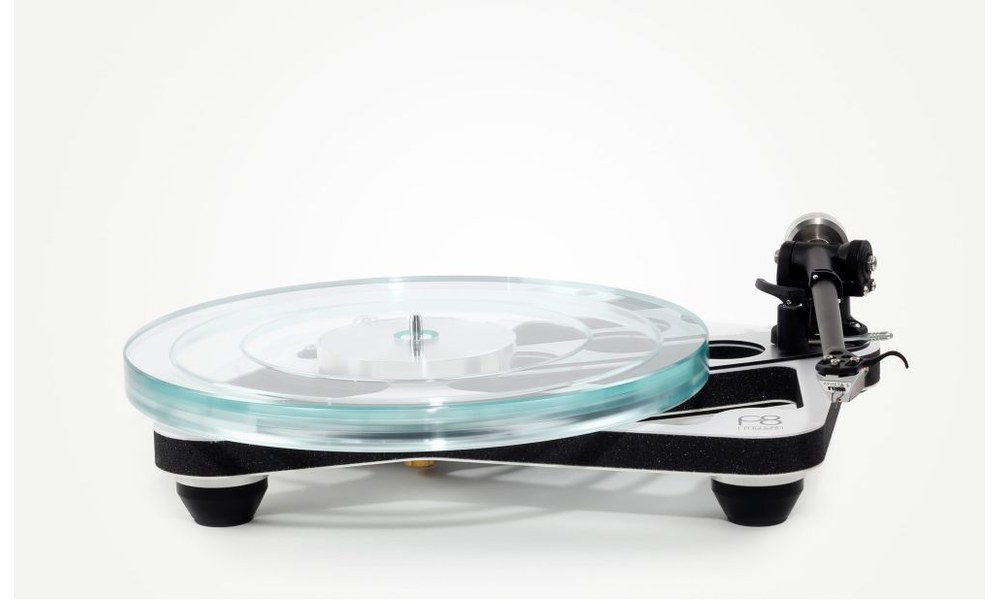
Summary
The Planar 8 is Rega’s upper Expert tier below the Planar 10/Naia: an ultra-light skeletonised plinth (Tancast/HPL), a triple-layer platter, RB880, and the Neo PSU as standard. Without a system it is often about €2,500–2,600; with an Nd7, Ania or Apheta, the market price quickly reaches €3,000–4,000+ (Sept 2026 — check). Makes sense if the Planar 6 feels “too tight” and phono/budget keep pace — as upper Expert with a Master transitional model for expensive MC packages.
Assumptions
- External phono stage mandatory; MC packages need matching MC-Phono
- System package decides market price strongly
- No listening access of our own
Technical data (public)
| Drive | Belt · Neo PSU · Electronic 33/45 · Fine Speed (manufacturer) |
|---|---|
| Tonearm | RB880 |
| Cartridges | Variable bundle (without / Nd7 / Ania Pro / Apheta...) — check |
| Plinth / Platter | Skeletal Tancast/HPL · Triple layer glass (3-ply) |
| Phono / auto | No / No |
| Price guide | approx. €2,500–4,000+ per cartridge · Sept 2026 — Upper Expert |
Manufacturer specifications (Rega)
| Type | belt drive (EBLT), 24 V motor, Neo PSU |
|---|---|
| Tonearm | Rega RB880 |
| Cartridge (fitted) | Nd7, Nd9 (MM), Ania Pro, Apheta 3 (MC) optional |
| Platter | triple-layer glass (super flywheel) |
| Dimensions | 420 × 125 × 315 mm (with dust cover) · Neo PSU 180 × 50 × 155 mm |
| Weight | 4.2 kg · Neo PSU 0.6 kg |
Source: Rega – official specifications · As of 16 October 2026 · subject to change by the manufacturer
Rating criteria in detail
The four criteria feed into the Vinyl BotPro Index with weights of 25/20/25/30. The index is scaled across all tiers (see Methodology); that is why we do not show individual sub-scores.
Strengths
- Naiad-inspired lightweight architecture (manufacturer)
- RB880 + Neo PSU as standard
- Clear Rega step logic Planar 6 → 8 → 10
- Detailed press analyses (What Hi-Fi?, The Ear, Hi-Fi Choice, AnalogPlanet)
Weaknesses
- No phono stage, automatic or direct drive
- Expensive MC bundles push towards a Master budget
- Placement/isolation matter (Hi-Fi Choice, AnalogPlanet)
Comparison models
| Rega Planar 6 | Cheaper Expert Sweet Spot · RB330 |
|---|---|
| Rega Planar 10 | Master-borderline · Ceramics/RB3000 · significantly more expensive |
| Pro-Ject X8 | Different philosophy · high mass |
System matching
Works well with
- Good MM or MC phono per cartridge package
- Users who have outgrown a Planar 6
- Retailer demo before expensive MC bundle
Less suited
- Budget < ~2,500 € → Planar 6 / X2 B fits better
- If you want Phono/DD → Technics GR2 / SL-1500C
Technology in detail
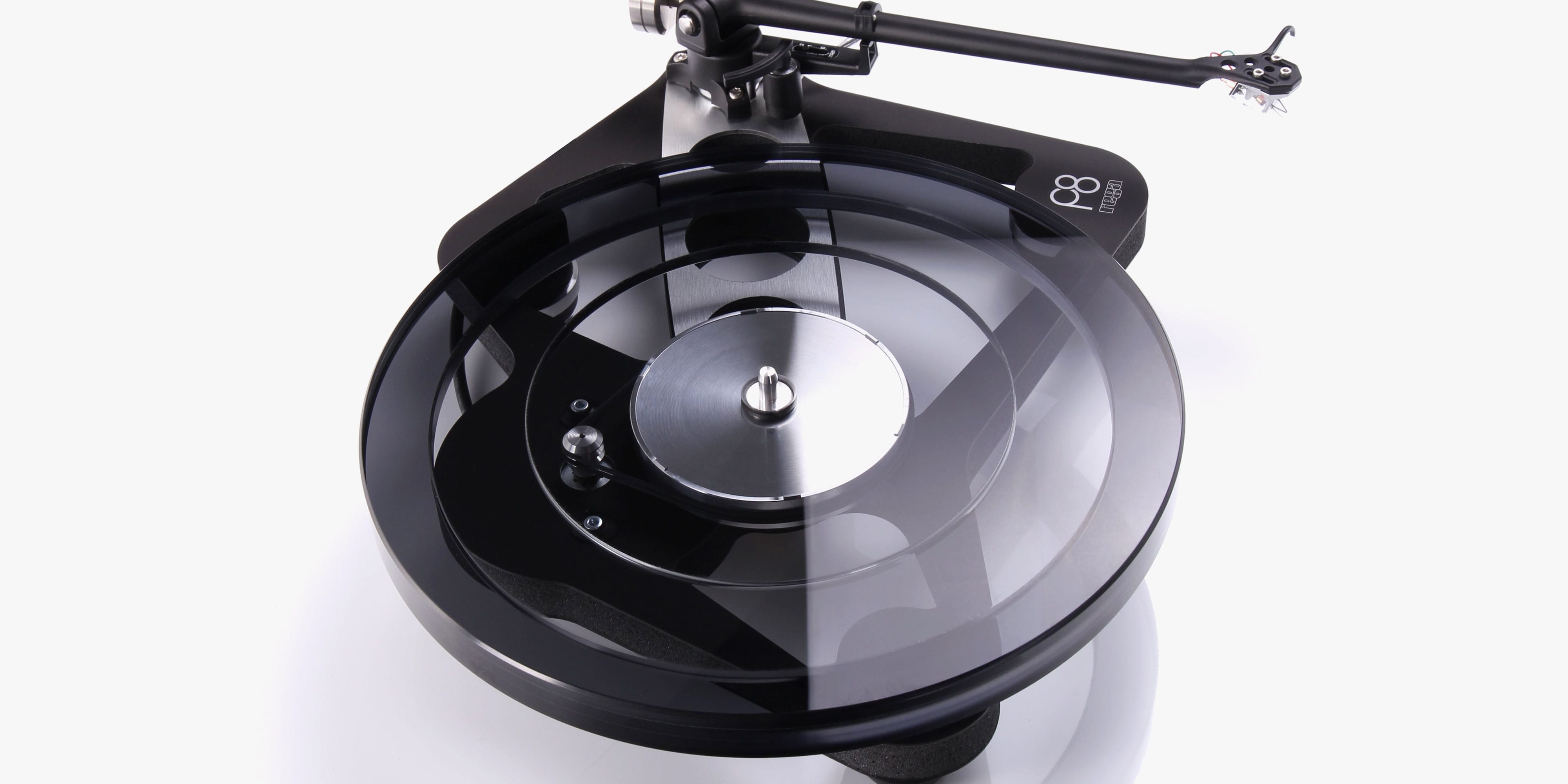
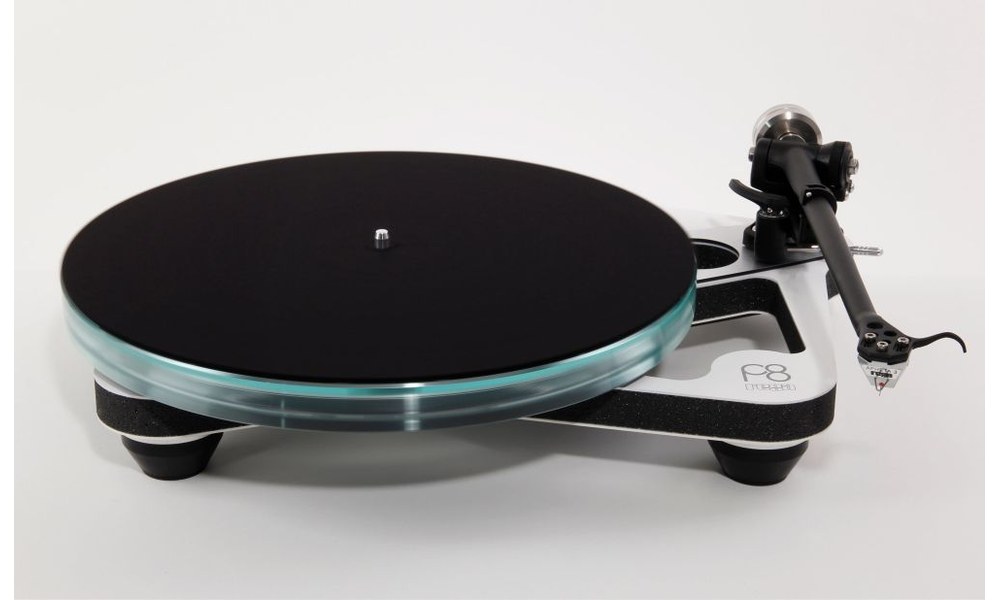
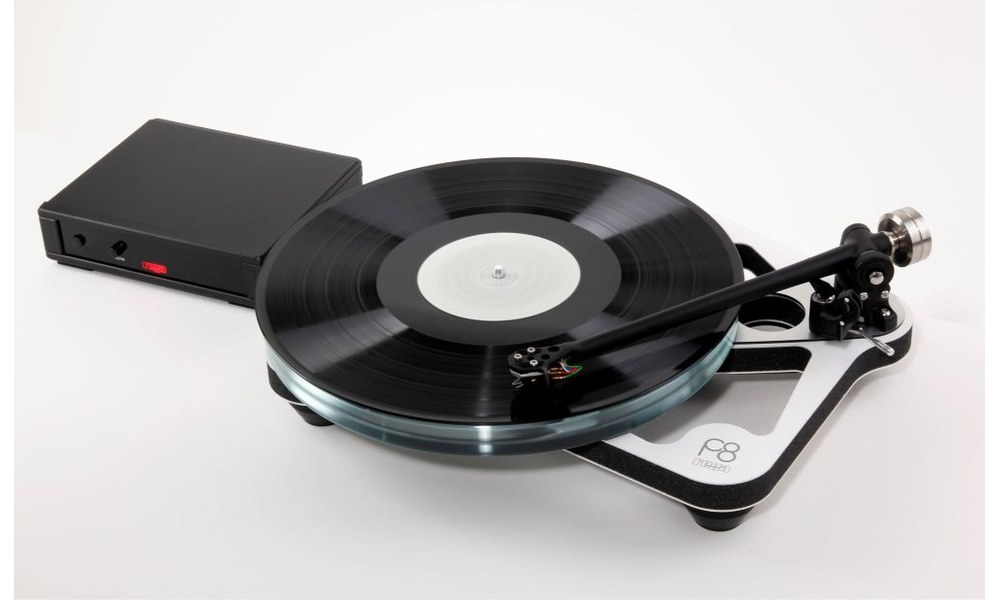
According to Rega, the Rega Planar 8 is inspired by the Naiad and is not a gradual successor to the RP8: a Tancast 8 plinth between two HPL layers without an outer frame, a phenolic double brace between tonearm mount and bearing, a triple-layer glass platter with its mass at the rim, an aluminium sub-platter with a steel spindle in a brass housing, and the RB880 tonearm. A bottom-mounted 24 V synchronous motor is powered by the outboard Neo supply, which switches between 33 and 45 rpm and offers fine adjustment in 0.01 rpm steps. There is no phono stage and no automatic function; the one-piece dust cover is removed for play.
It is available without a cartridge or factory-fitted with the Nd7, Nd9, Ania Pro or Apheta 3. The market price depends heavily on the package (prices as of Sept 2026, see above). Background, variants and sources are explained in the analysis section further down.
What the specialist press says
What Hi-Fi? (November 2018, with Apheta 2) describes clear air between the Planar 8 and Rega’s cheaper turntables: more clarity and insight, composure with complex music and rhythmic precision; more weight is possible, but only at considerably higher cost. It calls the gap to the Planar 6 huge. The Ear (October 2018) highlights the low noise floor and fine detail and recommends the best phono stage you can afford.
Hi-Fi Choice (2023) praises detail and the combination of bass depth and speed but names isolation and arm height adjustment only via spacers as weaknesses. AnalogPlanet (2025, with Ania) describes plenty of energy and detail but says it is not the weightiest-sounding turntable and reports that the support clearly affected the sound. Evidence is in the analysis section.
Who is it for?
Arm
The RB880 has three-point mounting for Rega cartridges; according to the manual, overhang is then set automatically. According to Hi-Fi Choice, arm height can only be adjusted with spacers. Tracking force and bias are set to the same value as described in the manual.
Phono
An external phono stage is required. The Nd7 and Nd9 work with MM inputs; the Ania Pro (350 µV) and Apheta 3 need an MC stage. The Ear recommends the best phono stage you can afford for the Planar 8.
Budget
From approx. €2,500 without a cartridge, considerably more with MC packages (prices as of Sept 2026). A firm, level surface or Rega’s wall bracket and a suitable phono stage belong in the budget.
Upgrade
Within Rega, the Planar 10 and Naia follow. According to the manual, the belts should be replaced every five years and the Neo then reset to factory settings. Index 78 = Expert; Master typically from ~85.
Analysis: the Rega Planar 8 in depth
What this is: an AI analysis, not a listening test
This section brings together what can be documented about the Rega Planar 8 from manufacturer material and international reviews. Vinyl BotPro has neither listened to nor measured the turntable. We paraphrase sound descriptions as named publications wrote them under their own conditions. Our own assessments are labelled as such. This section changes nothing about rating, rank or index: the Planar 8 remains at index 78, rank 10 in the Expert tier, and holds the sound champion award.
Rega uses similar design principles and similar names across its turntables. The sources mention the RP8, the Planar 6, the Planar 8, the Planar 10 and the Naiad. Because these models differ in platter, tonearm, power supply and plinth, we separate them explicitly below. Prices are given only as dated UK or US press prices; they are not current euro street prices.
Origins: from RP8 to Planar 8
According to Rega, the Planar 8 was inspired by the Naiad, its most elaborate turntable. Rega says it decided early on not to build a gradual evolution of the RP8 but to capture the essence of the Naiad at an affordable price [1]. What Hi-Fi? calls this unusual for Rega, which normally improves things step by step. It describes the Naiad as a limited run, likely capped at around 50 units, at £29,999 [8].
The Ear puts the development in context: the RP8 was the first Rega with a skeletal, foam-cored plinth. A removable surround nevertheless made it look rectangular; this surround mainly provided hinge points for the lid [9]. For the Planar 8, Rega dropped the surround and chose a smaller shape of its own [9].
The timeline according to the sources:
- RP8: the predecessor, with the RB808 tonearm and a frame around the plinth [9].
- Planar 8 (autumn 2018): The Ear published its review on 31 October 2018 [9], What Hi-Fi? on 19 November 2018 [8].
- White finish (from April 2023): matt white with a clear dust cover and a clear triple-layer glass platter; the other colour is Polaris grey [1].
- Neo MK2: according to Rega, the Planar 8 now ships with the restyled Neo MK2 power supply [1]. AnalogPlanet had this version in 2025 [11].
- Nd9 (November 2025): since then Rega has also offered the Nd9 as a factory-fitted cartridge [1].
The plinth: Tancast 8 and double brace
The plinth consists of a Tancast 8 core, a light polyurethane foam from aerospace, sandwiched between two thin, very rigid layers of high-pressure laminate (HPL) [1]. According to Rega, the Planar 8 is the second Rega turntable built this way [1]; the first was the Planar 6 [6]. Rega says the plinth is 30 per cent lighter than the original RP8's and yet more rigid [1][8].
A phenolic resin double brace sits between the tonearm mount and the main bearing [1]. The Ear describes braces above and below the plinth so that bearing and arm move as little as possible relative to each other [9]. Rega's reasoning: mass absorbs energy, and heavy plinths can transfer motor and bearing noise into the record [1]. What Hi-Fi? sums up that Rega wants to add rigidity where it is needed without adding much mass [8].
Our own assessment: this is a design philosophy, not a universally accepted law. AnalogPlanet explicitly notes that every approach has strengths and weaknesses and that heavy, damped turntables offer other benefits [11].
Platter and bearing
The platter is made from three pieces of laminated glass using two different Pilkington glasses; Rega developed it with a British glass engineering company [1]. The mass sits as far towards the rim as possible to create a flywheel effect, while the centre stays light to ease the load on the bearing [1]. The Ear writes that the Planar 8 shares the RP8's triple-layer glass platter, now with a clear middle layer as a visible stripe [9].
The main bearing consists of a single-piece machined aluminium sub-platter and a hardened tool-steel spindle in a custom brass housing [1][8]. According to Rega, the way it is mounted in the plinth is meant to stop energy being transferred into or stored in the plinth [1]. Hi-Fi Choice highlights that the belts run on the sub-platter rather than the platter rim; this simplifies assembly because the belts ship already fitted [10].
Motor, belts and Neo power supply
According to Rega, the 24 V synchronous motor is mounted from the bottom, a technique from the Naiad. It is meant to remove stress from the motor body [1]. Each motor is hand-tuned to its own Neo power supply before it is fitted [1]. Rega says it spent three years developing its own rubber compound for the EBLT belts [1]. The Ear describes two short belts; Rega deliberately keeps them short so that motor fluctuations have less effect and the flywheel effect smooths out the rest [9].
According to Rega, the outboard Neo power supply uses the RP10's DSP generator with a high-stability crystal. It produces a near-sinusoidal, balanced 24 V AC signal with less than 0.15 per cent distortion, unaffected by mains fluctuations [1]. The Neo measures 180 × 50 × 155 mm and weighs 0.6 kg [1].
The manual describes operation [2]:
- Speed: switching between 33⅓ and 45 on the power supply.
- Fine adjustment: on the back, in 0.01 rpm steps using a 1.7 mm Allen key; factory set and only to be changed if necessary. A change made at 33⅓ is applied automatically to 45.
- Checking: with the separately available Rega Strobe kit (100 Hz). Rega also mentions a smartphone app but does not guarantee its accuracy.
- Factory reset: after fitting a new belt, Rega recommends resetting the power supply to factory settings.
- Belt replacement: every five years.
The RB880 tonearm
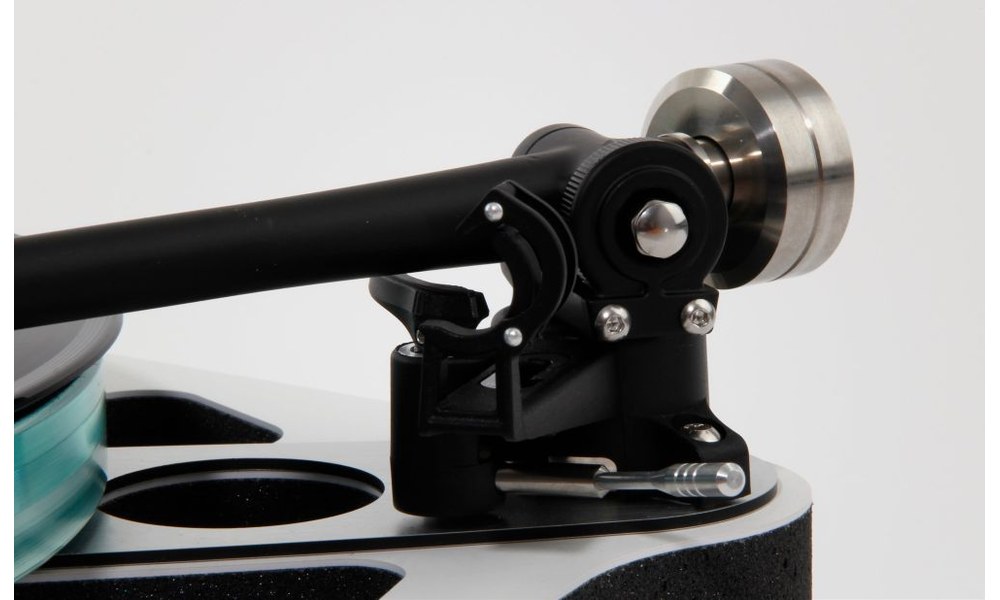
Rega describes the RB880 as the culmination of almost 40 years of tonearm design [3]. It looks like Rega's cheaper arms but, according to Rega, has a new low-mass vertical bearing assembly made of aluminium and stainless steel [1][3]. Rega says the preloaded bearings are adjusted to less than a thousandth of a millimetre [1]. There is also a thinner stainless-steel counterweight for more adjustment range and a new low-capacitance arm cable with locking phono plugs [1][3]. The Ear says the difference from the RP8's RB808 is only visible as a shiny ring at the bottom of the arm base [9].
According to the manual, overhang is set automatically with Rega cartridges using three-point mounting; for others a protractor is supplied [2]. Tracking force is set on the dial, choosing the upper end of the cartridge maker's range if in doubt; bias is set to the same value [2]. Hi-Fi Choice names as a weakness that arm height can only be adjusted with spacers [10].
Cartridge options
Rega offers the Planar 8 without a cartridge or factory-fitted with the Nd7 or Nd9 (MM) or the Ania Pro or Apheta 3 (MC) [1]. Data from Rega's product pages:
- Nd7: moving-magnet cartridge with 5–6 mV output, a nude "Fine Line" diamond and 1.75 g tracking force [5].
- Ania Pro: moving-coil cartridge with a nude "Vital" diamond, 350 µV output, 1.75–2.0 g tracking force and a recommended 100 ohms and 1000 pF [4]. Rega calls it a perfect partner for the Planar 6 and Planar 8 [4].
- Apheta 3: the top moving-coil model among the factory-fitted options [1].
Our own assessment: the Nd7 and Nd9 work with MM inputs. The Ania Pro and Apheta 3 need an MC phono stage; at 350 µV the Ania Pro is not a high-output cartridge.
In 2018 What Hi-Fi? analysed the combination with the Apheta 2, the top model at the time, and quoted a tracking force of around 1.9 g [8]. AnalogPlanet listened to a package with the Ania in 2025 [11]. The sound verdicts therefore refer to different cartridges.
Technical details of the power supply and cartridges
The manual gives further data on the Neo: it supplies a bi-phase 24 V AC signal to the motor, protected by a resettable fuse, and draws 7.2 watts [2]. The Strobe kit's disc has 180 marks for 33⅓ rpm at 100 Hz; according to Rega, the resolution is 0.016 per cent when one bar drifts per minute [2]. Rega recommends at least 10 cm of space around the power supply and a firm, level surface [2].
Rega gives further construction details for the cartridges. The Ania Pro has an aluminium cantilever, a PPS body and a hand-wound coil on an iron cross [4]. The Nd7 uses parallel-wound coils with 1,275 turns of 38-micron wire, which Rega says gives low inductance and better high-frequency response [5]. According to Rega, a dealer exchanges a worn Rega cartridge for a rebuilt one at a reduced price [5].
Dated prices
- What Hi-Fi? (2018): £1,699 without a cartridge; extra £210 for the Exact MM, £420 for the Ania, £740 for the Apheta 2 [8].
- The Ear (2018): £1,699, or £2,439 with Apheta 2 [9].
- Hi-Fi Choice (2023): £1,870 [10].
- AnalogPlanet (2025): $4,145 with Ania and Neo MK2 [11].
These prices come from different years and markets and serve only as historical context.
Placement and set-up
According to the manual, the Planar 8 needs a rigid, level surface; Rega names its own wall bracket as the best isolation solution [2]. What Hi-Fi? describes three soft feet as the only suspension and recommends a level, rigid support as far from the speakers as possible [8]. Hi-Fi Choice sees isolation as the area that needs most care and notes that the wall bracket adds to the cost [10].
AnalogPlanet reports a cool, uninvolving first impression on an MDF shelf. Small wooden blocks, and later cork and rubber squares under the feet, made the sound fuller [11]. The feet are not height-adjustable; AnalogPlanet used shims to level the deck [11]. On AnalogPlanet's sample, the factory cartridge alignment was also off when checked with the reviewer's own protractor [11].
What Hi-Fi? calls set-up easy: remove the transit packaging, fit the counterweight, set tracking force and bias [8]. AnalogPlanet says it was up and running in about 15 minutes [11]. The one-piece dust cover is removed for play and, when fitted, is secured against turning by a pin [2][9].
What the press says about the sound
The following descriptions are the verdicts of the named publications under their conditions, not our own listening results.
What Hi-Fi? (with Apheta 2) writes that the Planar 8 puts clear air between itself and Rega's cheaper turntables, with clarity and insight more reminiscent of far pricier decks [8]. It praises composure even with complex music, drive, rhythmic precision and articulate bass. What Hi-Fi? describes the imaging as stable and focused, with an expansive soundstage; tonally the package is balanced, smooth but with bite when the music demands it [8]. More authority and weight are possible, but cost considerably more [8]. It calls the gap to the Planar 6 huge [8].
The Ear (with Apheta 2) describes a very low noise floor, a great deal of fine detail, fast attack without edginess and bass that does not sound thickened [9]. The turntable reacts strongly to recording quality and deserves the best phono stage you can afford [9].
The Ear also reports that switching from Rega's Aria to a more expensive phono stage brought out the turntable's strengths more clearly [9]. The reviewer uses an RP10 himself and writes that he heard new things on his records with the Planar 8 at nearly half the price [9].
Hi-Fi Choice (2023) compared the Planar 8 in a group test of turntables between £1,500 and £1,870. It was the most expensive and the smallest deck there [10]. The magazine praises the build, the electronic speed control and the dust cover as a well-implemented idea [10]. Hi-Fi Choice also praises detail retrieval and the combination of bass depth with speed and definition [10]. AnalogPlanet (with Ania) describes plenty of energy, detail and a large soundstage but says the Planar 8 is not the weightiest-sounding turntable; it lacks the warmth and fullness of heavy decks [11].
How it differs from the Planar 6 and Planar 10
According to Rega, the Planar 6 was the first turntable with a Tancast 8 core. It has the RB330 tonearm and a dual-layer glass platter and also comes with the Neo power supply [6]. It is offered factory-fitted with the Nd5, Nd7 or Ania Pro [6]. According to Rega, the Planar 6 also has a double brace, there with aluminium pillars for tonearm and hub, and a single-piece aluminium sub-platter [6].
The Planar 8 has a more reduced plinth without a frame, the RB880 tonearm, a triple-layer glass platter and the bottom-mounted motor [1].
According to Rega, the Planar 10 above it has a ceramic platter, the RB3000 tonearm, a ceramic brace and the larger P10 PSU; its plinth is even lighter [7]. At 4.7 kg the Planar 10 is nevertheless slightly heavier than the Planar 8 at 4.2 kg; the P10 PSU weighs 3 kg, the Neo 0.6 kg [1][7].
Our own assessment: according to the manufacturer data, the main differences between the Planar 6 and Planar 8 are tonearm, platter, plinth shape and motor mounting. Between the Planar 8 and Planar 10 they are platter, tonearm, brace and power supply. How large the audible difference is, only the reviews describe, each with different cartridges.
Source situation and conflicts
- Weight: Rega, The Ear and Hi-Fi Choice give 4.2 kg [1][9][10]; AnalogPlanet gives 4.4 kg [11].
- Inspiration: Rega names the Naiad [1]; AnalogPlanet writes Naia [11]. We follow the manufacturer.
- Plinth: Rega describes HPL skins [1]; Hi-Fi Choice writes phenolic resin [10]. According to Rega, phenolic resin is the brace material [1].
- Belts: Rega mentions the Reference EBLT belt in the singular [1]; The Ear and AnalogPlanet describe two belts [9][11].
Limits and trade-offs
- No phono stage and no automatic: an external MM or MC stage is needed [1][2].
- Feet not height-adjustable: the surface must be level [11].
- Arm height only via spacers [10].
- Sensitive to placement: Hi-Fi Choice and AnalogPlanet stress isolation [10][11].
- Hingeless dust cover: removed for play [1][9].
Who the Planar 8 suits
This is an orientation aid, not a buying recommendation.
Based on the sources reviewed, the Planar 8 suits people looking for a light, rigid belt-drive turntable with electronic speed control, who plan for a firm, level surface or wall bracket and have a suitable phono stage. Anyone looking for the warm, weighty sound of heavy turntables will, according to AnalogPlanet, more likely find it with other designs [11].
Sources for this analysis
- Rega: Planar 8 (Produktseite/product page). https://www.rega.co.uk/products/planar-8
- Rega: Planar 8 User Manual (PDF). https://www.rega.co.uk/download/pl8-multi-lingual-manual.pdf
- Rega: RB880. https://www.rega.co.uk/products/rb880
- Rega: Ania Pro. https://www.rega.co.uk/products/ania-pro
- Rega: Nd7. https://www.rega.co.uk/products/nd7
- Rega: Planar 6 (Produktseite/product page). https://www.rega.co.uk/products/planar-6
- Rega: Planar 10 (Produktseite/product page). https://www.rega.co.uk/products/planar-10
- What Hi-Fi? (19.11.2018): Rega Planar 8/Apheta 2 review. https://www.whathifi.com/reviews/rega-planar-8apheta-2
- The Ear (31.10.2018): Rega Planar 8 turntable and arm. https://www.the-ear.net/review-hardware/rega-planar-8-turntable-and-arm
- Hi-Fi Choice (2023): Group Test Turntables – Rega Planar 8 (Nachdruck/reprint, Rega-PDF). https://www.rega.co.uk/pdf/HFC-PL8-GT-Decks-Rega-Reprint-1.pdf
- AnalogPlanet (25.09.2025): Rega Planar 8 Turntable. https://www.analogplanet.com/content/rega-planar-8-turntable
Created by AI (Vinyl BotPro) from the sources listed; no listening tests or measurements of our own. Detailed human fact-check pending.
The special features of this analysis
This AI analysis brings together manufacturer specifications, technical data and the verdicts of the specialist press in a compact assessment. It shows where the sources agree, which strengths come up again and again, and which system the product suits best.
How the score comes about
Expert ~70–84. Planar 8: 78 (rank 10 / sound champion). Very high engineering and performance values, lower equipment and value-for-money scores. The rank does not only prioritise maximum performance. Weights ~25/20/25/30. No listening test. Details on weighting · Methodology.
Created by Vinyl BotPro (AI) · As of Sept 2026 · Corrections: info@vinylcination.de · Rank = guidance
Manufacturer and concept
With the Planar 8, launched in autumn 2018, Rega showed how much of its Naiad reference turntable can be carried into a much more affordable production deck. Unlike the RP8 predecessor, there is no surrounding frame, only a skeletal plinth that carries bearing, arm and motor. Rega’s reasoning is that mass absorbs energy and heavy plinths can transmit motor and bearing noise.
In our ranking, the Planar 8 is the sound champion of the Expert tier. In the overall ranking it sits behind the cheaper Planar 6 because value for money carries a high weight in the Vinyl BotPro Index.
Technology explained
Plinth, double brace, glass platter, bearing, motor, Neo power supply and RB880 tonearm are explained with sources in the section “Analysis: the Rega Planar 8 in depth” above. In brief: Tancast 8 between HPL skins, a phenolic brace between arm and bearing, triple-layer glass with its mass at the rim, a bottom-mounted 24 V motor, a crystal-controlled DSP power supply and an arm with preloaded bearings and locking plugs.
How the press describes the sound
The documented sound descriptions from What Hi-Fi?, The Ear, Hi-Fi Choice and AnalogPlanet are given with date and cartridge in the analysis section above. What they share is the picture of a detailed, fast turntable; AnalogPlanet misses the warmth and fullness of heavy decks.
Placement and set-up
According to the manual, the Planar 8 needs a rigid, level surface; Rega names its own wall bracket as the best isolation. The three feet are not height-adjustable. What Hi-Fi? recommends distance from the speakers, and AnalogPlanet reported that supports under the feet audibly changed the sound. MC cartridges need an MC phono stage.
Which cartridge suits the Planar 8
Rega offers the Planar 8 without a cartridge or with the Nd7, Nd9, Ania Pro or Apheta 3. The Nd7 is a moving-magnet cartridge with 5–6 mV. The Ania Pro is a moving-coil cartridge with 350 µV and needs an MC stage; Rega recommends 100 ohms and 1000 pF. The Apheta 3 is the top MC among the factory options. Data and sources are in the analysis section.
Comparison with its neighbours in the ranking
- Rega Planar 6 (Index 84, Expert Champion): more affordable, with RB330 and dual-layer glass platter (manufacturer).
- Michell Revolv (Index 79): British alternative with a different construction.
- Dual CS 718Q (Index 78): direct drive with convenience features, if ease of use matters more.
- Pro-Ject X8 Evolution (Index 77): high-mass alternative with balanced outputs.
- Rega Planar 10 (Master): the Rega model above, with ceramic platter, RB3000 and P10 PSU.
Who it suits
Based on the sources reviewed, the Planar 8 suits people looking for a light, rigid belt-drive turntable with electronic speed control, who plan for a firm surface or wall bracket and have a suitable phono stage. Anyone wanting ease of use, a built-in phono stage or direct drive will find other models in the Expert tier.
Goes well with the Rega Planar 8: cartridges, phono preamps and speakers
To get the best from the Rega Planar 8, the partners matter. These models from our top lists complement it well, based on the data.
Cartridges for the Rega Planar 8
- Hana EH MK II: MC with high output voltage
- Ortofon Cadenza Red: lively MC for the RB880
More choice in the cartridge top list.
Phono preamps
- Rega Aria MK3: MM/MC phono stage from Rega
- Rega Fono MC MK4: cheaper MC alternative
All models in the phono preamp top list.
Speakers
- Bowers & Wilkins 805 D4: Reference bookshelf speaker
- Canton Reference 9: open, dynamic voicing
More speakers in the bookshelf speaker top list and the floorstanding speaker top list. All turntables side by side: the turntable top list.
More questions about the Rega Planar 8
Is it worth the extra cost over the Planar 6?
What Hi-Fi? calls the sonic gap between the Planar 6 and Planar 8 huge. According to Rega, the two differ technically mainly in tonearm (RB330 versus RB880), platter (dual- versus triple-layer glass), plinth shape and motor mounting. Whether the extra cost is worthwhile depends on phono stage, speakers and placement; we do not give a buying recommendation.
Which system is the best choice?
Rega offers the Nd7 and Nd9 (MM) and the Ania Pro and Apheta 3 (MC) factory-fitted and calls the Ania Pro a perfect partner for the Planar 6 and Planar 8. The Ania Pro and Apheta 3 need an MC phono stage; according to Rega, the Nd7 delivers 5–6 mV and suits MM inputs.
Is there a dust cover?
Yes, a suitable dust cover is included.
Verdict
The Planar 8 is the most consistent form of Rega’s lightweight idea below the Master class and the sound champion of the Expert tier.
Sources
Read more: best turntables 2026 · What is hi-fi?