
Bookshelf speaker · AI analysis · Expert, rank 2
Wharfedale Elysian 2 Review
AI analysis (research): 3-way bookshelf with AMT, 89 dB / 4 Ω, 25–250 W — specs/prices, no listening test.
Summary
The Elysian 2 combines AMT-tweeter, 150 mm mid tone and 220 mm bass: 89 dB, 4 Ω (8 Ω compatible), 25–250 W, 35 Hz–22 kHz (±3 dB). Market price often approx. €5,799/pair. Large and heavy for the shelf — but resolution and substance (consensus). Note 4 Ω.
Assumptions
- Price per pair Sept 2026
- Is recommended (large enclosure)
- Amplifier 25–250 W to 4 Ω
- No measurements of our own
Specs (public / manufacturer)
| Type | 3-way compact speaker · Bass-reflex |
|---|---|
| Sensitivity | 89 dB (2.83 V/1 m) |
| Impedance | 4 Ω (8 Ω compatible) |
| Rec. Amplifier power | 25–250 W |
| Frequency range | 35 Hz–22 kHz (±3 dB) |
| Chassis | AMT 90 mm · 150 mm average · 220 mm bass |
| Dimensions / weight | 700 × 334 × (432 + 30) mm · 30.5 kg/piece |
| Price guide | approx. €5,799/pair · Sept 2026 |
Manufacturer specifications (Wharfedale)
| Type | 3-way standmount speaker, bass reflex |
|---|---|
| Drivers | 27 × 90 mm AMT · 6″ (150 mm) coated glass-fibre midrange · 8.5″ (220 mm) coated glass-fibre woofer |
| Frequency response | 35 Hz–22 kHz (±3 dB) · bass extension 28 Hz (−6 dB) |
| Sensitivity | 89 dB |
| Impedance | 4 Ω (8 Ω compatible), min. 3.6 Ω |
| Recommended amplifier power | 25–250 W |
| Max. SPL | 109 dB |
| Crossover frequency | 360 Hz / 2.9 kHz |
| Dimensions | 700 (on plinth) × 334 × (432 + 30) mm (H × W × D) |
| Weight | 30.5 kg each |
Source: Wharfedale – official specifications · As of 16 October 2026 · subject to change by the manufacturer
Scores in detail
Vinyl BotPro Index: 81 · Index band Expert 70–84 · Guidance only, not a lab value.
Strengths
- AMT resolution
- 89 dB relatively efficient
- Deep bass for shelf class
Weaknesses
- Very large/heavy
- ~5.8 k€ MSRP
- 4 Ω
Comparison models
| vs. EVO4.2 (Premium) | Significantly more expensive/finer |
|---|---|
| vs. Contour 20i | More level/AMT, different profile |
| vs. Gold 100 6G | Similar Regal Budget |
System matching
Works well with
- Stable expert amps
- Large stands / fixed placement
- Vinyl with Focus resolution
Less suited
- Small shelves without stands
- Budget under 4 k€
- Minimum housing size
Created by Vinyl BotPro (AI) · As of Sept 2026 · Corrections: info@vinylcination.de
Manufacturer and concept
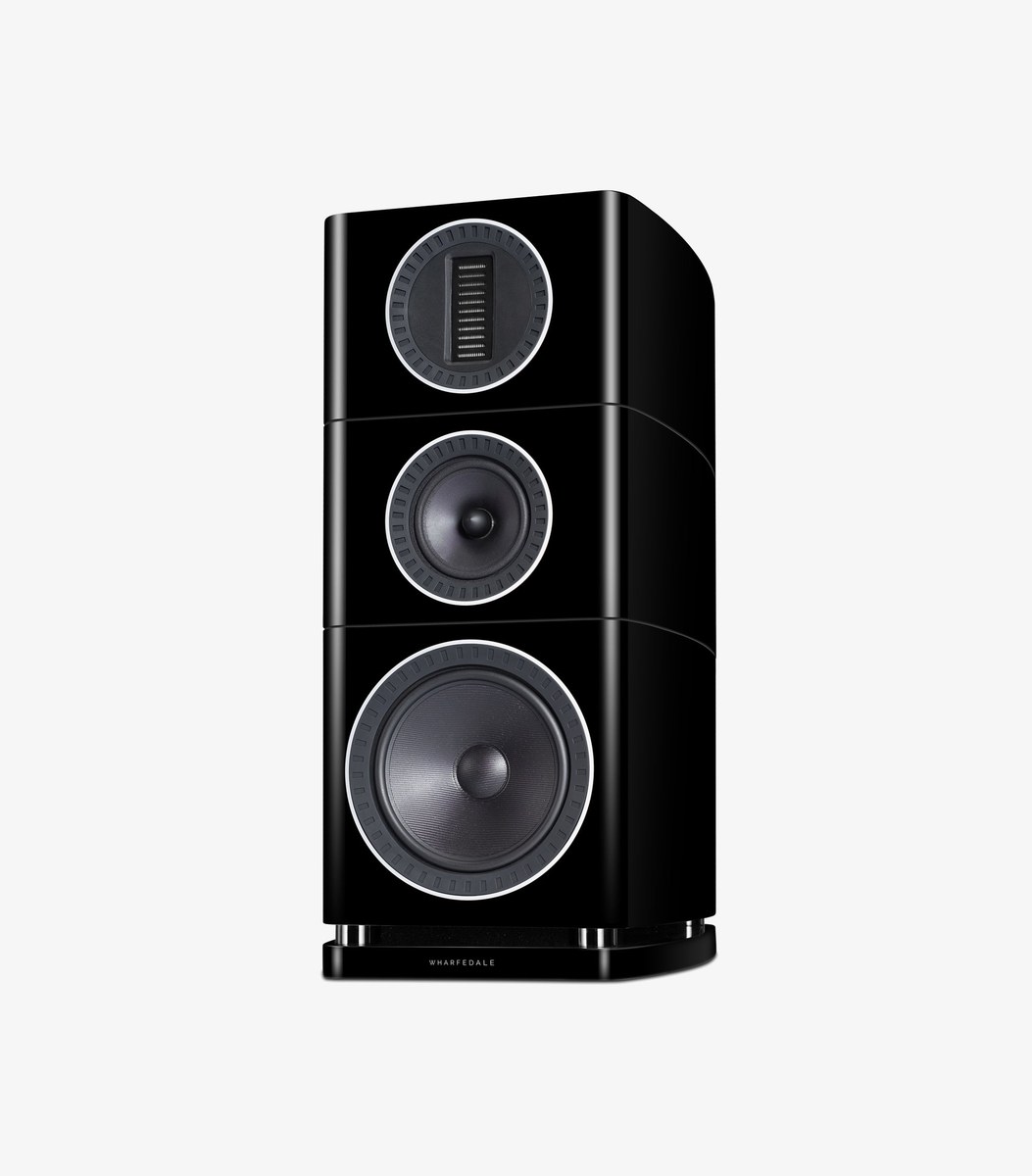
Wharfedale was founded in Yorkshire in 1932 and is best known for affordable, musically voiced speakers. With its Heritage series, such as the Linton, the brand recently revived the look of classic British speakers. The Elysian series, by contrast, is Wharfedale's flagship line. It combines large glass fibre drivers with an Air Motion Transformer tweeter and elaborately curved cabinets.
The Elysian 2 is the large standmount of the first Elysian generation. It is a three-way design with a 22 cm woofer, a 15 cm midrange driver and an AMT tweeter, 70 cm tall and 30.5 kg in weight. A successor, the Elysian 2R, now exists, but the Elysian 2 is still available from many retailers at around €5,799 per pair. That places it in our Expert tier of bookshelf speakers.
The technology explained
Three ways in a standmount
Most bookshelf speakers use two ways: a bass/mid driver handles bass and midrange, a tweeter the treble. The Elysian 2 splits the range into three. The 22 cm woofer plays up to 360 Hz, the 15 cm midrange from 360 Hz to 2.9 kHz, and the AMT above that. The advantage is that the midrange driver does not have to make large bass excursions and can reproduce voices more cleanly. According to the Greek magazine hxosplus, midrange and tweeter sit in their own sub-enclosure that takes up about two thirds of the cabinet depth.
Glass fibre drivers
Both cone drivers have a woven, coated glass fibre diaphragm; hxosplus names Scan-Speak as the supplier. Glass fibre is stiff and light, and the coating damps resonances. The drivers sit in heavy metal baskets bolted together with additional aluminium rings. The midrange has a fixed phase plug instead of a dust cap.
AMT tweeter
The Air Motion Transformer uses a pleated film with an area of 27 × 90 mm. The pleats squeeze together in time with the signal and push the air out like a bellows, which makes the AMT very fast on transients. Its tall shape disperses widely in the horizontal plane and more narrowly in the vertical.
Cabinet and bass reflex
The cabinet is strongly curved and finished in piano lacquer. The bass reflex port fires downwards onto a plinth about two centimetres below. Wharfedale calls this a Slot-Loaded Profiled Port. The air exits to the sides, with damping elements at the front and back. This is meant to excite the room more evenly and make the speaker less sensitive to wall distance. On the back are two pairs of large terminals for bi-wiring.
What the specifications mean
Wharfedale quotes 35 Hz to 22 kHz (±3 dB) and 28 Hz at −6 dB, which is the bass extension of a mid-sized floorstander. Sensitivity is 89 dB and impedance 4 Ω with a minimum of 3.6 Ω. The recommended amplifier power is 25 to 250 watts, and maximum SPL is 109 dB. hxosplus reported that the speaker was very easy to drive even with a 40-watt valve amplifier.
Sound according to international reviews
hxosplus gave the Elysian 2 a score of 95 percent. It described the sound as warm, rounded and full-bodied, with a bottom-up tonal balance that emphasises volume and instrumental body. Resolution was clearly higher than with the Heritage Linton, and the result airier and more detailed. The bass was full, powerful and rhythmic, more generous than fast. The transition to the midrange was seamless, and voices sounded expressive and human. The AMT added plenty of air without becoming hard or over-analytical.
Compared with reference speakers such as the KEF R11, the Elysian 2 was slightly less neutral and less revealing but had more personality and invited long listening sessions. It did not mercilessly expose the flaws of recordings. Audioholics described the technical background of the series in detail at its launch. These statements come from the press, not from listening tests of our own.
Elysian 2 and Elysian 2R
The successor, the Elysian 2R, belongs to the R series introduced in 2025, with a revised AMT and a new crossover. If you buy the older Elysian 2, you get the proven driver line-up, often at a lower price. We have also analysed the smaller two-way model of the new series, the Elysian 1R. For large rooms the series also has floorstanders.
Stands: almost essential
At 70 cm tall and 30.5 kg, the Elysian 2 is not a bookshelf speaker in the usual sense. Wharfedale offers the Elysian Stand: a steel stand with carbon reinforcement and an MDF base plate in the cabinet finish. According to hxosplus, four rubber-covered hemispheres on top of the stand locate in matching holes in the speaker's plinth, so it sits securely while being lightly decoupled. A boxed pair of speakers with stands weighs over 80 kg; set up with two people and wear gloves, because the piano lacquer is delicate.
Placement and amplification
Thanks to the downward-firing port, the Elysian 2 is relatively flexible. hxosplus found it could stand closer to the wall than many rivals and still sounded full and powerful out in the room. 40 to 80 cm from the wall is a good starting point. Toe the speakers in slightly towards the listening seat and bring the AMT to about ear height.
At 89 dB it is pleasantly efficient for a 4 Ω speaker. A load-stable integrated amplifier with 50 to 150 watts is enough for most rooms, and according to hxosplus it also works very well with valve amplifiers.
Examples of suitable amplifiers
- Luxman L-507Z: finely detailed, complements the warm speaker well.
- Hegel H190v: powerful and clear.
- McIntosh MA252: hybrid with valve preamp.
- Rotel A14MKII: lots of power for the money.
More candidates in our amplifier rankings.
Cables, bi-wiring and connection
The Elysian 2 has two pairs of large-diameter terminals. According to hxosplus they come linked with short jumper cables, so a single cable run is enough. Bi-wiring means the woofer and the mid/treble section get separate cables that meet again at the amplifier. Whether that makes an audible difference is debated. If you want to try it, use identical cables for both sections. With a 4 Ω speaker a cross-section of 2.5 mm² or more matters. Suitable cables are in our speaker cable rankings.
First steps
First place and level the stands where you want them, then lift the speakers on with two people and let them locate in the mounts. Handle the piano lacquer only with gloves or a soft cloth. Then start with a familiar recording and change wall distance and toe-in in small steps until bass and voices sound balanced. Because the speaker has a lot of bass extension, check the bass at several listening positions.
Room and fine-tuning
The Elysian 2 suits medium to large rooms from about 20 m². In small rooms the strong low bass can be too much. Because the voicing is warm, it pairs well with rooms that sound on the bright side. In heavily damped rooms a neutral or slightly bright amplifier can improve the balance.
The Elysian 2 in a vinyl system
The warm, full-bodied voicing suits records with acoustic instruments, jazz and rock. Because the speaker reaches down to 35 Hz, the turntable should be well isolated from footfall. A precise cartridge such as the Ortofon 2M Black or an MC cartridge such as the Ortofon Cadenza Red pairs well with a high-quality deck such as the Rega Planar 6. More in our turntable rankings.
Strengths and limits at a glance
- Strength: true three-way design with a dedicated midrange.
- Strength: bass extension to 35 Hz (±3 dB).
- Strength: warm, full-bodied sound with plenty of treble air.
- Strength: easy to drive, even with valves.
- Strength: excellent build, bi-wiring.
- Limit: very large and heavy, needs matching stands.
- Limit: slightly less neutral than reference speakers.
- Limit: the 2R successor is already available.
Who it suits
The Elysian 2 suits listeners who want floorstander sound in a standmount format and enjoy long, relaxed listening sessions. It suits valve fans and rooms where floorstanders would not fit visually. If you want maximum neutrality and analysis, audition alternatives such as KEF's Reference models. Weight is worth considering too: if you rearrange or move often, smaller speakers are less work.
Comparison with alternatives
The Dynaudio Contour 20i is smaller and more balanced but harder to drive. The KEF Reference 1 Meta is more neutral and precise but more expensive. The Bowers & Wilkins 805 D4 is a two-way with a diamond tweeter. More in our bookshelf speaker rankings.
Frequently asked questions about the Wharfedale Elysian 2
Can I put the Elysian 2 on a shelf?
Hardly. At 70 cm tall and 30.5 kg it belongs on matching stands.
Is bi-wiring possible?
Yes, the speaker has two pairs of terminals.
What is the difference from the Elysian 2R?
The 2R has a revised AMT, a new crossover and new finishes.
Does a valve amplifier work?
Yes. hxosplus reported very easy operation with a 40-watt valve amplifier.
Which finishes are available?
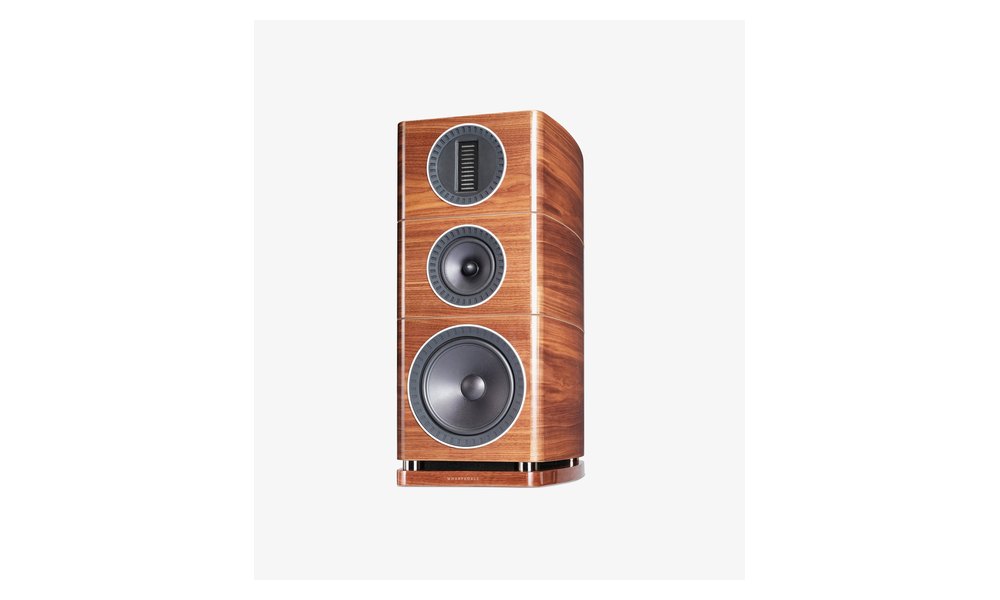
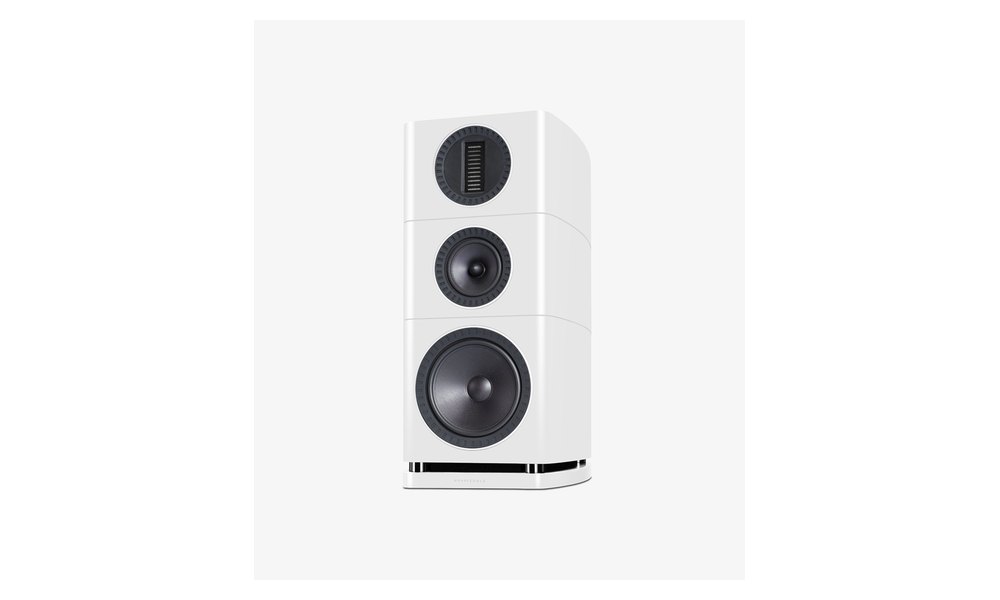
The Elysian 2 comes in piano lacquer, for example black and walnut. The matching stand has a base plate in the cabinet finish.
Do I need a subwoofer?
Hardly for music. The speaker reaches 28 Hz at −6 dB.
Verdict
The Wharfedale Elysian 2 is a large three-way standmount with an AMT tweeter, deep bass and a warm, full-bodied voicing. International reviewers praise its build, musicality and ease of drive. If you have room for stands and want a relaxed, full sound, it is a very distinctive alternative to floorstanders.
Read more: best bookshelf speakers 2026 · Improve your hi-fi system · What is hi-fi?