
Bookshelf speaker · AI analysis · Expert, rank 1
Dynaudio Contour 20i: Analysis
AI analysis (research): compact speaker, 86 dB / 4 Ω, IEC 180 W, Esotar 2i — specifications and prices, no listening test.
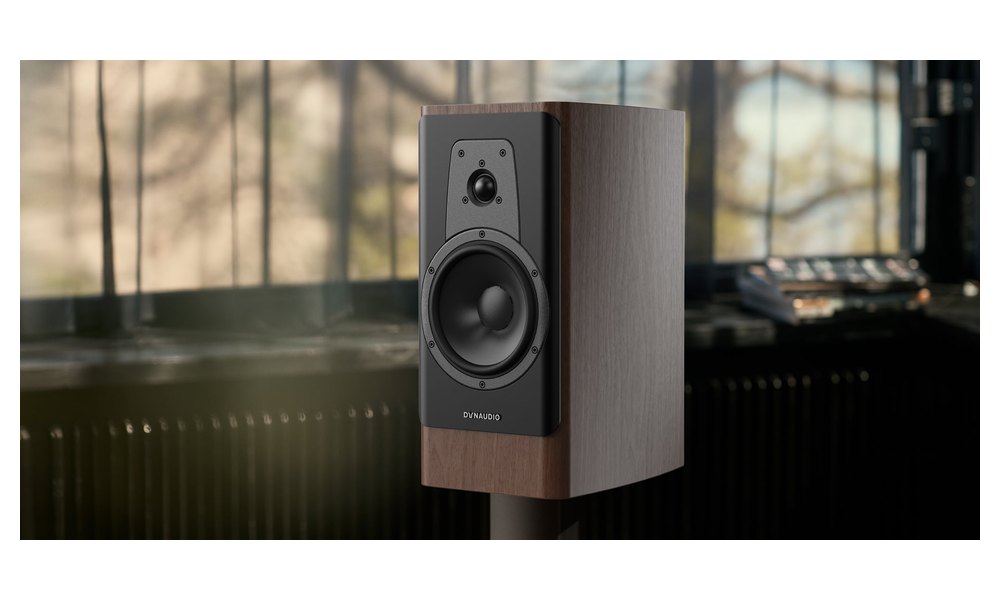
Summary
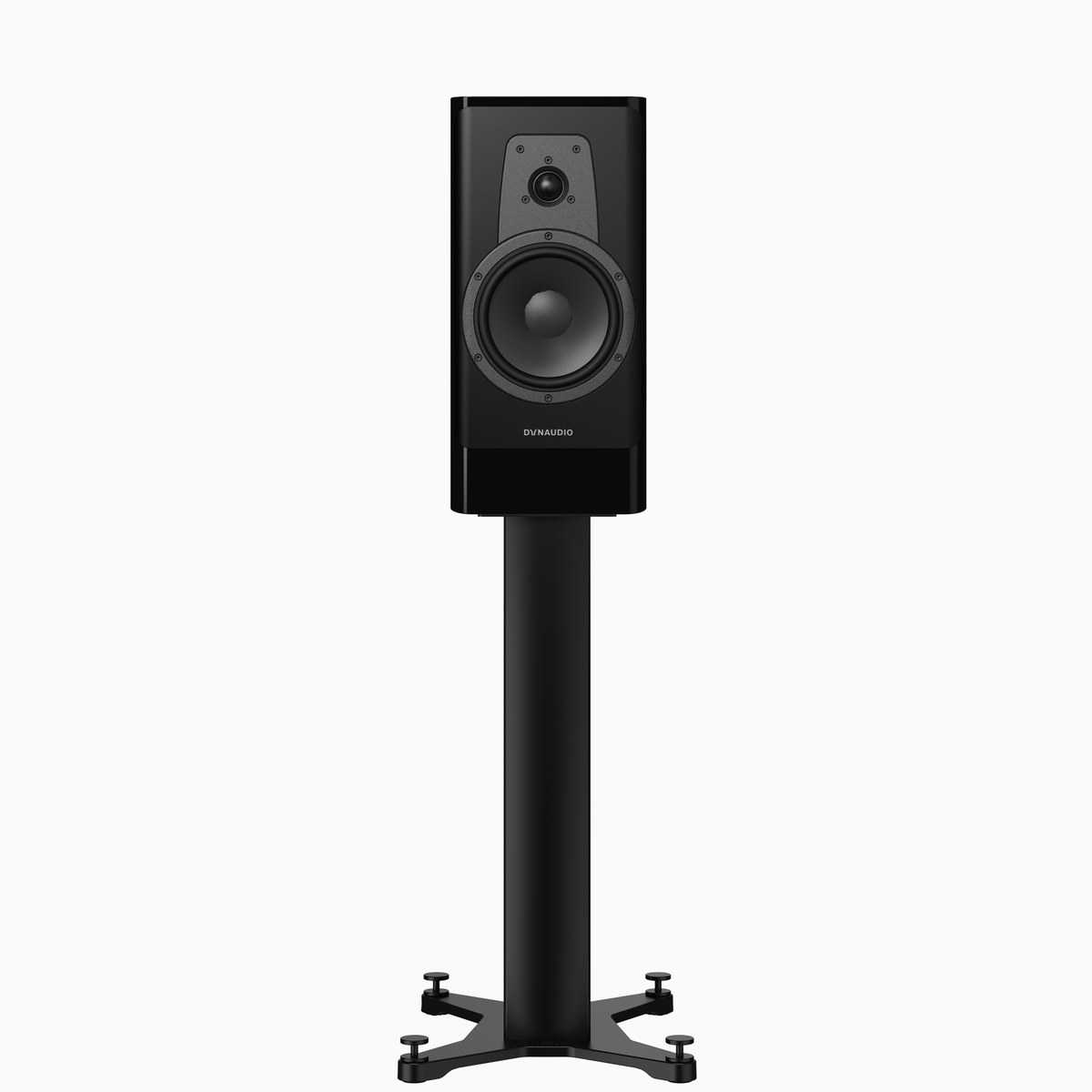
The Contour 20i is Dynaudio’s aspiring bookshelf speaker: 18 cm MSP, 28 mm Esotar 2i, 86 dB, 4 Ω, 39 Hz–23 kHz (±3 dB), IEC 180 W. Market price/MSRP often approx. €5,000/pair. Strong with vinyl if amp and stands are right — 86 dB / 4 Ω demand substance and deliver monitor clarity (consensus).
Assumptions
- Price per pair Sept 2026
- Stands recommended
- Amp load stable at 4 Ω
- No measurements of our own
Specs (public / manufacturer)
| Type | 2-way compact speaker · Bass-reflex |
|---|---|
| Sensitivity | 86 dB (2.83 V/1 m) |
| Impedance | 4 Ω |
| Power handling | IEC long-term power handling 180 W |
| Frequency range | 39 Hz–23 kHz (±3 dB) |
| Chassis | 18 cm MSP · 28 mm Esotar 2i |
| Dimensions / weight | 215 × 440 × 360 mm · 14 kg/piece |
| Price guide | approx. €5,000/pair · Sept 2026 |
Manufacturer specifications (Dynaudio)
| Type | 2-way bookshelf speaker, bass reflex (rear-ported) |
|---|---|
| Drivers | 28 mm Esotar 2i with Hexis · 18 cm MSP mid/woofer |
| Frequency response | 39 Hz–23 kHz (±3 dB) |
| Sensitivity | 86 dB (2.83 V/1 m) |
| Impedance | 4 Ω |
| IEC long-term power handling | 180 W |
| Crossover frequency | 2,200 Hz (2nd order) |
| Dimensions | 215 × 440 × 360 mm (W × H × D; D 396 mm incl. grille) |
| Weight | 14 kg |
Source: Dynaudio – official specifications · As of 16 October 2026 · subject to change by the manufacturer
Scores in detail
Vinyl BotPro Index: 82 · Index band Expert 70–84 · Guidance only, not a lab value.
Strengths
- Esotar 2i tweeter
- Monitor reputation
- Deep bass for a standmount (consensus)
Weaknesses
- Only 86 dB — Amp-hungry
- 4 Ω
- Stands/Setup critical
Comparison models
| vs. R3 Meta | Cheaper, different sound profile |
|---|---|
| vs. 705 S3 | Similar bookshelf budget, Continuum vs. MSP |
| vs. Evoke 30 | Shelf vs. stand, higher positioned |
System matching
Works well with
- Load-stable expert amps
- Good stands
- Nearfield/living room with control
Less suited
- Weak Class D budget amps
- If you want maximum sensitivity
- Very large rooms without reserve
Analysis: the Dynaudio Contour 20i in depth
What this page is: an AI analysis, not a listening session
This page summarises what can be documented about the Dynaudio Contour 20i from manufacturer information and international reviews. Vinyl BotPro has neither listened to nor measured these speakers. We paraphrase sound descriptions as the named authors wrote them under their own conditions, each with a date. Measurements come exclusively from the trade press and, where stated, concern the predecessor model. This section does not change the page's rank, index or prices.
Keeping the models apart
- Contour 20 (2016): the predecessor. Stereophile reviewed and measured it in 2017 [5][6].
- Contour 20i (2020): the model analysed here. What Hi-Fi? (July 2020), SoundStage! Ultra (November 2020) and hi-fi+ (January 2024) reviewed it [2][3][4].
- Other Contour models: Dynaudio also lists a Contour 20 Black Edition and a Contour Legacy [1]. They are not covered by this analysis.
The Contour i family also includes the Contour 30i and 60i floorstanders and the Contour 25Ci centre [1][3]. According to What Hi-Fi?, the headline specifications of the Contour 20 and 20i are almost identical; the differences are in the detail [2]. We have no measurements of the 20i itself.
What changed from the Contour 20
Dynaudio and the reviews name four changes [1][2][3][4]:
- Esotar 2i tweeter: a larger rear chamber for better damping and the Hexis inner dome from the Confidence series [1][4]. SoundStage! Ultra also mentions a bigger neodymium magnet [3]. According to SoundStage! Ultra, Hexis is a dimpled, injection-moulded plastic dome damped at its centre with felt [3].
- Mid/bass driver: a new spider made of aramid fibres with ribs of varying width [1][4]. SoundStage! Ultra names the material as Nomex, an aramid [3]. The aluminium voice coil and vented dual-ferrite magnet system carry over [1][3][4].
- Crossover: simplified; according to Dynaudio, extra impedance-correction circuitry is no longer needed [1][4].
- Internal damping: revised using lessons from Evoke and Confidence [1][3].
According to SoundStage! Ultra, the high-gloss lacquers and walnut veneer were also improved [3]. A reshaped bass reflex port is not mentioned in any of our sources.
Technology according to Dynaudio
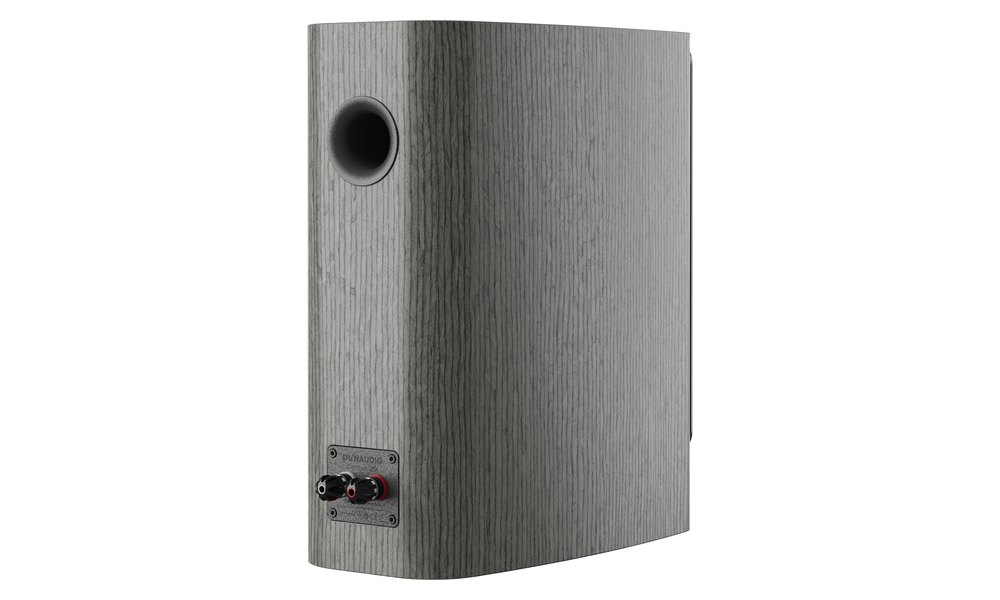
- Design: two-way, bass reflex with a rear port [1].
- Tweeter: 28 mm Esotar 2i with Hexis, coated fabric dome [1][3].
- Mid/bass driver: 18 cm MSP (magnesium silicate polymer) [1]. What Hi-Fi? writes "Magnesium Silicon Polypropylene" [2]; we follow Dynaudio.
- Crossover: 2,200 Hz, second order [1].
- Sensitivity: 86 dB (2.83 V/1 m) [1].
- Impedance: 4 Ω nominal [1].
- Power handling: 180 W IEC long-term [1].
- Frequency response: 39 Hz to 23 kHz (±3 dB) [1].
- Dimensions: 215 × 440 × 360 mm (W × H × D), 396 mm deep with grille [1].
- Weight: 14 kg per speaker [1].
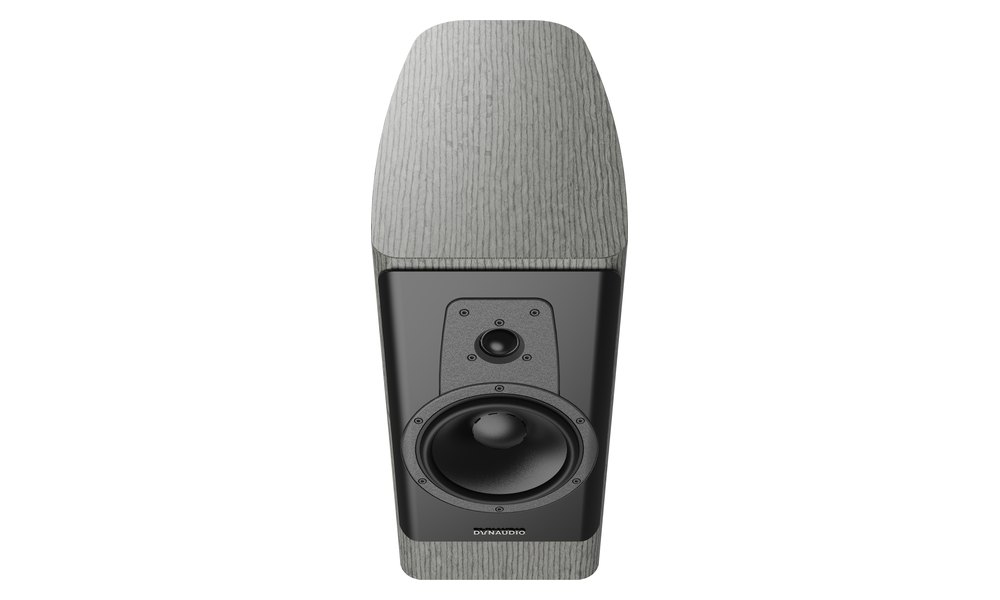
- Baffle: aluminium, set into the cabinet; its chamfer is integrated into the driver basket, which according to Dynaudio reduces high-frequency diffraction [1].
Cabinet
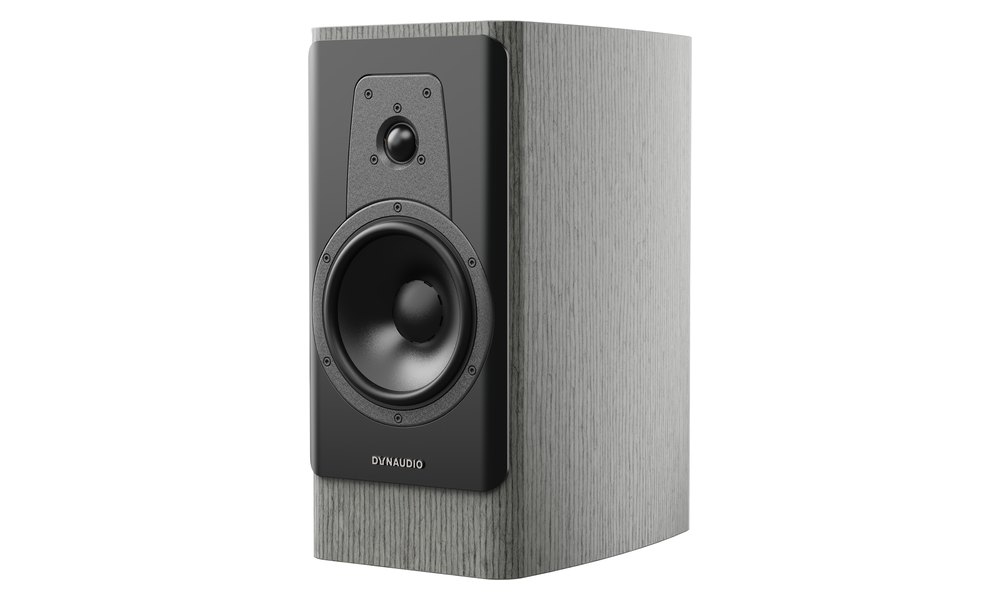
What Hi-Fi? describes the 20i's cabinet as unchanged from the predecessor: MDF, a 38 mm back panel, 16 mm sides and extensive bracing [2]. According to What Hi-Fi?, the front is a 14 mm aluminium panel lined with 16 mm MDF [2]. The sides taper towards the rear and have rounded edges [3][4]. Magnetic grilles are included; the connections are a single pair of binding posts for banana plugs or spades [3][4].
According to SoundStage! Ultra, the speakers are made at Dynaudio's factory in Skanderborg, Denmark [3]. The warranty there was five years, eight with registration [3].
Finishes
The sources differ here:
- What Hi-Fi? (2020) and SoundStage! Ultra (2020): high-gloss black, walnut, high-gloss grey oak [2][3].
- hi-fi+ (2024): Black High Gloss, Walnut and Nordic Silver as a new colour [4].
Check the current range with a dealer.
What 86 dB and 4 Ω mean in practice
- What Hi-Fi?: Dynaudio tends to engineer relatively flat impedance curves, so the speaker is kinder than its specs suggest. Even so, What Hi-Fi? recommends an amplifier with some grunt, with something like a Naim Supernait 3 or Rega Aethos as the bare minimum [2].
- SoundStage! Ultra: the speaker worked well even with a tube amplifier delivering only 51 W into 4 Ω. The author considers 50 W into 4 Ω enough as long as the amplifier is stable into 4 Ω [3]. A very powerful Hegel H590 drew out a little more bass energy [3].
- Stereophile (predecessor Contour 20, 2017): John Atkinson estimated sensitivity at 84.2 dB, below the specified 86 dB. Impedance stayed above 4 Ω for most of the band, with a minimum of 4 Ω at 285 Hz [6]. Herb Reichert ran the speaker with a 35 W tube amplifier [5][6].
Our reading: the 20i specifications and the predecessor's measurements point to a speaker that needs voltage headroom more than extreme current delivery. There are no measurements of the 20i itself.
What Hi-Fi? (July 2020)
What Hi-Fi? reviewed the Contour 20i on 9 July 2020, then priced at £3,999, $5,250 or AU$9,000 [2]. The scores: 5 for sound and build, 4 for compatibility [2]. The impressions [2]:
- Powerful, weighty bass that is surprising for the cabinet size, yet agile and tuneful.
- Class-leading detail resolution, more than the predecessor.
- Big dynamic swings delivered with composure; no hardening at high volume.
- Tonally smooth and even; its strengths emerge over longer listening.
- Good, stable soundstage, though not as spacious as the B&W 805 D3.
It warns of too much bass with careless placement or amplifiers with poor bass control [2]. The supplied foam port plugs are a fix rather than a cure [2]. Against the KEF Reference 1 and B&W 805 D3, the Contour 20i is more rhythmic and musically cohesive, and costs less [2].
SoundStage! Ultra (November 2020)
Hans Wetzel reviewed the Contour 20i for SoundStage! Ultra on 1 November 2020, then priced at $5,250 per pair [3]. He used three amplifiers, with the speakers about 30 cm from the rear wall [3]. His impressions [3]:
- In one word: balanced.
- No other two-way minimonitor he knew was as linear and tightly controlled below 120 Hz; well controlled down to about 40 Hz.
- Smooth and textured rather than airy and incisive; treble a touch polite, midrange gently forward.
- Moderate soundstage depth and width; very composed even at high volume.
- Enjoyable over hours and weeks.
Compared with the EgglestonWorks Nico Evo and the Sonus Faber Electa Amator III, he found the Contour 20i more accurate but less exciting [3].
hi-fi+ (January 2024)
Chris Kelly reviewed the Contour 20i in hi-fi+ issue 227 (January 2024), then priced at £4,500 or $5,750 per pair [4]. Among other sources he used a Linn LP12 with a Dynavector XX2 and a Gold Note PH5 [4]. His impressions [4]:
- A subwoofer did not seem necessary in his room.
- At 54 cm from the wall he heard no chuffing from the rear port and no bloated bass.
- Room correction (Lyngdorf RoomPerfect) changed little in his room; he concludes the frequency response is fairly even.
- The speakers must be run in; dealers should do that before a demonstration.
His room measured about 4.6 × 3.7 m [4].
The predecessor measured (Stereophile 2017)
Stereophile published measurements of the Contour 20 [6]. They do not automatically apply to the 20i, but show how the platform behaves:
- The port is tuned to about 32 Hz; with plugs fitted the speaker works as a sealed box tuned around 53 Hz [6].
- The on-axis response was very even, with a slight dip in the presence region [6].
- The tweeter became clearly directional above 10 kHz; Atkinson thought the sound might be a bit mellow in large or heavily damped rooms [6].
- Vertically, dips in the crossover region only appeared more than 15° above or below the tweeter axis, so stand height should not be critical [6].
- According to Stereophile, the plugs could be fitted in two stages [5][6].
With the Contour 20, Herb Reichert found the best imaging with his ears just below the tweeter axis and toe-in such that the axes crossed about 30 cm behind his head [5]. For the 20i, hi-fi+ chose a similar toe-in with the axes crossing just behind the listening position [4].
Placement
- Stands: Dynaudio offers the Stand 20; the Contour 20i can be bolted to it with adapter plates [3][4]. In 2020 SoundStage! Ultra quoted $499 for the stands plus $70 for the adapters [3].
- Wall distance: hi-fi+ chose 54 cm, SoundStage! Ultra about 30 cm with audible bass reinforcement [3][4]. What Hi-Fi? warns against placing them too close to the wall [2].
- Plugs: help with placement near a wall but, according to What Hi-Fi?, are only a fix [2].
- Running in: What Hi-Fi? and hi-fi+ stress that the speakers need time [2][4].
In a vinyl system
The reviewers also used turntables: What Hi-Fi? a Technics SL-1000R, hi-fi+ a Linn LP12 [2][4]. A speaker whose predecessor's port is tuned around 32 Hz can make low-frequency disturbances such as rumble or footfall audible [6]. That is our assessment from the predecessor's measurements; there are no such measurements of the 20i. A stable turntable support and sensible distance from the speakers are therefore worthwhile.
Where the sources agree
- Bass: strong for the size and very well controlled [2][3][4].
- Tonality: balanced, smooth rather than spectacular; strong over long listening [2][3].
- Build: very high quality [2][3][4].
- Placement: needs care, especially wall distance [2][4].
Open points and limits of this analysis
- Amplifier needs: What Hi-Fi? recommends headroom, SoundStage! Ultra considers 50 W into 4 Ω enough [2][3].
- Finishes: grey oak (2020) versus Nordic Silver (2024) [2][3][4].
- Measurements: only the predecessor Contour 20 has been measured in our sources [6].
- Prices: £3,999/$5,250 (2020), £4,500/$5,750 (2024) [2][3][4]. The page's price information stays unchanged.
- A detailed human fact-check of this analysis is still pending.
Sources for this analysis
- Dynaudio – Contour 20i (Produktseite mit Spezifikationen). https://dynaudio.com/home-audio/contour-i/contour-20i
- What Hi-Fi? – Dynaudio Contour 20i review (09.07.2020). https://www.whathifi.com/reviews/dynaudio-contour-20i
- SoundStage! Ultra – Hans Wetzel, Dynaudio Contour 20i Loudspeakers (01.11.2020). https://www.soundstageultra.com/index.php/equipment-menu/991-dynaudio-contour-20i-loudspeakers
- hi-fi+ Ausgabe 227 – Chris Kelly, Dynaudio Contour 20i (Januar 2024; Nachdruck als PDF bei Dynaudio). https://dynaudio.com/hubfs/Reviews%20and%20awards/PDFs/Contour%20i/hi-fi+_227_Cotour_20i.pdf?hsLang=en
- Stereophile – Herb Reichert, Dynaudio Contour 20 loudspeaker (Vorgängermodell, 24.03.2017). https://www.stereophile.com/content/dynaudio-contour-20-loudspeaker
- Stereophile – John Atkinson, Dynaudio Contour 20 Measurements (Vorgängermodell, 2017). https://www.stereophile.com/content/dynaudio-contour-20-loudspeaker-measurements
Created by AI (Vinyl BotPro) from the sources listed; no listening tests or measurements of our own. Detailed human fact-check pending.
Created by Vinyl BotPro (AI) · As of Sept 2026 · Corrections: info@vinylcination.de
Manufacturer and concept
Background, model history and the changes from the Contour 20 (2016) are now covered, with sources, in the analysis above.
The technology explained
Drivers, crossover, cabinet and what 86 dB and 4 Ω mean are now explained in the analysis above, with manufacturer data and the predecessor's measurements.
Sound according to international reviews
We evaluate the reviews by What Hi-Fi? (07/2020), SoundStage! Ultra (11/2020) and hi-fi+ (01/2024) above, separately, with names and dates.
Contour 20i, Contour 20 Black Edition and Contour Legacy
How the Contour 20, Contour 20i and the other Contour models differ is set out above under "Keeping the models apart". Below sits the Evoke 20, above it the Confidence 20.
Choosing the right stands
Stands, toe-in and wall distance based on SoundStage! Ultra, hi-fi+ and Stereophile (predecessor) are covered above under "Placement".
Placement and amplification
Because of the rear port the speaker needs distance from the wall; 50 cm or more is a sensible start. If it has to stand closer, the supplied foam plugs help, but What Hi-Fi? called them a fix rather than a cure. The speakers should be slightly closer to each other than to the listening seat.
With the amplifier, current delivery matters more than the wattage figure. A load-stable integrated amplifier with 100 watts or more into 4 Ω is a good basis. SoundStage! Ultra (11/2020) did note, however, that the speaker can play loud and clean without an extremely powerful amplifier; What Hi-Fi? (07/2020) recommends some headroom.
Examples of suitable amplifiers
- Hegel H190v: powerful, with strong bass control.
- Naim Supernait 3: rhythmic and powerful.
- Luxman L-507Z: finely detailed and load-stable.
- Rotel RA-1592MKII: lots of power for the money.
More choices in our amplifier rankings.
First steps
For setup, an equilateral triangle of both speakers and the listening seat is a good starting point, with the speakers slightly closer together than to the seat. Make sure the stands are firm and place both speakers at the same distance from the rear and side walls. Check polarity when connecting. Then start with a familiar recording with a centred voice and change the toe-in in small steps until the voice stands sharp and stable between the speakers. Only then fine-tune the wall distance for the bass.
Cables and connection
The Contour 20i has a single pair of terminals. With a 4 Ω speaker that draws a lot of current, a cable with adequate cross-section pays off, about 2.5 to 4 mm² for longer runs. Equal lengths on both sides and clean spades or banana plugs ensure secure connections. Suitable models are in our speaker cable rankings.
Room and fine-tuning
The Contour 20i suits rooms of about 15 to 35 m². In small rooms the strong bass can dominate; then more wall distance, placement away from corners and, if necessary, the foam plugs help. Toe-in has a strong effect on focus and soundstage width. Rugs and curtains on the side walls stabilise the imaging.
The Contour 20i in a vinyl system
A speaker with this much detail and bass benefits from a quiet, well-isolated turntable. Footfall and rumble can become noticeable with a speaker that reaches down to 39 Hz. A deck such as the Rega Planar 6 or the Technics SL-1500C on a stable support is a good partner. Cartridges are in our cartridge rankings and decks in our turntable rankings.
Strengths and limits at a glance
- Strength: very powerful, controlled bass for a standmount.
- Strength: high detail resolution and balanced tonality.
- Strength: stays calm and unstressed even at high volume.
- Strength: high-quality build.
- Limit: 86 dB and 4 Ω demand a powerful amplifier.
- Limit: needs wall distance and careful placement.
- Limit: large and heavy for a shelf.
Who it suits
The Contour 20i suits listeners who want a standmount with the bass of a small floorstander and are willing to invest time in setup. It rewards a powerful amplifier and a good source. If you expect instant wow effects, give it some time, as What Hi-Fi? advised; its strengths show mainly over longer listening.
Comparison with alternatives
The Bowers & Wilkins 805 D4 is more expensive; in 2020 What Hi-Fi? found its predecessor, the 805 D3, more spacious in imaging. The KEF R3 Meta is cheaper and very precise thanks to its coaxial driver. The Wharfedale Elysian 1R relies on an AMT tweeter. More in our bookshelf speaker rankings.
Frequently asked questions about the Dynaudio Contour 20i
What is new in the 20i compared with the Contour 20?
The Esotar 2i tweeter with Hexis and a larger rear chamber, an aramid-fibre spider, a simplified crossover and revised internal damping.
How much distance from the wall does it need?
50 cm or more is a good start. Closer to the wall, the supplied foam plugs help.
Which amplifier suits it?
A load-stable integrated amplifier with strong current delivery into 4 Ω.
Do I need a subwoofer?
Usually not. The speaker reaches 39 Hz and, according to the press, sounds very bass-strong.
Is the Contour 20i suitable for home cinema?
Yes. Together with the Contour i floorstanders and the 25Ci centre you can build a tonally consistent system. For film soundtracks with very deep bass a subwoofer still makes sense.
How tall should the stand be?
Tall enough for your ears to sit just below the tweeter axis.
Verdict
The Dynaudio Contour 20i is a large, powerful standmount with impressive bass, high resolution and a balanced voicing that works over the long term. What Hi-Fi? (5 for sound and build), SoundStage! Ultra and hi-fi+ were very positive and named careful placement and a suitable amplifier as the main conditions. In 2020 What Hi-Fi? rated it one of the best standmounts at its price.
Sources
Read more: best bookshelf speakers 2026 · Improve your hi-fi system · What is hi-fi?