
Bookshelf speaker · Short analysis · Expert, rank 4
Wharfedale Elysian 1R Review
Short analysis (research): 2-way bookshelf 89 dB / 4 Ω (min. 3.8 Ω), 25–175 W — specs/retailer price, no listening test.
Summary
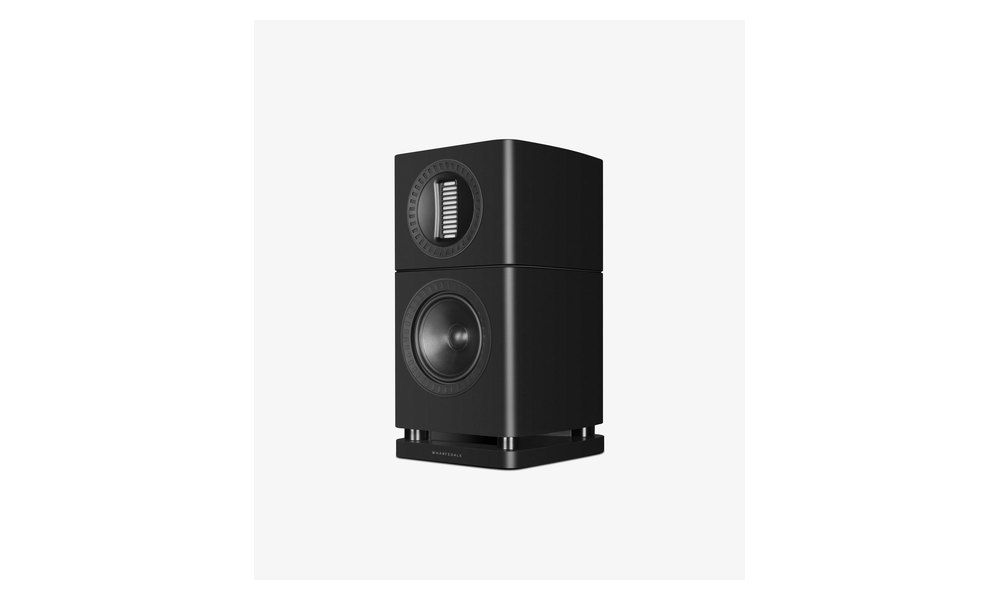
The Elysian 1R is Wharfedale's smaller shelf of the Elysian range: 7-inch glass fiber deep midrange driver, AMT tweeter (27 × 90 mm), 89 dB, 4 Ω (minimum 3.8 Ω), recommended 25–175 W, 49 Hz–22 kHz, about 490 mm on base, approximately 15 kg. According to the retailer, the pair costs €4,199. The 4-Ω load requires a load-stable amplifier.
Assumptions
- Price per pair Sept 2026
- Stands available
- Load-stable amp (4 Ω)
- No measurements or listening tests of our own
Specs (public / manufacturer)
| Type | 2-way compact speaker · Bass-reflex |
|---|---|
| Sensitivity | 89 dB |
| Impedance | 4 Ω nominal (min. 3.8 Ω) |
| Rec. Amplifier power | 25–175 W |
| Frequency range | 49 Hz–22 kHz |
| Chassis | 7″ Fiberglass · AMT 27 × 90 mm |
| Dimensions / weight | 490 × 263 × (285 + 30) mm · 15 kg/piece |
| Price guide | approx. €4,199/pair · Sept 2026 |
Manufacturer specifications (Wharfedale)
| Type | 2-way compact speaker, bass reflex |
|---|---|
| Drivers | 27 × 90 mm AMT · 7″ (180 mm) coated glass-fibre woofer |
| Frequency response | 49 Hz–22 kHz (±3 dB) · bass extension 44 Hz (−6 dB) |
| Sensitivity | 89 dB |
| Impedance | 4 Ω (8 Ω compatible), min. 3.8 Ω |
| Recommended amplifier power | 25–175 W |
| Max. SPL | 108 dB |
| Crossover frequency | 2.6 kHz |
| Dimensions | 490 (on plinth) × 263 (on plinth) × (285 + 30) mm (H × W × D) |
| Weight | 15 kg each |
Source: Wharfedale – official specifications · As of 16 October 2026 · subject to change by the manufacturer
Matching tips
- Suits: Load-stable expert amplifiers
- Suits: stands + detached placement
- Suits: Looking for AMT-treble with shelf format
- Less suited: Weak amplifier
- Less suited: Very narrow shelves
- Less suited: if you want no stands
Vinyl BotPro Index: 78 (Expert 70–84) · Label: AI research · Sept 2026 · All information is provided without guarantee; prices change and manufacturer specifications may differ.
Manufacturer and concept
Wharfedale is one of the oldest loudspeaker brands in the world. The company was founded in Yorkshire in 1932 and for decades built mainly affordable, well-voiced speakers such as the Diamond range. The Elysian series shows what the brand can do at the upper end of the market. The first Elysian generation appeared in 2019, and the revised R series followed in 2025. It consists of two standmount speakers, two floorstanders and a centre channel.
The Elysian 1R is the smallest model in the range. It is a two-way design meant to carry the character of the larger models into a cabinet that suits normal living rooms. Wharfedale describes the sound as open, fast and naturally balanced. At around €4,199 per pair it sits firmly in the Expert tier of our bookshelf speaker rankings.
Compared with the original Elysian 1, Wharfedale mainly revised the tweeter and the crossover. The basic concept stayed the same: a large 18 cm bass/mid driver and an Air Motion Transformer instead of a conventional dome. New matt finishes such as Lunar Grey join the familiar gloss walnut.
The technology explained
The AMT tweeter
An Air Motion Transformer (AMT) works differently from a dome. Instead of a curved diaphragm moving back and forth, it uses a pleated film with printed conductors. When current flows, the pleats squeeze together and open again, pushing air out like a bellows. The air moves faster than the film itself, which is why AMTs are known for fast transients and low distortion.
In the 1R Wharfedale uses a diaphragm measuring 27 × 90 mm. The tall shape has a side effect: horizontally the tweeter disperses widely, vertically it is narrower. That helps against reflections from floor and ceiling, but it also means your ear height at the listening seat should roughly match the tweeter height.
The bass/mid driver
The 18 cm (7-inch) bass/mid driver has a coated glass fibre matrix cone. Glass fibre is stiff and light, and the coating damps its own resonances. For a standmount, a 7-inch driver is large. It moves more air than the usual 13 or 15 cm units and therefore reaches deeper into the bass. The drawback of large cones is that they beam more as frequency rises. That is why the crossover point is fairly low at 2.6 kHz; the AMT takes over early.
Cabinet and bass reflex
The cabinet has an internal volume of 21.6 litres. That is a lot for a standmount and explains the bass figures. Wharfedale uses a slot-shaped, profiled reflex port at the plinth instead of a round tube on the back. A slot like this is meant to reduce air noise. Because the port does not face backwards, the speaker is usually less critical about the distance to the rear wall than a model with a rear port.
What the specifications mean
Wharfedale quotes 49 Hz to 22 kHz at ±3 dB and 44 Hz at −6 dB. That is strong bass for a box this size, but pipe organ or electronic sub-bass below 40 Hz is out of reach. Sensitivity of 89 dB (2.83 V, 1 m) is decent. A nominal impedance of 4 Ω with a minimum of 3.8 Ω is no problem for any decent integrated amplifier, but weak receivers can struggle. Peak SPL is 108 dB, and the recommended amplifier power is 25 to 175 watts. Each speaker weighs 15 kg.
Build and finishes
The Elysian R is available in Lunar Grey, matt black and gloss walnut. The matt versions look more modern, while the walnut veneer links back to the first Elysian generation. According to Wharfedale a boxed pair weighs 33.2 kg, so two people are a good idea for unpacking and setup. Wharfedale offers a three-year warranty and sells matching steel stands with a wooden base plate in the cabinet finish separately.
Sound according to international reviews
At the time of writing, detailed English-language reviews of the new 1R were still scarce. A useful reference is the direct predecessor, the Elysian 1, which used the same driver layout. The Danish site Audiophiles.eu described the Elysian 1 as tight, coherent and very open. It singled out the transition between AMT and bass/mid driver as almost inaudible, called the treble one of the best Wharfedale had ever made and gave the speaker an Editor's Choice award.
The same review described the bass as controlled and accurate, sometimes deep, within the natural limits of a single 18 cm driver. For the R version Wharfedale promises more precision and transparency from the revised AMT and the new crossover. These impressions are not ours; we did no listening test of our own. If you plan to buy the 1R, audition it with your own music and, ideally, your own amplifier.
The Elysian R series at a glance
The 1R is the entry model. Above it sits the Elysian 2R, a larger three-way standmount with a dedicated midrange driver. It costs considerably more, weighs more and needs more space. For large rooms there are the 3R and 4R floorstanders, and the CR centre for home cinema. All models share the same AMT, so they combine well tonally. We have also analysed the older, discontinued Elysian 2.
Choosing the right stands
The 1R is not a bookcase speaker. On its plinth it is 49 cm tall and 31.5 cm deep, and the bass quickly becomes thick inside a shelf. If you use third-party stands, check three things. The top plate must safely carry 15 kg. The height should put the AMT at roughly ear level, which usually means 55 to 65 cm. And the stand itself should be rigid so that it does not resonate.
Placement and amplification
As a starting point, allow 40 to 60 cm from the rear wall and at least half a metre from the side walls. The speakers should be about as far apart as they are from the listening seat. A slight toe-in towards the listener helps to lock the centre image. Because the AMT disperses narrowly in the vertical plane, sit upright and not too close.
A solid integrated amplifier with 50 to 100 watts into 4 Ω is enough. What matters is that it stays stable at low impedance. A very bright amplifier combined with the detailed AMT can sound tiring; a neutral or slightly warm partner often works better.
Examples of suitable amplifiers
- Hegel H190v: powerful, controlled and with streaming.
- Rotel A14MKII: plenty of power and good load stability.
- Naim Nait XS 3: rhythmic, compact approach.
- Luxman L-507Z: if the budget allows more.
More candidates are in our amplifier rankings.
Room and fine-tuning
Judging by the specifications, the 1R suits rooms of roughly 15 to 30 m². In very small rooms the bass can become too strong, especially close to walls or in corners; then pull the speakers further into the room. In large rooms it stays clean, but a subwoofer can usefully extend the deep bass. A soft rug between speakers and listener damps floor reflections, and curtains or shelves on the side walls soften hard reflections. With an AMT in particular it is worth changing the toe-in in small steps until voices sit firmly in the centre.
The Elysian 1R in a vinyl system
A high-resolution tweeter also reveals weaknesses at the source. Clicks, a worn stylus or a badly aligned cartridge become audible. That makes a carefully set-up turntable worthwhile with this speaker. A good belt-drive deck such as the Rega Planar 3 with a clean moving-magnet cartridge is a sensible starting point. An external phono stage can pay off if the amplifier lacks a good phono input. See our phono preamp rankings and turntable rankings.
Strengths and limits at a glance
- Strength: AMT tweeter with plenty of detail and speed.
- Strength: large 18 cm bass/mid driver and 21.6 l cabinet for a standmount.
- Strength: profiled slot port instead of a rear-facing tube.
- Strength: high-quality build and three finishes.
- Limit: needs stands and space, not a shelf model.
- Limit: the 4 Ω load needs a stable amplifier.
- Limit: narrow vertical dispersion of the AMT, watch the listening height.
- Limit: sub-bass below 40 Hz only with a subwoofer.
Who it suits
The Elysian 1R suits listeners who want a compact speaker with a big sound and are ready to budget for stands and a good amplifier. It fits rooms where a floorstander would look too dominant. If you mostly listen quietly in the background or have to put the speakers in a shelf, a smaller, simpler model will serve you better.
Comparison with alternatives
In the same price range the 1R competes with the KEF R3 Meta, a three-way design with a coaxial driver and very precise imaging. The Dynaudio Contour 20i is harder to drive but is known for a very clean midrange. The Bowers & Wilkins 705 S3 uses a tweeter-on-top and a Continuum cone. Of these, the 1R has the largest bass driver. All candidates are in our bookshelf speaker rankings.
Frequently asked questions about the Wharfedale Elysian 1R
What is the difference between the Elysian 1 and 1R?
The 1R has a revised AMT, a new crossover and new finishes. Driver layout and cabinet size are similar.
Do I need a subwoofer?
In most rooms, no. If you listen to a lot of organ, electronic music or film soundtracks, a small subwoofer taking over below 45 Hz helps.
Can I connect the 1R to an AV receiver?
Yes, if the receiver is rated for 4 Ω. Many budget receivers shut down or sound strained at low impedance.
How tall should the stand be?
Tall enough that the tweeter sits at about ear height. With typical sofas that means 55 to 65 cm.
How long is the warranty?
Wharfedale states three years.
Verdict
The Wharfedale Elysian 1R is a large standmount with an AMT tweeter, a big bass/mid driver and a cabinet capable of serious bass. International reviewers already praised the predecessor's treble and the seamless transition between drivers. It needs stands, a load-stable amplifier and some care with placement. If you can provide that, you get a lot of speaker in a living-room-friendly format.
Read more: best bookshelf speakers 2026 · Improve your hi-fi system · What is hi-fi?