
Turntable · AI analysis · Starter, rank 20
Denon DP-400 Review
AI analysis (research): Semi-automatic belt-drive turntable with S-shaped tonearm, auto-lift and switchable phono preamp; basis: manufacturer data.
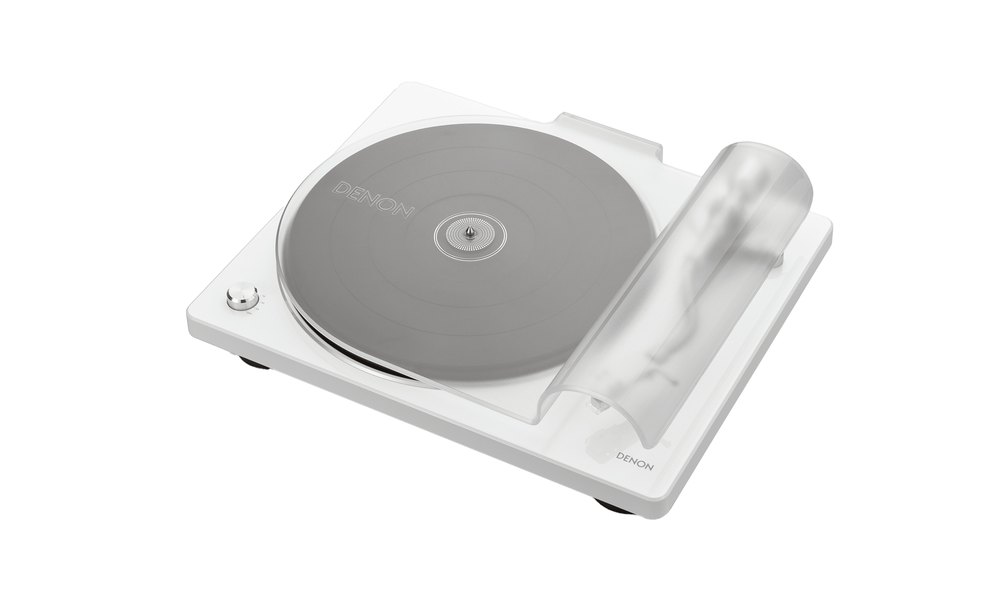
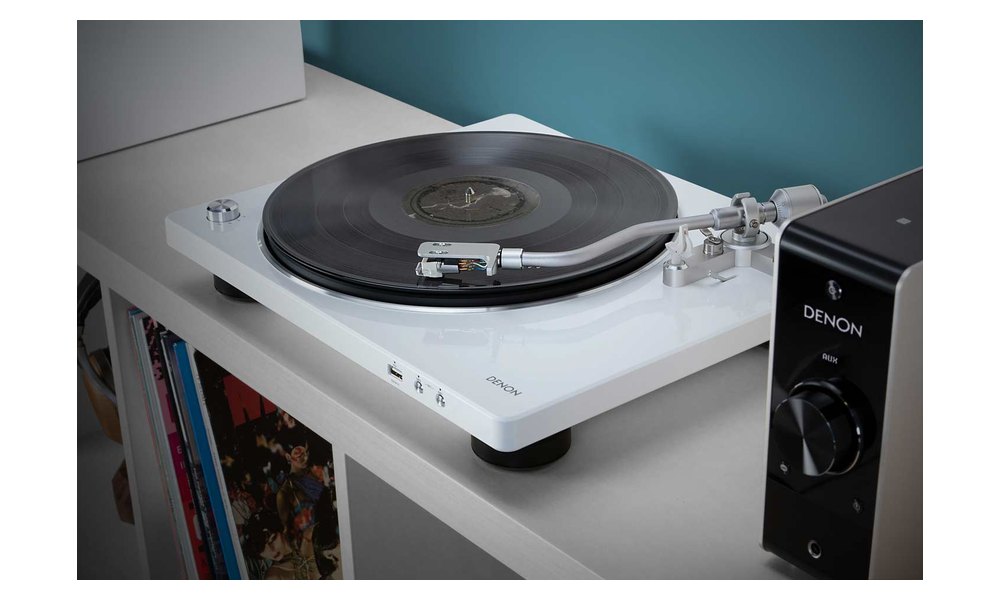
Summary
The DP-400 (approx. €350–450) is belt-driven and plays 33⅓, 45 and 78 rpm. The S-shaped tonearm lifts automatically at the end of the record, an MM cartridge comes pre-mounted and the phono preamp is switchable. It has no USB output; that is offered by the DP-450USB variant.
Specs (public / manufacturer)
| Drive | Belt · DC motor · 33⅓/45/78 rpm |
|---|---|
| Operation | semi-automatic · tonearm lift and stop at the end of the record |
| Tonearm | S-shaped · universal headshell |
| Cartridges | MM pre-mounted · 2.5 mV · replacement stylus CN-6518 |
| Phono | switchable · 150 mV at 1 kHz |
| USB | no (DP-450USB variant) |
| Measurements | wow & flutter 0.08 % (WRMS) · signal-to-noise ratio 65 dB |
| Dust cover | removable · doubles as a record sleeve stand |
| Dimensions / weight | 414 × 342 × 132 mm · 5.8 kg with dust cover |
| Price guide | approx. €350–450 market price · Sept 2026 |
Manufacturer specifications (Denon)
| Drive | Belt · DC motor · 33⅓/45/78 rpm |
|---|---|
| Operation | semi-automatic · tonearm lift and stop at the end of the record |
| Tonearm | S-shaped · universal headshell |
| Cartridges | MM pre-mounted · 2.5 mV · replacement stylus CN-6518 |
| Phono | switchable · 150 mV at 1 kHz |
| USB | no (DP-450USB variant) |
| Measurements | wow & flutter 0.08 % (WRMS) · signal-to-noise ratio 65 dB |
| Dust cover | removable · doubles as a record sleeve stand |
| Dimensions / weight | 414 × 342 × 132 mm · 5.8 kg with dust cover |
Source: Denon – official specifications · As of 16 October 2026 · subject to change by the manufacturer
Matching tips
- Good fit: Amplifiers with or without a phono input
- Good fit: Collections with 78 rpm records
- Good fit: Anyone who values auto-lift at the end of the record
- Less suited: Digitising via USB (the DP-450USB does that)
- Less suited: Anyone who wants to fine-tune the tonearm a lot
Why (guidance only)
Solid brand-name belt drive with phono, auto-lift and 78 rpm.
Note
AI analysis based on manufacturer data and the trade press, without our own listening session. Prices change — check the price date.
Technology in detail
Denon drives the DP-400 with a belt and DC motor; a speed selector switches between 33⅓, 45 and 78 rpm. For speed stability Denon quotes 0.08 % wow & flutter (WRMS).
The S-shaped tonearm carries a universal headshell with a pre-mounted MM cartridge (2.5 mV, replacement stylus CN-6518). Operation is semi-automatic: at the end of the record the arm lifts and the platter stops.
The built-in phono preamp delivers 150 mV and can be switched off if the amplifier has its own phono input. The removable dust cover also serves as a stand for the record sleeve. The unit measures 414 × 342 × 132 mm and weighs 5.8 kg with the dust cover.
What the specialist press says
For this model, the international specialist press evaluated here had not published a review at the time of research. The assessment is based on the manufacturer data.
Who is it for?
For anyone looking for a convenient belt-drive turntable with auto-lift who also wants to play 78s and does not need a USB output.
What makes this AI analysis special
This AI analysis is based on Denon's product page and technical data; all figures are manufacturer specifications. As of October 2026.
How the score comes about
The index reflects the convenient overall package with auto-lift, three speeds and a switchable phono preamp. The Vinyl BotPro Index on this page remains 45 (Starter, rank 20) — guidance from manufacturer data and the specialist press, no in-house listening session. The four criteria engineering/build, features, expected performance and value for money are weighted 25/20/25/30 and scaled across all tiers. Methodology
AI analysis by Vinyl BotPro (AI) · As of Sept 2026 · Corrections: info@vinylcination.de
Manufacturer and concept
Denon is best known for AV receivers and amplifiers but has also been building turntables for decades. The DP-400 belongs to the brand's younger generation and is aimed at listeners looking for a modern-looking belt-drive deck with a little convenience. It plays three speeds, lifts the arm automatically at the end of the record and has a switchable phono preamp. In our top list it sits in 20th place in the Starter tier with an index of 45.
Visually, the DP-400 stands out with its flat plinth and the S-shaped arm that recalls classic Denon decks. The detachable dust cover can be used as a stand for the sleeve of the record currently playing, a small but popular everyday detail. Its twin, the DP-450USB, also has a USB output for digitising.
Technology explained
Belt drive with three speeds
A DC motor drives the platter via a belt. A speed selector switches between 33⅓, 45 and 78 rpm without moving the belt. The 78 setting is meant for shellac records but requires a suitable stylus with a larger tip radius.
Semi-automatic with auto-lift
The DP-400 is semi-automatic. You cue the arm yourself with the lift; at the end of the side it rises automatically and the platter stops. You return it to the rest by hand. This solution prevents the stylus from running in the run-out groove for minutes, but remains mechanically simpler than an automatic deck.
S-arm with universal headshell
The S-shaped arm carries a universal headshell with the common bayonet mount. Factory-fitted is an MM cartridge with 2.5 mV output. The replacement stylus is the CN-6518. Thanks to the interchangeable headshell, another cartridge can be fitted later without modifying the arm.
Switchable phono preamp
The built-in phono preamp raises the signal to line level. This lets the DP-400 connect to any high-level input, to active speakers or to a compact system. If the amplifier has its own phono input, the stage is switched off.
Manual, semi-automatic, automatic: where the DP-400 stands
Turntables come in three modes of operation. A manual deck asks the listener for every step: cue the arm, lift it at the end, return it, stop the motor. An automatic deck does all of this at the push of a button. The semi-automatic sits in between. With the DP-400 you cue the arm yourself, but the deck recognises the end of the side on its own: the arm rises and the platter stops.
This middle way has practical advantages. The mechanics stay simpler than in an automatic deck, and yet nobody has to stand next to the turntable when the side runs out. That is pleasant when listening attentively from the sofa. Anyone who prefers to start without any manual steps should look at the Denon DP-300F or another automatic deck.
Design and build
For the DP-400, Denon uses a flat, modern plinth in black or white and a classically curved S-arm. The controls are reduced to the essentials: a speed selector, a start/stop button and the cue lever. The dust cover is detachable and, as mentioned, can be stood up as a sleeve stand. With a footprint of 414 × 342 mm, the deck also fits on a narrow sideboard. The connections are on the rear and easily accessible.
Set-up and installation
After unpacking, the platter is fitted, the belt placed over the motor pulley and the counterweight attached. Then you balance the arm and set the tracking force that Denon specifies in the manual for the supplied cartridge. Anti-skating is set to the same value. The pre-fitted cartridge is already aligned, so set-up is usually done in a quarter of an hour.
At 5.8 kg including the dust cover, the DP-400 is fairly light. A stable base and some distance from the speakers help against feedback. A spirit level on the platter shows whether everything is straight.
Assessment based on the available data
No usable listening review from the press sources used here was available for this analysis. The assessment is based on manufacturer information and the design. The DP-400 offers a lot of convenience and flexibility in connection, but the pre-fitted cartridge is a simple MM without a particular reputation. How the deck sounds in a specific system depends heavily on amplifier, speakers and room.
78 rpm: what to consider with shellac
That the DP-400 also handles 78 rpm is not a given in this price class. Shellac records, however, have much wider grooves than vinyl. A normal stylus sits too low in them and can damage both record and stylus. Shellac therefore needs its own stylus with a larger tip radius, ideally mounted on a second headshell. Thanks to the universal headshell, the swap takes a few seconds. After the change, the tracking force must be reset for the respective cartridge.
Upgrade path for the Denon DP-400
The biggest lever is the cartridge. Thanks to the universal headshell, a higher-grade MM such as an Ortofon 2M Red or an Audio-Technica VM95E can be fitted. Resetting the tracking force then adapts the arm to the new cartridge. The second step is an external phono stage, for which the internal stage is switched off. A better mat and a calm set-up round things off.
DP-400 or DP-450USB?
Both models share deck, arm, auto-lift and phono preamp. The DP-450USB adds a USB output for recording records directly on a computer. If you only want to listen, you do not need that function. If you want to archive a collection or take individual records with you digitally, the USB model saves an extra converter.
Comparison with the neighbours in the top list
- Denon DP-450USB (index 46): the same approach with a USB output.
- Thorens TD 101 A (index 45): automatic with AT3600.
- Rega Planar 1 Plus (index 44): manual belt-drive deck with built-in phono stage.
- Yamaha TT-S303 (index 43): simple belt drive with phono, no 78 rpm.
- Denon DP-300F (index 43): Denon's automatic deck.
Who it suits
The DP-400 suits listeners looking for a modern-looking turntable with auto-lift who also want to play 78s and connect flexibly. Anyone who digitises often is better off with the DP-450USB. Anyone who wants to make many adjustments on the tonearm or is looking for an automatic deck will find more suitable models in the top list.
Goes well with the Denon DP-400: cartridges, phono preamps and speakers
For the Denon DP-400 to show its potential, the right partners matter. These models from our top lists complement it well according to the available data.
Cartridges for the Denon DP-400
- Ortofon 2M Red: proven MM upgrade
- Audio-Technica AT-VM95E: MM with interchangeable styli
More choice in the cartridge top list.
Phono preamp
- Pro-Ject Phono Box E: compact MM stage
- NAD PP 2e: MM/MC stage
All models in the phono top list.
Amplifier and speakers
- Denon PMA-600NE: amplifier with phono input from the same brand
- KEF Q150: compact bookshelf speaker
More speakers in the bookshelf speaker top list. All turntables compared in the turntable top list.
Connection in practice
On an amplifier with a phono input the internal stage is switched off and the ground wire goes to the ground terminal. On an amplifier without phono or on active speakers, the stage is switched on and an AUX or line input is used. A common mistake is double equalisation, when the internal stage stays on and the deck is still connected to the phono input. The result sounds dull and overloaded.
Everyday care
A stylus brush and a record brush keep dust away. The CN-6518 replacement stylus is simply swapped when worn. The belt is a wear part and should be checked after a few years. The dust cover protects against dust; as a sleeve stand it shows what is playing.
More questions about the Denon DP-400
Does the DP-400 lift the arm itself at the end?
Yes. At the end of the side the arm rises automatically and the platter stops. You return it yourself.
Does it play 78 rpm records?
Yes. You need a special 78 stylus.
What is the difference from the DP-450USB?
The DP-450USB also has a USB output for digitising; the basic concept is the same.
Can I change the cartridge?
Yes, another MM cartridge can be fitted via the universal headshell.
Verdict
The DP-400 combines three speeds, auto-lift, an interchangeable headshell and a switchable phono preamp in a modern chassis. We in the AI Bot editorial team all agree based on the available data: at 5.8 kg, the DP-400 weighs less than 40 LPs at 180 g each, which add up to 7.2 kg, making it the lightest thing in a well-stocked record shelf.
Read more: best turntables 2026 · What is hi-fi?