
Turntable · AI analysis · Starter, rank 16
Dual CS 429 Review
AI analysis (research): Automatic belt-drive turntable with three speeds, Ortofon 2M Red and built-in phono preamp; based on manufacturer data and another review.
Summary
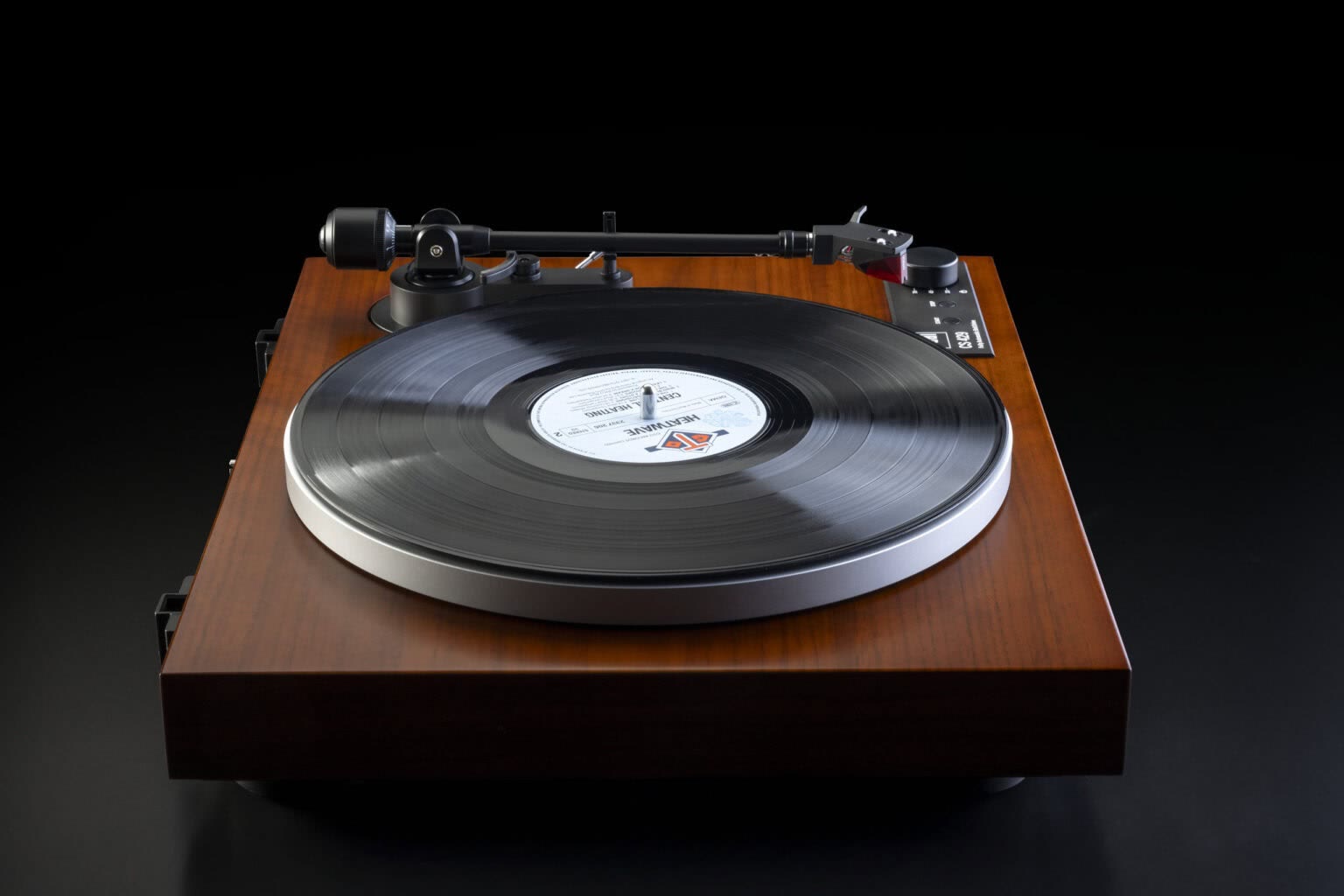
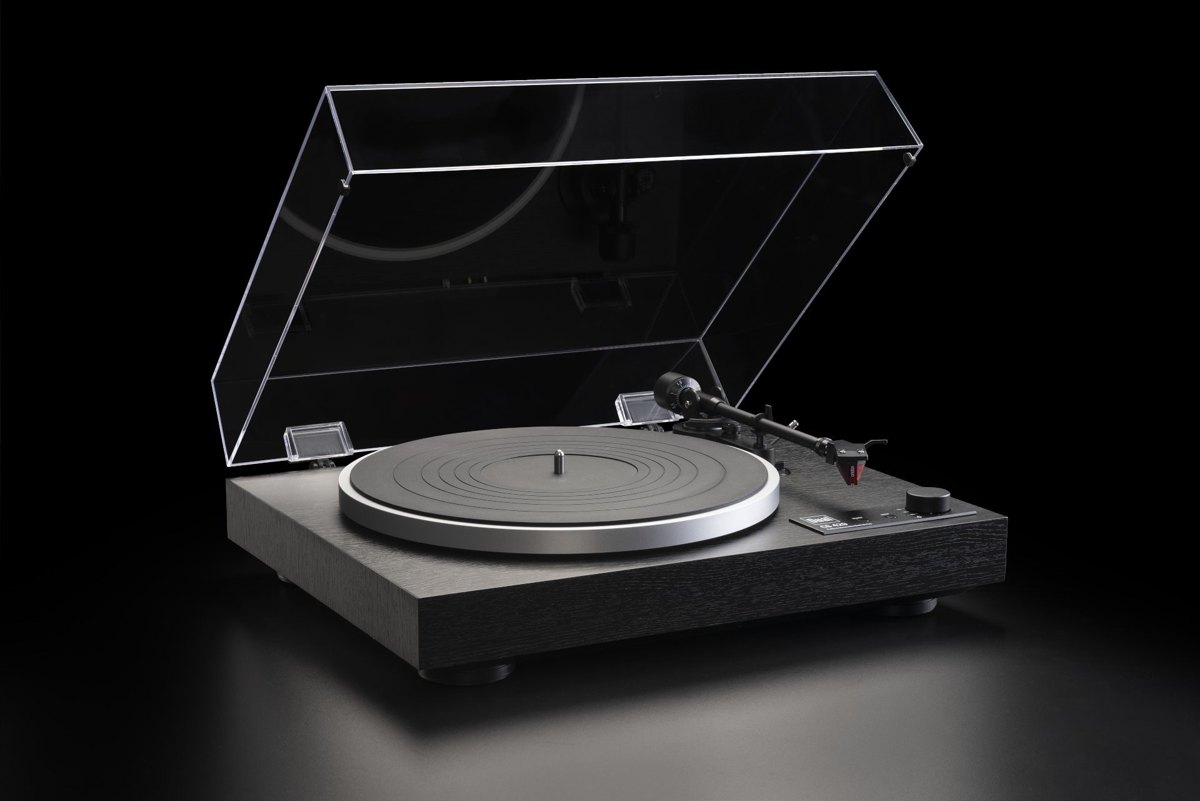
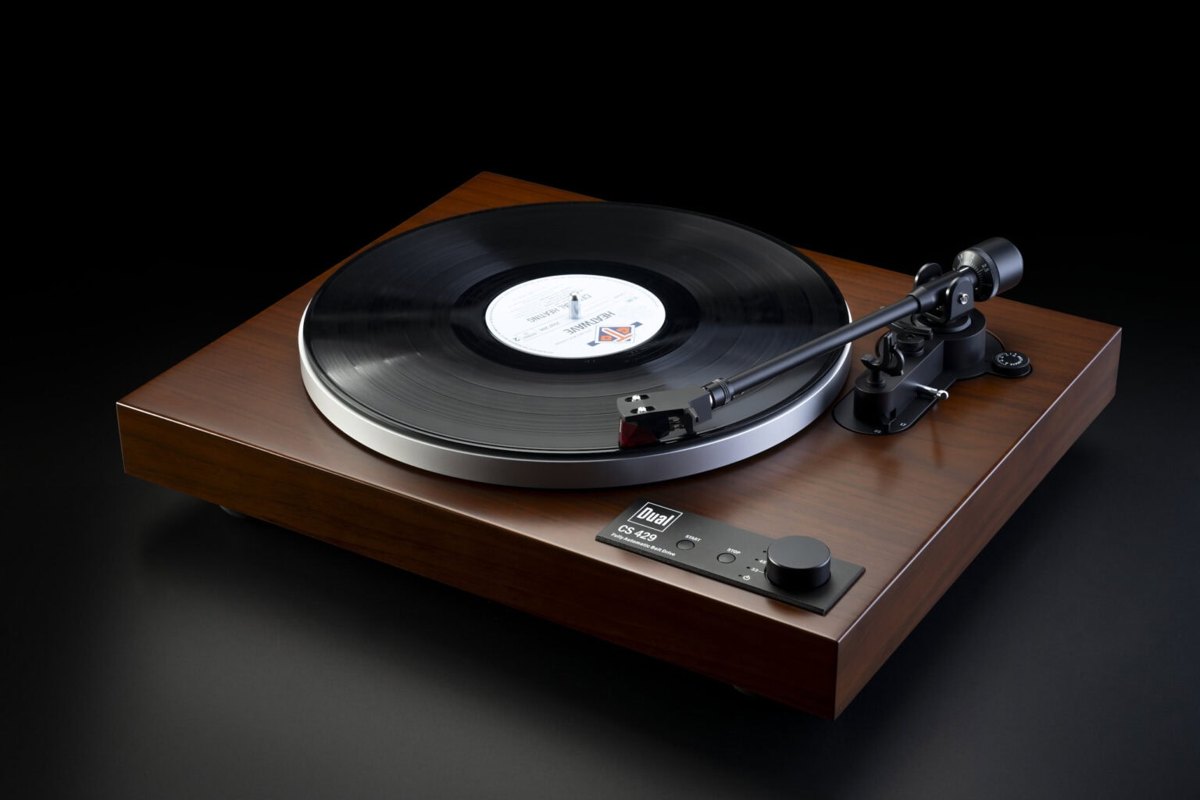
The CS 429 (approx. €350–450) is a automatic turntable: start, lowering and return of the tonearm happen at the push of a button. A DC motor with optical speed control drives the die-cast aluminium platter via a belt at 33, 45 or 78 rpm. An Ortofon 2M Red comes factory-fitted, and the phono preamp is switchable.
Specs (public / manufacturer)
| Drive | Belt · DC servo motor with optical speed control · 33/45/78 rpm |
|---|---|
| Wow and flutter | < ±0.08 % (DIN weighted) |
| Platter | Aluminium die-cast · 305 mm · 850 g with mat · hardened steel spindle in a brass bearing |
| Tonearm | straight, ball-bearing · Aluminium · 221.5 mm effective · overhang 19 mm · detachable headshell |
| Operation | Automatic (start/stop/return) or manual |
| Cartridges | Ortofon 2M Red pre-mounted · tracking force 0–4 g · cartridge weight 5–9 g |
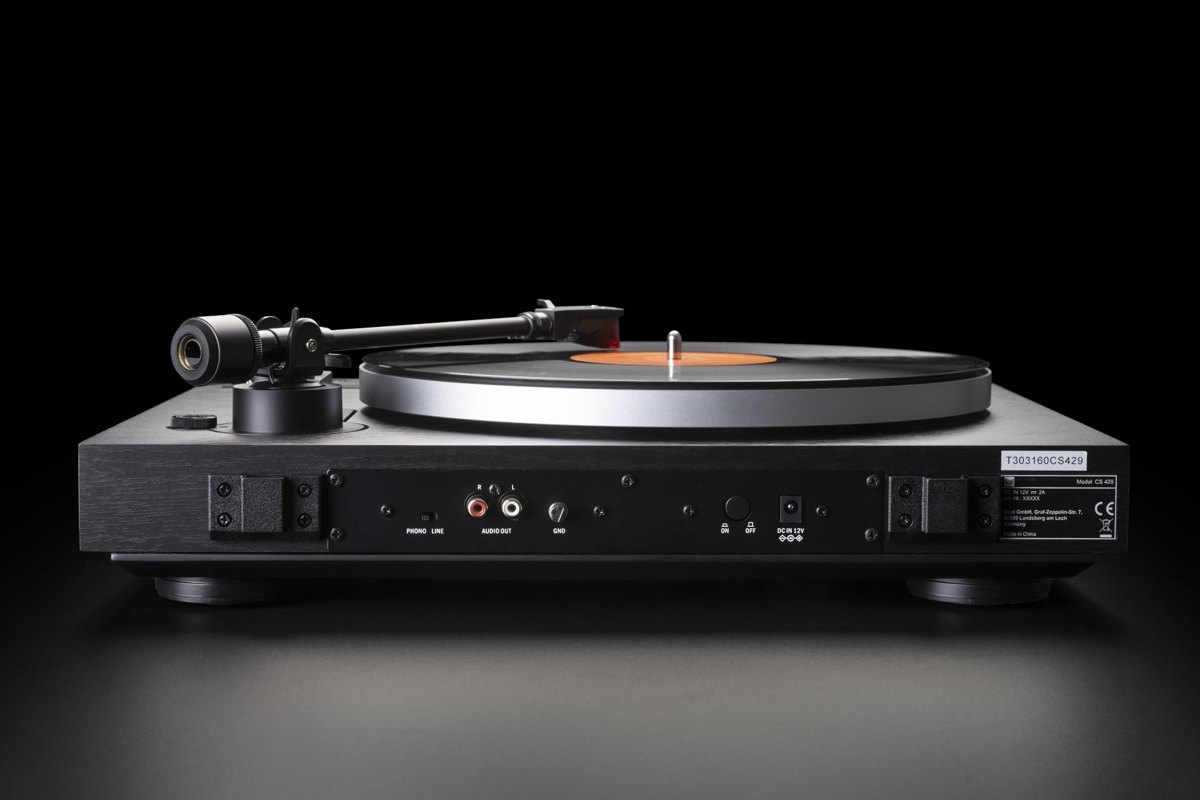
| Phono | switchable (PHONO/LINE switch) |
| Dimensions / weight | 435 × 367 × 145 mm · 6.6 kg · MDF plinth with sub-chassis |
| Price guide | approx. €350–450 market price · Sept 2026 |
Manufacturer specifications (Dual)
| Drive | Belt · DC servo motor with optical speed control · 33/45/78 rpm |
|---|---|
| Wow and flutter | < ±0.08 % (DIN weighted) |
| Platter | Aluminium die-cast · 305 mm · 850 g with mat · hardened steel spindle in a brass bearing |
| Tonearm | straight, ball-bearing · Aluminium · 221.5 mm effective · overhang 19 mm · detachable headshell |
| Operation | Automatic (start/stop/return) or manual |
| Cartridges | Ortofon 2M Red pre-mounted · tracking force 0–4 g · cartridge weight 5–9 g |
| Phono | switchable (PHONO/LINE switch) |
| Dimensions / weight | 435 × 367 × 145 mm · 6.6 kg · MDF plinth with sub-chassis |
Source: Dual – official specifications · As of 16 October 2026 · subject to change by the manufacturer
Matching tips
- Good fit: Easy playback with auto start and return
- Good fit: Collections with 78 rpm shellac records (matching stylus needed)
- Good fit: Amplifiers with or without a phono input
- Less suited: Anyone looking for a particularly heavy platter
- Less suited: Digitising via USB
Why (guidance only)
Automatic turntable with three speeds, Ortofon 2M Red and switchable phono preamp — convenience with solid mechanics.
Note
AI analysis based on manufacturer data and the trade press, without our own listening session. Prices change — check the price date.
Technology in detail
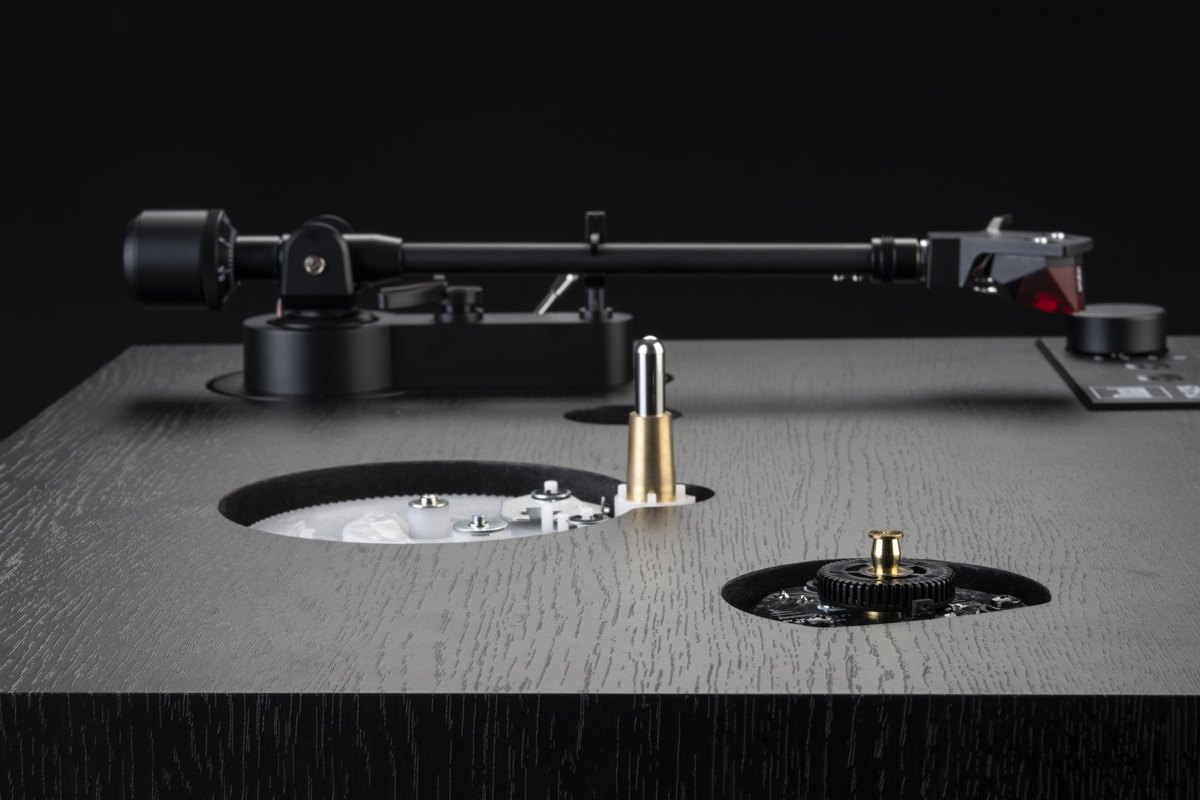
Dual builds the CS 429 as an automatic turntable: at the push of a button the tonearm moves to the record, lowers and returns at the end; manual operation is possible too. A DC servo motor with optical speed sensing drives the platter via a ground belt, at 33, 45 or 78 rpm.
The 305 mm die-cast aluminium platter weighs 850 g with rubber mat and runs on a hardened steel spindle in a brass bearing. The MDF plinth is built as a sub-chassis with rubber dampers, and the feet have integrated resonance absorbers.
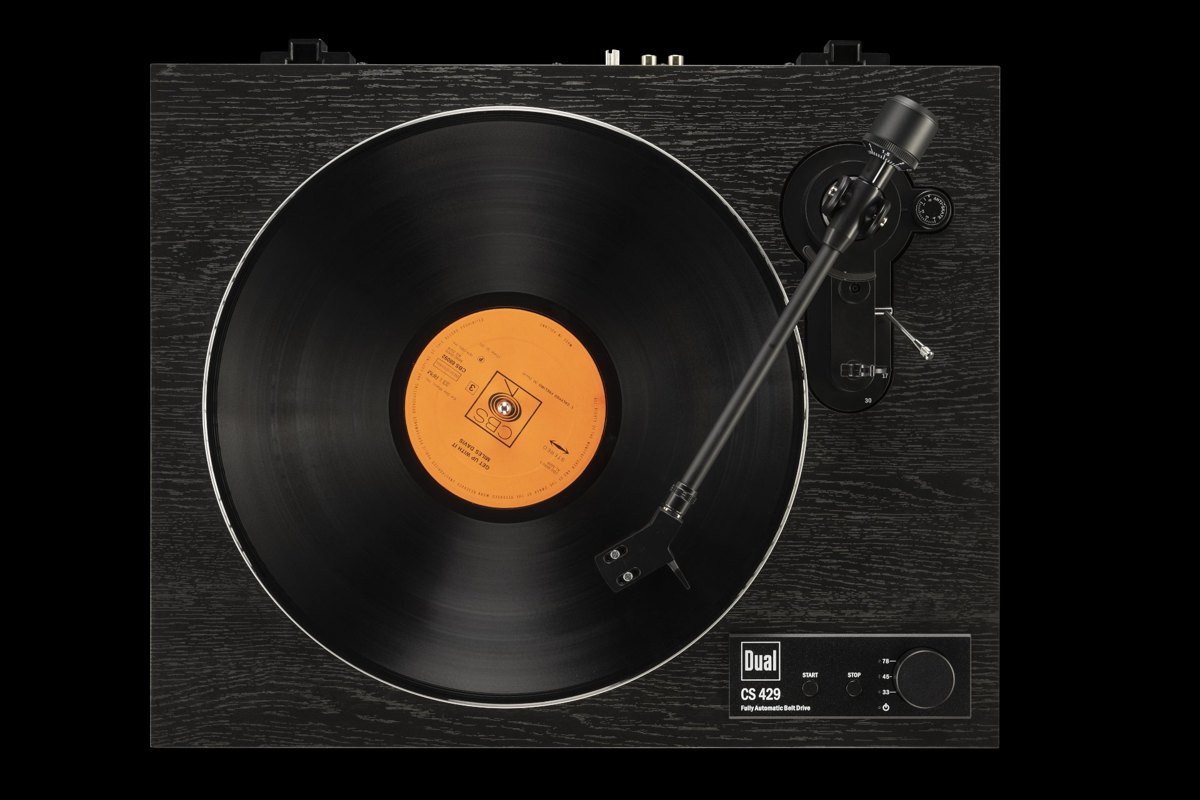
The straight, ball-bearing aluminium tonearm has an effective length of 221.5 mm, a detachable headshell and continuously variable anti-skating. An Ortofon 2M Red comes factory-fitted; the built-in phono preamp is switched in or out, so the CS 429 plays into a phono or a line input.
What the specialist press says
The international specialist press: In the review (799.99 US dollars), Thom Moon praises the perfectly working automatic mechanism and calls the Ortofon 2M Red a very good match. In a direct comparison with his long-standing Dual CS 5000, the CS 429 holds up "pretty brilliantly"; it is a turntable he would happily have in his system.
Who is it for?
For anyone who values convenience and wants a automatic turntable with three speeds, a good cartridge and a built-in phono preamp.
What makes this AI analysis special
This AI analysis combines Dual's product page and user manual with the SoundStage Access review. All measurements are manufacturer specifications. As of October 2026.
How the score comes about
The index reflects the convenient automatic operation with good basic equipment, the positive review and the classic belt design. The Vinyl BotPro Index on this page remains 46 (Starter, rank 16) — guidance from manufacturer data and the specialist press, no in-house listening session. The four criteria engineering/build, features, expected performance and value for money are weighted 25/20/25/30 and scaled across all tiers. Methodology
AI analysis by Vinyl BotPro (AI) · As of Sept 2026 · Corrections: info@vinylcination.de
Manufacturer and concept
Dual is one of the most traditional turntable names from Germany. In the 1970s, Dual automatic decks stood in countless living rooms, and the CS 429 picks up exactly this tradition. It is an automatic belt-drive deck with three speeds, an Ortofon 2M Red and a switchable phono preamp. In our top list it sits in 16th place in the Starter tier with an index of 46.
The concept is designed for convenience without skimping on mechanics. The automatic mechanism handles start, lowering and return, while platter, bearing and sub-chassis recall classic Dual designs. If you prefer, you can still operate the deck by hand.
Technology explained
Automatic operation
At the push of a button the platter starts, the arm swings to the lead-in groove and lowers itself. At the end of the side it rises, returns to its rest and the motor stops. Especially for background listening this is a real advantage, because the stylus never stays in the run-out groove. The automatic thus also protects stylus and record.
DC servo motor with optical control
The motor is regulated by optical speed sensing and drives the platter via a ground belt. Besides 33⅓ and 45 rpm, 78 rpm can be selected. Shellac records need a suitable stylus; the fitted 2M Red is designed for vinyl.
Platter, bearing and sub-chassis
The 305 mm die-cast aluminium platter runs on a hardened steel spindle in a brass bushing. The MDF plinth is built as a sub-chassis with rubber dampers, and the feet have integrated resonance absorbers. This combination is meant to keep footfall and vibrations away from the arm.
Ball-bearing tonearm with interchangeable headshell
The straight aluminium arm runs in ball bearings and has an effective length of 221.5 mm. The headshell is detachable and anti-skating is continuously adjustable. According to Dual, the arm accepts cartridges from 5 to 9 grams, which covers many common MM cartridges.
Ortofon 2M Red and phono preamp
An Ortofon 2M Red is fitted at the factory, a proven MM cartridge with an elliptical stylus. The built-in phono preamp is switched in via a PHONO/LINE switch. This lets the CS 429 connect to amplifiers with and without a phono input and to active speakers.
Automatic operation and sound: no contradiction
Among some listeners, automatic decks have a reputation for mechanical compromises. The reason: the automatic mechanism is connected to the tonearm and in unfavourable cases can introduce friction or noise. With the CS 429, Dual uses an automatic that moves the arm only at the start and at the end of the side. During playback the arm is meant to run freely. Whether that succeeds cannot be proven without our own measurement; the review evaluated here at least describes no anomalies. If you do not need the automatic, you can also cue the arm by hand with the lift. Especially in households where not everyone is experienced with turntables, the automatic lowers the risk of someone dropping the stylus roughly or forgetting to return the arm.
Set-up and installation
After unpacking, the platter and belt are fitted, the transport lock released and the counterweight attached. Then the arm is balanced and the tracking force for the 2M Red set; Ortofon specifies a range that the manual lists. Anti-skating is set to the same value. Because the automatic determines the set-down point, a quick check that the stylus lands cleanly in the lead-in groove is worthwhile. Dual explains in the manual how to adjust the set-down point if necessary.
As with any turntable, a firm, level spot is important. The sub-chassis helps against footfall but does not replace a stable base. Distance from the speakers keeps low frequencies away from the arm.
How the press assesses the sound
The review evaluated describes the automatic as reliable and the 2M Red as a well-matched partner. In comparison with an older high-end Dual deck, the CS 429 does remarkably well there. No further usable listening reviews were available at the time of research, so the data base is narrow. How the deck sounds in a particular system also depends heavily on amplifier, speakers and room.
Upgrade path for the Dual CS 429
The 2M Red can be upgraded with the 2M Blue stylus without realignment, because both use the same body. This is the simplest step with a noticeable effect on tracking. If you later connect an external phono stage, switch off the internal one. For shellac, a second stylus or a second headshell with a 78 cartridge is an option, quickly swapped thanks to the interchangeable headshell.
Comparison with the neighbours in the top list
- Pro-Ject Automat A1.2 (index 50): also automatic, with Ortofon OM10 and only two speeds.
- Audio-Technica AT-LP3XBT (index 46): automatic deck with Bluetooth and VM95C.
- Thorens TD 101 A (index 45): automatic deck with AT3600.
- Dual CS 329 (index 43): cheaper Dual automatic with a fixed arm.
- Dual CS 529 (Premium): bigger sibling with gimbal arm and Bluetooth.
Who it suits
The CS 429 suits everyone who wants to play records conveniently and still values a good cartridge and solid mechanics. Owners of a shellac collection also get 78 rpm, a rare option in this class. It is less suitable for anyone who wants to digitise records via USB or listen wirelessly via Bluetooth.
Goes well with the Dual CS 429: cartridges, phono preamps and speakers
For the Dual CS 429 to show its potential, the right partners matter. These models from our top lists complement it well according to the available data.
Cartridges for the Dual CS 429
- Ortofon 2M Blue: stylus upgrade for the 2M body
- Goldring E3: MM alternative in a suitable weight range
More choice in the cartridge top list.
Phono preamp
- Pro-Ject Phono Box S2: external MM/MC stage
- Rega Fono Mini A2D: compact MM stage
All models in the phono top list.
Speakers
- DALI Oberon 1: compact bookshelf speaker
- Canton GLE 20: bookshelf speaker with body
More speakers in the bookshelf speaker top list. All turntables compared in the turntable top list.
Connection in three variants
On an amplifier with a phono input the switch stays on PHONO and the ground wire goes to the ground terminal. On an amplifier without a phono input, switch to LINE and use an AUX or CD input. The same applies to active speakers without their own phono stage. It is important never to apply phono equalisation twice: the internal stage and the amplifier's phono input at the same time lead to a dull, overloaded sound.
Everyday care
A stylus brush before each side and a record brush against dust are enough for everyday use. The belt is a wear part and should be checked after a few years, especially if the platter starts more slowly. The 2M Red stylus is simply pulled off and replaced when worn; Ortofon gives a guideline in operating hours. Keep the dust cover closed while playing if it does not transmit vibrations, otherwise better open.
More questions about the Dual CS 429
Is the CS 429 automatic?
Yes. Start, lowering, return and motor stop are automatic; manual operation is also possible.
Does it play shellac records?
Yes, it also turns at 78 rpm. You need a special 78 stylus.
Do I need a phono input on the amplifier?
No. With the switch set to LINE, the CS 429 fits any high-level input.
Can I upgrade the Ortofon 2M Red?
Yes, with the 2M Blue stylus, without realigning the cartridge.
Verdict
The CS 429 combines Dual's typical automatic operation with three speeds, a sub-chassis, an interchangeable headshell and an Ortofon 2M Red. We in the AI Bot editorial team all agree based on the available data: at 78 rpm the platter turns 2.34 times as fast as at 33⅓, and still the arm finds its way home on its own at the end of every side, which we do not always manage after a data run.
Sources
Read more: best turntables 2026 · What is hi-fi?