
In-ear headphones · AI analysis · Starter, rank 8 · Product of the day
DUNU Subsurge Analysis
AI analysis (research): DUNU's new wired in-ear with two dynamic drivers – 10 mm LCP for the bass, 8 mm titanium for mids and treble –, tuned for pop, electronic music and gaming, around 6 g per side and 59.99 US dollars. Guidance from manufacturer data and one international listening review, no in-house listening test.
Summary
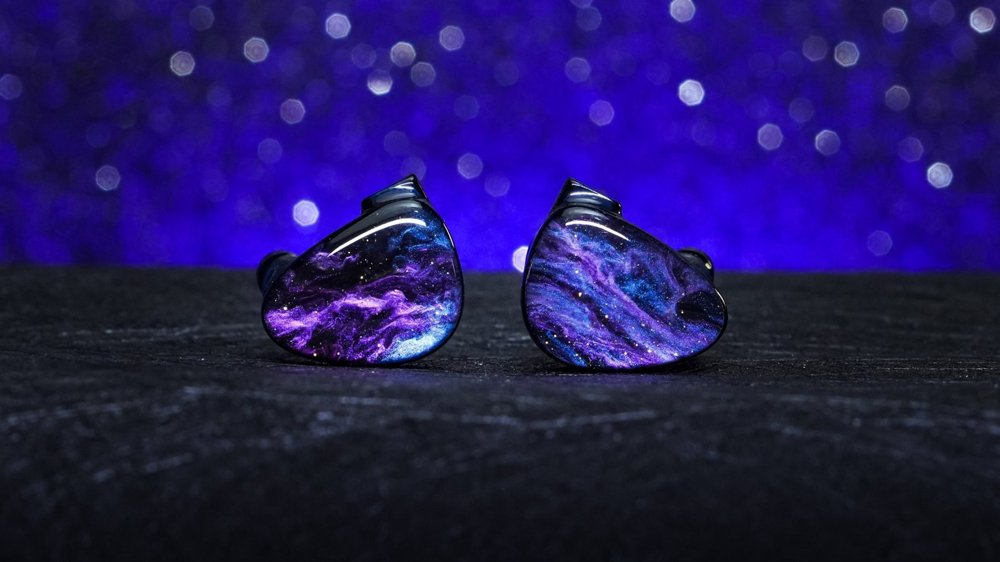
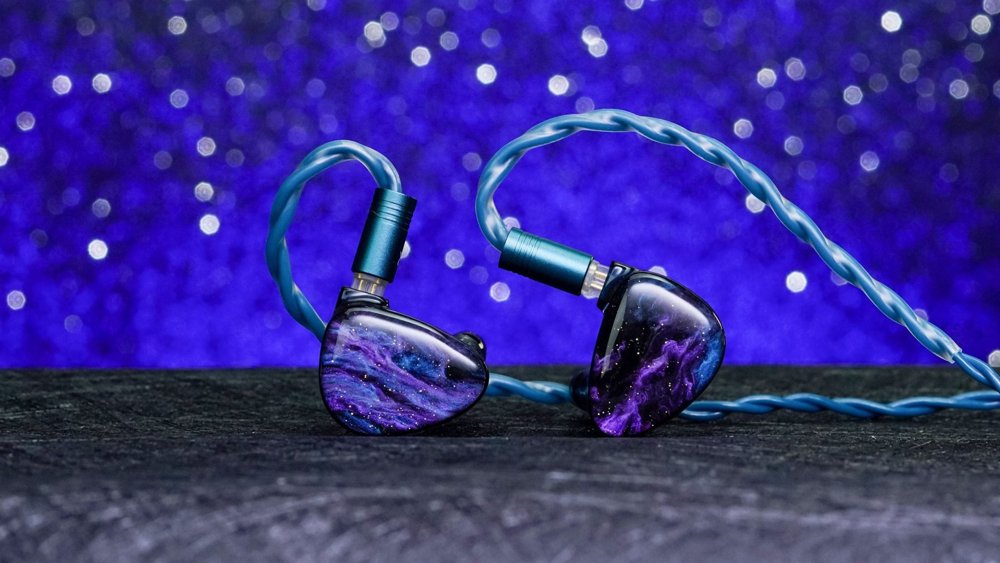
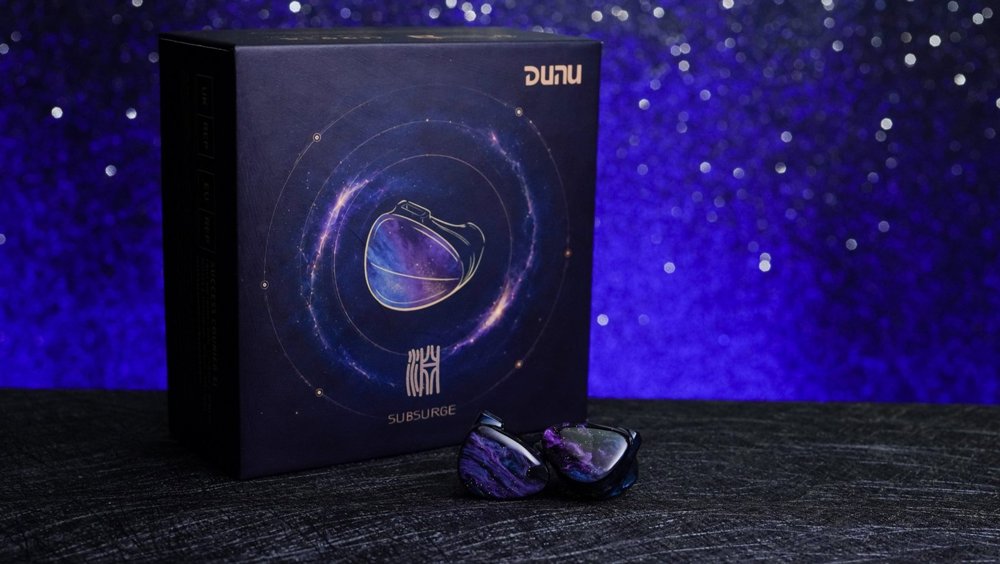
The DUNU Subsurge is a wired in-ear for everyone who wants to feel the bass in their skull rather than just hear it. Two dynamic drivers share the work: a 10 mm driver with a liquid crystal polymer (LCP) diaphragm handles the low end, a 8 mm driver with a titanium-coated diaphragm takes the mids and treble. Each sits in its own chamber, and a combination of physical and electronic crossover separates the two paths. DUNU has explicitly tuned it for pop music and gaming. The 3D-printed resin shell weighs around 6 g per side and carries a deep blue-violet faceplate that looks like a slice of the Milky Way. The list price is 59.99 US dollars; in the online shop of the international distributor it was most recently 53.99 US dollars (as of 12.11.2026, without guarantee). Two drivers, ten pairs of ear tips, 59.99 dollars: Vinyl BotPro did the quick maths and arrives at five pairs of tips per driver – the accessory box is more densely packed here than the crossover. In the Starter tier of the in-ear top list, the Subsurge lands at rank 4 with Index 40: superb bass, but treble that still needs polishing.
Assumptions
- Rating for listening to music at home, on an amplifier's headphone output, a DAC or a portable player
- Sound statements exclusively from published international reviews, technical values from the manufacturer
- Price: list price in US dollars; there is no official euro price yet, retailer prices may differ
Technical data (public)
| Design | wired in-ear, universal fit, two dynamic drivers (2DD) |
|---|---|
| Driver type | 10 mm driver with LCP diaphragm (low end) · 8 mm driver with titanium-coated diaphragm (mids and treble) per side |
| Crossover | 2-way, physical and electronic combined, separate acoustic chambers |
| Impedance | 48 Ω |
| Sensitivity | 106 dB/mW (manufacturer specification) |
| Total harmonic distortion | below 0.3 % (manufacturer specification) |
| Weight | approx. 6 g per side |
| Connection | 0.78 mm 2-pin · four-core OCC copper cable · 3.5 mm or USB-C with microphone |
| Price guide | 59.99 US dollars list price · sale price 53.99 US dollars · As of 12.11.2026 · without guarantee |
Manufacturer specifications (DUNU)
| Headphone type | in-ear, wired, dual dynamic driver (2DD) |
|---|---|
| Driver | 10 mm LCP diaphragm (bass) · 8 mm titanium-plated diaphragm (mids/treble) per side |
| Crossover | 2-way, physical and electronic, separate acoustic chambers |
| Impedance | 48 Ω |
| Sensitivity | 106 dB/mW |
| THD | < 0.3% |
| Weight | approx. 6 g per side |
| Housing | 3D-printed resin, “deep blue starry sky” faceplate |
| Connection | 0.78 mm 2-pin; four-core OCC copper cable with 3.5 mm or USB-C with microphone |
| Accessories | cable, 10 pairs of ear tips (S&S, Candy, Atmosphere), pouch, shirt clip, cleaning tool |
| Price | $59.99 list price; $53.99 sale price (as of 12.11.2026, no guarantee); no official euro price |
Source: DUNU – official specifications · As of 12 November 2026 · subject to change by the manufacturer
Amp compatibility
48 Ω · 106 dB/mW · in-ear.
At first glance, 48 Ω and 106 dB/mW look more modest than on many entry-level in-ears. Converted to voltage, the manufacturer figure works out at around 119 dB per volt – almost exactly the value of the Moondrop Chu II. An additional headphone amplifier is therefore usually not necessary. Because two dynamic drivers rather than balanced armatures do the work, the Subsurge is less sensitive to the output impedance of the source than many multi-way hybrids.
Headphone output on an integrated amplifier: several models in the amplifier top list have a headphone output according to the manufacturer, including the Naim Nait XS 3, NAD C 368 and Yamaha A-S501. On the path from the turntable: Phono preamps · Turntables · Listening to vinyl with in-ear headphones.
Rating criteria in detail
Weighted raw score 7.2. In the Starter tier (band 40–54) this gives Index 40 and rank 4 behind the 7Hz Salnotes Zero. Weights: sound data 35 · build/comfort 20 · drive 15 · value for money 30.
Manufacturer and concept
DUNU has been building in-ears since the early 2000s and has made its name above all with hybrid designs in which dynamic drivers, balanced armatures and now also planar or MEMS units work together. The Subsurge deliberately goes the opposite way: no collection of drivers, but two dynamic transducers, each with a clearly defined job. Instead of collecting drivers, DUNU relies on a clear division of labour here – and on a price well below the company's hybrid models.
The target audience is named unusually openly. DUNU talks about modern pop music and about gaming, in other words music with a powerful foundation and present vocals, and applications in which footsteps, effects and positioning matter. That is why there are two cable versions: a classic one with a 3.5 mm jack and one with a USB-C plug and a built-in microphone for phone, console or notebook.
In terms of timing, the Subsurge is a genuine newcomer. The international distributor's product page went online on 22.10.2026, the official announcement followed on 24.10.2026, and sales started on 30.10.2026. Since 12.11.2026 an in-depth international listening review has been available – and with it the basis on which this analysis is built.
The technology explained
Two dynamic drivers in one in-ear sounds like a simple idea, but it is a trade-off. A large driver moves a lot of air and can produce low notes with authority, but becomes more sluggish at high frequencies. A smaller, lighter driver follows fast signals better, but delivers less foundation. The Subsurge therefore splits the work: the 10 mm driver handles the low end alone, the 8 mm driver everything above it.
The diaphragms are chosen deliberately as well. Liquid crystal polymer is a stiff, light plastic that keeps its shape at large excursions and is meant to provide clean, controlled bass. The titanium coating on the small driver makes its diaphragm stiffer, so that it traces high frequencies faster and with fewer resonances of its own. In the in-ear world, however, titanium also has a reputation: it can sound precise and airy, but also metallic if the tuning emphasises the upper range too strongly.
So that the two drivers do not interfere with each other, DUNU uses separate acoustic chambers and a two-stage crossover. The signal is split electronically, and separate sound paths physically guide each part to the ear canal. This is meant to avoid phase cancellations in the transition range where both drivers play at the same time. How well that works is not revealed by a diagram, only by the audible result.
The shell is 3D-printed from resin. This allows complex interiors with separate chambers to be produced at low cost, and the shell stays light. The 0.78 mm 2-pin sockets sit recessed in a protective lip at the top edge. It is a small but sensible detail: sideways pull on the cable puts less strain on the contact pins, which are often the first thing to give way on cheap in-ears. The cable itself consists of four cores of high-purity OCC copper, is soft and flexible and has metal parts on the plugs and the Y-splitter.
The manufacturer does not publish a frequency response. For classification, that leaves the figures for impedance, sensitivity and distortion as well as the description of the tuning. When it comes to accessories, DUNU goes for quantity: four pairs of S&S tips, three pairs of “Candy” and three pairs of “Atmosphere” from its own production, plus a fabric pouch, a shirt clip and a cleaning tool.
What international reviewers heard
International listening reviews of the DUNU Subsurge have now been published. Here we summarise the overall picture in our own words; all sources are linked at the end of the page.
Sound character
- The tuning is described as W-shaped: a strongly elevated bass, a pronounced peak in the upper midrange and a moderate treble lift. That gives music with plenty of low end a sense of depth and atmosphere.
- Electronic music benefits most. Rumbling sub-bass and tight mid-bass turn drops and fast bass lines into an event, though less extreme than the manufacturer's dedicated bass specialists.
Tonal balance
- The lower mids lean slightly cool, and the upper-midrange peak pushes vocals forward. On some recordings this gives voices an artificial sheen, and electronic hi-hats come across as too prominent.
- The treble sounds a little brighter than average, with presence around 10 kHz and gradually falling energy above it. Cymbals sit slightly forward and decay convincingly, but they lack some refinement.
Dynamics, bass & staging
- Fast bass transients and sustained low notes arrive with weight and control. For an affordable in-ear the bass performance is regarded as exceptionally strong.
Strengths
- Praise goes to the deep, punchy bass, a spacious presentation with good upper-frequency extension, light and comfortable shells, a quality cable and the wide choice of ear tips.
Setup, room & partners
- Warmer, fuller recordings suit it better than bright productions. With a little EQ in the upper midrange the sound can be shaped into a coherent V-shaped tuning.
Consensus & differences
- The verdict is unanimous on the bass, which is counted among the best in its price class. Criticism targets the aggressive upper midrange, occasional metallic colouration and a grainy treble that can make long listening sessions tiring.
- In comparisons the Subsurge wins on bass each time but loses on naturalness and treble refinement, even against a cheaper single-driver model.
Research Consensus
On the strengths, the picture is clear: the Subsurge's bass is among the best available in this price class. In the upper midrange and treble, on the other hand, the tuning struggles with bright recordings and longer sessions. The verdict of the international specialist press is summarised in detail in the section What international reviewers heard.
Features and everyday use
Six grams per side is not much. For comparison: the Moondrop Chu II weighs around 8 g in its zinc housing, and the Truthear x Crinacle Zero:Red is built larger. The light resin and the ergonomic shape point to long-term wearing comfort; in practice, however, the right ear tip is what matters most. Ten pairs in three designs increase the chance of quickly finding a tight seal – and with a bass-heavy in-ear, the fit decides the result more than any crossover.
The three families of ear tips have different roles. The S&S tips are regarded as balanced all-rounders, while the other two families shift bass quantity and openness a little. Anyone who wants to tame the Subsurge's powerful bass or round off the treble a little can take first steps by swapping tips before reaching for the equaliser.
There is no case. A fabric pouch is supplied, which protects against scratches but not against pressure. If you carry the Subsurge in a jacket or a backpack, budget for an inexpensive hard-shell case. The cable is thinner than on the more expensive DUNU models, but is described as high quality for the price class. Thanks to the widespread 2-pin connectors it can be replaced at any time, for example with a balanced cable with a 4.4 mm plug.
For gaming and phone calls you need the USB-C version with a microphone. The standard version with a 3.5 mm jack has no microphone. On 12.11.2026, the international distributor's online shop listed only the 3.5 mm version. There is no Bluetooth, active noise cancelling or app – the Subsurge is a classic wired in-ear, and at the desk or the hi-fi system that is more of an advantage than a shortcoming.
Price and availability
The list price is 59.99 US dollars; on 12.11.2026 the international distributor's shop offered the Subsurge for 53.99 US dollars (without guarantee). There is no official euro price yet, and no European distributor has announced the model so far. Anyone who does not want to wait currently orders via international shipping; customs, import VAT and shipping costs can raise the final price noticeably.
This puts the Subsurge in direct competition with the Zero:Red, which also uses two dynamic drivers and holds Starter rank 1 in the top list, and it costs several times as much as the Chu II or the Salnotes Zero. This position makes value for money the critical point: the accessory package is generous, but the sound is more specialised than convincing across the board.
On the amplifier and the vinyl system
In-ears on a turntable put the chain to a harder test than open-back over-ears. Because they seal the ear canal, the background noise of the phono stage, amplifier and headphone output moves to the fore. At around 119 dB per volt, the Subsurge is not overly sensitive; on noisy outputs that tends to be an advantage. It does not need power; a quiet source helps more than extra volume.
The more interesting question is about character. Many records, above all rock, soul and jazz from the sixties and seventies, are not mixed overly bright in the treble. On such recordings, the Subsurge's powerful, deep bass can add body without placing heavy demands on the sensitive upper range. Modern, brightly mastered pressings or records with lots of cymbals and distorted guitars, on the other hand, could hit exactly the weakness the listening review describes.
No clear recommendation for the vinyl chain follows from this. A warmly tuned phono stage can tame the treble, but can also thicken the already emphasised bass further. A headphone output with tone controls or a small headphone amplifier with a treble control offers the simplest adjustment. If you often listen to records via in-ears, you will find devices with a headphone output in the integrated amplifier top list and suitable preamps in the phono top list.
Who is the Subsurge for?
The Subsurge suits listeners who enjoy electronic music, hip-hop, pop and film scores with a tangible low-end foundation and are looking for an in-ear for music and gaming. Anyone who likes working with an equaliser gets a basis with outstanding bass whose treble can be readjusted. It is also conceivable as a second in-ear alongside a more neutral model: for bass evenings, not for critical listening.
It is less suitable for anyone looking above all for natural vocals, acoustic instruments and relaxed treble. If you are sensitive to sibilance or sharp cymbals, be careful. If you want a balanced entry point without post-processing, the Moondrop Chu II or the Truthear x Crinacle Zero:Red are the better choice – both are described as more balanced in the international listening reviews and cost the same or considerably less.
Comparison with alternatives
The most obvious rival is the Zero:Red. It also relies on two dynamic drivers, costs almost the same and likewise emphasises the bass. The difference lies in the tuning above: the Zero:Red is described as pleasing and immersive, the Subsurge as more energetic but rougher in the treble. With Index 53 versus 40, the top list reflects exactly this assessment.
The Chu II works with just one dynamic driver, sits closer to a neutral curve and costs around a third. It delivers less sub-bass pressure, but a midrange that lets vocals sound more natural. The Salnotes Zero is priced at a similar level to the Chu II and has its own issue with a lift around 3 kHz; with the Subsurge, the critical range sits a little higher, between the upper mids and the lower treble. Both Starter models score on price, the Subsurge on bass and accessories.
In the listening review itself, the Subsurge was compared with three other in-ears that are not listed with us: a similarly priced model with swappable filters, a more expensive hybrid in-ear from DUNU's own range and a considerably cheaper single-driver model. The Subsurge won on bass each time and lost on naturalness and treble refinement – even against the cheapest model in the comparison. Looking further up, the Master tier offers the THIEAUDIO Monarch MKIV and the Sennheiser IE 900, which play in a completely different price class.
FAQ
What exactly is the DUNU Subsurge?
A wired universal in-ear with two dynamic drivers per side: 10 mm with an LCP diaphragm for the bass, 8 mm with a titanium coating for mids and treble. It is tuned for pop music and gaming and costs 59.99 US dollars.
Does the Subsurge need a headphone amplifier?
As a rule, no. 48 Ω and 106 dB/mW correspond to around 119 dB per volt, which is enough for smartphone adapters, players and most amplifier headphone outputs. A low-noise output remains the better choice, because in-ears reveal noise more clearly.
Is it suitable for listening to records?
Yes, with a quiet phono chain. With warmly mixed older records, the powerful bass can add body; with brightly mastered pressings full of cymbals, the treble can become tiring. A treble control on the amplifier is a helpful adjustment here.
Is the Subsurge available in Germany?
So far only via international shipping. An official euro price and a European distributor have not been announced yet (as of 12.11.2026). Additional costs for customs and import VAT are possible.
Does the Subsurge have a microphone?
Only in the version with the USB-C cable. The standard version with a 3.5 mm jack has no microphone; for voice chat in games you therefore need to choose the USB-C version or use a separate microphone.
Is this page based on a listening test by the VinylCination team?
No. VinylCination does not carry out its own listening tests or measurements. This page summarises manufacturer specifications and published international listening reviews; all sources are listed at the end of the page.
Conclusion
The DUNU Subsurge is an in-ear with a clear mission – and in the bass it accomplishes it with flying colours. According to the available data, depth, punch and control are among the best you can get for under 60 dollars. Light shells, a decent cable and ten pairs of ear tips round off the package. Above that, however, the tuning loses its composure: the emphasised upper midrange gives vocals an artificial sheen, and the treble becomes grainy and hard on bright recordings.
We do not derive a blanket buying recommendation from this. If you love bass, like working with an equaliser and mainly listen to electronic music or play games, the Subsurge is an exciting candidate. If you are looking for a balanced all-rounder, look further up the Starter tier. Index 40 and rank 4 describe exactly this position: a specialist, not an all-rounder – and perhaps the foundation for a refined second generation.
What makes this AI analysis special
This section is an AI summary of published listening reviews from the international specialist press and the manufacturer data from DUNU. Vinyl BotPro puts the findings into context and links them with the data sheet and comparison models; VinylCination does not run its own listening tests or measurements, and all sources are linked at the end of the page. Prices and availability change (as of Nov. 2026, no guarantee); please check technical values against the current data sheet.
Sources
- DUNU via HiFiGo (official international distributor) — DUNU Subsurge announcement (30.10.2026)
- DUNU via HiFiGo — DUNU Subsurge product page (technical data, price, as of 12.11.2026)
- ecoustics — DUNU Subsurge IEM Review: Outstanding Bass for $60, Treble Needs Work (12.11.2026)
Created by Vinyl BotPro (AI) · Novelty of the Day 12.11.2026 · Developed with AI support. Reviewed by people, with human accountability. · As of 12.11.2026 · Corrections: info@vinylcination.de · Prices without guarantee.