
Turntable · AI analysis · Starter, rank 4
Pro-Ject T1 Phono SB Review
AI analysis (research): Pro-Ject T1 Phono SB with glass platter, switchable phono stage and electronic speed change — specifications and manufacturer logic, no listening test.
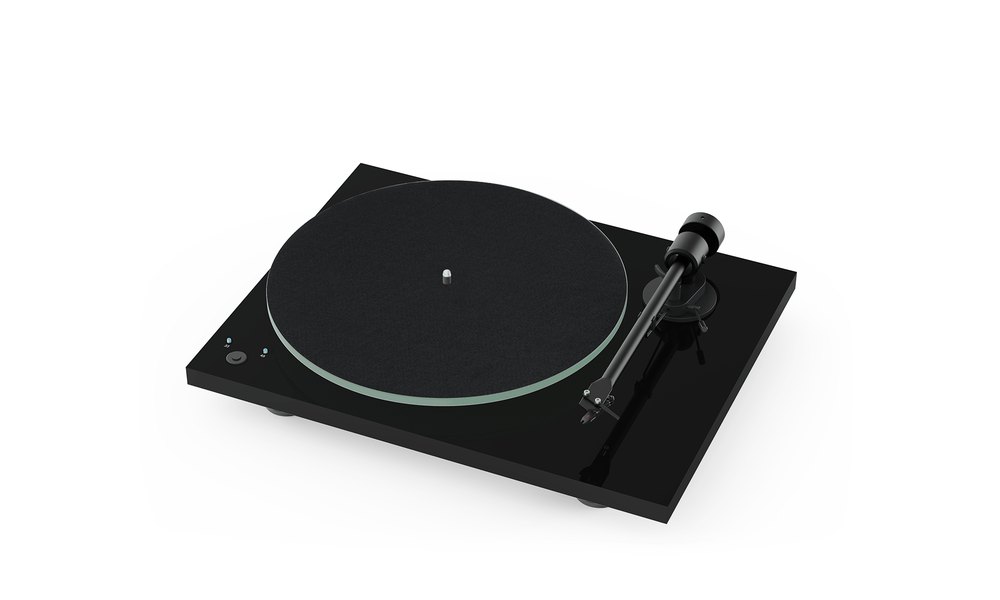
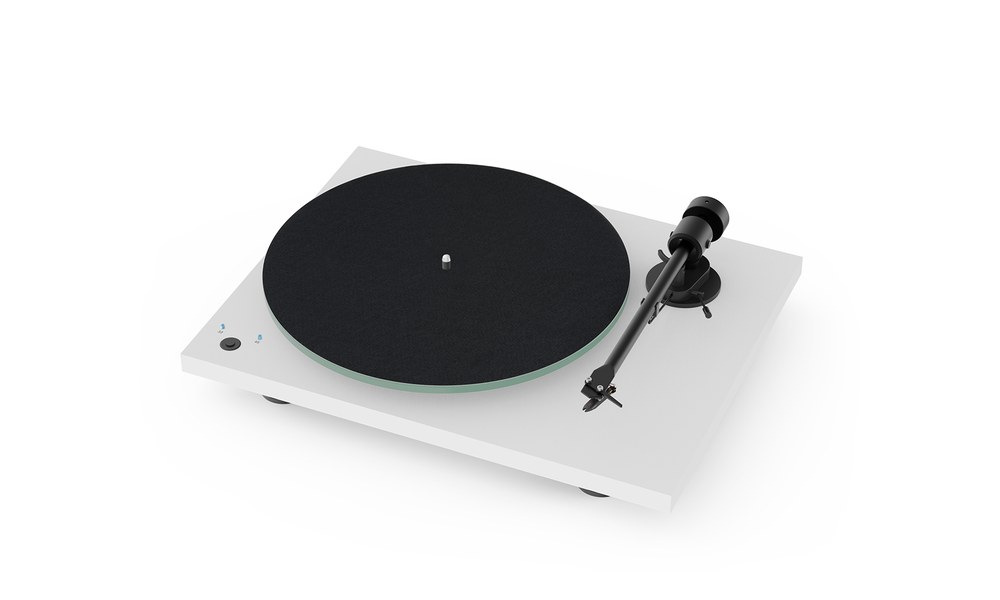
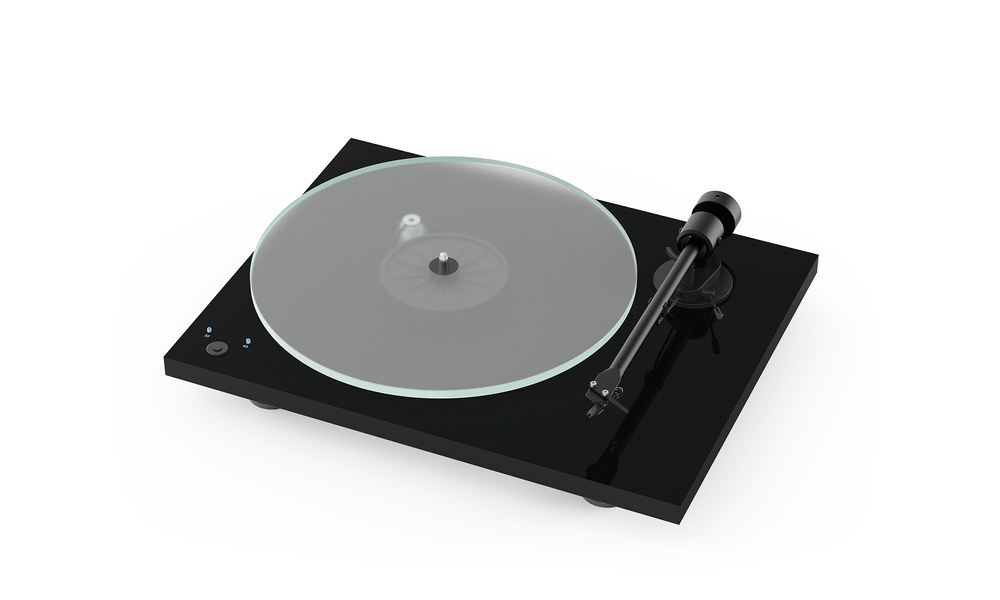
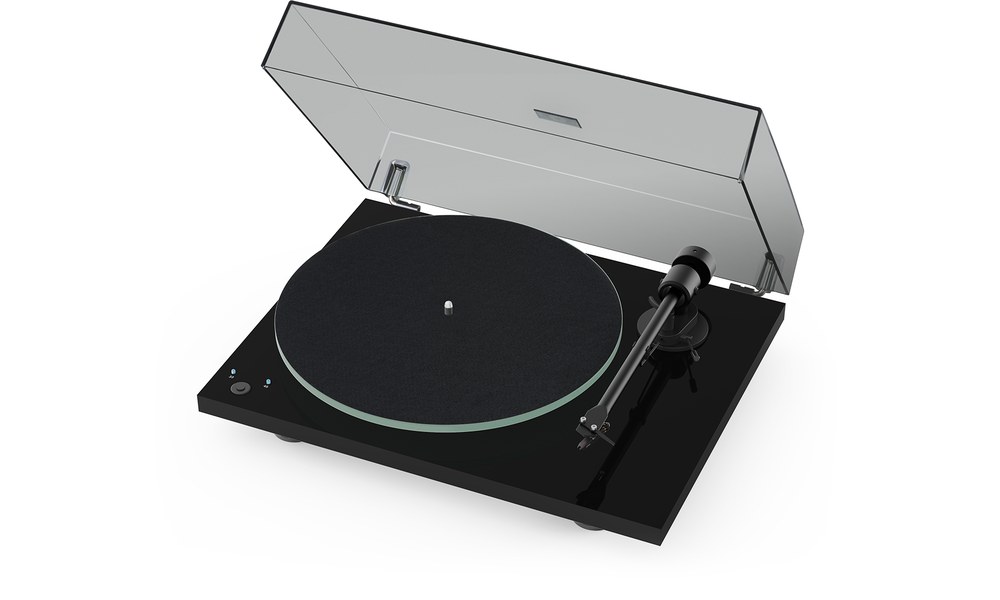
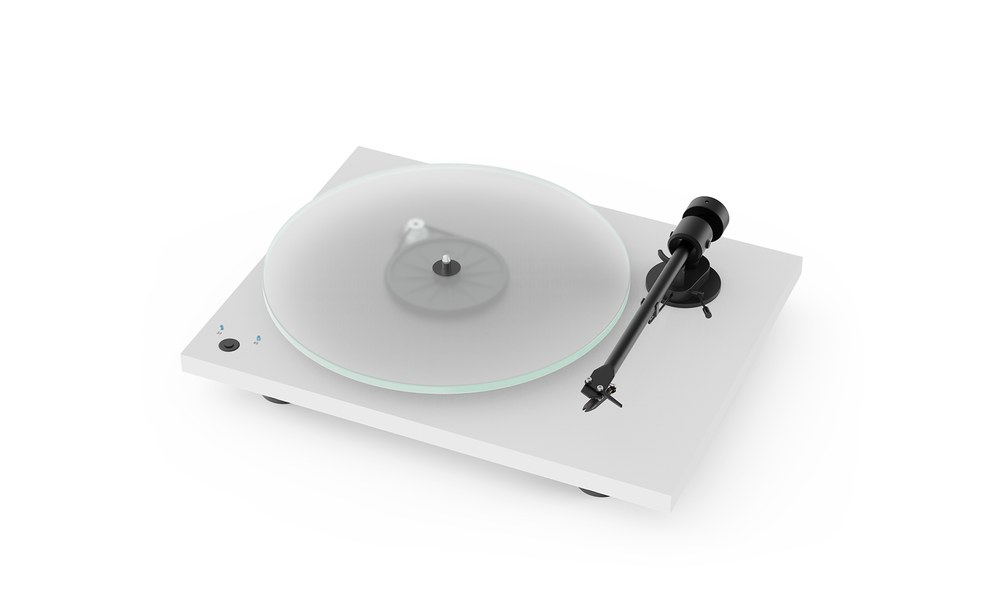
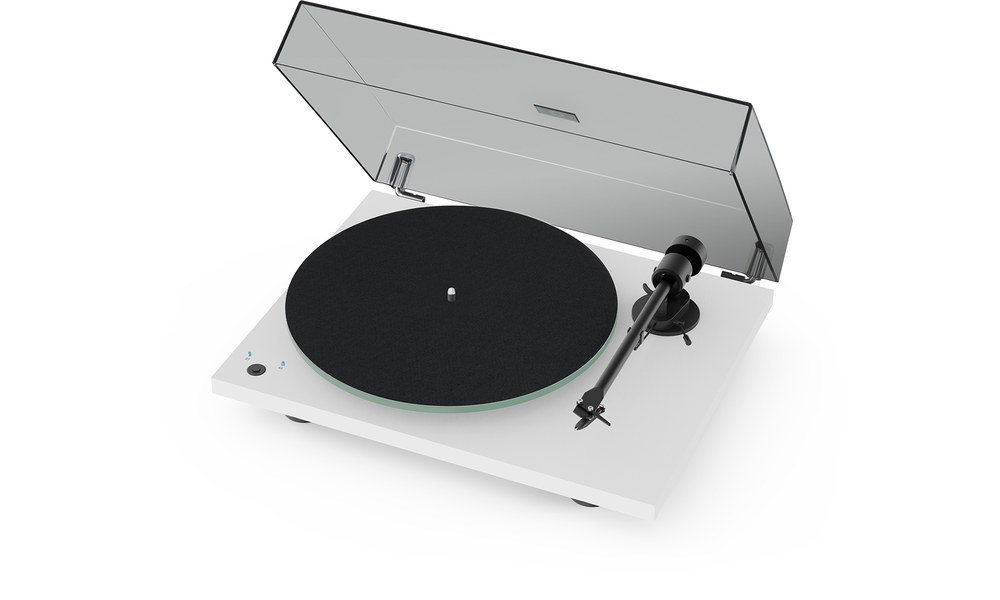
Summary
According to the manufacturer the T1 Phono SB is the feature starter of the T line: heavy CNC chassis without cavities, sub-platter, one-piece 8.6″ aluminium arm, Ortofon OM5e, switchable MM phono and electronic 33/45. RRP often around ~449 €. Makes sense if you want phono stage and speed control without separates; less so if you are looking for the maximum arm and system playroom of the next tier.
Assumptions
- Phono switchable — Line or Phono input per setup
- OM5e as start; OM-Stylus upgrade conceivable
- No listening access of our own
Technical data (public)
| Drive | Belt · Electronic 33/45 |
|---|---|
| Tonearm | 8.6″ Aluminium one-piece · Integrated headshell |
| Cartridges | Ortofon OM5e pre-assembled |
| Platter / chassis | platter material not specified in manufacturer manual · sub-platter |
| Phono / USB | Switchable MM-Phono · no USB (base config.) |
| Price guide | approx. €350–450 market price · MSRP often ~€449 · Sept 2026 |
Manufacturer specifications (Pro-Ject)
| Type | belt drive, electronic speed change, built-in MM phono preamp |
|---|---|
| Speeds | 33, 45 rpm |
| Wow & flutter | 33: ±0.25% · 45: ±0.23% |
| Speed variance | 33: ±0.70% · 45: ±0.60% |
| Signal-to-noise ratio | 65 dB |
| Tonearm | 8.6″, eff. length 218.5 mm, eff. mass 8.0 g, overhang 22 mm |
| Cartridge (fitted) | Ortofon OM 5E |
| Power consumption | 4.5 W (15 V / 0.8 A DC PSU) |
| Dimensions | 420 × 112 × 330 mm |
| Weight | 5.0 kg |
| MM phono preamp | 34 dB gain · 47 kΩ / 100 pF · noise floor −68 dB · RIAA 20 Hz–20 kHz max. 0.5 dB |
Source: Pro-Ject – official specifications · As of 16 October 2026 · subject to change by the manufacturer
Rating criteria in detail
The four criteria feed into the Vinyl BotPro Index with weights of 25/20/25/30. The index is scaled across all tiers (see Methodology); that is why we do not show individual sub-scores.
Strengths
- Phono + electronic speed in the bundle
- Glass platter / solid chassis in line with the manufacturer’s material logic
- OM family: known stylus upgrade path
- Connect-it-cable logic of the brand
Weaknesses
- OM5e under OM10 of the Essential III (plan on stylus upgrade)
- No VTA like Debut PRO
- Market price near premium limit — price as of check
- An AI analysis is not a demo
Comparison models
| Pro-Ject Essential III | Cheaper, OM10, but without Phono/e-Speed |
|---|---|
| Teac TN-3B | Similar comfort profile, other arm partnership |
| Rega Planar 1 Plus | Rega phono path vs. Pro-Ject T-Line |
System matching
Works well with
- Amplifier without phono (use line input)
- Starters who want electronic speed
- Living room setup with dust protection expectation
Less suited
- USB/BT digitisation priority
- If you prefer Rega arm philosophy → Planar 1
Technology in detail
The Pro-Ject T1 Phono SB belongs to the T1 family (T1 / T1 Phono SB / T1 BT) and combines belt drive with electronic 33/45 switching and switchable MM-Phono stage. According to the manual and manufacturer specifications: glass platter (blasted, with felt mat), 8.6″ aluminium tonearm (eff. Length 218.5 mm, eff. Mass 8.0 g, Overhang 22 mm), pre-assembled Ortofon OM 5E, precision bearing in the style of the Essential line, Connect it E-cable and dust hood. Typical specs from the manual: speed variance 33 ±0.70 % / 45 ±0.60 %, wow & flutter 33 ±0.25 % / 45 ±0.23 %, signal-to-noise −65 dB, dimensions 420 × 112 × 330 mm, weight 5.0 kg. For the integrated MM phono stage it lists 34 dB gain, 47 kΩ/100 pF and RIAA accuracy 20 Hz–20 kHz / max. 0.5 dB. Market prices often approx. €350–450 (price as of Sept 2026). RCA, a phono/line switch and the ground terminal sit at the rear; power is supplied by an external 15 V supply.
Compared with the Essential III base model, the glass platter, electronic speed change and onboard phono stage are the decisive comfort gains; the OM 5E series cartridge ranks below the Essential III’s OM10. Compared with the Rega Planar 1, the T1 Phono SB wins on feature density, but gives up the RB110/Carbon minimalist philosophy. There is no USB and no Bluetooth (the latter is the T1 BT), no direct drive and no 78 rpm speed. The arm deliberately dispenses with extensive azimuth and VTA adjustment — rigidity and simple set-up come first.
What the specialist press says
The international specialist press describes the T1 Phono SB as an uncomplicated entry-level belt drive with fixed anti-skating and a factory-set counterweight for the OM 5E. Reviews single out its quiet running (even without a perfectly coupled mass in the editorial review), usable pitch stability and a ready-to-use package below the price point at the time. At the same time, limited upgrade potential through accessories, isolation or an expensive external phono stage is noted: the device is essentially what it is. This is an important matching signal for buyers who expect "tweaking".
One review recommends the T1 Phono SB as a strong starter bundle: electronic speed control, glass platter, switchable phono stage and attractive looks; the editors report lasting listening pleasure across different genres. Another review places the T1 Phono SB in the three-tier T1 matrix and details the drive (aluminium pulley, flat belt, sub-platter, tight bearing), the arm without azimuth/VTA theatrics and the “rigidity before adjustability” philosophy on a budget. An international review primarily tested the basic T1 (without Phono SB): weighty, full-bodied delivery, generous bass, criticism of timing and dynamic subtleties — with the note that the Phono and BT siblings may be sonically comparable. VinylCination conveys this carefully as family context, without equating the Phono SB with the base T1.
The outlets named above plus the manufacturer’s manual serve as the reliable pillars. The recurring assessment of the specialist press: high comfort per euro, simple setup, musically accessible character; limits for fine adjustment, OM-5E level and missing digital features. If you want the maximum stylus upgrade path and an OM10 from the factory, you will tend towards the Essential III; if you want a line connection and button-operated speed change, the T1 Phono SB; if you want rhythmic minimalism, the Planar 1.
In the starter comparison field, the T1 Phono SB stands between purists (Planar 1 / Essential III) and feature decks (AT-LP5X). It addresses living room, active speakers and amps particularly well without phono input — exactly the target audience, which often fails due to the lack of phono in Rega base models. At the same time, be clear: an onboard phono stage in this price class is pragmatic, not “reference phono”. External stages remain a field for later experiments, provided the phono/line switch is used correctly. Glass platters and felt mats belong to the stock look; if you want to experiment with acrylic or mats, temper your expectations of “night-and-day” jumps.
Who is it for?
Arm
One-piece 8.6″ aluminium arm, OM 5E factory adjusted. Little fluffy egg, little room for exotic systems. An OM stylus change (Stylus 5E and compatible OM styli, depending on manufacturer approval) is the realistic first step; large MC plans and heavy headshells do not belong here. If you want to learn how to turn tracking and anti-skating, you will find less practice field here than with Fluance RT82 or AT-LP5X.
Phono
Switchable MM stage on board — ideal for line inputs on active speakers and stereo receivers. For better external phono stages, switch to the phono output and compare without expecting dramatic jumps (some reviews saw little reserve). Wire ground post and RCA correctly; avoid double RIAA. If you need Bluetooth, check T1 BT instead of adapter chaos.
Budget
At around €350–450 you buy comfort that the Essential III base model and the Planar 1 do not offer. Even so, plan for the quality of the speakers and their location; a glass platter and electronic speed control replace neither room acoustics nor a stable sideboard. If you play 45 rpm singles often, the speed button in everyday use is a noticeable advantage over a manual belt change.
Upgrade
Stylus path OM, later a jump to the Debut Carbon EVO / Debut PRO or the X series. Mat and isolation experiments are possible, but another review warns against excessive expectations of “hidden potential”. Who needs USB Rip or 78er, more AT-LP5X. In absolute index terms, the T1 Phono SB deliberately remains in the Starter band, below the Premium Debuts.
The special features of this analysis
This AI analysis brings together manufacturer specifications, technical data and the verdicts of the specialist press in a compact assessment. It shows where the sources agree, which strengths come up again and again, and which system the product suits best. Prices as of Sept 2026.
How the score comes about
The Vinyl BotPro Index is scaled across all tiers, 0–100. Starter typically sits at ~40–54. The T1 Phono SB receives 52 (rank 4): good features (phono stage, electronic speed and glass platter), solid engineering/build, expected performance slightly behind the Planar 1 and Essential III in the consensus, and a strong value-for-money weighting in the band. Weights according to the methodology: technology/build ~25, features ~20, performance (expected) ~25, value for money ~30. Scores are AI guidance — no listening test. Details: Details on weighting · Methodology.
Created by Vinyl BotPro (AI) · As of Sept 2026 · Corrections: info@vinylcination.de · Rank = guidance
Manufacturer and concept
The T-Line is Pro-Ject's entry-level family for people looking for a high-quality, uncomplicated turntable. The T1 Phono SB is the model with the most features: switchable phono prepress, electronic speed switching and an installed ortophone OM 5E. In our top list he is in fourth place in the Starter level with Index 52.
Technology explained
Chassis without cavities
The chassis is milled from a massive block and has no cavities in which resonances could arise. The platter sits on a subplate, which is driven over a belt.
Tonearm and system
The one-piece 8.6-inch aluminium arm has an effective length of 218,5 mm and an effective mass of 8.0 g. The Ortofon OM 5E is adjusted ex works. A later stylus upgrade to Stylus 10 is simply possible.
Phono and speed
The built-in MM phono preamp can be switched off if an amplifier with phono input is available. The speed is changed electronically by switch, the transfer of the belt is no longer necessary.
Establishment and establishment
The T1 Phono SB is delivered almost ready for play. After placing the platter and the strap, the counterweight is put on and the tracking force is adjusted according to Ortofon. A stable, horizontal base is important. Use the switch on the back to select whether the signal is output with phono or line level.
Upgrade path on the Pro-Ject T1 Phono SB
The OM 5E can be upgraded by the stylus Stylus 10 without recalibrating the system. Who later uses an amplifier with good phono level, switches off the internal stage. A felt or cork mat and a stable base are further favorable improvements. For a long time, the T1 Phono SB remains a suitable entry, which grows with the system.
Comparison with the neighbors in the top list
- Rega Planar 1 (index 54, starter champion): purist, without phono.
- Rega Replay (Index 52): Rega's model with integrated phono.
- Audio-Technica AT-LP5X (Index 51): Direct drive with USB.
- Pro-Ject T1 EVO (Index 51): Further development of the T1 family.
For whom suitable
The T1 Phono SB is suitable for beginners whose amplifier has no phono input or who want to connect directly to active speakers.
Goes well with the Pro-Ject T1 Phono SB: cartridges, phono preamps and speakers
To get the best from the Pro-Ject T1 Phono SB, the partners matter. These models from our top lists complement it well, based on the data.
Cartridges for the Pro-Ject T1 Phono SB
- Ortofon 2M Red: MM upgrade
- Audio-Technica AT-VM95E: Balanced alternative
More choice in the cartridge top list.
Phono preamps
- Pro-Ject Phono Box E: external MM-Phono as upgrade
- Rega Fono Mini A2D: MM-Phono with USB
All models in the phono preamp top list.
Speakers
- Dali Oberon 1: compact bookshelf speaker
- Canton GLE 20: Low-cost partner
More speakers in the bookshelf speaker top list and the floorstanding speaker top list. All turntables side by side: the turntable top list.
More questions about the Pro-Ject T1 Phono SB
What does SB mean?
SB stands for Speed Box, i.e. the electronic speed switch.
Does he have a USB output?
No, not in the base configuration.
Verdict
The T1 Phono SB is an uncomplicated starter with phono and electronic speed. According to the available data, we all agree in the AI Bot editorial team: press the button instead of flipping the strap – this is comfort according to our algorithm.
Sources
Read more: best turntables 2026 · What is hi-fi?